Why a Record Number of Americans Applied for British Citizenship in 2025 - and What It Means for 2026
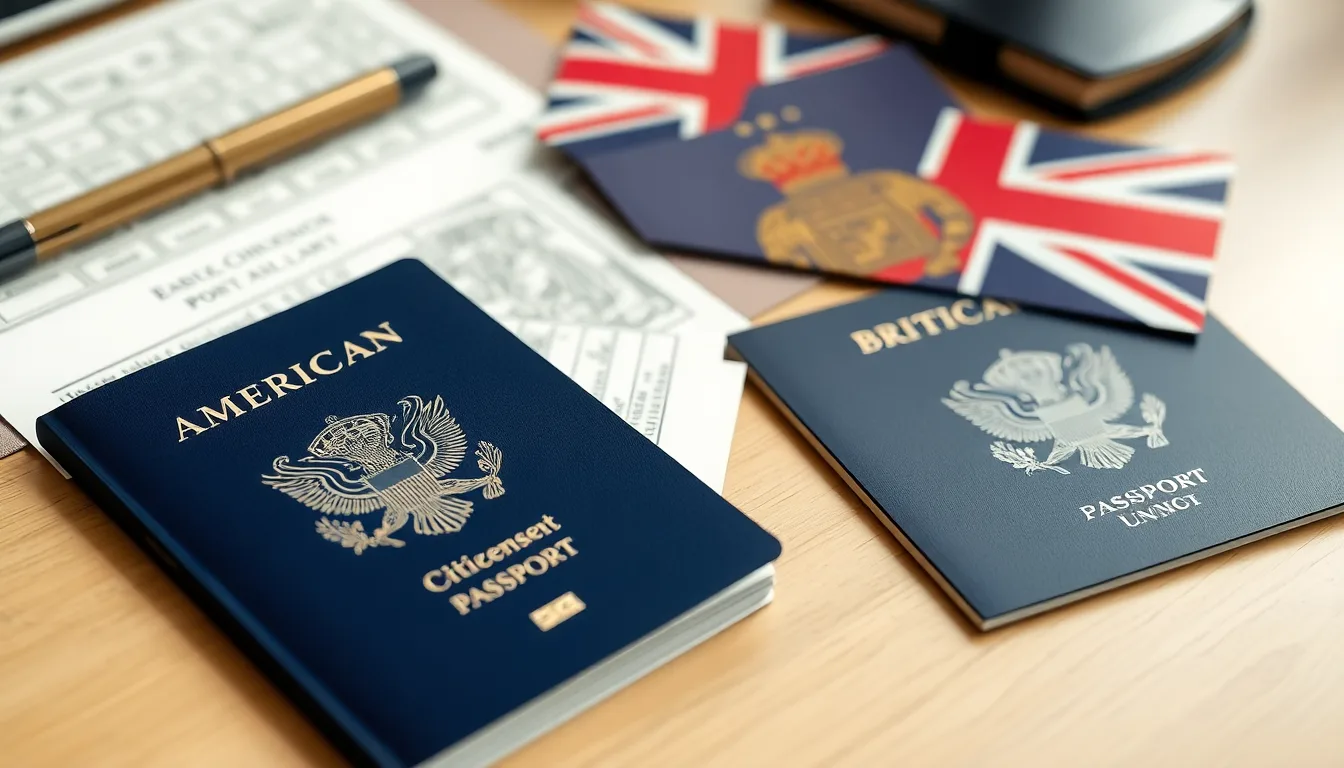
- American applications for British citizenship reached a record level in 2025, driven by several overlapping factors.
- The UK permits dual citizenship, meaning Americans naturalising don't need to give up their US citizenship.
- Naturalisation requires holding Indefinite Leave to Remain and meeting a specific qualifying residency period.
- The 2025 surge may affect processing times for 2026 applicants, making early, well-prepared applications more important than ever.
Here's what actually drove the 2025 surge, and what American applicants preparing to apply in 2026 need to know.
What the data actually showed about the 2025 surge
Applications from American nationals for British citizenship climbed notably through 2025, standing out even against the broader, more gradual year-on-year growth trend the route has seen over recent years. This wasn't a single-cause spike but rather the convergence of several separate factors, each contributing to a larger number of eligible, long-term American residents in the UK deciding the time was right to formalise their status through naturalisation.
Political uncertainty in the US as a genuine motivating factor
A meaningful portion of the surge reflects American nationals living in the UK responding to political uncertainty and polarisation back home, with British citizenship offering both a practical backup option and a sense of increased stability regardless of how US politics develops. This motivation doesn't require abandoning American identity or citizenship, since the UK's acceptance of dual citizenship means applicants can hold both nationalities simultaneously, making the decision less about choosing sides and more about expanding genuine long-term options.
Demographic timing: earlier arrivals reaching eligibility
A significant wave of American professionals, students, and family migrants arrived in the UK during earlier periods, and many of these individuals reached their qualifying residency period for citizenship right around 2025, contributing a genuinely structural, demographic component to the surge alongside the more discussed political motivations. This timing effect means some of the 2025 increase reflects a natural progression through the standard citizenship timeline rather than an entirely new wave of applicants responding solely to current events.
Practical benefits driving the decision beyond politics

- Freedom from future UK visa renewal costs, uncertainty, and administrative burden.
- Full voting rights in UK elections, unavailable to non-citizen residents even with settled status.
- Easier international travel using a British passport for certain destinations and processes.
- Long-term security against any future changes to UK immigration policy affecting settled status holders.
How the naturalisation process actually works for Americans
American nationals seeking British citizenship generally need to hold Indefinite Leave to Remain, or equivalent settled status, and have met the UK's specific continuous residency requirements before applying, meaning naturalisation is the final stage of a longer immigration journey rather than a standalone, quick process. Applicants also need to pass the Life in the UK test, meet English language requirements, and satisfy a good character assessment as part of the overall application.
What Americans specifically need to understand about dual citizenship
The UK has no objection to dual citizenship, meaning American nationals becoming British citizens don't need to renounce their US citizenship as part of the UK process, though applicants should separately understand how the US government views and taxes dual citizens, since American citizenship carries its own ongoing tax and reporting obligations regardless of where a citizen actually lives. This dual-citizenship framework is a significant part of why the decision has become more appealing, since it removes the difficult choice between nationalities that some other countries' citizenship rules would otherwise require.
How the 2025 surge may affect 2026 processing times
A meaningful increase in applications during 2025 can create knock-on effects for processing capacity in the following year, potentially extending decision timelines for 2026 applicants beyond what earlier, lower-volume years experienced. Applicants planning to apply in 2026 should build in a realistic buffer around any date-sensitive plans — a specific trip, a job requiring proof of citizenship, or a family event — rather than assuming the same processing timeline that applied during quieter years will necessarily hold in a higher-volume period.
What documentation Americans specifically need to prepare
- Evidence of Indefinite Leave to Remain or equivalent settled status.
- Comprehensive proof of continuous UK residency meeting the specific required period.
- Life in the UK test pass certificate.
- Evidence of English language proficiency, where not automatically exempt.
- Standard character references and any required declarations.
What the good character requirement means in practice
The good character assessment considers an applicant's criminal record, immigration history, and financial conduct including tax compliance, meaning American applicants with any past UK immigration issues or unresolved financial matters should address these proactively before applying rather than assuming they won't be relevant. Given the genuinely serious consequences of a refused application on character grounds, applicants with any potentially relevant history should consider seeking professional immigration advice before submitting.
How US tax obligations continue after gaining British citizenship
American citizens are taxed by the US government based on citizenship rather than residency, meaning becoming a British citizen doesn't change or reduce existing US tax filing obligations, which continue regardless of where the individual actually lives or what other citizenships they hold. Americans considering naturalisation should understand this ongoing dual-reporting reality clearly before applying, since it's a permanent feature of holding US citizenship rather than something that changes based on acquiring a second nationality.
What the ceremony and final steps involve
Once an application is approved, new British citizens attend a citizenship ceremony, involving an oath or affirmation of allegiance, before receiving their certificate of naturalisation and becoming eligible to apply for a British passport. This final stage is generally straightforward once the application itself has been approved, though applicants should book their ceremony promptly after approval, since delays here can add unnecessary time to receiving a British passport if there's a specific reason it's needed by a certain date.
What this trend suggests about long-term American settlement patterns in the UK
The 2025 surge, considered alongside broader patterns in American emigration and UK immigration data, suggests a growing cohort of Americans treating UK residency as a genuinely long-term or permanent arrangement rather than a temporary posting, reflected in their willingness to commit to the formal citizenship process rather than simply maintaining renewable settled status indefinitely. This shift in mindset, from temporary resident to committed long-term citizen, is arguably the more durable underlying story behind the headline application numbers, likely to continue shaping the trend into 2026 and beyond regardless of any single year's specific political backdrop.
How the residency qualifying period actually works
Most American applicants need to have held Indefinite Leave to Remain for a specific minimum period, alongside meeting an overall continuous UK residency requirement that also accounts for time spent on earlier visa categories before reaching settled status, meaning the total journey from initial arrival to citizenship eligibility often spans five years or more depending on individual circumstances. Applicants married to a British citizen sometimes qualify under a different, occasionally shorter timeline, making it worth checking which specific pathway applies to your particular situation rather than assuming a single universal timeline covers every applicant.
What counts as a disqualifying absence from the UK
The continuous residency requirement isn't absolute — applicants are generally permitted a limited number of absence days from the UK within the relevant qualifying period, but exceeding this limit can reset or complicate the residency calculation. American applicants who've made regular trips home to visit family, especially those with longer visits for holidays or family events, should carefully total their actual absence days across the qualifying period well before applying, since a miscalculation here is a genuinely common and avoidable reason applications face complications.
How the Life in the UK test trips up some American applicants
The Life in the UK test covers British history, culture, and institutions in a level of specific detail that surprises some American applicants who assume general cultural familiarity from years of UK residency is sufficient preparation on its own. Dedicated study using official preparation materials, rather than relying purely on lived experience, is genuinely advisable, since the test covers specific facts and dates that everyday life in the UK doesn't necessarily teach through simple exposure alone.
What English language proof actually requires
While American applicants are native English speakers, the UK citizenship process still requires formal proof of English language proficiency in most cases, generally satisfied through an approved qualification or, in many cases, simply through holding a degree that was taught and assessed in English. Applicants should confirm exactly which category of proof applies to their specific educational background well before applying, since assuming native speaker status alone suffices without the correct formal documentation can create an avoidable application delay.
How the application fee and total cost compare to other countries' citizenship routes
The UK's citizenship application fee is a substantial cost that applicants should budget for as a single, significant upfront payment, and this cost sits within a broader range seen across comparable citizenship-by-naturalisation programmes in other developed countries, though the specific figure should always be checked directly given periodic fee reviews. Beyond the headline application fee, applicants should also budget for the Life in the UK test fee, any required document translations, and potential professional advice costs for more complex individual cases.
What happened to UK-based American communities and support networks in 2025
The surge in applications was accompanied by a genuinely noticeable increase in American expatriate community engagement around the citizenship process specifically, with informal support groups, online forums, and community organisations serving American residents in the UK reporting considerably higher levels of citizenship-related discussion and mutual support throughout 2025. This kind of peer support network, while informal, has genuinely helped many applicants navigate the process more confidently, particularly around less commonly discussed details like the absence-day calculation and Life in the UK test preparation.
How UK-US relations and policy discussions influenced the decision for some applicants
Beyond individual political motivations, some American applicants cited broader uncertainty about the long-term stability of UK-US relations and international policy as a contributing factor in their decision to formalise their UK status through citizenship, viewing it as a way to secure their own personal position regardless of how broader diplomatic or economic relationships between the two countries might develop. This kind of macro-level reasoning, distinct from purely personal political views, represents another genuine thread within the broader 2025 surge that's worth understanding as part of the full picture.
What professional and family considerations played a role
Americans with UK-born or UK-raised children, or those in long-term professional roles requiring ongoing UK-based commitment, often cited these family and career-rooted considerations as at least as significant as any political motivation, reflecting a genuinely practical dimension to the naturalisation decision beyond the more widely discussed political narrative. For many applicants in this category, citizenship represented a formal recognition of an already deeply established UK life, rather than a reactive decision driven primarily by current events.
What immigration advisers observed about 2025 applicant profiles
Immigration advisers specialising in American clients reported a genuinely broader range of applicant profiles during the 2025 surge compared to previous years, including notably more applicants who had been eligible for citizenship for some time but had previously delayed applying, suggesting the surge partly reflects existing eligible individuals finally taking action rather than exclusively new arrivals reaching fresh eligibility. This pattern reinforces the idea that 2025's numbers reflect pent-up eligible demand converging with genuinely new motivating factors, rather than a single simple explanation.
What 2026 applicants should do differently given the elevated volume
Given the record 2025 application volume and its potential knock-on effect on 2026 processing capacity, prospective applicants should prioritise submitting a genuinely complete, error-free application on the first attempt, since any request for additional information or correction can add meaningful additional time to an already potentially longer queue. Double-checking absence-day calculations, ensuring all required documents are properly certified, and confirming the correct fee has been paid before submission are all steps that matter more in a higher-volume processing environment than they might in a quieter year.
How to plan around date-sensitive personal or professional needs
Applicants with a specific reason to need their British citizenship confirmed by a certain date — an upcoming job requiring proof of citizenship, a family event, or travel plans requiring a British passport — should apply considerably earlier than the standard recommended timeline in a higher-volume year, building in a genuinely substantial buffer beyond the typical processing estimate. Checking current processing time estimates directly through official government sources immediately before applying, rather than relying on figures from a previous year, gives a more accurate picture of what to realistically expect.
What the broader trend might mean for future years beyond 2026
If the underlying factors driving the 2025 surge — political uncertainty, growing dual-citizenship appreciation, and structural demographic timing — continue or intensify, American applications for British citizenship could remain elevated well beyond 2026 rather than representing a single unusual spike followed by a return to previous baseline levels. This possibility is worth understanding for anyone considering applying in the coming years, since a sustained higher-volume environment would likely mean processing times remain longer than the pre-2025 baseline for an extended period, not just a single transitional year.
What Americans considering the decision should weigh beyond the trend itself
While understanding why so many other Americans applied in 2025 provides useful context, each individual's decision to pursue British citizenship should ultimately rest on their own specific circumstances — their long-term UK plans, family situation, and personal view of the practical and symbolic value of formal citizenship — rather than simply following a broader trend because it exists. The surge itself is informative context, not a reason on its own, and prospective applicants genuinely benefit from working through their own specific motivations and circumstances rather than assuming the collective 2025 experience necessarily mirrors their own situation.
How the citizenship ceremony experience has evolved alongside higher volumes
With more American applicants reaching the final ceremony stage following the 2025 surge, some local authorities responsible for organising citizenship ceremonies reported adjusting their scheduling and capacity to accommodate higher demand, meaning newly approved applicants in 2026 should book their ceremony promptly and remain flexible about the exact date offered, rather than assuming the same rapid scheduling some earlier applicants experienced during quieter periods.
What advice past applicants most commonly share with prospective 2026 applicants
American nationals who successfully navigated the citizenship process during the 2025 surge frequently cite starting document preparation well before their exact eligibility date, thoroughly understanding the absence-day calculation early, and beginning Life in the UK test preparation with dedicated study time rather than last-minute cramming, as the specific habits that made their own application process considerably smoother. This kind of peer-sourced, practical guidance, gathered from those who've genuinely been through the current process recently, often proves more immediately useful than general official guidance alone, though applicants should still verify any specific requirement directly through official sources.
What role social media and online discourse played in raising awareness
Discussion of the UK citizenship process among American expatriates gained noticeably more visibility across social media and online forums throughout 2025, with individuals sharing their own application experiences, timelines, and practical tips in ways that likely made the process feel more accessible and less intimidating to others who might have been considering it but hadn't yet taken action. This kind of organic, genuinely peer-driven visibility, entirely separate from any official government campaign, arguably contributed meaningfully to converting long-standing latent eligibility into actual completed applications throughout the broader surge period observed during 2025.
How employers of American staff in the UK responded to the trend
Some UK employers with a significant number of American staff reported increased interest in employer-provided immigration support benefits specifically covering the citizenship process, reflecting the broader 2025 trend and suggesting employers recognised genuine value in supporting long-term staff through this transition. Employees whose employer offers this kind of support benefit should genuinely take advantage of it directly and early, since professional guidance funded by an employer removes a meaningful, otherwise significant cost barrier that some applicants would entirely otherwise need to cover themselves out of pocket.
Even for applicants without access to employer-provided support, the broader lesson from 2025 remains the same: the citizenship process rewards early, careful preparation considerably more than a last-minute, rushed approach, and this is arguably even more true now given the higher application volumes the system is currently processing.
What older long-term American residents specifically said about their decision
Among applicants who had lived in the UK for well over a decade before finally applying in 2025, a common theme was a sense that citizenship formalised an identity and commitment that had genuinely existed for years, rather than representing any sudden change in how connected they felt to the UK. For this group specifically, the 2025 surge functioned less as a trigger and more as a final nudge — encouragement from seeing peers go through the same process successfully — that turned a long-considered but repeatedly postponed decision into concrete, completed action.
Key takeaways
- American applications for British citizenship reached a record high in 2025, driven by political, demographic, and practical factors.
- The UK permits dual citizenship, meaning American applicants don't need to renounce their US nationality.
- US tax obligations continue unchanged regardless of acquiring British citizenship.
- 2026 applicants should plan for potentially longer processing times given the elevated 2025 application volume.
This article provides general guidance, not official advice — always verify current requirements directly on the official GOV.UK website, or consult a qualified immigration adviser for your specific circumstances, since citizenship requirements are periodically reviewed and updated.
Frequently asked questions
Quick answers on why American citizenship applications surged in 2025 and what it means for 2026 applicants.
Frequently asked questions
Why did American citizenship applications surge in 2025?
Do Americans need to give up US citizenship to become British?
Does becoming a British citizen change US tax obligations?
What do Americans need before applying for British citizenship?
Will 2026 applicants face longer processing times?
This article is for general informational purposes only. Visa and travel authorisation rules change frequently. Always check the official government website before travelling.

Written & reviewed by
Can OTUTravel Authorisation Editor
Can OTU is the editor of ETA Travel Assistant, specialising in UK ETA, Schengen ETIAS, NZeTA and ESTA travel authorisations. Can monitors official government sources and policy updates to ensure every guide is accurate, current and genuinely useful for travellers.
View all guides →