Do Indian Passport Holders Need ETIAS to Visit Europe?
Quick answer: No — Indian passport holders do not need ETIAS to visit Europe, because India is not on the visa-waiver list. You'll need a Schengen visa instead.
- ETIAS will apply only to travellers from visa-exempt countries; India is not one of them.
- The standard Schengen visa fee is €90 for adults, and you should apply well ahead of travel.
- If you hold a second passport from an eligible country, that passport can be used for ETIAS — but never mix passports at the border.
But hold on — there's a nuance that catches a lot of travellers off guard. If you hold Indian citizenship alongside a passport from a country that does get visa-free access to Europe, ETIAS could apply to you. You'd use your eligible passport, not your Indian one.
We'll unpack that later in this article.
Everything here is general guidance, not legal advice. European entry rules change quickly, and ETIAS has already been delayed more than once. Before you book anything, check the official sources we link to — they matter far more than any blog post, including this one.
Why Indian travellers keep asking about ETIAS
ETIAS has become a talking point because it affects millions of travellers from countries like the US, UK, Canada, and Australia. Search results make it look like everyone going to Europe needs this new authorisation. That creates confusion for Indian passport holders who see the headlines but not the eligibility rules.
Another reason is the growing number of Indians travelling to Europe. More than a million Schengen visas are issued in India each year, and that number was rising before the pandemic. As borders reopen, any new scheme naturally triggers questions.
The key is to filter out the noise. ETIAS is not a global requirement. It applies to a defined group of passports, and India is not inside that group.
What is ETIAS, exactly?
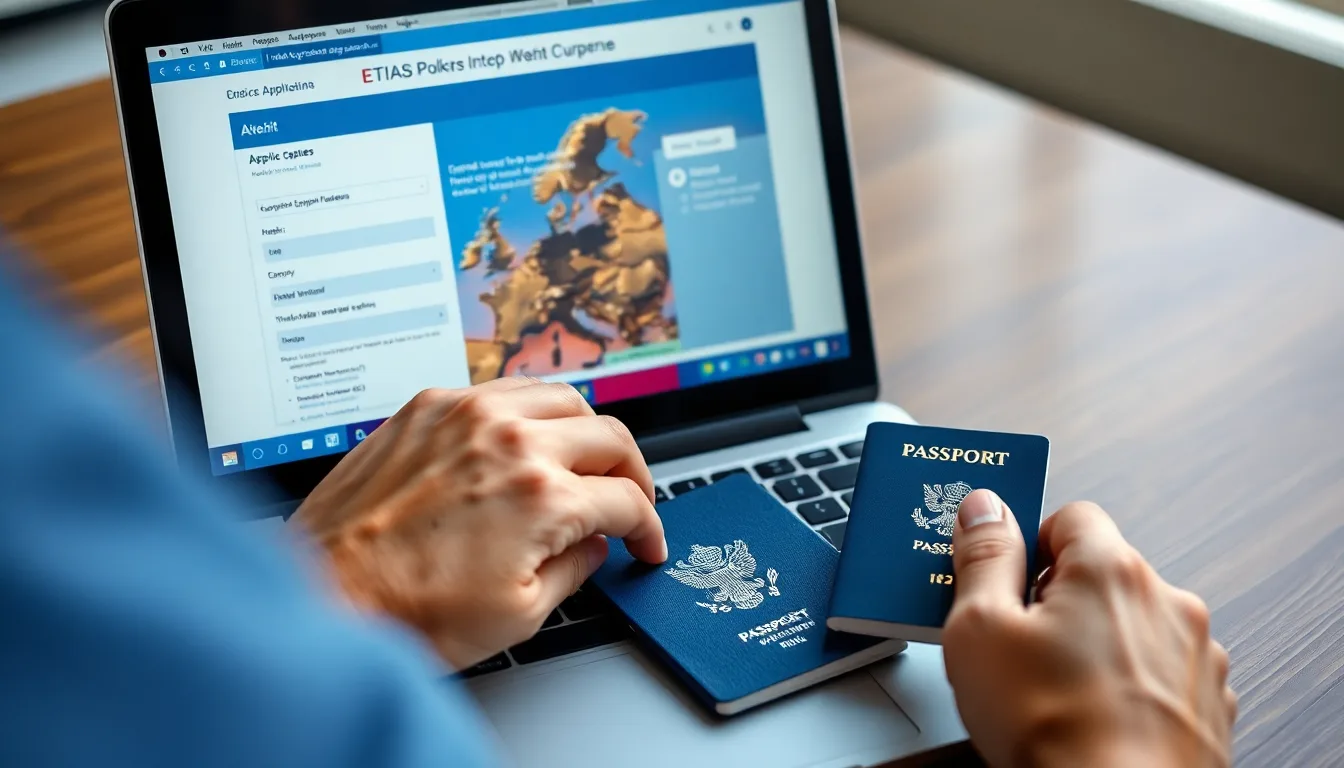
ETIAS stands for European Travel Information and Authorisation System. It's an online pre-travel authorisation for passport holders from countries that don't need a Schengen visa. Think of it as a security check that happens before you fly, rather than a visa.
You don't visit an embassy, you don't give fingerprints, and you don't wait for an interview.
Here are the key facts:
- It costs €20 per application.
- It's valid for up to three years or until your passport expires, whichever comes first.
- Applications are completed online in minutes.
- It covers short stays of up to 90 days in any 180-day period.
- It will be required to enter the Schengen area once the system is operational.
At the time of writing, ETIAS is still not operational. It was originally planned for 2023, then delayed to 2024, then 2025, and is now expected around 2026. That schedule could shift again.
What won't change is the fundamental rule: ETIAS is only relevant to visa-exempt travellers.
A common misunderstanding is that ETIAS is a visa. It isn't. A visa gives you permission to enter based on your circumstances; ETIAS simply confirms you've been screened and don't raise red flags.
For travellers from visa-exempt countries, it sits on top of their existing visa-free status.
How the online application works
The ETIAS form asks for basic personal details, passport information, and a few security questions. You'll also need to provide information about your intended stay, including the first Schengen country you plan to visit. There is no requirement to upload a photograph or give fingerprints.
Once submitted, the system checks your details against European security databases, including the Schengen Information System and Europol data. If no matches are found, the authorisation may be issued within minutes.
Approval is not guaranteed. Even visa-exempt travellers can be refused an ETIAS if the checks raise concerns, and a refusal notice would explain the reason and how to appeal.
What ETIAS does not do
ETIAS does not replace a visa, and it does not give you the right to work, study, or settle in Europe. It only covers the same short stay that visa-free travel covers today, up to 90 days in any 180-day period.
It also does not guarantee entry. Border guards still have full authority to refuse entry if they have doubts about your documents, funds, or plans.
Who will actually need ETIAS?
ETIAS applies to citizens of countries on the EU's visa-waiver list. That's the list of countries whose nationals can already enter the Schengen area without a visa for short stays. Once ETIAS is live, those travellers will need to complete an online application before their first trip.
If your country is on that list, you'll need ETIAS even if you fly into Europe frequently. Short stays, business trips, tourism, even airport-to-airport travel within the Schengen zone — all covered. The rules are tied to your passport, not to your reason for travelling.
The official list of visa-waiver countries is set in EU law and it changes over time. Our etias country list page shows which passports qualify and which don't. Bookmark it if you want to double-check any change before your trip.
For example, a Canadian citizen will need ETIAS for Europe, even though they don't need a visa today. Same for Americans, Brits, Australians, Japanese, South Koreans, and citizens of many other countries. Indian citizens are not in this group — which is exactly why ETIAS doesn't apply to Indian passports.
Examples of travellers who need ETIAS
A tourist from the United States flying to Rome for a week will need ETIAS before the trip. A British citizen taking the Eurostar to Paris for a weekend would need it too, because the UK is not in the Schengen area even though it is near Europe.
The same applies to Australians on a backpacking trip through Spain and Portugal, or Japanese business travellers attending meetings in Germany. In every case, the trigger is the passport, not the journey.
Who is not covered by ETIAS
Citizens of Schengen countries themselves do not need ETIAS, because they are exercising free movement rights. Citizens of non-Schengen EU countries such as Ireland also have separate rights that sit outside the ETIAS system.
Indian passport holders are not covered either, because they are visa-required nationals. Even if you live in the UK on a visa, an Indian passport still requires a Schengen visa for most European trips.
Why is India not on the ETIAS list?

The short answer: because India is on the Schengen visa-required list. The EU keeps two official country lists in law. Annex I has countries whose citizens need a visa.
Annex II has countries whose citizens don't. India sits on Annex I, and that status determines everything.
Visa-free status isn't handed out randomly. The EU decides based on factors like a country's security situation, migration pressures, diplomatic relationships, and whether that country reciprocates by giving EU citizens visa-free access. India and the EU haven't reached that point, so Indian passport holders remain visa nationals.
This matters because ETIAS only plugs into the visa-exempt system. If you need a visa for Europe anyway, an ETIAS authorisation is pointless. The system wouldn't even process your Indian passport — it's built for passports that currently travel visa-free.
Could that change one day? EU-India relations have deepened, and a visa facilitation agreement has been discussed. But as of now, the answer is clear: Indian passport holders do not need ETIAS, and cannot apply to use it.
The role of visa facilitation agreements
The EU has signed visa facilitation agreements with several countries, and these agreements can lower fees, speed up processing, and make multi-entry visas easier to obtain. India and the EU have discussed a similar arrangement.
That could improve the experience of getting a Schengen visa, even if it does not remove the visa requirement entirely. It is a practical step that matters more for most Indian travellers than ETIAS.
What might change in the future for India and ETIAS
Immigration policy is never static. The EU reviews its visa-required lists from time to time, and talks about closer mobility cooperation with India have already happened at the official level.
A full visa-waiver for India would be a major political decision, not a routine administrative update. It would follow years of negotiation and require changes to EU law.
Even if that happened, ETIAS would not immediately apply. The EU would need to update systems and communicate the change well in advance.
Other incremental changes to watch
- A visa facilitation agreement that lowers fees and speeds up processing.
- Longer multi-entry visa validity for frequent Indian travellers.
- Simplified document requirements for categories like students and researchers.
- Expansion of biometric appointment centres in more Indian cities.
All of this would make travel easier, but none of it would let you skip a Schengen visa with an Indian passport today.
What do Indian passport holders need instead?
You need a short-stay Schengen visa. That's often called a Type C visa. It lets you travel across the Schengen area for tourism, family visits, business meetings, or transit, with a maximum stay of 90 days in any 180-day period.
A Schengen visa is a real visa. It requires a paper application, supporting documents, and in most cases an in-person appointment at a consulate or visa application centre. The good news: it works across most of Europe, so one visa covers multiple destinations like France, Germany, Italy, Spain, and the Netherlands.
There's one more detail to be aware of. Some Schengen countries also require Indian passport holders to get an airport transit visa even if you're just changing planes and never leaving the transit zone. Check this before booking any itinerary with a Schengen connection, because it's easy to miss.
Different types of Schengen visas
Some applicants receive a single-entry visa, which allows one stay for a limited window. Others receive a double-entry or multi-entry visa, useful if you plan to leave the zone and return.
Multiple-entry visas are not automatic. They are more common when you have a history of using previous Schengen visas correctly and a clear reason for repeated travel.
Do you need a separate visa for Switzerland, France, or Germany?
No. One Schengen visa covers all 29 Schengen member states in the free-travel zone. You can fly into Paris, take a train to Amsterdam, and cross into Germany without passing another border control.
This simplicity is why the Schengen visa is so useful for holidays that cover several countries.
How to apply for a Schengen visa: step by step
The process varies slightly by country and consulate, but the skeleton is the same across the Schengen area.
- Find your main destination. If you're visiting several countries, apply at the embassy of the country where you'll spend the most days. If you'll spend equal time in several, apply at the one you'll arrive in first.
- Book travel insurance. You'll need cover of at least €30,000 for medical emergencies, valid across the whole Schengen zone for your entire trip.
- Gather your documents. That means a valid passport (with at least two blank pages and validity beyond your planned departure), a completed application form, passport photos, proof of accommodation, flight bookings, and evidence of finances.
- Book an appointment. Most applications go through an authorised visa application centre, like VFS Global, rather than directly through an embassy.
- Attend in person. Biometrics — fingerprints and a photograph — are usually taken. They remain valid for five years, so repeat travellers may not need to provide them again.
- Pay the fee and wait. Standard processing takes up to 15 calendar days, but it can stretch to 30 or even 45 days in busy periods.
The single biggest mistake is leaving this until the last minute. Consulates in India handle huge volumes, and appointments fill up fast in summer and near Christmas. Treat the visa application as part of your booking timeline, not an afterthought.
Documents Indian applicants should prepare
- A passport valid for at least three months beyond your departure from the Schengen area.
- Completed and signed visa application form.
- Two recent passport-size photographs meeting the Schengen photo rules.
- Round-trip flight itinerary with dates and flight numbers.
- Hotel bookings or an invitation letter if staying with family or friends.
- Bank statements for the last three to six months showing sufficient funds.
- Travel insurance covering medical emergencies up to €30,000.
- Proof of employment, self-employment, or studies in India.
- Income tax returns or Form 16, if applicable.
Consulates may ask for extra paperwork specific to your situation. A freelancer, for example, might need a client contract, while a student may need a no-objection letter from their university.
Choosing the right consulate
If your itinerary contains more than one country, apply at the consulate of the country where you will spend the most days. If time is split equally, apply at the first country you enter.
That rule is often misunderstood, and applying at the wrong consulate can result in a rejection. Confirm your daily itinerary before booking the appointment.
After you submit
Your biometric data is stored in the Schengen information system for five years. That means repeat applicants may not need to give fingerprints again.
Even with an approved visa, you should keep copies of your application and supporting documents for your trip. Border officers may ask you to show where you're staying and how you can fund the visit.
Real-world scenarios for Indian travellers
The rules become clearer when you look at actual journeys. These examples are illustrative, not guarantees, but they show how eligibility works in practice.
Scenario one: a family holiday in Europe
A family from Mumbai plans a trip to France, Switzerland, and Italy. They hold only Indian passports, so they need a Schengen visa from the French consulate because France is their first and main destination.
They book travel insurance with €30,000 cover, provide bank statements, and apply six weeks ahead. Their visas should be issued in time if the documents are complete.
Scenario two: a business traveller with a US green card
A business analyst from Bengaluru lives in the United States on a green card but keeps an Indian passport. A green card does not change citizenship, so the Indian passport still needs a Schengen visa.
This person can apply through the visa application centres in the US, but the process remains the same. ETIAS does not apply because citizenship, not residency, determines eligibility.
Scenario three: a dual national travelling from Canada
A traveller holds both Indian and Canadian passports and lives in Toronto. On a trip to Europe, they present the Canadian passport for ETIAS and use it for every stage of the journey.
The Indian passport stays at home or in the luggage, and the border sees only the Canadian document. This works as long as the traveller is consistent about which passport is used.
Scenario four: an OCI card holder with an Indian passport
An Overseas Citizen of India cardholder thinks the card removes the visa requirement. It does not. European border rules recognise only passports, not OCI cards.
This traveller needs a full Schengen visa unless they are also a citizen of an eligible country. The OCI card may help with flights to India, but it has no role in European entry.
Schengen visa fees and processing times
Fees changed in June 2024, so use these figures with confidence — but always confirm the current amount when you book your appointment.
| Applicant | Standard fee |
|---|---|
| Adults | €90 |
| Children aged 6 to 12 | €45 |
| Children under 6 | Free |
| Students, researchers, and certain other categories | May be exempt |
Those are the official visa fees. Visa application centres charge an additional service fee, so your total will be higher. You'll see that amount clearly when you book and pay.
Processing times follow the same pattern across most countries: around 15 calendar days normally, 30 days where more scrutiny is needed, and up to 45 days in exceptional cases. A multi-entry visa can also be granted if you travel regularly and have a history of compliant visits.
Budgeting for additional costs
Visa application centres in India charge a service fee for every application, and that amount can change. You may also pay for optional services such as SMS notifications, courier return, or priority processing where available.
Currency conversion means the final cost in rupees depends on the daily exchange rate. Check the visa centre's fee page before your appointment.
Refunds and refused applications
The visa fee is normally non-refundable, even if your application is refused. The service fee is also non-refundable because it covers administrative work that has already been done.
If your visa is refused, you can appeal or reapply with stronger documentation. A refusal does not permanently block you, but you should understand the reason before submitting again.
Multi-entry visas for frequent travellers
Schengen rules encourage visa-issuing states to grant multi-entry visas to travellers with a clean history. Frequent Indian travellers can sometimes receive a visa valid for one, three, or even five years.
Meeting the conditions takes time. You will usually need previous Schengen visas, documented travel history, and no overstays in any European country.
What if you have dual Indian and another citizenship?
This is where the conversation gets genuinely useful. Many Indian-origin travellers hold a second passport from the US, Canada, Australia, the UK, or another country. If that country is on the EU's visa-waiver list, your Indian passport doesn't block you from travelling visa-free.
You just have to use the right passport.
You would apply for ETIAS using your Canadian, American, or other eligible passport. You'd also travel to Europe on that passport and show it at the border. The EU doesn't care about your Indian citizenship; it only looks at the passport you present.
But there are rules to follow:
- Use the same passport for booking flights, applying for ETIAS, leaving your departure country, and entering Europe.
- Make sure the second country's passport is valid — ETIAS authorisation is linked to the specific passport number.
- Remember that renewing your second passport means you'll need a fresh ETIAS authorisation, even if the old one hasn't expired.
- Check whether the second country requires you to enter its own territory on its passport. That doesn't affect Europe, but it matters for other legs of your trip.
If your second passport is Canadian, you'll also want to read our detailed comparison of schengen visa or etias canada. It walks through which route makes sense depending on your travel plans, ties to India, and how often you visit Europe.
One more note about OCI. An Overseas Citizen of India card is not a passport. European border authorities will not accept it as a travel document.
It's useful when you're dealing with India, but for entering Europe only your passport nationality matters.
Which second passports are qualifying
The EU maintains its visa-waiver list, so not every non-Indian passport helps. A passport from Canada, the United States, Australia, Japan, South Korea, or the UK, among others, would generally qualify for ETIAS once it is live.
If you are unsure about your second country, search the official EU list rather than relying on informal advice. Your eligibility depends entirely on that document.
What about permanent residence in a visa-exempt country?
Being a permanent resident of the US, Canada, or the UK does not change your passport's nationality. Your Indian passport still requires a Schengen visa, except in a few specific national rules that are not common.
You may have better appointment access from your country of residence, but the substantive requirements remain the same. Do not assume a residence card grants ETIAS eligibility.
How to handle bookings with two passports
When you travel with an eligible second passport, use that passport for your flight booking, your ETIAS application, and your border checks. Avoid using a different passport at any point in the journey.
A mismatch between the flight booking and the passport at border control can cause delays or even a refusal. It is safer to be consistent, even if both passports are valid.
Does this affect travel to the UK?
A lot of Indian travellers confuse Europe with the UK. These are separate systems with completely separate rules. Indian passport holders do not qualify for the UK's Electronic Travel Authorisation — a system usually called UK ETA — because it is only for visa-exempt nationalities.
India is on the UK's visa-required list.
So for a trip to London you'd apply for a Standard Visitor visa instead. That's a different application, different fee, and different processing route. And in Ireland, the rules are separate again.
Don't assume one European entry system covers both sides of the Channel.
UK ETA is separate from ETIAS
The UK's Electronic Travel Authorisation applies to nationals who currently visit the UK without a visa. Indian citizens are not on that list, so they must use the Standard Visitor visa route.
This is true even after the UK ETA is fully introduced. The UK and the EU run entirely separate border systems, and the two programmes are often confused.
What about Ireland and Northern Ireland?
Ireland is an independent country outside the Schengen area. It has its own visa rules, even though it shares a land border with Northern Ireland.
Travellers with a UK visit visa normally cannot
Key takeaways
- Indian passport holders don't need ETIAS — you need a Schengen visa for Europe because India is on the visa-required list.
- ETIAS only applies to travellers from visa-exempt countries; India isn't one of them, so your Indian passport can't be used for ETIAS.
- If you also hold a passport from an ETIAS-eligible country, you may use that passport for ETIAS — but never mix passports at the border.
- ETIAS costs €20 and is valid for up to 3 years, but it's still not operational and is currently expected around 2026.
- For Indian travellers, the standard Schengen visa fee is €90 for adults — apply well ahead of time and prepare documents like bank statements and travel insurance.
Frequently asked questions
Do Indian passport holders need ETIAS to visit Europe?
Can I apply for ETIAS if I have an Indian passport and a Schengen visa?
What if I have dual citizenship with Canada, the US, or another visa-exempt country?
How long before my trip should I apply for a Schengen visa as an Indian citizen?
Is India on the ETIAS eligible countries list?
This article is for general informational purposes only. Visa and travel authorisation rules change frequently. Always check the official government website before travelling.

Written & reviewed by
Can OTUTravel Authorisation Editor
Can OTU is the editor of ETA Travel Assistant, specialising in UK ETA, Schengen ETIAS, NZeTA and ESTA travel authorisations. Can monitors official government sources and policy updates to ensure every guide is accurate, current and genuinely useful for travellers.
View all guides →