Which Schengen Visa Is Easiest to Get? The Honest Answer
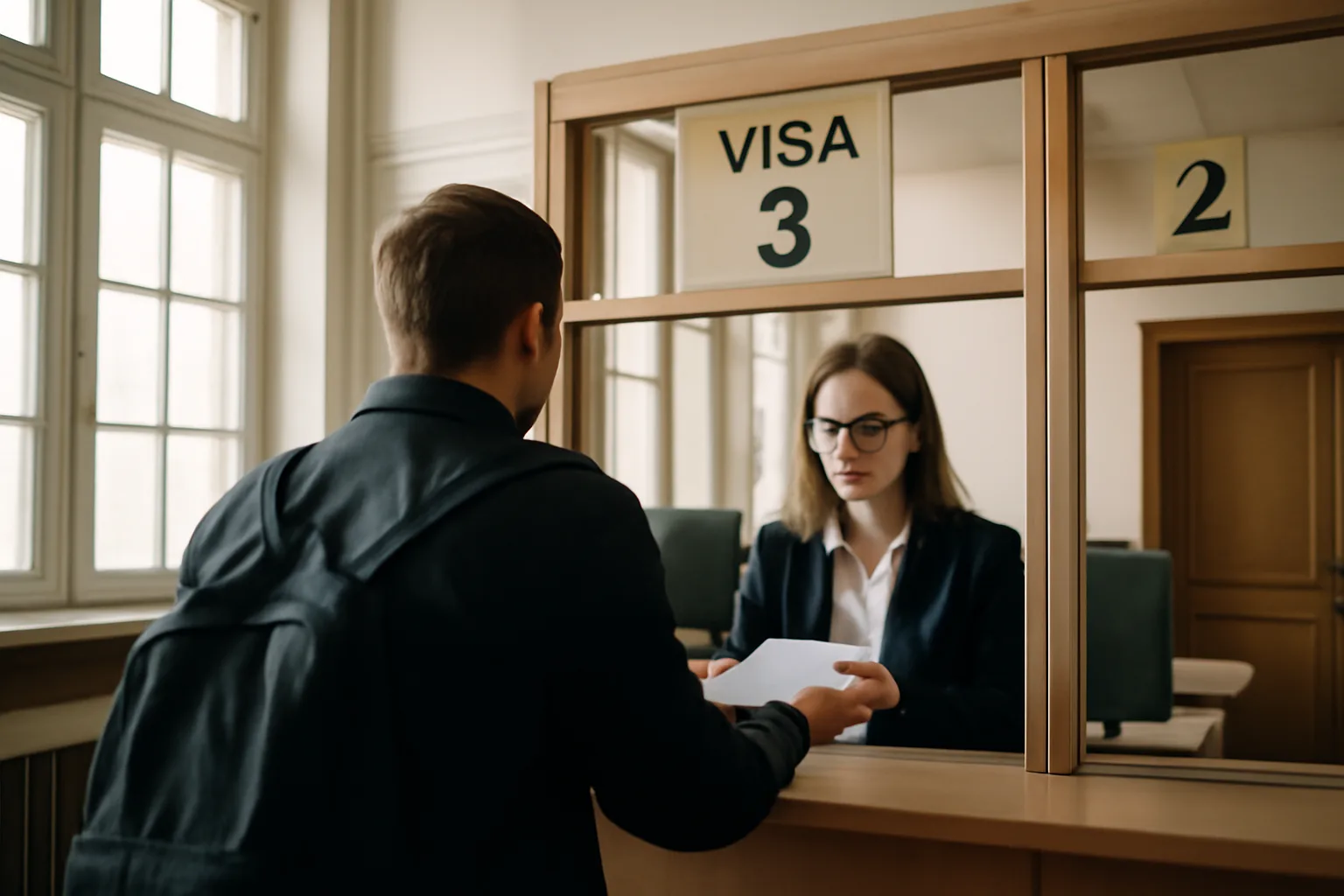
- Approval rates and processing speed vary significantly by consulate, not just by country reputation.
- You should apply through the country where you'll spend the most nights — not simply whichever consulate seems easiest or fastest.
- A strong, well-organised application matters more than which country you pick — weak paperwork gets rejected everywhere.
If you're planning a first Schengen trip and trying to work out where to apply, or you've been rejected once already and want better odds next time, this is the honest version of that conversation — including why "easiest" is a more complicated question than most lists make it sound.
We'll cover how the "main destination" rule actually determines where you must apply, which consulates have reputations for smoother processing, what actually drives approval rates, and the mistakes that sink otherwise strong applications regardless of which country you choose.
Wait — can you even choose which country to apply through?
Not freely. Schengen rules require you to apply through the consulate of your main destination — the country where you'll spend the most nights on your trip. If you're spending equal nights in multiple countries, you apply through the country you'll enter first.
This matters a lot, because it means "which country is easiest" isn't really a free choice for most travellers — it's determined by your actual itinerary. Trying to game this by applying through a country you barely visit, purely because it's known for easier approvals, is a real red flag to visa officers and can lead to a straightforward rejection.
If you genuinely can't work out which country counts as your main destination — say, three countries with almost identical night counts — apply through whichever one you'll enter first, and be ready to explain your full itinerary clearly if asked.
So what actually makes a consulate "easier"?
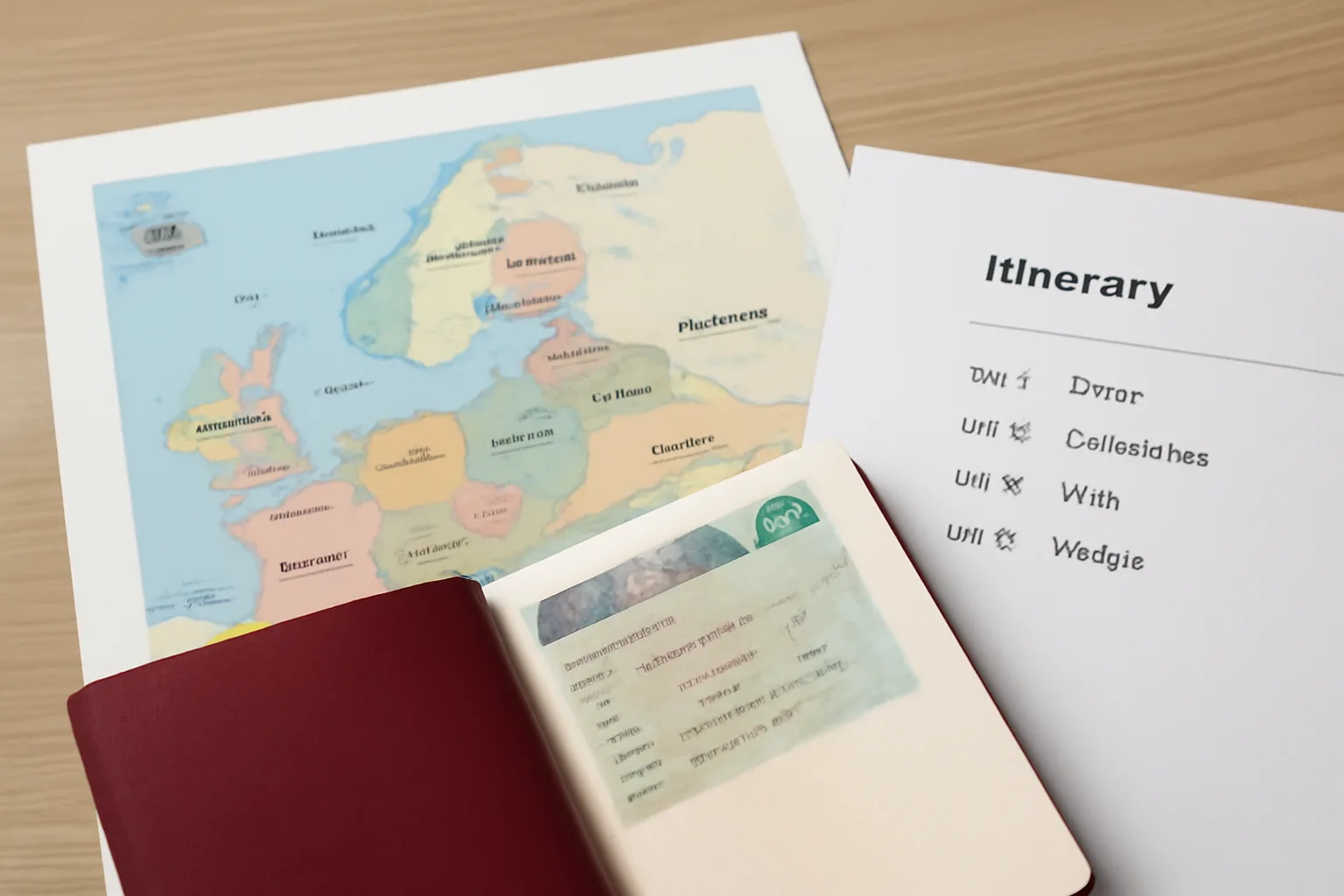
A few consistent factors show up across most travellers' real experiences, more than country reputation alone.
- Appointment availability. Some consulates have much shorter waits for a visa appointment slot, purely due to lower application volume relative to their capacity.
- Processing time. Standard Schengen processing is up to 15 calendar days, extendable to 30 or 45 in some cases — but real-world averages vary a lot by consulate.
- Document flexibility. Some consulates accept slightly more flexible proof of funds or accommodation, while others are stricter about exact formats.
- Volume and staffing. Busier consulates in major cities can be slower simply due to sheer application volume, regardless of the underlying rules being identical.
None of this changes the underlying Schengen rules — approval criteria are broadly consistent across the area. What differs is administrative capacity and how strictly individual officers apply discretion within those rules.
Which consulates have reputations for smoother processing?
Treat this as general traveller experience, not a guarantee — individual results vary by your nationality, your specific application, and the time of year.
| Country | General reputation | What travellers report |
|---|---|---|
| France | Efficient in most cities | Predictable processing, though busy consulates (like Paris hub locations) can be slower at peak season |
| Netherlands | Generally straightforward | Clear document requirements, reasonably fast turnaround for most nationalities |
| Czechia | Often faster processing | Lower application volume relative to capacity in several regions |
| Greece | Fast for tourism-focused applications | High tourism volume means a well-established, efficient process for holiday itineraries |
| Italy | Can be slower in high season | Very high overall application volume, especially in summer |
Remember that these reputations are built from thousands of individual traveller experiences, not official published statistics, so treat them as a rough guide rather than a guarantee of your own outcome. These are broad patterns, not fixed rules — a well-prepared application through a "slower" consulate will usually still succeed, while a weak application through a "faster" one can still be rejected.
It's also worth noting that these patterns shift over time. A consulate known for fast processing one year can become significantly busier the next, particularly as tourism volumes recover or shift after major world events. Don't rely on a single traveller forum post from a few years ago — check recent, current-year experiences where possible, since consulate performance genuinely does change year to year.
What actually drives approval rates more than country choice?
Officers assess the same core things regardless of which country handles your application: intent to return home, financial capacity to fund the trip, a clear and consistent itinerary, and travel history.
- Ties to your home country. Stable employment, property, family responsibilities, or ongoing study all signal you intend to return.
- Financial proof. Bank statements showing consistent balances and activity — not a single large deposit shortly before applying.
- A coherent itinerary. Flights, accommodation, and a day-by-day plan that actually matches the country you're applying through.
- Prior travel history. A clean record of past visas used correctly (no overstays) genuinely helps.
These factors matter more than which specific country's consulate reviews your file. A weak application with thin financial proof and no clear itinerary will struggle in Italy, Greece, or anywhere else.
Does your nationality affect which country is "easiest"?
Yes, significantly. Approval rates vary a great deal by applicant nationality, reflecting each consulate's own risk assessment for travellers from that country — not something listed publicly in a simple, comparable way.
If you're applying from a nationality that faces more scrutiny, the consulate matters less than the strength of your documentation. Focus your energy on building an unmistakably clear, well-organised application rather than searching for a "soft touch" country — that search rarely pays off in practice.
What documents actually make the biggest difference?
Beyond the standard checklist (application form, passport photo, travel insurance, itinerary), a few documents consistently strengthen an application more than applicants expect.
- An employment letter confirming your role, salary, and approved leave dates — this directly supports both financial capacity and intent to return.
- A detailed cover letter explaining the purpose of your trip in plain terms, especially useful if your itinerary is complex or unusual.
- Proof of accommodation for every night of the trip, not just the first few — gaps in your accommodation record raise unnecessary questions.
- Evidence of ties beyond employment — property ownership, family responsibilities, or enrolled study — for applicants whose situation might otherwise look ambiguous.
None of these are strictly mandatory everywhere, but together they turn a merely adequate application into a genuinely strong one — and that difference matters more than which country's consulate happens to review it.
Organise these documents in the same order the consulate's checklist requests them, clearly labelled, rather than handing over a loose stack of papers. It sounds like a small, almost cosmetic detail, but a genuinely well-organised submission signals the same care and seriousness that officers are already looking for in the content of your application.
If a document isn't in English or the consulate's local language, check whether a certified translation is required — submitting an untranslated document when one was expected is a surprisingly common, entirely preventable delay.
What about visa-free entry — does that change anything?
If your nationality already qualifies for visa-free short stays in the Schengen area, none of this "easiest country" discussion applies to you at all — you don't need a visa in the first place, only (eventually) an ETIAS travel authorisation once that requirement is fully in effect.
This guide is specifically for travellers whose nationality requires an actual Schengen visa application before travelling.
Mistakes that sink applications regardless of which country you choose
- Applying through the wrong consulate. Ignoring the main-destination rule is one of the most common, entirely avoidable rejection reasons.
- Vague or unrealistic itineraries. A trip plan that doesn't logically connect flights, dates, and accommodation raises immediate questions.
- Thin or last-minute financial proof. A large deposit two days before applying looks exactly like what it is.
- Inconsistent information across documents. Dates, addresses, or employer details that don't match between your form and your supporting documents.
- Applying too close to your travel date. This leaves no room to fix a request for additional documents, and can itself look like poor planning.
How much does timing affect your chances?
Applying during off-peak periods (avoiding summer and major holiday windows) generally means shorter queues, more appointment availability, and — anecdotally — slightly more attention paid to each individual application, simply because officers are processing fewer files per day.
Peak season also means peak scrutiny in a different sense: with a much higher volume of applications, officers are working through more files in the same amount of time, which can mean less room for a follow-up question if something in your paperwork is ambiguous. A borderline application that might get a clarifying question in a quieter month can more easily be rejected outright when the same officer is processing dozens of files that day.
If your travel dates are flexible, applying in shoulder season (spring or autumn) is a genuinely useful, low-effort way to improve your overall experience, independent of which country you're applying to.
Real scenarios: how this plays out for different applicants
The first-time leisure traveller. If this is your first Schengen application and you're visiting one country for a two-week holiday, your case is usually straightforward — the main-destination rule is obvious, and a clear itinerary with hotel bookings and return flights covers most of what's needed.
The multi-country backpacker. If you're visiting five countries over three weeks, working out your main destination (the one with the most nights) takes more care. Keep a simple night-by-night breakdown ready, since officers may ask you to justify which country you applied through.
The frequent business traveller. If you travel to the Schengen area regularly for work, a strong prior travel history (clean visa use, no overstays) becomes one of your biggest assets — it demonstrates a track record that first-time applicants simply don't have yet.
The self-employed applicant. Without a traditional payslip, self-employed applicants often face more scrutiny on financial proof. Tax returns, business registration documents, and consistent bank activity over several months matter more here than for salaried applicants.
What if you're applying with children or as a family group?
Family applications add complexity but not necessarily difficulty, as long as each person's documents are complete and consistent with the group's shared itinerary. Children generally need their own passport, their own application form (completed by a parent or guardian), and — depending on the consulate — a birth certificate and, in some cases, consent documentation if travelling with only one parent.
Financial proof for the family is usually assessed jointly if a parent is covering costs for the whole group, but each traveller still needs their own supporting documents. Keep the family's shared itinerary identical across every application — small inconsistencies between family members' forms (different dates, different accommodation details) are an easy, unnecessary way to raise questions.
If one family member has a more complicated situation — a different nationality, a prior visa issue, or a more unusual travel history — that person's application may need extra supporting documents even if everyone is travelling together on the same trip.
Do visa agencies or "expediting" services actually help?
Some consulates use third-party visa application centres (like VFS Global or TLScontact) to handle appointment booking and document submission — this is standard and doesn't affect your approval odds either way, since the actual decision is still made by consular staff, not the service centre.
Be more cautious of services promising to "guarantee" approval or claiming special influence over outcomes — no legitimate service can guarantee a Schengen visa decision, and offers that suggest otherwise are worth treating with real scepticism. A genuinely useful service saves you time and reduces the chance of a documentation mistake; it can't change the underlying strength of your case.
What if your itinerary changes after your visa is approved?
A small amount of flexibility is normal and expected — plans shift, and a Schengen visa doesn't lock you into the exact itinerary submitted with your application. What matters is that your overall trip still broadly matches what you applied for: the same general destination, similar dates, and a stay within your granted number of days.
A genuinely major change — switching your entire trip to a different main destination country, for example — is a different situation, and in principle the visa was granted for the itinerary you originally submitted. If your plans change substantially before you travel, it's worth checking with the consulate rather than assuming it's automatically fine.
How does travel insurance factor into your application?
Nearly all Schengen visa applications require proof of travel insurance meeting a minimum coverage level (commonly at least €30,000 for medical emergencies and repatriation) for the full length of your stay. This is one of the more mechanical, checkbox-style requirements — missing or insufficient coverage is an easy, entirely avoidable rejection reason, regardless of how strong the rest of your application is.
Buy this early enough that the policy dates clearly cover your full intended stay, and keep the certificate easily accessible — it's one of the first documents most consulates check.
A few travellers try to save money with a bare-minimum policy that technically meets the coverage figure but excludes common scenarios like pre-existing conditions or activities like skiing. Read the policy details, not just the headline coverage number — a cheap policy that doesn't actually protect you defeats the purpose of buying one at all.
What if you've been rejected before?
A prior rejection doesn't bar you from applying again, but it does mean your new application needs to directly and clearly address whatever reason was given for the refusal. Reapplying with an identical application and hoping for a different outcome rarely works.
Request the specific reason for refusal if it wasn't made clear, and build your next application specifically around closing that gap — stronger financial evidence, a clearer itinerary, or better proof of ties to home, depending on what was cited.
Consider also whether your previous application was submitted through the correct consulate in the first place. A surprising number of rejections trace back to a main-destination mistake rather than anything wrong with the applicant's actual circumstances — worth double-checking before you assume the problem is you.
Give a reapplication real time to breathe. Submitting again within days of a rejection, without changing anything meaningful, rarely produces a different result and can itself look like you haven't taken the refusal seriously.
What about the new EU Entry/Exit System and ETIAS — do they change any of this?
The EU's Entry/Exit System (EES) changes how your entries and exits are recorded — moving from manual passport stamps toward electronic logging at many external borders — but it doesn't change the underlying visa approval criteria. It does mean any past overstay or irregular travel history is more visible and harder to overlook, which makes a clean travel record even more valuable than before.
ETIAS, once fully in effect, adds a pre-travel authorisation step for visa-exempt nationalities — it's not relevant to travellers who already need a full Schengen visa, since you're going through a more thorough consular process already.
Should you use a visa consultant or lawyer?
For most straightforward tourist applications, a consultant isn't necessary — the process is designed to be completed by individual applicants, and most consulates provide clear checklists. Where a consultant can genuinely help is in more complex cases: a prior rejection you're struggling to understand, an unusual employment situation, or an application involving multiple family members with different documentation needs.
If you do use a consultant, treat them as someone who helps you organise and present your own genuine documents clearly — not as someone who can manufacture qualifying circumstances that don't actually exist. Consular officers are experienced at spotting applications that look professionally assembled but don't hold up under a few direct questions.
How far in advance should you actually apply?
Most consulates allow applications up to six months before travel, though the practical sweet spot for most applicants is around two to three months out. That gives enough time to secure an appointment, respond to any request for additional documents, and still book flights and accommodation with confidence once approved.
Applying too early can occasionally cause its own problems — some consulates want your travel dates to be reasonably close to your application date, since a visa granted many months in advance for a trip that could still change raises its own questions. Read the specific consulate's guidance on this rather than assuming earlier is always better.
Building the strongest possible application, wherever you apply
- Confirm your main destination correctly, and apply through that country's consulate — don't guess or choose based on convenience alone.
- Book fully refundable or flexible flights and accommodation before applying, so your itinerary is genuinely consistent with your form.
- Gather 3-6 months of bank statements showing stable, explainable activity — not one large recent deposit.
- Write a simple day-by-day plan for your trip, matching your stated accommodation and entry country.
- Apply as early as the consulate allows (many open applications up to six months ahead), giving room to respond to any follow-up requests.
This article is general guidance, not official advice — always check the official website of the specific consulate you're applying through before submitting your application.
Key takeaways
- There's no universally "easiest" Schengen country — you're generally required to apply through your main destination's consulate, not a free choice.
- Some consulates have reputations for faster processing, but a strong application matters more than which country reviews it.
- Approval hinges on financial proof, a coherent itinerary, ties to home, and clean travel history — the same factors everywhere.
- Applying in shoulder season (spring/autumn) generally means shorter queues and more attention per application.
- After a rejection, address the specific stated reason directly rather than reapplying unchanged.
Frequently asked questions
Can I just apply through whichever Schengen country has the easiest reputation?
Which Schengen country has the fastest visa processing?
Does my nationality affect how easy it is to get a Schengen visa?
What's the single biggest mistake that gets Schengen applications rejected?
Does applying in a specific season improve my chances?
This article is for general informational purposes only. Visa and travel authorisation rules change frequently. Always check the official government website before travelling.

Written & reviewed by
Can OTUTravel Authorisation Editor
Can OTU is the editor of ETA Travel Assistant, specialising in UK ETA, Schengen ETIAS, NZeTA and ESTA travel authorisations. Can monitors official government sources and policy updates to ensure every guide is accurate, current and genuinely useful for travellers.
View all guides →