What Countries Are Under Schengen? Full 2026 List
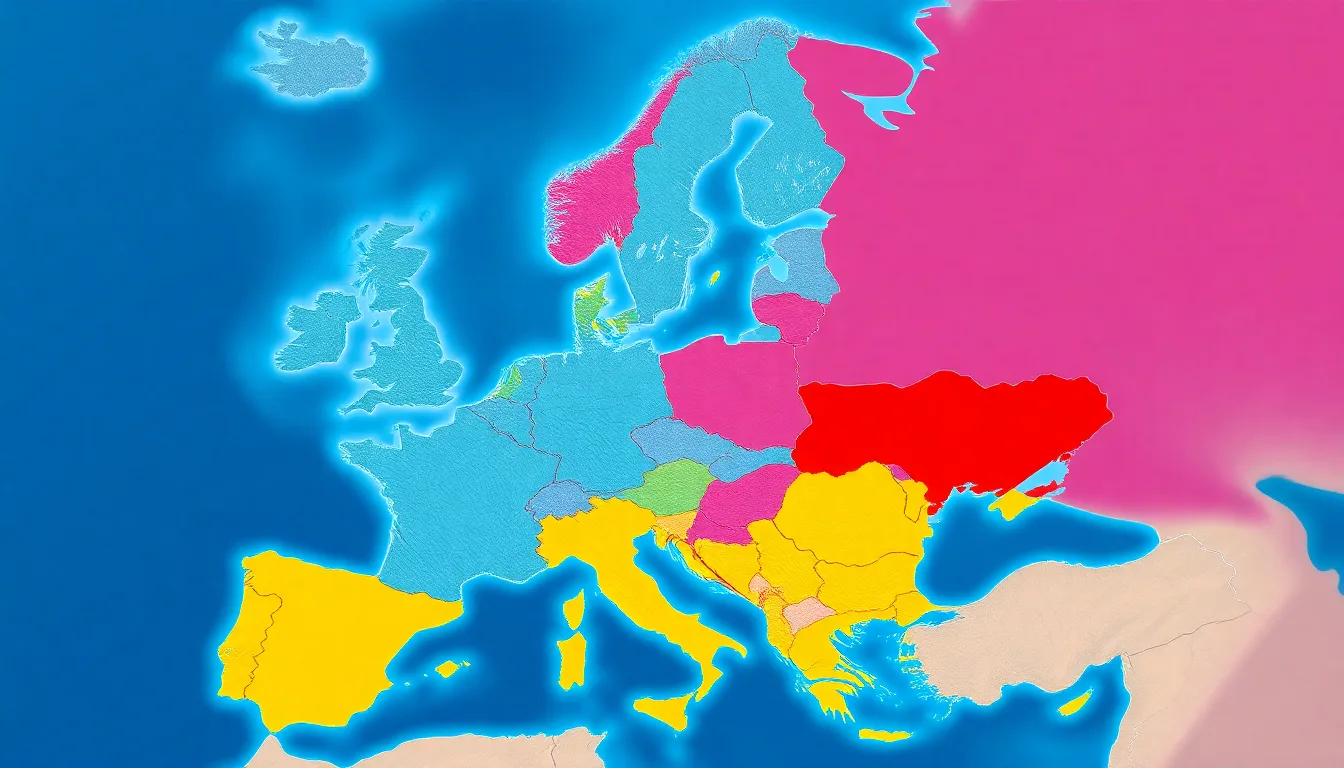
- Schengen membership and EU membership are closely related but genuinely different things — a handful of EU countries (Ireland, Cyprus) are not in Schengen, while four separate non-EU countries (Iceland, Liechtenstein, Norway, Switzerland) fully are.
- Inside the Schengen area, there are generally no routine passport checks at internal borders — you can travel between member countries much like crossing a state or provincial line.
- For visa and stay-limit purposes, all 29 countries count as a single shared space: your 90/180-day allowance applies across the whole area together, not reset separately per individual country.
The list of Schengen countries looks simple enough at a glance, but the finer details around exactly who's in, who's out, and why genuinely trip up a lot of travellers planning a European trip. Here's the full, current list, how the newest members fit in, and the specific edge cases worth knowing before you plan a multi-country itinerary across this genuinely large and steadily growing travel zone.
The complete list of Schengen countries
As of 2026, the Schengen area includes:
- Austria
- Belgium
- Bulgaria
- Croatia
- Czechia (Czech Republic)
- Denmark
- Estonia
- Finland
- France
- Germany
- Greece
- Hungary
- Iceland
- Italy
- Latvia
- Liechtenstein
- Lithuania
- Luxembourg
- Malta
- Netherlands
- Norway
- Poland
- Portugal
- Romania
- Slovakia
- Slovenia
- Spain
- Sweden
- Switzerland
That's 29 countries total in all: 25 EU member states, plus Iceland, Liechtenstein, Norway, and Switzerland, which are not EU members but participate fully in Schengen through separate association agreements.
EU members that are NOT in the Schengen area
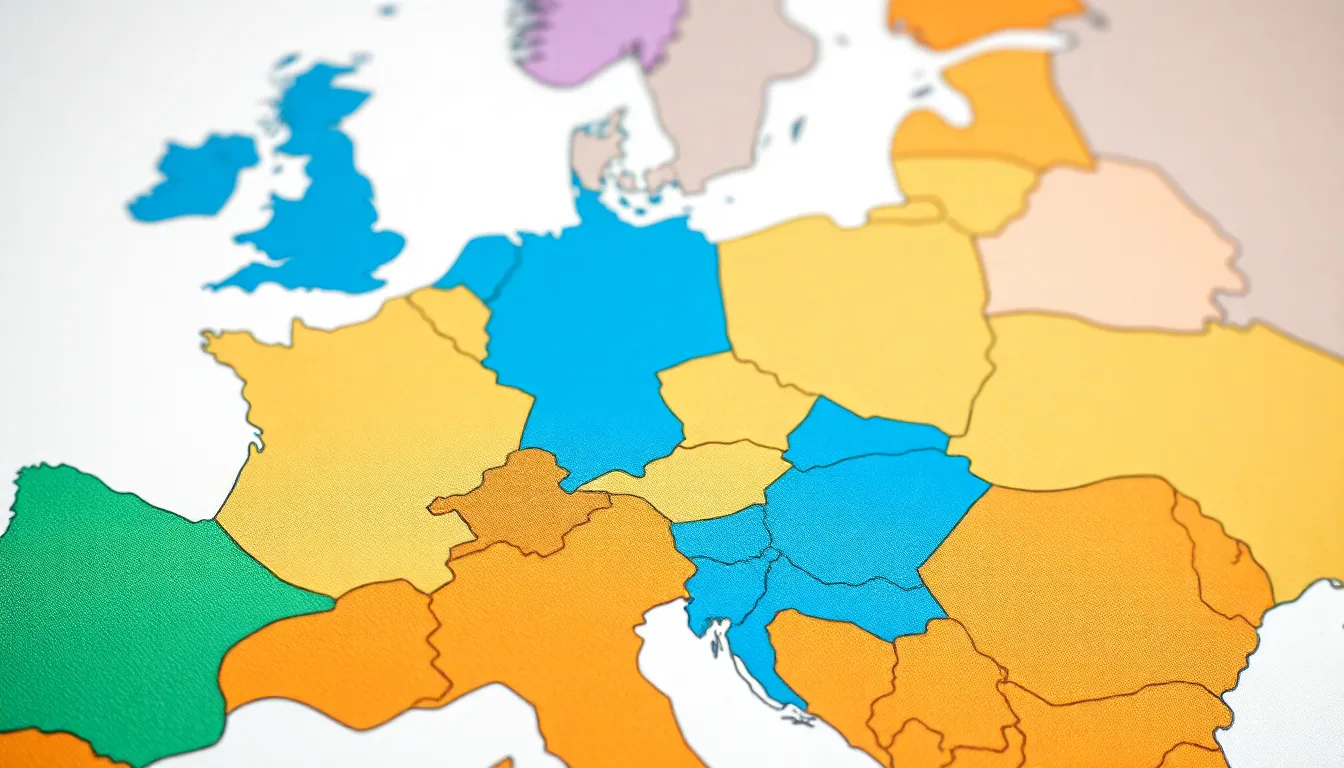
Two EU countries currently sit outside Schengen, for very different reasons:
- Ireland opted out from the start to preserve the Common Travel Area with the United Kingdom, a long-standing bilateral arrangement predating the EU. This is a settled, long-term position, not a step toward eventual membership.
- Cyprus is an EU member working toward eventual Schengen membership, but hasn't yet completed the process, largely due to the island's ongoing political division.
Being an EU member state gives citizens broad freedom-of-movement rights across the whole EU, but doesn't automatically mean short-stay Schengen visa rules apply — Ireland and Cyprus are the clearest proof that "EU" and "Schengen" aren't interchangeable labels.
Non-EU countries that ARE in the Schengen area
Four countries participate fully in Schengen without being EU members, through separate association agreements:
- Norway and Iceland joined via the Nordic Passport Union transition into Schengen in the 1990s/2000s.
- Switzerland joined through a bilateral agreement, effective 2008.
- Liechtenstein joined shortly after, in 2011, given its close relationship with Switzerland.
Travellers to these four countries follow exactly the same Schengen visa rules, 90/180-day allowance, and border-free movement as they would in any EU Schengen member — the "EU vs. non-EU" distinction here doesn't change anything about entry requirements or your stay-limit counting.
Bulgaria and Romania: the newest full members

Bulgaria and Romania had a unique path into Schengen. Both joined the EU in 2007, but weren't admitted to the Schengen area at the same time. Starting in March 2024, they gained partial Schengen membership — internal air and sea border checks were lifted, but land border checks with neighboring Schengen countries remained in place.
Full membership, including the removal of land border checks, was completed in January 2026, after several years of gradual implementation. This means Bulgaria and Romania now function exactly like any other established Schengen member for travellers — no passport checks when crossing land borders with neighboring Schengen countries, and time spent there counts fully within the shared 90/180-day allowance.
If you're referencing older travel guides or forum posts, be aware that anything written before January 2026 may still describe Bulgaria and Romania's land borders as requiring checks — that's now outdated.
Microstates with a special relationship to Schengen
A few small European states aren't formal Schengen members but function as if they were, due to open borders with surrounding Schengen countries:
- Monaco has an open border with France and functions as a de facto part of the Schengen area for practical travel purposes, despite not being a formal member.
- San Marino and Vatican City are both landlocked entirely within Italy, with open borders, and similarly function as de facto Schengen territory for travel purposes.
- Andorra sits between France and Spain with relatively light border controls, though it's not fully and formally integrated into the Schengen framework in quite the same way as the three microstates above.
None of these microstates issue their own Schengen visas or count separately for the 90/180-day calculation at all — your time there is generally treated as part of your time in the neighboring Schengen country you passed through.
What accession actually involves, in practical terms
It's worth understanding briefly what a country actually has to do to join Schengen, since it explains why the process (as with Bulgaria and Romania) can take years even after formal EU membership. Prospective members need to demonstrate they can properly manage external Schengen borders — meeting shared standards for border control infrastructure, visa processing systems, police cooperation, and data-sharing through systems like the Schengen Information System (SIS), which lets member states share security and immigration-relevant information in real time.
This is why EU membership and Schengen membership aren't automatically bundled together — a country can complete the political and economic steps of EU accession well before it's technically ready, or politically agreed, to fully integrate into Schengen's shared border-management systems. Bulgaria and Romania's decade-plus gap between EU accession (2007) and full Schengen membership (2026) is a clear, real-world illustration of just how much longer the Schengen-specific technical and political requirements can take to satisfy in practice, even for countries fully committed to eventual membership from the start.
Countries not currently in the pipeline to join
Beyond Ireland's settled long-term opt-out, it's worth being clear that most non-Schengen European countries aren't actively working toward accession at all. The UK left the EU and has no active pathway toward Schengen membership. Balkan countries outside the EU (Albania, Bosnia and Herzegovina, Serbia, and others) would first need to complete EU accession before Schengen membership could even become a realistic near-term prospect, and EU accession itself for these countries remains a longer-term process without a confirmed timeline.
Understanding this distinction — genuinely settled non-members versus countries formally working toward eventual accession — helps set realistic expectations if you're tracking the list for long-term travel planning purposes, rather than assuming change is either imminent or impossible for any given country outside the current 29.
Why this list matters for visa planning
Understanding the full, current list matters for a few practical reasons:
- Choosing which consulate to apply through: for a multi-country trip, you apply through the country where you'll spend the most nights, or your first point of entry if time is split evenly — this only works if you know which countries on your itinerary actually count as Schengen members.
- Calculating your 90/180-day allowance: every day spent in any of the 29 countries counts toward the same shared total, so a trip touching several countries adds up faster than travellers sometimes expect.
- Avoiding accidental non-Schengen detours: a trip that swings through Ireland, Cyprus, or the UK doesn't use up (or protect) your Schengen days, since those countries sit outside the system entirely.
Regional groupings worth understanding
It can help to think of the 29 Schengen countries in a few loose regional clusters, since travel patterns and consulate demand often follow these groupings:
- Western core: France, Germany, Belgium, Luxembourg, and the Netherlands — the founding members, densely connected by rail and among the most-visited destinations for first-time Schengen travellers.
- Southern Europe: Italy, Spain, Portugal, Greece, and Malta — consistently popular for summer tourism, and correspondingly some of the busiest consulates for visa applications during peak season.
- Nordic countries: Denmark, Sweden, Finland, Iceland, and Norway — a mix of EU and non-EU members, all fully integrated into Schengen, known for efficient border infrastructure and comparatively lighter tourist-season visa demand than Southern Europe.
- Central Europe: Austria, Czechia, Hungary, Poland, Slovakia, and Slovenia — joined together in the major 2007-2008 expansion wave, offering strong rail connections and increasingly popular as alternative or extended-itinerary destinations.
- Baltic states: Estonia, Latvia, and Lithuania — smaller, less-visited Schengen members with correspondingly lighter appointment demand at their consulates.
- Southeastern Europe: Croatia, Bulgaria, and Romania — the most recently completed members, with Croatia joining in 2023 and Bulgaria/Romania completing full membership in 2026.
- Alpine microstate: Switzerland and Liechtenstein — non-EU members deeply integrated into the surrounding Schengen countries' transport and travel networks.
None of these groupings change the underlying rules — every country listed follows the same 90/180-day allowance and the same visa framework — but understanding the regional patterns helps when you're deciding which consulate to apply through for a multi-country trip, or which destinations might have lighter appointment demand if your schedule is flexible.
How to verify a country's current Schengen status yourself
Given how much the list has changed even in just the past few years, it's worth knowing where to check the current, authoritative status rather than relying solely on any single article, including this one:
- The official European Commission website maintains the current, authoritative list of Schengen area member states, including any recent accessions or changes in status.
- The specific destination country's own government or embassy website will confirm their current Schengen participation status, along with any country-specific entry notes.
- If you're applying for a visa, the France-Visas-style official portal for your destination (each Schengen country runs some version of an official visa information site) will reflect current membership status as part of its visa category logic.
Checking one of these sources shortly before finalizing travel plans is a simple way to avoid being caught out by any future change, especially given the pattern of steady expansion covered above — a list that felt fixed and stable a decade ago has genuinely shifted several times since, and there's no reason to expect that pattern to stop entirely going forward.
Comparing Schengen membership to other European travel frameworks
Schengen isn't the only cross-border travel framework in Europe, and it's worth distinguishing it from a couple of others that sometimes get confused with it:
- The European Union (EU): a political and economic union with its own membership list that overlaps heavily, but not perfectly, with Schengen — as covered above, Ireland and Cyprus are EU members outside Schengen, while Iceland, Liechtenstein, Norway, and Switzerland are Schengen members outside the EU.
- The European Economic Area (EEA): extends certain EU single-market rights to Iceland, Liechtenstein, and Norway, but is a separate framework from Schengen, even though these same three countries happen to be members of both.
- The Common Travel Area (CTA): a bilateral arrangement between Ireland and the United Kingdom, entirely separate from both the EU and Schengen, allowing free movement between those two countries specifically.
Keeping these frameworks mentally separate — even though they overlap significantly for most European countries — makes it much easier to correctly plan a trip that touches multiple countries with different combinations of membership.
What travellers from outside Europe often get wrong
- Assuming "Europe" and "Schengen" are the same thing. Europe includes many countries — the UK, Ireland, and several Balkan states, for example — that aren't part of Schengen at all, and travellers sometimes assume a Schengen visa or visa-exempt status covers a trip that actually spans several different systems.
- Assuming EU membership means Schengen membership. As covered above, this isn't always true, and the gap matters specifically for Ireland and Cyprus.
- Not realizing how recently the list has changed. Bulgaria and Romania's full membership only completed in January 2026 — travellers relying on older guides or forum posts may not realize land border checks between these countries and their neighbors have already been removed.
- Underestimating how far the 90-day allowance stretches (or doesn't) across a big multi-country trip. With 29 countries sharing a single 90-day allowance, an ambitious "see all of Europe" itinerary can burn through your available days faster than travellers touring just one or two countries typically expect, especially on a longer multi-week or multi-month backpacking-style trip.
How the list has changed over time
The Schengen area has expanded steadily since the original 1985 Schengen Agreement, which initially included just five founding countries. Major expansion waves brought in most Western European members through the 1990s, most Central and Eastern European members in 2007 and 2008 (alongside the broader EU enlargement), Croatia in 2023, and most recently Bulgaria and Romania's full membership in 2026. Given this pattern of steady expansion over the past four decades, it's reasonable to expect the list could grow further over time, though there's no other country with an imminent, confirmed accession date at the moment, based on currently available official information.
What "Schengen area" actually means at the border
The core idea behind Schengen is that the 29 member countries treat their shared internal borders as if they don't exist for routine travel purposes. When the agreement was first signed in 1985 (named after the small Luxembourg town where it was signed), the goal was to remove the friction of constant passport checks between neighboring European countries that were already closely integrated economically and culturally.
In practice, this means:
- Driving from Germany into France, or Austria into Italy, involves no routine passport check — you simply cross, much like crossing a state or provincial line within a single country.
- Trains and buses running between Schengen countries generally don't stop for immigration checks at the border itself.
- Flights between two Schengen countries are treated as "internal" flights for immigration purposes, meaning you clear passport control only once — at your very first Schengen entry point, not again at each subsequent stop.
- External borders — the outer edge of the whole Schengen area — are where the actual immigration checks happen, whether you're entering by air, sea, or land from a non-Schengen country.
This is exactly why the 90/180-day rule treats the whole area as one space rather than tracking each country separately — from an immigration control standpoint, the 29 countries function as a single, shared travel zone.
Occasional exceptions: when internal border checks do happen
Schengen's border-free principle isn't absolute. Member states retain the right to temporarily reintroduce internal border checks under specific circumstances — a major security concern, a large public event, or a significant migration situation, for example. When this happens, it's usually announced publicly, time-limited, and applied to specific border crossings rather than the whole area.
For ordinary travellers, these temporary reintroductions are rare enough that they're worth knowing about in principle, but not something to actively plan around unless there's a specific, publicized reason affecting your particular route at the time of travel. If you're crossing a border during a period when checks have been reintroduced, you'll simply need to show your passport as you would at any external Schengen border.
A brief history of how the list grew to 29
The original 1985 Schengen Agreement included just five founding countries: Belgium, France, Germany (West Germany at the time), Luxembourg, and the Netherlands. It took another decade for the agreement to actually be implemented in practice, with the Schengen Convention coming into force in 1995.
From there, membership expanded in several distinct waves:
- Late 1990s: most of the remaining original Western European members joined, along with the Nordic countries through the Nordic Passport Union's transition into the wider Schengen framework, bringing in Iceland and Norway as non-EU participants.
- 2007-2008: a large wave of Central and Eastern European countries joined following the 2004 EU enlargement, alongside Switzerland's accession as a non-EU member via bilateral agreement.
- 2011: Liechtenstein joined, completing the four-country non-EU participant group alongside Switzerland, Norway, and Iceland fully.
- 2023: Croatia formally became the newest EU member state to join Schengen.
- 2024-2026: Bulgaria and Romania's phased accession, starting with air and sea borders in 2024 and completing with land borders in January 2026.
This steady pattern of expansion is worth keeping in mind if you're researching Schengen membership using an older source — always check the publication date, since the list has genuinely changed multiple times over the past two decades.
Digital nomads, cruise passengers, and other edge cases
- Digital nomads working remotely while travelling across multiple Schengen countries still fall under the standard 90/180-day short-stay rule for tourism/visa-exempt entry — working remotely for a non-local employer doesn't extend your allowed stay, and a longer-term stay requires an appropriate visa or residence permit from a specific country.
- Cruise passengers visiting multiple Schengen ports on a single cruise generally don't need separate entry procedures at each stop, since the ship's itinerary and passenger manifest are typically processed as a whole — but time spent ashore still counts toward your overall Schengen day allowance if you're not an EU/EEA citizen.
- Business travellers attending events across several Schengen countries on one trip should apply through the country matching the "most nights" or "first entry" rule, exactly as with any multi-country tourist itinerary.
Key takeaways
- 29 countries are currently in the Schengen area: 25 EU members plus Iceland, Liechtenstein, Norway, and Switzerland.
- Ireland and Cyprus are EU members that are not in Schengen, for different reasons — Ireland by long-standing choice, Cyprus pending eventual accession.
- Bulgaria and Romania completed full Schengen membership, including land borders, in January 2026.
- Monaco, San Marino, and Vatican City function as de facto Schengen territory due to open borders, without being formal members.
- All 29 member countries share a single 90/180-day short-stay allowance — your days don't reset per country.
This article provides general guidance, not official advice — always verify current Schengen membership status on the official European Commission website before finalizing your travel plans.
Frequently asked questions
Quick answers on which countries are in the Schengen area right now, covering the accession questions and edge cases travellers ask about most often.
Frequently asked questions
How many countries are in the Schengen area?
Are Bulgaria and Romania fully part of the Schengen area now?
Which EU countries are not part of the Schengen area?
Is Switzerland part of the Schengen area even though it is not in the EU?
Does time in Monaco or Vatican City count toward my Schengen 90-day limit?
This article is for general informational purposes only. Visa and travel authorisation rules change frequently. Always check the official government website before travelling.

Written & reviewed by
Can OTUTravel Authorisation Editor
Can OTU is the editor of ETA Travel Assistant, specialising in UK ETA, Schengen ETIAS, NZeTA and ESTA travel authorisations. Can monitors official government sources and policy updates to ensure every guide is accurate, current and genuinely useful for travellers.
View all guides →