How to Write a UK Visa Invitation Letter (With Samples)

A UK visa invitation letter needs five things to be genuinely useful to your visitor: your full name and address, your immigration status in the UK, your relationship to the visitor, the exact dates and purpose of their visit, and confirmation of who's covering their costs. It's a supporting document, not a guarantee of approval — but a clear, specific letter meaningfully strengthens a visitor's visa or ETA application by confirming their stated purpose and travel plans.
- An invitation letter should be specific and factual — vague language ("come visit anytime") is far less useful than exact dates, addresses, and a clear stated purpose.
- Include your own immigration status and proof of address, since the visitor's application needs to show you're legitimately settled in the UK and able to host them.
- A letter alone rarely makes or breaks an application — it works alongside the visitor's own financial and travel documents, not as a replacement for them.
Whether you're inviting a close family member for a visit, a good friend for a wedding, or a business contact for meetings, writing a clear invitation letter is more straightforward than it looks once you know exactly what needs to be included. Here's the full structure, sample wording you can adapt, and the details that make a real difference to how useful the letter actually is.
What a UK visa invitation letter actually does
An invitation letter supports your visitor's own visa or ETA application by confirming, in writing from your side, the details they've already stated in their own application — where they'll stay, why they're visiting, and for how long. It doesn't replace any of the visitor's own required documents (proof of funds, return travel, ties to their home country), but it corroborates their stated plans with a credible, verifiable source: you, as their host in the UK.
The essential structure

- Your details: full name, current UK address, and immigration status (British citizen, settled status, valid visa holder, etc.).
- Your relationship to the visitor: family member, friend, business contact — stated clearly and specifically.
- Purpose and dates of the visit: exact arrival and departure dates, and a clear statement of why they're visiting (family visit, tourism together, a specific event, business meetings).
- Accommodation details: confirm they'll be staying with you, at your address, or provide details of alternative accommodation if applicable.
- Financial arrangements: state clearly whether you're covering some or all of their costs, or whether they're funding their own trip.
- Your signature and contact details, so the visa officer can verify the letter if needed.
Sample invitation letter for a family visit
Below is a template you can adapt with your own details:
[Your full name]
[Your UK address]
[Your phone number and email]
[Date]
To whom it may concern,
I am writing to confirm that I am inviting [visitor's full name], my [relationship, e.g. sister], to visit me in the United Kingdom from [start date] to [end date].
I am a [British citizen / hold settled status / hold a valid visa, specify type], residing at the address above. During their visit, [visitor's name] will stay with me at my home address. I will be covering [all / part] of their accommodation and daily expenses during their stay [or: they will be funding their own trip, as shown in their own financial documents].
The purpose of this visit is [state the specific purpose — a family visit, attending a family event, tourism together, etc.]. [Visitor's name] intends to return to [their home country] on [return date], as reflected in their own travel booking.
Please do not hesitate to contact me if you require any further information.
Yours sincerely,
[Your signature]
[Your full name]
Sample invitation letter for a business visit
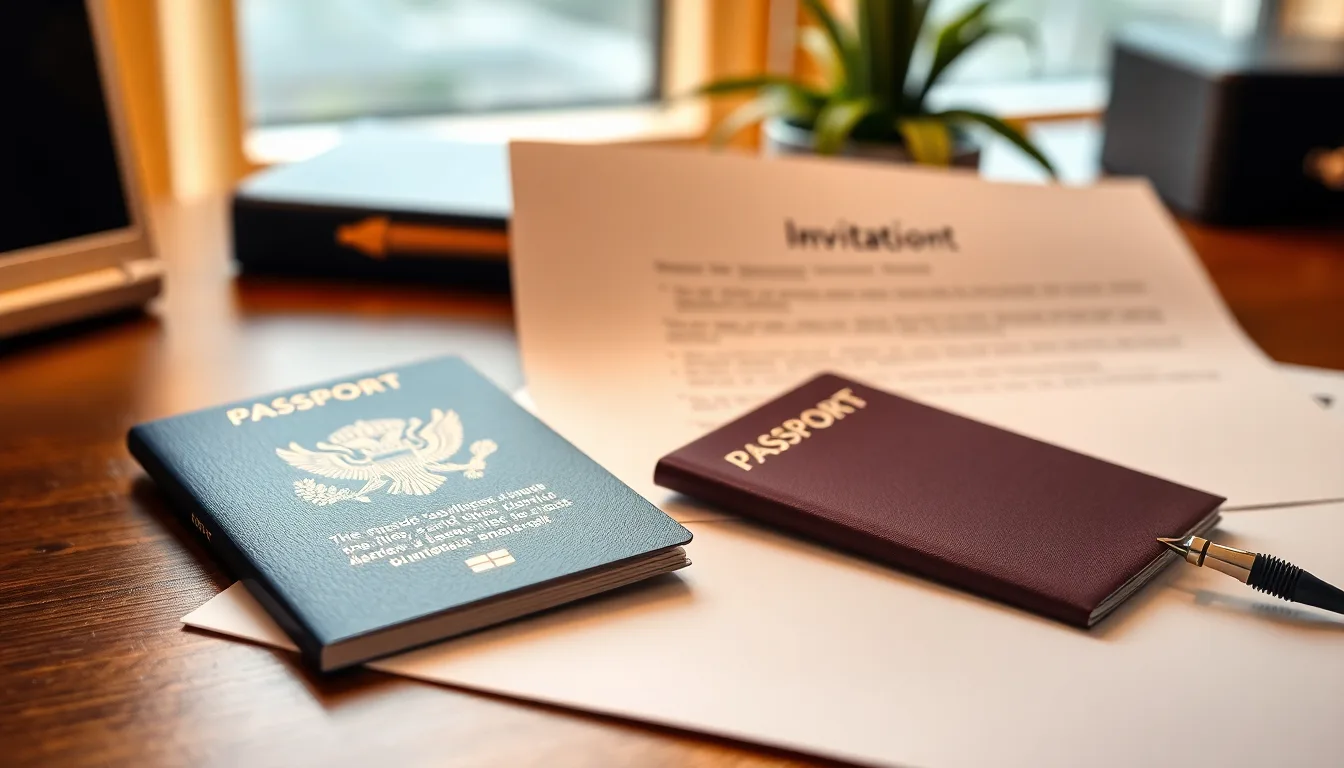
For a business invitation, the structure is similar but should come from the host company rather than an individual, on official letterhead where possible:
- State the visitor's full name and the purpose of their visit (meetings, a conference, negotiations) with specific dates.
- Include the host company's registration details or business address, to help establish the invitation's legitimacy.
- Clarify who's covering costs — the host company, the visitor's own employer, or the visitor themselves.
- Include a named contact person at the host company who can be reached to verify the invitation if needed.
Common mistakes that weaken an invitation letter
- Being vague about dates or purpose — "come visit whenever" is far less useful than exact, specific dates matching the visitor's own application.
- Inconsistency with the visitor's own application — if your letter states different dates or a different purpose than what the visitor listed in their own application, this inconsistency can raise more questions than it answers.
- Missing your own status details — a visa officer needs to understand who you are and your right to be in the UK, not just that you're inviting someone.
- Overpromising financial support without genuine ability to back it up — if you state you're covering all costs, be prepared for this to be checked against your own financial situation in some cases.
- No signature or contact details — an unsigned, unverifiable letter carries far less weight than one with clear, checkable contact information.
Does an invitation letter guarantee visa or ETA approval?
No. An invitation letter is one supporting document among several — it doesn't override or guarantee anything about the outcome of the visitor's own application. The visitor still needs to independently demonstrate sufficient funds, a genuine intention to return home, and, where relevant, meet all standard entry requirements for their nationality. A strong invitation letter helps corroborate a credible trip; it can't compensate for genuine gaps elsewhere in the visitor's own documentation.
Do you need an invitation letter for a UK ETA, or only for a visa?
This is a common point of confusion. For nationalities requiring a UK ETA rather than a full visa, an invitation letter typically isn't a formal requirement of the ETA application itself, since the ETA process is a much lighter, largely automated online authorization. However, having one available can still be useful if the visitor is asked questions at the border about their trip purpose or accommodation, and it's a reasonable, low-effort document to prepare regardless of which entry category applies to your visitor.
For those applying for a full UK visitor visa (rather than an ETA), an invitation letter is a more standard and expected part of a well-supported application, particularly for family or business visit categories.
Formatting and delivery: practical tips
- Keep the letter to one page — a concise, well-organized letter is more useful than a long, meandering one.
- Send the visitor both a printed copy (for their physical application file, if applying for a visa) and a digital copy they can access easily.
- If your address or immigration status has recently changed, make sure the letter reflects your current situation accurately, not outdated information.
- Consider having proof of your own address (a utility bill, tenancy agreement, or similar) ready in case the visitor's application requires it as a supporting document alongside your letter.
What to include as proof alongside the letter
The letter itself carries more weight when accompanied by supporting evidence of your own status and situation:
- A copy of your passport photo page, or your UK residence document, confirming your identity and status.
- Proof of your current UK address, such as a recent utility bill or council tax statement.
- If you're covering costs, recent bank statements showing you can genuinely support the stated arrangement.
- For business invitations, company registration documents or a letter on official letterhead, where applicable.
Sample invitation letter for a wedding or special event
Invitations for a specific event, like a wedding, benefit from including event-specific details that a generic family visit letter wouldn't have:
[Your full name]
[Your UK address]
[Your phone number and email]
[Date]
To whom it may concern,
I am writing to invite [visitor's full name] to attend my wedding, taking place on [event date] at [venue name and address]. I am inviting [visitor's name] to stay with me / at [accommodation name] from [arrival date] to [departure date].
I am a [British citizen / hold settled status / hold a valid visa, specify type], and I can confirm that [visitor's name] is a close [relationship] and an important guest at this event. [State financial arrangement — who is covering costs]. [Visitor's name] plans to return to [home country] on [return date].
Please contact me directly if you require any further confirmation or documentation regarding this invitation.
Yours sincerely,
[Your signature]
[Your full name]
Attaching a copy of the event invitation or a wedding save-the-date, where available, adds an extra layer of credibility to this type of letter, since it independently corroborates the stated occasion.
What visa officers are actually looking for in the letter
Beyond the checklist of required details, it helps to understand what an officer reviewing the letter is really trying to establish. Every invitation letter is implicitly answering three questions: is this a genuine, verifiable relationship between host and visitor; does the stated trip purpose match what the visitor themselves claimed in their own application; and does the host have a credible, stable situation in the UK that supports the claims being made (about accommodation, funding, or both). A letter that clearly and specifically answers all three, without vague language or unexplained gaps, does its job well — anything beyond that (flowery language, excessive personal detail) doesn't add real value to the assessment.
How formal should the tone be?
The letter should be clear, polite, and businesslike — but it doesn't need to sound like a legal document. Avoid overly casual language ("hey, come stay with us!") since this can read as less credible, but equally avoid unnecessarily stiff, jargon-heavy phrasing that obscures the actual facts being communicated. A natural, professional tone that states the relevant facts plainly is the right balance — the content and specificity matter far more than achieving a particular formal register.
Digital vs. printed invitation letters
Most visa and ETA application processes today accept a digital copy of the invitation letter, whether as a PDF attachment or a scanned image of a signed physical letter. A few practical points:
- A scanned copy of a letter with an actual wet-ink signature is generally viewed as more credible than a purely digital, typed signature, though both are commonly accepted.
- If sending digitally, use a clear, legible format (PDF is generally preferred over a photo of a printed page) so all details are easy to read.
- Keep a copy for your own records too, in case questions arise later or the visitor's application requires clarification.
Special considerations for repeat visits
If you regularly invite the same visitor — a parent visiting annually, for example — each individual application still needs its own current, dated invitation letter reflecting that specific trip's dates and purpose. Don't reuse an old letter with outdated dates, even if the underlying relationship and general arrangement haven't changed; a stale or clearly recycled letter (with an old date crossed out and replaced, for instance) reads as less credible than a fresh, accurately dated one prepared specifically for the current application.
What if you can't provide a full invitation letter?
If you're not in a position to write a full formal letter — perhaps the relationship is more casual, or you're not the primary host — a shorter confirmation of key details (dates, relationship, general purpose) is still better than nothing, though it will naturally carry less weight than a complete, detailed letter. In cases where no host invitation is available at all, the visitor's own application should rely more heavily on their independent documentation (funds, accommodation booked directly, return travel) to demonstrate a credible trip without this particular supporting document.
Key takeaways
- A UK visa invitation letter should include your details, immigration status, relationship to the visitor, exact trip dates and purpose, accommodation, and financial arrangements.
- Consistency with the visitor's own application details matters more than length or formality — vague or mismatched information weakens the letter's usefulness.
- An invitation letter supports but doesn't guarantee approval — the visitor still needs their own complete, independent documentation.
- For UK ETA applicants, an invitation letter isn't typically a formal requirement, but it's still useful to have ready in case of border questions.
- Include supporting proof of your own status and address alongside the letter itself for maximum credibility.
This article provides general guidance, not official advice — always verify current requirements with the official GOV.UK website or the relevant visa application guidance for your visitor's specific situation.
Language considerations if English isn't the visitor's first language
The invitation letter itself should generally be written in English, since it's addressed to a UK-facing application process and, potentially, UK visa or border staff. If the visitor's own supporting documents (bank statements, employer letters from their home country) are in a different language, those typically need a certified translation separately — but the invitation letter itself, coming from you as the UK-based host, should be in English from the outset rather than needing translation afterward.
Invitation letters for children travelling to visit UK-based family
When the visitor is a child, particularly one travelling without both parents, the invitation letter needs some additional considerations:
- Clearly state the relationship between the host and the child, and between the host and the accompanying adult (if any), to avoid any ambiguity about the arrangement.
- If the child is travelling with only one parent or a non-parent guardian, this is generally handled through a separate parental consent letter from the non-travelling parent, in addition to your invitation letter — the two documents serve different purposes and don't replace each other.
- Include specific details about how the child will be supervised and cared for during the visit, since this is a natural point of interest for anyone reviewing a minor's travel arrangements.
What happens if the details in your letter and the visitor's application don't match
Consistency between your invitation letter and the visitor's own application form is genuinely important — small discrepancies (different dates, a different stated purpose, an address mismatch) can raise unnecessary questions even when both documents are completely genuine. Before finalizing your letter:
- Confirm the exact travel dates directly with your visitor before writing the letter, rather than estimating or guessing.
- Ask what purpose they've stated in their own application, and make sure your letter describes the same purpose in compatible terms.
- Double-check the spelling of names and any reference numbers exactly as they appear on the visitor's own documents.
- Send your visitor a draft of the letter before finalizing it, so they can flag any inconsistency with their own application before you both submit final versions.
Keeping a paper trail for future applications
If you expect to host visitors regularly — extended family living abroad, for instance — it's worth keeping organized records of past invitation letters and any related correspondence. This isn't required by the application process itself, but it creates a useful, consistent history that can support future invitations, showing an established, genuine, ongoing relationship rather than a one-off arrangement that might otherwise look less established to an outside reviewer.
A quick pre-submission checklist
- Does the letter include your full name, current address, and immigration status clearly stated?
- Are the exact travel dates and purpose specific, not vague, and consistent with the visitor's own application?
- Is the accommodation arrangement clearly explained?
- Is the financial arrangement (who's covering what) stated plainly?
- Is the letter signed, dated, and does it include your contact details for verification?
- Have you attached any relevant supporting proof (address, funds, event invitation) alongside the letter itself?
Running through this checklist before sending the final letter to your visitor takes only a few minutes but catches the majority of the common gaps and inconsistencies covered throughout this guide.
Adapting the letter for different visa categories
While the core structure covered above applies broadly, a few specific visa categories benefit from small adjustments to the standard letter:
- Standard visitor visa: the general family or friend template above works well, with an emphasis on the tourism or family-visit purpose and clear accommodation details.
- Marriage visitor visa: if the visit is specifically for a wedding or marriage ceremony in the UK, include the exact ceremony date, venue, and, where relevant, confirmation that the marriage has been properly registered or booked with the relevant UK authority.
- Parent of a child student visa: if a parent is visiting a child studying in the UK, mention the child's own status (student visa details) and the nature of the visit, since this establishes a clear, verifiable family context.
- Academic visitor: for visits tied to research, conferences, or academic collaboration, the invitation typically comes from the hosting UK institution rather than an individual, and should include the institution's official details alongside the visit's academic purpose.
None of these variations changes the fundamental purpose of the letter — confirming who, why, when, and how the visit is supported — but tailoring the specific details to the actual visa category makes the letter read as more precisely relevant to a reviewing officer.
A final word on tone and honesty
Above all, an invitation letter should be a straightforward, honest account of a genuine planned visit. Exaggerating your own financial position, overstating the closeness of a relationship, or describing a trip purpose that doesn't quite match reality creates real risk — both for the visitor's application and for your own credibility as a host, particularly if you plan to invite the same or other visitors in the future. A modest, accurate letter that clearly states the real situation is always a genuinely stronger foundation than an embellished one that might not hold up to later scrutiny.
Frequently asked questions
Quick answers on writing a UK visa invitation letter, covering the format, content, and consistency questions that come up most often.
Frequently asked questions
What must a UK visa invitation letter include?
Does an invitation letter guarantee a UK visa or ETA will be approved?
Do I need an invitation letter for a UK ETA application?
Who should write a business invitation letter for a UK visa applicant?
What proof should I send along with my invitation letter?
This article is for general informational purposes only. Visa and travel authorisation rules change frequently. Always check the official government website before travelling.

Written & reviewed by
Can OTUTravel Authorisation Editor
Can OTU is the editor of ETA Travel Assistant, specialising in UK ETA, Schengen ETIAS, NZeTA and ESTA travel authorisations. Can monitors official government sources and policy updates to ensure every guide is accurate, current and genuinely useful for travellers.
View all guides →