Canada eTA: The Complete Guide to Requirements, Cost and How to Apply
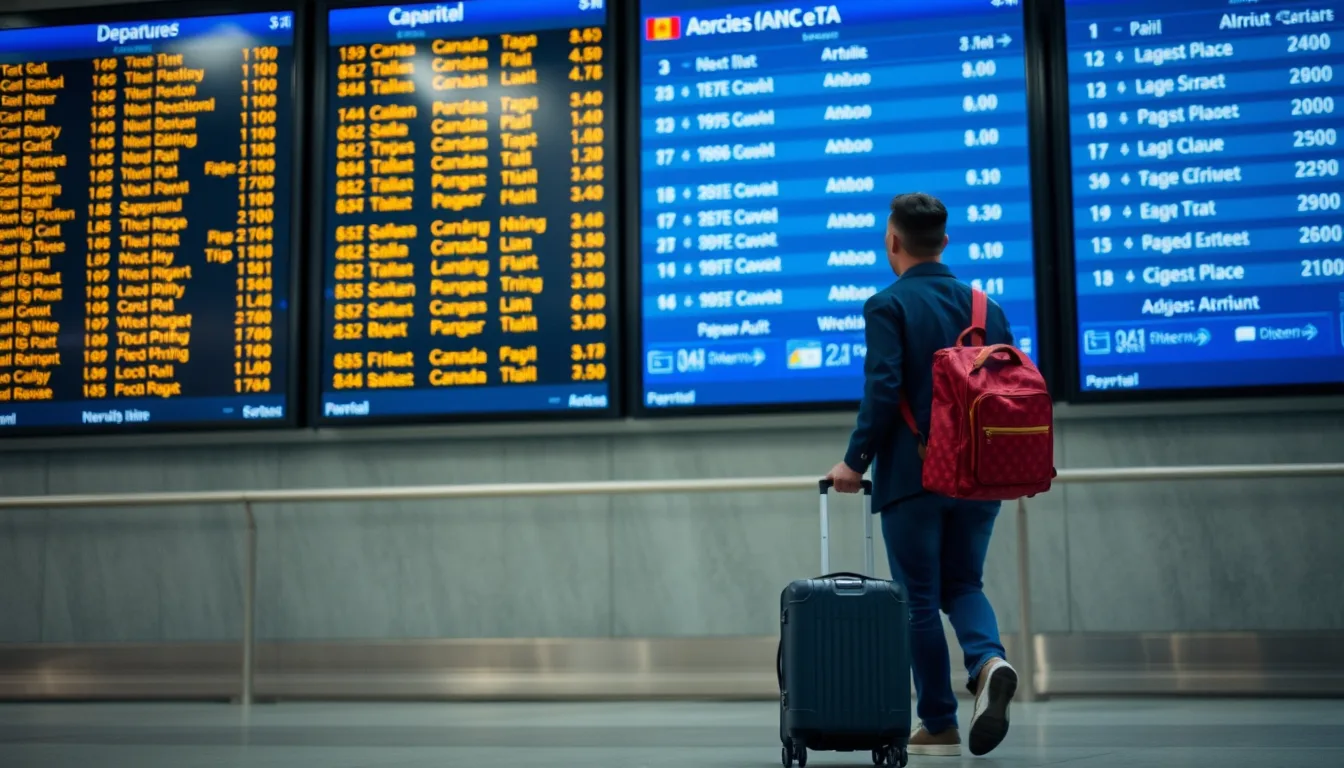
- You need an eTA if you're a visa-exempt national flying to Canada — it's linked electronically to your passport, not stamped in it.
- Canadian citizens and permanent residents cannot use an eTA, and US citizens with a valid US passport don't need one to fly to Canada.
- Your eTA is valid for up to 5 years or until your passport expires, whichever comes first.
You're planning a trip to Canada. Maybe it's a week in Toronto, a ski trip to Whistler, or a layover at Vancouver International on your way to somewhere else. You've heard you need something called an eTA, and you're not entirely sure what that means for you.
Here's the short version: the Canada eTA is an electronic travel authorization that pre-screens travellers before they board a flight. It is not a visa. You don't visit an embassy.
You don't sit for an interview. You fill out a short online form, pay a small fee, and within minutes you usually have an approval linked to your passport.
This guide walks you through everything — who needs one, who doesn't, how to apply, what it costs, how long it takes, and what happens at the border when you land. It's general information, not legal or immigration advice, so always double-check the official rules on the Government of Canada's website before you travel.
What is a Canada eTA?
The eTA is Canada's version of an electronic travel authorization. It is a digital pre-screening check for travellers who come from visa-exempt countries. You've probably seen similar systems elsewhere — the US ESTA, or the visa waiver program that allows short visits without a full visa.
Canada introduced the eTA in 2016 to screen travellers before they board a flight, rather than relying solely on checks at the border.
When your eTA is approved, it is electronically linked to your passport number. There is no paper document. No vignette in your passport.
No sticker. When you check in for your flight, the airline confirms your eTA electronically. If you don't have one, you won't be allowed to board.
It's worth being precise about what the eTA is and isn't. It is not a visa. It does not guarantee entry to Canada.
It simply gives you permission to travel to a Canadian airport. The final decision on whether you can enter the country is always made by a border services officer when you arrive. Think of the eTA as the ticket that gets you to the door — the officer decides whether you walk through it.
Who needs a Canada eTA?

The rule is straightforward: you need an eTA if you are a visa-exempt foreign national travelling to Canada by air. In practice, that covers most tourists, business visitors, and transiting passengers from around 50 countries, including the UK, Australia, New Zealand, Japan, South Korea, and most of Europe.
If you're travelling by land or sea — driving across the US border or arriving by cruise ship — you do not need an eTA. Those travellers use the same entry rules as before, and generally need no pre-authorisation if they are visa-exempt. The eTA applies only to air travel.
So the answer to the most common question — "do I need an eTA for Canada?" — depends on three things:
- Your nationality (are you from a visa-exempt country?)
- How you're arriving (by air, or by land/sea?)
- Whether you have another status in Canada (citizen, permanent resident, or valid visa)
If you hold a passport from a visa-required country, such as India or China, you will normally need a full visitor visa instead of an eTA. Canada has introduced some special measures in recent years, so check the current rules if your country has changed status. For example, Indian nationals now need a visitor visa or the newer expedited visa process, not an eTA — the previous policy changed in 2024.
Who is exempt from the eTA?
Several groups do not need an eTA, even if they are visa-exempt nationals. Here is who can skip the application:
- Canadian citizens, including dual nationals travelling on a Canadian passport
- Canadian permanent residents — you must travel with your permanent resident card or a permanent resident travel document, not an eTA
- US citizens — you do not need an eTA to fly to Canada, but you do need a valid US passport
- Holders of a valid Canadian visitor visa — if you already have a visa, you don't need an eTA as well
- Diplomats and official travellers from eligible countries, under certain conditions
- Crew members travelling for work under specific agreements
This is a common source of confusion for canada eta for uk citizens — UK nationals do need an eTA, but only for air travel. A British citizen driving across the border from the US into Ontario does not need one. A British citizen flying London to Toronto absolutely does.
Dual nationals and which passport to use
Dual nationality creates some of the trickiest situations. Here are the key rules:
- If you are a Canadian citizen (including dual nationality), you must enter Canada with a valid Canadian passport. Airlines are required to deny boarding if you try to fly into Canada using a foreign passport without an eTA or visa, even if you hold Canadian citizenship.
- If you are a Canadian permanent resident, you must carry your PR card or travel document. An eTA is not valid for you.
- If you are a dual national of two visa-exempt countries, apply using the passport you plan to travel with, and check in with that same passport. Your eTA is linked to that specific passport.
Here's a real-world example. Say you hold both a US and a Canadian passport. You plan to fly from New York to Toronto.
You must use your Canadian passport for that journey. You cannot use your US passport to avoid the Canadian passport requirement — Canada considers you a citizen, and citizens do not enter on eTAs or as foreign visitors.
Another example: you're a UK citizen who also holds an Irish passport. Both countries are visa-exempt, so you can apply for an eTA with either passport. But you must use that same passport for check-in and at the border.
Don't mix and match, or the airline won't be able to verify your eTA.
How to apply for a Canada eTA: step-by-step
The application is entirely online, and the official Government of Canada eTA form is the only place you should use. The process is quick, but you need to get a few details right. Here's how it works:
- Go to the official Government of Canada eTA application page (canada.ca/en/immigration-refugees-citizenship/services/visit-canada/eta).
- Complete the online form. You'll need your passport details, contact information, and answers to a few eligibility questions about your health, criminal history, and immigration history.
- Pay the non-refundable fee of CAD $7 using a credit or debit card.
- Submit the application. In most cases you'll get a decision within minutes, by email.
- Check that your approved eTA is linked to the same passport you'll travel with.
You don't need to print anything. The eTA is stored in the immigration system, and when you check in, the airline confirms it electronically. That said, it's sensible to keep a copy of the approval email — just in case the airline's system has a glitch and you need to show proof.
Apply well before your flight. Most applications are approved in minutes, but some require extra processing — IRCC guidance says you should allow up to 72 hours if your application needs further review. If you apply at the last minute and your application goes into that queue, you could miss your flight.
Can you apply on a phone?
Yes. The official eTA application is mobile-friendly, and it works well on a phone or tablet. You don't need to download an app from an unofficial source.
There is an official mobile app called eTA Canada that IRCC publishes, but the website works perfectly well if you prefer to stay in your browser. Just make sure you're on the official Government of Canada domain before entering your passport details.
What if you make a mistake on the application?
Mistakes matter. Your eTA is linked to your passport number and date of birth, and if those don't match your actual passport, the airline may not be able to verify it.
If you spot an error after submitting, your best move is to check the status of your application online. For passport number or date of birth errors, you generally need to submit a new application with the correct details. A $7 fee is a small price to pay for peace of mind compared with being denied boarding at the airport.
How much does a Canada eTA cost?

The official eTA fee is CAD $7. That's it. There are no hidden charges, no processing fees, no express fees on the official website.
That low price is worth remembering, because there are dozens of unscrupulous websites that charge CAD $50, $75, or even $100 for what is essentially the same application. They create professional-looking sites that appear high in search results, and they charge a hefty markup for filling in the same form you could complete yourself in ten minutes.
Use only the official Government of Canada site. If a website is asking for significantly more than CAD $7, it is not the official service — however slick it looks.
Canada eTA cost vs other travel authorisations
For comparison, here's how the Canada eTA fee stacks up against similar systems travellers may already know:
| System | Country | Official fee | Validity |
|---|---|---|---|
| Canada eTA | Canada | CAD $7 | 5 years or passport expiry |
| ESTA | United States | USD $21 | 2 years or passport expiry |
| UK ETA | United Kingdom | £20 | 2 years or passport expiry |
| ETA (Australia) | Australia | AUD $20 | 12 months |
The pattern here is that these electronic authorisations are deliberately low-cost. The fee is not a revenue stream; it covers the cost of processing. That's why third-party sites charging many times the official fee are such a problem — they exploit the fact that travellers don't know the real price.
How long does a Canada eTA take to process?
Most eTA applications are approved within minutes. You apply, pay, and the system cross-checks your details against security databases. If everything comes back clean, you'll get your approval email almost immediately.
But not all applications sail through. Some get flagged for manual review, which can take hours or even days. The official guidance is to allow up to 72 hours if your application isn't approved straight away.
You can check your application status online using your passport details and the application number from your email.
Here's the practical advice: apply at least a few days before your flight, not the night before. If you're approved instantly, brilliant — you're done. If your application is flagged, you've given yourself time to respond to any requests for additional documents.
How long is a Canada eTA valid?
An approved eTA is valid for up to five years from the date of approval, or until the passport it's linked to expires — whichever comes first. This is a critical detail. If you get a new passport, your eTA is no longer valid for travel.
Your five-year eTA does not magically transfer to a fresh passport.
Think about the practical consequences. You apply for an eTA in July 2025, and it's approved. Your passport expires in May 2027.
Your eTA expires with your passport in May 2027, not in 2030. If you renew your passport, you'll need to apply for a new eTA before your next flight to Canada.
This is also why you should always apply for your eTA after you renew your passport, not before. An eTA attached to a passport with six months left of validity is perfectly fine — as long as your passport itself is still valid for entry into Canada, which normally requires validity for the duration of your stay.
What do you need to apply?
Gather these before you sit down to complete the form:
- Your valid passport, from a visa-exempt country
- Your contact details — email address and phone number
- Your address and employment details (you'll be asked to list your job and employer, if applicable)
- Credit or debit card to pay the CAD $7 fee
- Honest answers to questions about your health, criminal history, and previous immigration refusals
The health and criminal history questions cause some anxiety, but they're standard. You'll be asked whether you have been convicted of a crime, whether you have serious health conditions, and whether you've previously been refused a visa or removed from a country. Answer truthfully — the eTA system is an automated screening tool, and misrepresentation can lead to more serious consequences later, including a finding of inadmissibility.
You don't need to upload a photo, submit scans of documents, or provide biometrics for a standard eTA. It really is a form-filling exercise. There is no interview and no physical paperwork.
What happens at the border in Canada?
When you arrive at a Canadian airport, your eTA has already done its job — it got you on the plane. But it doesn't guarantee you'll be admitted. That decision belongs to the border services officer at the airport.
You'll go through a self-service kiosk or a primary inspection line, and you may be asked the standard questions:
- What's the purpose of your visit?
- Where are you staying?
- How long are you staying in Canada?
- Do you have enough money for your trip?
- Do you have a return ticket, or onward travel plans?
These questions aren't a trap — they're routine. The officer is checking that you're a genuine visitor who will leave at the end of your stay. Be honest, be brief, and have your accommodation details and return ticket ready to show.
Most eTA-holders breeze through. But it's possible to be refused entry even with an approved eTA, usually if the officer believes you plan to work without authorisation, stay longer than permitted, or cannot support yourself financially for the visit.
Can you work in Canada with an eTA?
No. The eTA is for visits — tourism, family visits, business meetings, conferences, and similar short-term activities. It does not include a work permit, and you cannot use it to take up employment in Canada.
There is a grey area for business visitors: attending meetings, negotiating contracts, and similar "business visitor" activities are permitted. But the minute you're doing hands-on work that could be done by a Canadian, you're crossing into territory that requires a work permit. If you're not sure whether your planned activity is allowed, check the IRCC guidance on business visitors before you travel.
Studying is another boundary. A short course or seminar might be fine, but a full semester of study requires a study permit, not an eTA. If your plans involve either work or study, sort out the correct authorisation well in advance.
Canada eTA vs a visitor visa: what's the difference?
This distinction confuses a lot of travellers, so let's be direct about it.
A Canada eTA is for travellers from visa-exempt countries. It's a quick, inexpensive, online pre-screening. It does not require biometrics, an interview, or a paper application.
It's linked to your passport electronically.
A visitor visa (officially a temporary resident visa, or TRV) is a physical document, either a counterfoil in your passport or an electronic document linked to your passport, that's required for travellers from visa-required countries. It requires a full application, biometrics, a fee of CAD $100, and can take weeks to process. It must be obtained before you travel.
Here's a simple way to remember it:
- Visa-exempt + flying = eTA (CAD $7, minutes)
- Visa-required + any mode = visitor visa (CAD $100, weeks)
- Visa-exempt + driving or sailing = no pre-authorisation needed
- US citizen + flying = no eTA, just your US passport
There's one more scenario worth knowing about. If you're a visa-exempt traveller who has applied for a visitor visa and been refused, your eTA may also be refused. IRCC does not issue eTAs to applicants they've recently deemed inadmissible.
If that happens to you, you'll need to address the underlying inadmissibility before you can travel.
Common mistakes when applying for a Canada eTA
These are the errors that trip people up, based on the questions travellers ask most often:
1. Using a third-party website that charges inflated fees
The official fee is CAD $7. If a website is charging you CAD $70 and calling it a "service fee" or "processing charge", you're overpaying. Stick with the official Government of Canada site, and if you're not sure you're on the right domain, look for canada.ca in the address bar.
2. Not checking the passport number on your approval
Your eTA is linked to the passport number you entered on the form. If the airline can't match your eTA to your passport at check-in, you're not flying. Double-check every digit of your passport number before you submit.
3. Applying on an old passport before renewing
Remember: the eTA dies with the passport. If your passport is close to expiry, renew it first, then apply for the eTA with the new passport. Otherwise you'll be paying the fee twice within a few months.
4. Assuming the eTA covers land or sea entry
The eTA is for air travel only. If you drive from the US into Canada or arrive by cruise ship, an eTA is neither required nor used. Visa-exempt travellers entering by land or sea simply present their passport at the border.
5. Confusing the Canada eTA with the Canada visitor visa
If you hold a valid Canadian visitor visa, you don't need an eTA. If you hold an eTA, you don't need a visitor visa. But they are not interchangeable — a traveller from a visa-required country cannot substitute an eTA for a visa, and a visa-exempt traveller does not normally qualify for a visa simply by applying.
Do you need a Canada eTA for a layover or transit?
Yes. If you're flying through a Canadian airport on your way to another country, you need an eTA — even if you don't leave the transit lounge. This is a rule that surprises people, but it makes sense: you're entering Canadian territory when you land, and Canada's border agency wants to know who's coming in.
So if your itinerary is London → Calgary → Seattle, you need a Canada eTA. If you're flying London → Vancouver → Sydney, you need one. There is no "transit exemption" for air travellers who remain airside, with very few exceptions.
The same rule applies with other systems. A UK ETA is required for transit through UK airports, just as the US ESTA is needed for transiting the US even without clearing customs. If you're a frequent flyer, it's worth understanding how these systems differ — our guide to the australia eta visa for uk citizens covers the Australian equivalent, where transit by air also requires authorisation.
What happens if your Canada eTA is refused?
An eTA refusal is rare, but it happens. When an application is refused, the email will state that you don't have an eTA, and you're not authorised to travel to Canada by air. Refusals can occur if the system links you to criminal history, prior immigration violations, or security concerns.
If your application is refused, you have two realistic options:
- Apply for a full visitor visa. The refusal decision is automatically forwarded to the visa office, and your visa application will be reviewed by an officer who can weigh more evidence than the automated eTA check.
- Contact IRCC if you believe the refusal was based on a genuine error, such as identity confusion or incorrect information.
There's no formal appeal process for an eTA refusal. Your pathway forward is through the visitor visa route, where a human case officer reviews your circumstances. If you're in this situation, seek advice from a qualified immigration lawyer or regulated Canadian immigration consultant — this is a genuine case where professional help matters, and this guide isn't a substitute for it.
Canada eTA and the 2025-2026 travel landscape
It's worth comparing the Canada eTA with what other countries are doing, because the pattern is identical. The UK launched its own ETA scheme in 2024-2025, now expanded to European visitors. The EU's ETIAS system, delayed repeatedly, is expected to go live at some point, though a firm date has been announced and re-announced before.
Australia continues to require ETAs for UK citizens. The direction of travel is clear: electronic pre-screening is becoming the norm for visa-exempt travellers.
For travellers, that means getting familiar with how these systems work. The sri lanka eta is another example — an electronic authorisation for a country that many British tourists visit. Every one of these systems has its own fee, its own form, and its own rules.
They're all cheap and quick compared with full visas, but they're all mandatory for air travel.
You can complete a Canada eTA application in less time than it takes to watch a short YouTube video. The real skill is knowing which system applies to you, when to apply, and how to spot the unofficial websites that are out to charge you ten times the official price.
Frequently asked questions
How far in advance should you apply for a Canada eTA?
Apply as soon as you've booked your flights, but at least 72 hours before departure. Most applications are approved in minutes, but some are flagged for manual review and can take up to three days. Applying early costs you nothing and removes the risk of being denied boarding.
Can a Canada eTA application be refused?
Yes. Refusals are rare but possible. The most common reasons are criminal history, previous immigration violations, or concerns raised during the automated security screening.
If your eTA is refused, you'll need to apply for a full visitor visa instead, which involves a more detailed review by a visa officer.
Is a Canada eTA the same as a Canadian visa?
No. An eTA is an electronic travel authorisation for visa-exempt nationals travelling by air. It costs CAD $7 and takes minutes to process. A visitor visa is for travellers from visa-required countries, costs CAD $100, requires biometrics, and can take weeks to process.
They serve different groups of travellers.
Do US citizens need a Canada eTA?
No. US citizens do not need an eTA to fly to Canada. They simply need a valid US passport. They also do not need a visa for short visits.
Canadian permanent residents and Canadian citizens also cannot use an eTA — citizens must use a Canadian passport, and permanent residents must carry their PR card or travel document.
Can I enter Canada by car or cruise ship with an eTA?
No. The eTA is valid for air travel only. If you arrive by land (for example, driving across the US border) or by sea (cruise ship), visa-exempt travellers do not need an eTA at all. You simply present your passport at the border.
Arriving by sea with an eTA doesn't cause a problem, but the eTA itself isn't the document that gets you in — your visa-exempt status is.
This article is for general information only and is not a substitute for official advice. Always verify current requirements with official sources before you travel.
Key takeaways
- The Canada eTA costs CAD $7, is applied for online, and is usually approved within minutes — but allow up to 72 hours for processing.
- It's valid for five years or until your passport expires, whichever comes first. Renew your passport first, then apply.
- You need one if you're a visa-exempt national flying to or transiting through Canada. US citizens and Canadian citizens/permanent residents are exempt.
- The eTA is not a visa and doesn't guarantee entry. Border officers make the final decision when you land.
- Only use the official Government of Canada eTA website. Third-party sites routinely overcharge for the same form.
- Verify all eTA requirements on the official Government of Canada eTA website before you travel — rules and fees can change.
Frequently asked questions
How far in advance should you apply for a Canada eTA?
Can a Canada eTA application be refused?
Is a Canada eTA the same as a Canadian visa?
Do US citizens need a Canada eTA?
Can I enter Canada by car or cruise ship with an eTA?
This article is for general informational purposes only. Visa and travel authorisation rules change frequently. Always check the official government website before travelling.

Written & reviewed by
Can OTUTravel Authorisation Editor
Can OTU is the editor of ETA Travel Assistant, specialising in UK ETA, Schengen ETIAS, NZeTA and ESTA travel authorisations. Can monitors official government sources and policy updates to ensure every guide is accurate, current and genuinely useful for travellers.
View all guides →