ETIAS for British Citizens: What UK Travellers Need

- ETIAS is not a visa — it's a pre-travel security check for visa-exempt travellers.
- You apply online, it costs €20, and is valid for 3 years.
- You must have a valid biometric passport and apply before travel.
If you're a British citizen planning a holiday, business trip, or short visit to Europe, you've probably heard about ETIAS. It stands for European Travel Information and Authorisation System. It's a new entry requirement for UK travellers heading to the Schengen Area.
You don't need a visa — but you do need this online authorisation before you travel.
This guide covers everything you need to know about ETIAS for British citizens. We'll explain who needs it, how to apply, costs, validity, and what changes after Brexit. By the end, you'll know exactly what to do before your next trip to Europe.
Remember: this is general guidance. Always check official sources before you travel. Requirements can change.
What Is ETIAS?
ETIAS is a travel authorisation system for citizens of countries that don't need a visa to enter the Schengen Area. It's not a visa. It's an electronic pre-screening that checks your details against security databases before you travel.
Think of it like the US ESTA or the UK ETA. You fill out an online form, pay a small fee, and get approval — usually within minutes. Once approved, it's linked to your passport electronically.
ETIAS is being introduced to strengthen border security and identify potential risks before travellers reach Europe. It applies to all 27 Schengen countries plus a few others like Switzerland, Norway, Iceland, and Liechtenstein.
How ETIAS Works in Practice
When you apply, your details are checked against databases like Interpol and Europol. This includes your criminal record, travel history, and any security alerts. The system flags any matches for further review by border authorities.
For example, if you have a conviction for theft, it may appear during the check. Border officials then decide whether to approve or refuse your authorisation. Most applicants with no red flags get instant approval.
This process is designed to be quick and user-friendly. You don't need to submit any physical documents or visit an office. The entire procedure is completed online from your home.
Do British Citizens Need ETIAS?
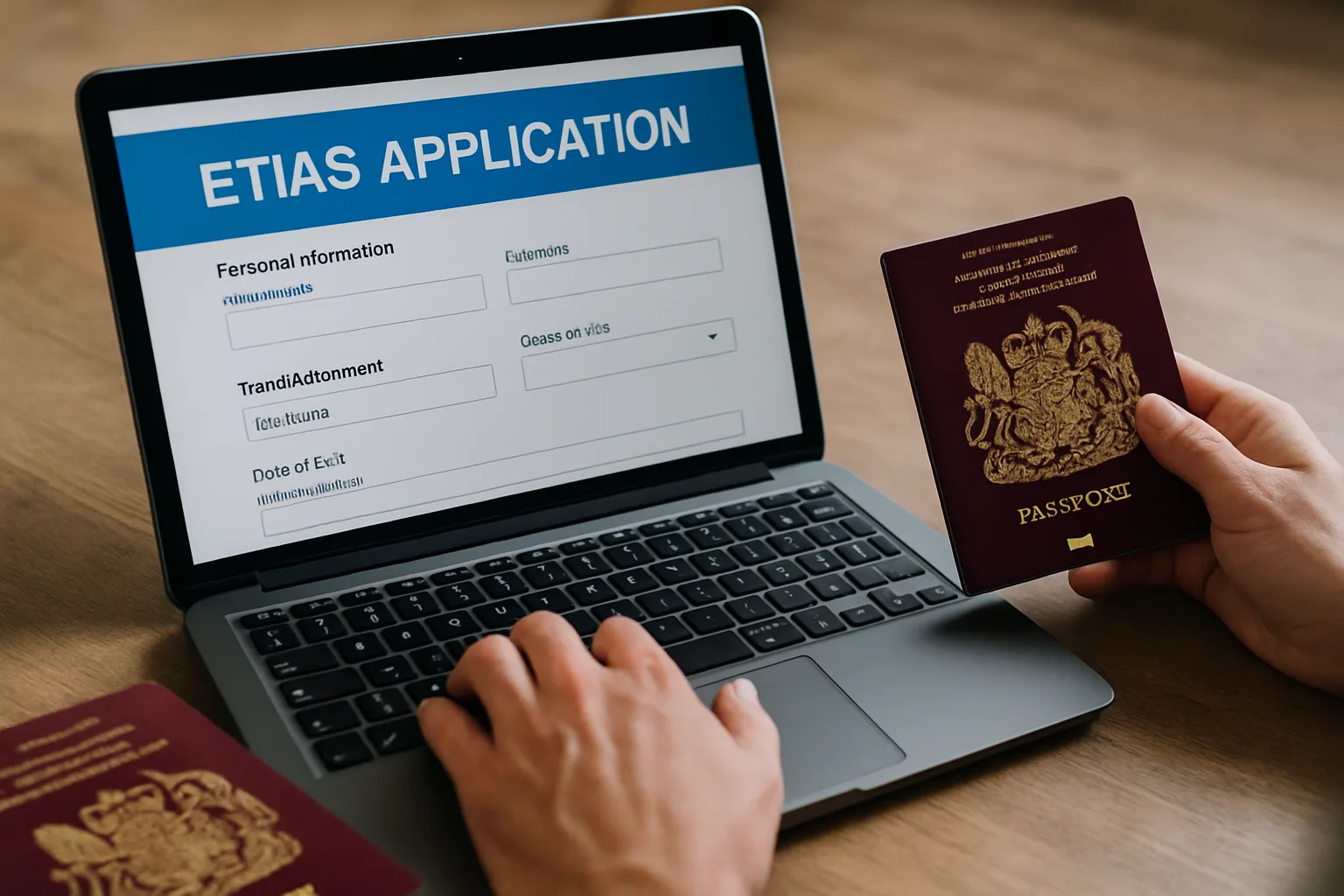
Yes, from mid-2025, British citizens will need ETIAS to enter the Schengen Area for short stays (up to 90 days in any 180-day period). This includes tourism, business, visiting family, or transit through a Schengen airport.
After Brexit, the UK is a 'third country' — not part of the EU or Schengen. British passport holders lost the right to free movement. So you now need either a visa or an ETIAS authorisation for short visits.
Since the UK is on the visa-waiver list, you get ETIAS instead of a visa.
You do not need ETIAS if you are a citizen of an EU/EEA country or Switzerland — even if you also hold a British passport. In that case, you use your EU passport for entry.
What About Dual Citizens?
If you hold both a British and an EU passport, always use your EU passport when entering Schengen. This avoids any confusion and ensures you don't need ETIAS. For example, a British-Irish dual citizen can travel on their Irish passport without ETIAS.
However, if you only have a British passport, you must apply for ETIAS. Even if you have a residence card from an EU country, you still need ETIAS for short visits unless you live there permanently.
Always carry both passports when travelling. Border officials may ask to see your EU passport if you claim exemption from ETIAS.
ETIAS vs Schengen Visa: What's the Difference?
Many British travellers wonder: is ETIAS a visa? No. It's a simpler, faster, cheaper alternative. Here's a quick comparison:
| Feature | ETIAS | Schengen Visa |
|---|---|---|
| Who needs it? | Visa-exempt nationals (including UK) | Visa-required nationals |
| Application | Online, 10 minutes | In-person at embassy, weeks in advance |
| Cost | €20 (free for under 18s and over 70s) | €80+ |
| Processing time | Minutes to 72 hours | 15–45 days |
| Validity | 3 years (or until passport expires) | Up to 90 days per visit |
| Multiple entries? | Yes | Depends on visa type |
For a deeper breakdown, read our article on ETIAS vs Schengen visa differences.
Why Choose ETIAS Over a Visa?
ETIAS is much less burdensome than a Schengen visa. You don't need to book an appointment or provide biometrics. The fee is also significantly lower, at just €20 compared to €80 or more for a visa.
For British citizens, ETIAS is the standard route for short trips. Only apply for a Schengen visa if you plan to stay longer than 90 days or work/study. Otherwise, stick with ETIAS for its convenience.
Remember that ETIAS doesn't guarantee entry. Border officials still have the final say at the border. But it makes the process smoother and faster.
When Does ETIAS Start?

ETIAS is expected to launch in mid-2025. The exact date hasn't been confirmed yet, but the European Union has announced a phased rollout. You won't need ETIAS before that date — until then, British citizens can travel to Schengen without any authorisation (just a valid passport).
Once ETIAS goes live, there will likely be a grace period (around 6 months) where travellers without ETIAS may still be allowed entry, but after that it becomes mandatory. Keep an eye on official announcements. For updates, check our page on when does ETIAS start.
Preparing for the Launch
Start checking your passport's biometric status now. If your passport was issued before 2006, it may lack the chip needed for ETIAS. Renew it early to avoid delays.
Also, monitor the official EU website for launch announcements. Third-party sites may spread misinformation. Only trust sources like the European Commission or your local embassy.
During the grace period, carry your passport and any supporting documents. Border officials may ask for proof of your travel plans, such as hotel bookings or return tickets.
How to Apply for ETIAS as a British Citizen
The ETIAS application is entirely online. You don't need to visit an embassy or provide biometrics. Here's the step-by-step process:
- Go to the official ETIAS website. Only use the official EU website — there are many third-party sites that charge extra fees.
- Fill in the application form. You'll need your personal details, passport information, and answers to security questions (e.g., criminal record, travel history to conflict zones).
- Pay the fee. €20 for adults. Free for applicants under 18 or over 70.
- Submit and wait. Most applications are approved within minutes. Some may take up to 72 hours if further checks are needed.
- Receive approval. Your ETIAS is linked electronically to your passport. You don't need to print anything, but it's wise to carry a copy.
For a full list of required documents and details, see our guide on ETIAS application requirements.
Common Mistakes to Avoid
Double-check your passport number and spelling of your name. Errors can delay approval or lead to refusal. For example, typing "Jon" instead of "John" might cause a mismatch with databases.
Use a valid email address that you check regularly. You'll receive your confirmation and any updates there. If you lose access, you may not be able to retrieve your ETIAS.
Never use third-party websites that promise faster processing. They often charge high fees and may not submit your application correctly. Stick to the official EU portal.
ETIAS Requirements for British Citizens
To apply for ETIAS as a British citizen, you must meet these requirements:
- Valid biometric passport. Your passport must be a biometric (e-passport) with a chip. Non-biometric passports are not accepted. If your passport was issued before 2006, it may not be biometric.
- Passport expiry. Your passport must be valid for at least 3 months beyond your planned departure from the Schengen Area. It's a good idea to have at least 6 months validity.
- Email address. You need a valid email to receive your ETIAS confirmation.
- Payment method. A credit or debit card to pay the €20 fee.
- No criminal record? You must declare any criminal convictions. Certain serious crimes may lead to refusal.
What Happens If Your Passport Is Not Biometric?
If your passport lacks a chip, you cannot apply for ETIAS. You must first renew your passport to a biometric one. The UK Passport Office issues biometric passports since 2006, so most current passports are fine.
Check the cover of your passport for the biometric symbol (a small camera icon). If it's missing, apply for a renewal immediately. Processing times can take several weeks.
For urgent travel, consider using a different travel document. But remember, ETIAS only works with biometric passports. Plan ahead to avoid last-minute issues.
ETIAS for Children and Families
Children under 18 need their own ETIAS authorisation, but the application is free. Parents or guardians can apply on their behalf. The child's passport must be biometric.
If you're travelling as a family, each person — including infants — must have an approved ETIAS linked to their own passport. You can apply for all family members in one session on the official website.
For more details, read our guide on ETIAS for families and children.
Applying for Multiple Family Members
When applying for a family, gather all passports and details beforehand. Fill in each application separately but use the same email for updates. This keeps everything organised.
If you have a child under 18, you'll need to provide your relationship to them. This may include a birth certificate or legal guardianship documents. Keep these handy in case of checks.
Remember that each child, even a newborn, needs their own ETIAS. Plan to apply at least a few weeks before travel to allow for any delays.
How Long Is ETIAS Valid For?
ETIAS is valid for 3 years from the date of approval, or until your passport expires — whichever comes first. If you renew your passport, you'll need a new ETIAS. You can use it for multiple entries into the Schengen Area during its validity.
The maximum stay per visit is 90 days within any 180-day period. This applies to the entire Schengen Area, not per country.
Tracking Your Stay
Keep a record of your entry and exit dates. Overstaying can lead to fines or future entry bans. Use a travel diary or app to track your days.
For example, if you spend 30 days in France, then 30 days in Italy, that's 60 days total. You can only stay an additional 30 days in any Schengen country within that 180-day window.
If you leave and re-enter, the 90-day limit resets only after 180 days from your first entry. Plan your trips carefully to avoid violations.
What If My ETIAS Application Is Refused?
Refusals are rare for British citizens, but they can happen. Common reasons include:
- Incorrect or incomplete information on the application.
- A criminal record involving serious offences.
- Previous overstays or immigration violations in Schengen countries.
- Being flagged in security databases.
If your ETIAS is refused, you'll receive a reason. You can appeal the decision through the relevant national authority of the Schengen country you intended to visit. The appeal process varies by country.
Alternatively, you may apply for a Schengen visa instead — but that's a longer, more expensive process.
How to Appeal a Refusal
First, read the refusal notice carefully. It will specify which country's authority to contact. For example, if you planned to visit Spain, you appeal to Spanish authorities.
Gather supporting documents, such as proof of your travel plans or evidence that the refusal was based on an error. Submit your appeal within the timeframe given, usually 30 days.
If the appeal fails, consider applying for a Schengen visa. This involves more paperwork but may succeed if the issue was minor. Consult an immigration lawyer for complex cases.
Will ETIAS Affect My Right to Work or Study in Europe?
No. ETIAS is for short stays (tourism, business, transit). It does not permit you to work or study in the Schengen Area. If you plan to work, study, or stay longer than 90 days, you need a national visa or residence permit from the specific country.
British citizens who already have residency rights under the Withdrawal Agreement (e.g., those living in an EU country before Brexit) are not affected by ETIAS — they use their residence card.
What About Remote Work?
If you work remotely for a UK employer while visiting Schengen, you generally don't need a work visa for short stays. ETIAS covers this as long as you don't work for a local employer. However, check the rules of the country you visit, as some have specific regulations.
For example, digital nomads may need a special permit in some countries. ETIAS alone doesn't cover long-term remote work. If you plan to stay more than 90 days, apply for a relevant visa.
Always consult the embassy of your destination for precise guidance. Rules vary by country and can change.
What About Ireland, Cyprus, and Non-Schengen Countries?
ETIAS applies only to Schengen Area countries. Here's what you need to know for other popular destinations:
- Ireland is not in Schengen. British citizens can still travel to Ireland freely under the Common Travel Area — no ETIAS needed.
- Cyprus is an EU member but not yet in Schengen. However, Cyprus plans to join, and ETIAS will apply once it does. For now, no ETIAS is required.
- Bulgaria, Romania, and Croatia are partially in Schengen (air/sea borders). ETIAS will apply to them once fully integrated.
- Switzerland, Norway, Iceland, Liechtenstein are not EU but are in Schengen — ETIAS applies.
- UK is not in Schengen. You don't need ETIAS to return to the UK.
Planning a Multi-Country Trip
If you travel to both Schengen and non-Schengen countries, you only need ETIAS for Schengen parts. For example, a trip to France (Schengen) and Ireland (non-Schengen) requires ETIAS only for France.
Keep your passport stamps separate. When entering Ireland, you'll get a non-Schengen stamp. This helps track your 90-day limit in Schengen.
Always check the status of each country before travel. Some may be in the process of joining Schengen, which could change requirements.
Practical Tips for British Travellers
- Apply early. Don't wait until the last minute. While most approvals are instant, some take up to 72 hours.
- Check your passport. Make sure it's biometric and valid for at least 3 months beyond your return date.
- Use the official website. Only apply on the official EU ETIAS website. Third-party sites may charge extra fees.
- Keep a copy. Save your ETIAS approval email or print a copy to carry with you.
- Renew your passport? You'll need a new ETIAS if you renew your passport before the 3-year validity ends.
Budgeting for Your Trip
Factor the €20 fee into your travel budget. It's a small cost compared to other expenses. For a family of four, that's only €80 total.
Also consider potential costs for passport renewal if yours is not biometric. A new UK passport costs around £82.50. Plan this well in advance.
Remember that ETIAS is non-refundable. If your trip is cancelled, you don't get the fee back. But since it's valid for 3 years, you can use it for future trips.
Understanding the Entry and Exit System (EES) Alongside ETIAS
The Entry/Exit System (EES) is a separate system that will launch around the same time as ETIAS. It records your entry and exit dates electronically at Schengen borders. This replaces passport stamping for non-EU travellers.
EES uses biometric data like fingerprints and facial scans. When you first enter, you'll register your details. On subsequent trips, the system checks your data automatically.
ETIAS and EES work together to manage your stay. ETIAS authorises you to travel, while EES tracks how long you stay. Both aim to improve border security and reduce overstays.
How EES Affects British Citizens
British citizens must register with EES on their first entry after the system launches. This adds a few minutes at the border. After that, entries and exits are faster.
EES calculates your 90-day limit automatically. This helps you avoid overstaying accidentally. You can check your remaining days online through the EES portal.
For example, if you enter France for 30 days, EES records that. When you leave, it updates your balance. This removes the need for manual tracking.
ETIAS for Business Travel and Conferences
Business travellers from the UK can use ETIAS for short trips. This includes attending meetings, conferences, or trade fairs. You cannot work for a local employer under ETIAS.
If you're a consultant or freelancer meeting clients, ETIAS covers you. For example, a UK marketing manager visiting Paris for a two-day conference needs ETIAS. They don't need a work visa.
However, if you plan to set up a business or work for a Schengen-based company, you need a work visa. ETIAS is only for short-term business activities. Check with the embassy if unsure.
Documentation for Business Travel
Carry a letter from your UK employer explaining the purpose of your trip. Include details like meeting dates and contact information. Border officials may ask for this.
Also bring proof of accommodation and return travel. This shows you intend to leave within 90 days. For example, a hotel booking in Berlin and a flight back to London.
Keep copies of your ETIAS approval and passport. Having these ready speeds up border checks. It also helps if there are any questions about your visit.
ETIAS for Medical Travel and Emergencies
British citizens can use ETIAS for short medical visits to Schengen countries. This includes consultations, treatments, or check-ups. You must have a valid reason and proof of appointment.
For example, if you need a specialist consultation in Switzerland, ETIAS covers the trip. You don't need a medical visa for short stays. However, longer treatments require a visa.
Always carry medical documents and insurance. ETIAS doesn't cover health costs. You need travel insurance that covers medical expenses in Schengen.
Emergency Travel Considerations
If you need to travel urgently for a family emergency, ETIAS can be obtained quickly. Most applications are approved within minutes. This makes it suitable for last-minute trips.
For example, if a relative in Italy falls ill, you can apply for ETIAS and fly the same day. The online system processes your request fast. Just ensure your passport is biometric and valid.
Keep emergency contact numbers handy. If your ETIAS is delayed, contact the nearest embassy for guidance. They can provide support in urgent cases.
Frequently Asked Questions About ETIAS for British Citizens
Many British travellers have common questions about ETIAS. Here are answers to the most frequent ones. This section clarifies doubts and helps you prepare.
Can I Apply for ETIAS if I Have a Criminal Record?
Yes, you can apply, but you must declare all convictions. Minor offences may not affect approval. Serious crimes like drug trafficking or terrorism can lead to refusal.
For example, a speeding ticket usually doesn't matter. But a conviction for assault may trigger further checks. The system assesses each case individually.
If you're unsure, consult an immigration lawyer. They can advise on your specific situation. Always be honest on your application to avoid penalties.
Do I Need ETIAS for Transit Through a Schengen Airport?
Yes, if you transit through a Schengen airport, you need ETIAS. This applies even if you don't leave the airport. For example, flying from London to Bangkok via Frankfurt requires ETIAS.
However, if you stay in the international transit area and don't pass through border control, you may not need ETIAS. Check with your airline for specific rules. Most transits within Schengen require authorisation.
Plan ahead to avoid surprises. Apply for ETIAS even for short transits. It's better to have it and not need it than to be denied boarding.
Can I Use ETIAS for Multiple Trips?
Yes, ETIAS allows multiple entries during its 3-year validity. You can travel to Schengen countries as often as you like. Each trip must stay within the 90/180-day rule.
For example, you can visit Spain in June, Germany in August, and Italy in December. All under the same ETIAS. Just ensure your total stays don't exceed 90 days in any 180-day period.
Track your days carefully. Overstaying can invalidate your ETIAS and lead to bans. Use the EES system to monitor your stays.
Key Takeaways
- British citizens need ETIAS for short stays in Schengen from mid-2025.
- Apply online at the official EU website — it costs €20 and takes minutes.
- ETIAS is valid for 3 years and allows multiple entries.
- Children and adults need their own ETIAS, but under 18s and over 70s apply free.
- Always check official sources before travel — this is general guidance.
For the latest updates, visit the official European Commission ETIAS page: European Commission ETIAS information.
Frequently asked questions
Do British citizens need ETIAS for Europe?
How long does it take to get ETIAS for British citizens?
Can British citizens apply for ETIAS now?
What documents do British citizens need for ETIAS?
Is ETIAS a visa for British citizens?
This article is for general informational purposes only. Visa and travel authorisation rules change frequently. Always check the official government website before travelling.

Written & reviewed by
Can OTUTravel Authorisation Editor
Can OTU is the editor of ETA Travel Assistant, specialising in UK ETA, Schengen ETIAS, NZeTA and ESTA travel authorisations. Can monitors official government sources and policy updates to ensure every guide is accurate, current and genuinely useful for travellers.
View all guides →