Can You Extend a Schengen Stay Past 90 Days? Here's What Actually Works

- Extensions are the exception, not a routine option — approved only for illness, natural disaster, or other force majeure.
- You apply to the immigration authority of the country you're physically in, before your current stay expires.
- Leaving and re-entering does not reset your 90/180 day count — that's one of the most common and costly misunderstandings.
If you're reading this because your flight home got cancelled, you broke a leg skiing in Austria, or you simply misjudged the calendar, you need a straight answer fast. Here's exactly how extensions work, who actually qualifies, and what happens if you overstay without applying for one.
We'll also cover the country-specific contacts you'll need, roughly what it costs, and the one workaround that does exist if you genuinely want to stay longer — not as an emergency, but as a real, planned extension of your trip.
What does "90 days in 180" actually mean here?
The Schengen area treats all participating countries as one space for short-stay visa purposes. You get 90 days total, in any rolling 180-day window, across the whole area — not 90 days per country.
So if you spent three weeks in Spain in March and then fly to Italy in June, the Italian border officer isn't just counting your Italian days. They're counting every day you've spent anywhere in the Schengen area over the previous 180 days.
Here's a worked example. Say you arrived in France on 1 April and left on 20 April (20 days). Then you came back to Portugal on 15 May and want to know how long you can stay.
The window looks backward 180 days from today, every single day, so both trips still count against your 90-day total until enough time passes for the April trip to "drop off" the count.
This matters here because "extending your stay" really means asking for extra days on top of that shared 90-day pool — not extra days in a specific country. An extension granted in Italy doesn't give you fresh days to spend in France afterwards; it just delays your overall exit from the whole area.
How do border officers actually calculate your days?
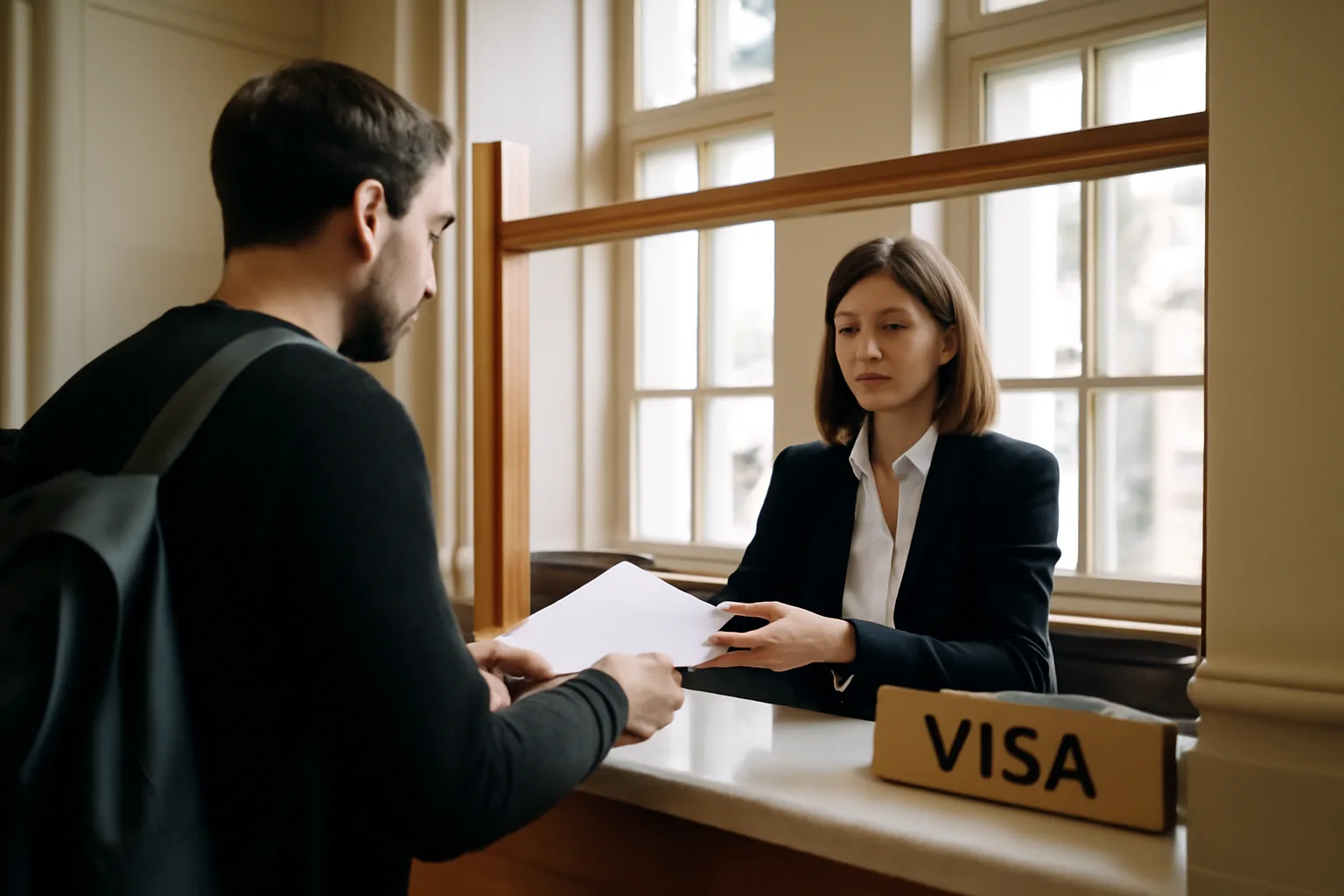
Since the EU's Entry/Exit System (EES) rolled out, entries and exits are logged electronically at the external border, replacing manual passport stamping in most locations. That means your count is no longer just "however many stamp pages you can find" — it's a digital record shared across the whole area.
In practice, this makes it harder to lose track of your own days by accident, but it also makes it much easier for a border officer to spot an overstay in seconds. If you're not sure exactly where you stand, don't guess — check your own days using a proper 90/180 calculator before you rely on your memory of when you arrived.
Can you actually get an extension?
In practice, rarely. Schengen short-stay rules (built on Regulation (EU) No 610/2013) allow national authorities to extend a stay only in exceptional circumstances. That's a deliberately high bar.
- Force majeure — a natural disaster, war, or sudden border closure that makes leaving impossible.
- Serious illness or injury — a doctor certifies you (or someone you're travelling with) can't safely fly or travel.
- Humanitarian reasons — a genuine emergency, not a preference to stay longer.
What doesn't count: your flight home is more expensive this week, you're enjoying the trip, or you didn't realise how the 90/180 rule worked. Immigration officers see that reasoning constantly, and it doesn't qualify.
It helps to think of it this way: the exception exists to cover situations genuinely outside your control, not situations you could have planned around. A cancelled flight is outside your control. Not checking your day count before booking your return isn't.
That distinction sounds harsh, but it's consistent everywhere in the Schengen area — no single country applies a softer version of the rule, because the whole system depends on every member state enforcing it the same way.
Real scenarios: when does this actually happen?
The rulebook is abstract until you see it applied. Here's how extension requests actually play out in practice.
Scenario 1 — cancelled flight home. You're due to fly out on day 90, but a strike grounds your airline for four days. This is a textbook force majeure case. Go to the local immigration office with your original ticket, the airline's cancellation notice, and your new booking — most offices will grant a short extension covering exactly the gap.
Scenario 2 — a skiing injury in Austria. You break your leg on day 85 and your doctor says flying isn't safe for two weeks. This qualifies as a medical extension. You'll need a medical certificate stating you're unfit to travel, not just a general note that you saw a doctor.
Scenario 3 — a cruise itinerary runs long. Cruise passengers sometimes assume days at sea don't count. They do — if your ship calls at any Schengen port, that day counts toward your 90, and an itinerary delay (bad weather, mechanical issue) is treated the same as a flight delay: a force majeure claim, with the cruise line's documentation as your evidence.
Scenario 4 — you just want six more weeks as a digital nomad. This is the case that does not qualify for an emergency extension, no matter how you phrase it. If this is your actual goal, skip ahead to the long-stay visa section below — that's the legitimate route, not an extension request.
Scenario 5 — a business trip overruns because a deal isn't finished. A commercial delay, on its own, isn't force majeure — it's a business decision, and immigration offices treat it that way. If you suspect a trip might run long for business reasons, plan your travel dates with buffer room rather than counting on an extension to bail you out later.
Common myths that get travellers into trouble
- "I'll just pay a fine at the airport and leave." Sometimes that happens — but it's not guaranteed, and a fine doesn't erase the overstay record, which can affect future visa applications for years.
- "My airline let me check in, so I must be fine." Airlines check your passport validity, not your Schengen day count. Passing check-in tells you nothing about whether border control will flag an overstay.
- "Extensions are basically automatic if you ask nicely." They're not. Officers are trained to apply the exceptional-circumstances test strictly, and asking without genuine documentation almost always ends in a refusal.
- "If I overstay by one day, nobody will notice." With EES electronic entry/exit logging now active at most external borders, even single-day overstays are recorded — it's not a manual stamp check anymore.
Can travel insurance help with any of this?
Travel insurance won't get you a legal extension by itself, but good policies can make the process much smoother. Look for cover that includes emergency medical treatment abroad, trip disruption (covering things like strike-related delays), and repatriation assistance.
If your extension request is medical, your insurer's documentation — treatment records, a doctor's fit-to-fly assessment — is often exactly what the immigration office wants to see. Keep copies of everything your insurer sends you; don't rely on being able to request it again later from a different country.
How do you apply for an extension?
You apply to the immigration or foreigners' office of the specific country you're currently in — never a different Schengen country, and never after your permitted stay has already expired.
- Contact the local immigration authority (in Italy, the Questura; in France, the local préfecture; in Germany, the Ausländerbehörde) as soon as the emergency arises — ideally days before your 90 days run out, not the morning of.
- Bring your passport, proof of the emergency (medical certificate, cancelled flight confirmation, embassy letter), proof of accommodation, and evidence you can support yourself financially.
- Ask specifically for a national extension of stay — the terminology varies, but this is the phrase that gets you to the right form.
- Keep every document they give you, including a receipt or reference number for your application. You may need to show it at departure.
What does it cost, and how long does it take?
Fees and timelines vary by country, so treat these as illustrative, not fixed — always confirm with the local office directly. According to the European Commission's official guidance on short-stay visa policy, extensions are handled entirely at national level, which is why the process and cost differ so much from one country to another.
| Country | Authority to contact | Typical fee | Typical decision time |
|---|---|---|---|
| Italy | Questura (local police headquarters) | Around €30 | Same day to a few days |
| France | Préfecture | Around €30 | A few days to two weeks |
| Germany | Ausländerbehörde | €30–€100 | A few days |
| Spain | Oficina de Extranjería | Around €10–€30 | A few days |
| Greece | Aliens & Immigration Department | Around €30 | Same day to a week |
These figures move, and some offices waive fees entirely for genuine medical emergencies. Don't budget around them — confirm with the office you're applying to.
A few country-specific notes worth knowing before you go in person. In Italy, the Questura often wants an appointment booked online first — turning up without one can mean a long wait or being turned away for the day. In France, some préfectures now handle initial requests online before an in-person visit, so check the local prefecture's website first.
In Germany, requirements can vary slightly between federal states (Bundesländer), so the exact document list may differ depending on where you are.
What about children, older family members, or group travel?
The same 90/180 rule applies to every traveller individually, including children — there's no family allowance that stretches the total. If you're travelling with a child or an elderly relative who needs a medical extension, the same documentation rules apply, though offices are often more flexible on timing given the added complexity of arranging return travel for a group.
If only one member of your group has a genuine emergency (say, a child needs medical treatment), the rest of the group doesn't automatically qualify for an extension too — each traveller's situation is assessed on its own facts, even if you're travelling together.
What if you just overstay without applying?
This is where people get into real trouble. An unauthorised overstay in the Schengen area isn't a slap on the wrist — it can mean an entry ban of one to three years, a fine, and a formal overstay mark in the Entry/Exit System that follows you to every future Schengen application.
Border officers see your entry and exit records (increasingly through EES rather than manual stamps) at the airport. And they don't accept "I didn't realise" as a reason to wave you through — you'll need to explain yourself, possibly to a supervisor, possibly with a translator.
What that entry ban actually means in practice: for the length of the ban, you can't enter any Schengen country as a short-stay visitor, even a country you've never visited before. It's recorded against your passport, not just against the country where the overstay happened.
The length of the ban usually depends on how long you overstayed and whether you made any effort to resolve it. A two-day overstay explained proactively is treated very differently from a two-month overstay discovered by chance at departure.
If you're already overstaying and haven't applied for an extension, contact the local immigration office immediately — before you try to leave. Explaining the situation proactively, with documentation, is very different from getting stopped at departure with no paperwork at all.
Does it matter if you entered visa-free or with an actual Schengen visa?
The 90/180 rule applies whether you entered visa-free (as many nationalities can) or with a short-stay Schengen visa (a visa sticker in your passport). But the extension process can look slightly different depending on which one applies to you.
If you entered on a Schengen visa, the visa itself may already specify your permitted stay, and any extension request needs to reference that original visa. If you entered visa-free, there's no visa document to extend — you're simply asking for extra days on top of your visa-free allowance, so the paperwork focuses more heavily on proving the emergency itself.
Either way, the underlying rule — extensions only for exceptional circumstances, applied for in the country you're in — stays the same.
Does leaving and coming back reset the clock?
No — and this is the single most common mistake travellers make. Flying to London for a weekend, or hopping to Croatia (not yet fully in the passport-free zone for all purposes) doesn't reset your 90-day count.
The 180-day window is rolling. Every day counts backward from today, everywhere in the Schengen area, regardless of how many times you've left and re-entered. A short "border run" to the UK or Ireland doesn't buy you a fresh 90 days — it just adds a stamp to your passport.
What if you want to stay longer — not as an emergency, but on purpose?
If you genuinely want a longer stay — say, for remote work, a longer course, or extended family time — an emergency extension isn't the tool for that. What you actually want is a national long-stay visa or residence permit from a specific country.
- Each Schengen country issues its own national long-stay (type D) visas, separate from the shared 90-day short-stay rule.
- You apply before you travel, through that country's consulate in your home country — not once you're already inside the Schengen area on a short-stay basis.
- Popular routes include digital nomad visas (Portugal, Spain, Croatia, Estonia), student visas, and long-stay visitor permits for those with sufficient savings or income.
- A type D visa is issued by one country but, depending on the type, may still let you travel elsewhere in the Schengen area for short periods — check the specific conditions attached to yours.
If this is your situation, plan months ahead — most consulates need several weeks to process a long-stay application, and some require an in-person interview.
Converting a tourist stay into a long-stay visa from inside the country is difficult and, in most cases, simply isn't possible. You'll usually need to leave, apply from your home country, and come back once it's approved — not the other way around.
What happens if the immigration office says no?
A refusal doesn't automatically mean you have to leave that same day, but it does mean the clock is still running against your original 90 days. Ask the office directly what your options are — sometimes that means booking the earliest possible flight out, and sometimes there's a short grace period built into local practice.
If your situation is genuinely urgent (a medical condition worsening, for example) and you've been refused, contact your country's embassy or consulate in that Schengen country. They can't override immigration decisions, but they can advise on next steps and, in serious cases, help coordinate with local authorities.
Don't simply ignore a refusal and stay anyway. A refused extension followed by an overstay is treated more seriously than an overstay alone, because it shows the authorities that you were told to leave and didn't.
A quick checklist for the moment you realise you might overstay
- Work out exactly how many days you have left — don't estimate, count precisely from your actual entry date.
- If the cause is a genuine emergency, contact the local immigration office the same day, not once your visa-free days have already run out.
- Gather documentation immediately: medical certificates, cancellation notices, insurance correspondence, proof of funds, and your accommodation details.
- Ask specifically for a national extension of stay, and get everything in writing — a reference number, a stamped form, anything with a date on it.
- If you're refused, ask what your options are before you leave the office, and contact your embassy if the situation is serious.
- Once you're cleared to leave (extension granted or not), keep every document from this process for at least a year — it may be relevant to future visa applications.
What if you're not sure whether your situation qualifies?
When in doubt, ask — don't guess. Contact the immigration office (or your country's nearest consulate of the Schengen country you're in) and describe your situation plainly. Officers would rather field a genuine question than deal with an unauthorised overstay later.
Bring everything that supports your case, even if you're not sure it's needed: medical letters, cancelled booking confirmations, insurance correspondence, proof of funds, and your original travel itinerary. It's far easier to have too much documentation than to be asked for something you don't have.
And if the answer turns out to be "no, this doesn't qualify" — that's still useful information. Better to hear it a few days before your 90 days run out, with time to book a flight and leave in good order, than to find out the hard way at the border on your way home.
This article is general guidance, not official advice — always check the official website of the relevant national immigration authority before you rely on any of the figures above.
Key takeaways
- Extensions are reserved for genuine emergencies (illness, disaster, force majeure) — not personal preference.
- Apply to the immigration office in the country you're currently in, before your 90 days expire.
- Fees are typically modest (roughly €10–€100 depending on the country) but confirm directly — figures change.
- Overstaying without applying risks a 1-3 year entry ban and a formal mark in the Entry/Exit System.
- Leaving and re-entering the Schengen area does not reset your 90/180-day count.
- Want to stay longer on purpose, not as an emergency? Apply for a national long-stay (type D) visa before you travel, not after.
Frequently asked questions
Can I extend my Schengen stay just because I want a longer holiday?
Which country do I apply to for a Schengen extension?
Does flying to the UK and back reset my 90 days?
What happens if I overstay by just a few days without asking?
Is there any way to legally stay in the Schengen area for more than 90 days?
This article is for general informational purposes only. Visa and travel authorisation rules change frequently. Always check the official government website before travelling.

Written & reviewed by
Can OTUTravel Authorisation Editor
Can OTU is the editor of ETA Travel Assistant, specialising in UK ETA, Schengen ETIAS, NZeTA and ESTA travel authorisations. Can monitors official government sources and policy updates to ensure every guide is accurate, current and genuinely useful for travellers.
View all guides →