Schengen Calculator for UK Residents: How to Track Your 90/180-Day Allowance
In this guide, I'll walk you through exactly how to use a Schengen calculator for UK residents. You'll learn step-by-step how to track your allowance, avoid overstaying, and plan your trips with confidence. I'll also cover common pitfalls and answer your top questions.
Let's get started.
What Is the Schengen 90/180-Day Rule?
The Schengen 90/180-day rule limits short stays for non-EU nationals. You can spend up to 90 days in any rolling 180-day period across the 27 Schengen countries.
This rule applies to UK passport holders and other visa-exempt nationals. It also applies to those with a short-stay visa (Type C).
The key point: it's a rolling window. Every time you enter or leave, the 180-day window shifts. You can't just count days from January 1st.
How the Rolling Window Works
Imagine you arrive in Paris on 1 March and leave on 10 March. That's 10 days. Then you go to Rome on 1 April and leave on 20 April.
That's another 20 days.
Now, on 20 April, the 180-day window looks back to 22 October (180 days before). It adds up all days you spent in Schengen during that window. If the total is 90 or less, you're fine.
If it's more, you've overstayed.
This rolling calculation is what makes a Schengen calculator so useful. Doing it manually is error-prone.
Why UK Residents Need a Schengen Calculator

Since Brexit, UK citizens no longer have freedom of movement in the EU. You're now treated as a third-country national. That means the 90/180-day rule applies to you.
Many UK residents travel frequently to Europe for holidays, business, or visiting family. Without a calculator, it's easy to lose track of your days.
Overstaying can lead to fines, entry bans, or trouble with future visa applications. A Schengen calculator helps you stay compliant.
Our schengen 90 180 rule calculator is designed for UK residents. It's free and easy to use.
How to Use a Schengen Calculator: Step-by-Step
Let's walk through the process. You'll need your travel dates ready.
Step 1: Gather Your Travel Dates
Collect every entry and exit date for your Schengen trips. This includes past trips within the last 180 days.
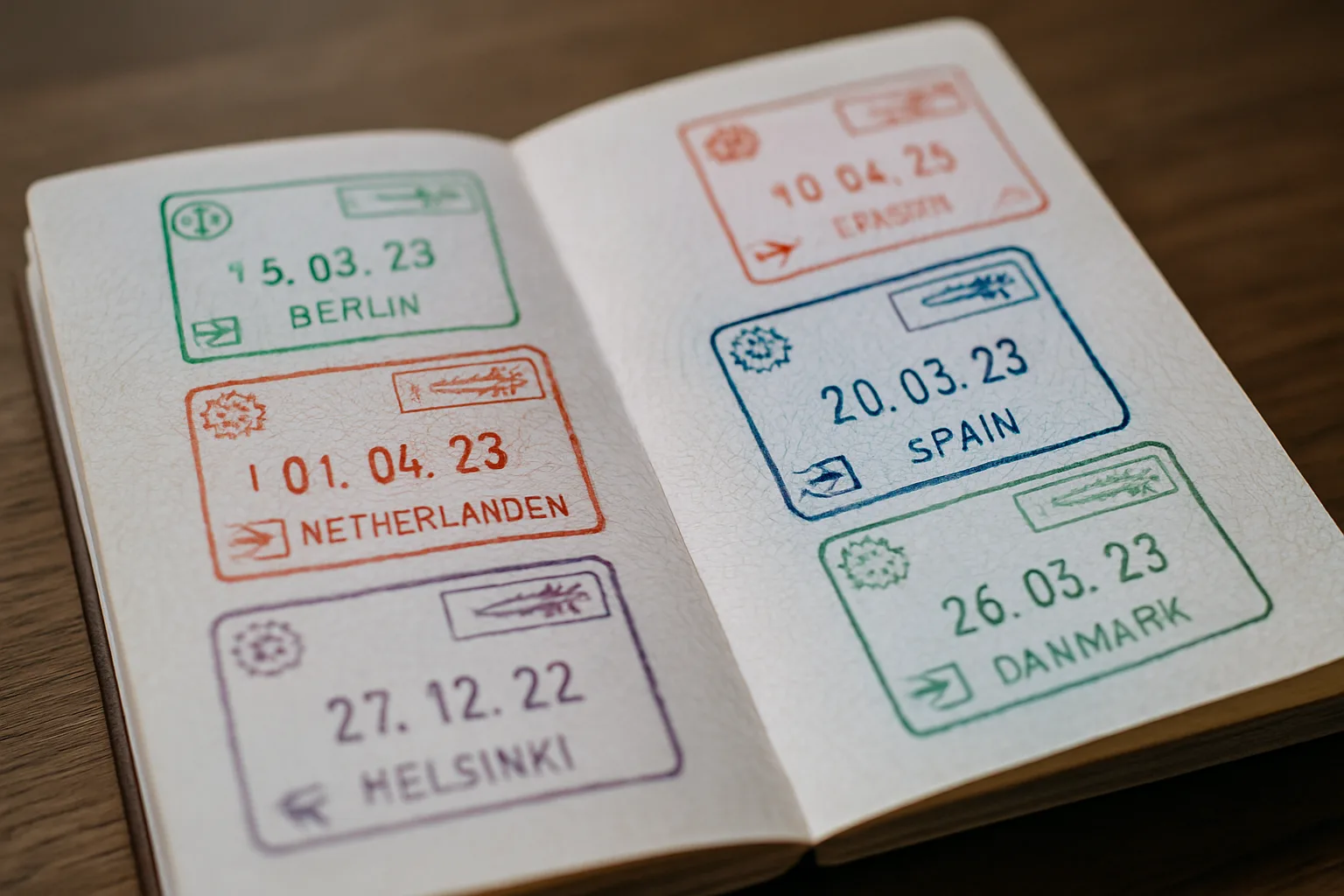
Check your passport stamps, boarding passes, or email confirmations. If you use the EU's Entry/Exit System (EES) — once it's fully rolled out — your data will be digital.
For now, stamps are still common. Make a list of all dates.
Step 2: Choose a Calculator
Use a reliable Schengen calculator. Our schengen 90 180 rule calculator is built for UK residents. It handles the rolling window automatically.
Alternatively, you can use the EU's official calculator. But ours is simpler and tailored to your needs.
Step 3: Enter Your Dates
Input each trip as a start and end date. The calculator will add them up.
Make sure you enter dates in the correct format (e.g., DD/MM/YYYY). Double-check for typos.
Step 4: Check Your Remaining Days
The calculator will show your total days used in the last 180 days. It will also tell you how many days you have left.
If you're planning a future trip, enter its dates too. The calculator will check if you'll exceed the limit.
Step 5: Adjust Your Plans if Needed
If you're close to the limit, consider shortening your trip or delaying it. The calculator helps you see exactly where you stand.
Remember: once you leave the Schengen Area, the clock resets for that trip, but the 180-day window keeps rolling.
Common Mistakes When Tracking Days
Even with a calculator, people make errors. Here are the most common pitfalls.
Mistake 1: Forgetting Transit Days
If you transit through a Schengen airport, that counts as a day. Even if you don't leave the airport.
For example, flying from London to Bangkok via Frankfurt means you enter Schengen in Frankfurt. That day counts.
Include all transit days in your calculator.
Mistake 2: Counting from the Wrong Date
The 180-day window is not fixed to January 1st or your first trip. It's a rolling window that ends on your departure date.
Always check the window ending on the day you leave (or plan to leave). The calculator does this automatically.
Mistake 3: Ignoring Previous Trips
If you've been to Schengen in the last 6 months, those days count. Don't assume a fresh start.
Even a weekend trip to Amsterdam uses up days. Enter all past trips.
Mistake 4: Confusing Visa-Free and Visa Stays
If you have a short-stay visa (Type C), the 90/180 rule still applies. The visa doesn't give you extra days — it just allows you to enter.
If you're visa-free (UK passport), the same rule applies. Both count toward the 90-day limit.
What Happens If You Overstay?
Overstaying is serious. Consequences vary by country but can include:
- Fines (e.g., €100–€3,000 depending on the country)
- Entry ban for up to 5 years
- Deportation
- Problems with future visa applications (including UK visas)
If you realise you've overstayed, leave as soon as possible. Voluntary departure may reduce penalties.
Always check official sources before travel. Rules can change.
How to Extend Your Stay Legally
In some cases, you can extend your stay beyond 90 days. But it's not easy.
Apply for a Long-Stay Visa (Type D)
If you need to stay longer, apply for a national long-stay visa (Type D) from the country you'll be in. This allows stays over 90 days.
You'll need a reason, like work, study, or family reunification. Apply well in advance.
Leave and Re-enter
You can reset your 90-day allowance by leaving the Schengen Area for 90 consecutive days. After that, you can re-enter for another 90 days.
But careful: the 180-day window is rolling. If you leave for 90 days and return, you'll have a full 90 days again — but only if you didn't use any days in the previous 180 days.
Use the calculator to check.
Using the Schengen Calculator for Multiple Trips
If you travel frequently, tracking becomes complex. The calculator simplifies it.
Enter all your trips for the last 6 months. Then add your planned trips. The calculator will show your total days used and remaining.
For example:
- Trip 1: 1–10 Jan (10 days)
- Trip 2: 15 Feb–5 Mar (19 days)
- Trip 3: 1–20 Apr (20 days)
- Total: 49 days used
If you plan a 50-day trip starting 1 May, the calculator will check the 180-day window from 1 May back to 2 November. It will include trips 2 and 3 (since trip 1 is outside the window). That's 39 days, so you have 51 days left.
Your 50-day trip is fine.
But if you add another trip in June, it might push you over. The calculator shows you in real time.
Schengen Calculator vs. Manual Calculation
Manual calculation is possible but tedious. You need to count days in a 180-day window ending on each departure date.
Here's a manual method:
- List all entry and exit dates in chronological order.
- For each exit date, look back 180 days.
- Sum all days spent in Schengen during that window.
- Ensure total ≤ 90.
Doing this for multiple trips is time-consuming. A calculator does it instantly.
Our schengen 90 180 rule calculator is free and accurate. Save yourself the headache.
What About the Schengen Visa Application Process?
If you need a Schengen visa (e.g., for longer stays or if you're not visa-exempt), the 90/180 rule still applies. But the visa itself has its own validity.
When applying, you'll need to show your travel history. The calculator can help you verify you haven't overstayed.
For a full guide, see our schengen visa application process page.
Bank Statement Requirements for Schengen Visa
If you're applying for a Schengen visa, you'll need to show sufficient funds. Bank statements are a key document.
Our schengen visa bank statement guide explains what's needed.
But remember: even with a visa, the 90/180 rule limits your stay. The calculator helps you plan.
Schengen Visa for UK Residents
UK residents who are not British citizens (e.g., Indian, Chinese, or other nationalities) may need a Schengen visa for short stays. The 90/180 rule applies to them too.
Our schengen visa uk residents page covers the application process.
Use the calculator to track your days regardless of visa status.
Tips for Accurate Tracking
- Keep a travel diary or use an app.
- Save all boarding passes and stamps.
- Check the calculator before each trip.
- Allow a buffer of a few days to avoid accidental overstay.
When You Don't Need a Schengen Calculator
If you have a long-stay visa (Type D) or residence permit, the 90/180 rule doesn't apply. You can stay for the duration of your permit.
Also, if you're a citizen of an EU/EEA country, you have freedom of movement. The rule doesn't apply to you.
But for most UK residents, the calculator is essential.
Advanced Scenarios for Frequent Travelers
Frequent travellers often face complex situations. For instance, you might take multiple short trips within a single month.
Consider a UK resident who travels for business every two weeks. Each trip lasts 3 days, totalling 6 days per month.
Over 6 months, that's 36 days. But if you add a 2-week holiday, you could reach 50 days quickly.
The calculator helps you see the cumulative effect. It prevents surprises when you plan a longer trip.
Using the Calculator for Back-to-Back Trips
Back-to-back trips are common for digital nomads or remote workers. You might leave Schengen for a weekend and return.
For example, you stay in Spain for 30 days, then fly to Morocco for 2 days, then return to Spain for 30 more days. The calculator will count all days in the 180-day window.
In this case, the 2 days outside Schengen don't reset the clock. Your total days in the window would be 60, so you'd have 30 days left.
But if you repeat this pattern, you could exceed 90 days. Always check the calculator before each return.
How the EES Will Change Tracking
The EU's Entry/Exit System (EES) is expected to launch soon. It will digitally record all entries and exits for non-EU travellers.
Once EES is active, border guards will automatically check your 90/180-day compliance. Overstays will be flagged instantly.
Until then, passport stamps are the primary record. But stamps can be illegible or missing, so keep your own records.
The calculator will still be useful under EES. It lets you plan ahead rather than waiting for a border check.
Planning a Long Trip: A Worked Example
Let's say you want to spend 60 days in Schengen starting 1 June. You've already taken a 10-day trip in January and a 15-day trip in March.
First, enter all past dates into the calculator. The 180-day window on 1 June looks back to 3 December.
Your January trip (1-10 Jan) is within that window. Your March trip (1-15 Mar) is also within it. Total used: 25 days.
You have 65 days remaining, so a 60-day trip is fine. But if you also had a trip in April, you'd need to recalculate.
This example shows why the calculator is essential. One extra trip can change your allowance dramatically.
What to Do If You're Close to the Limit
If you're near 90 days, consider these strategies:
- Shorten your trip by a few days.
- Delay your trip until some days fall out of the 180-day window.
- Spend time in non-Schengen countries like Croatia (before it joins fully) or Ireland.
Remember, non-Schengen EU countries like Ireland don't count toward the 90-day limit. You can reset your allowance there.
But always verify a country's status. Some non-EU countries like Switzerland are in Schengen.
Using the Calculator for Family Trips
If you're travelling with family, each person must track their own days. Children with UK passports are subject to the same rule.
Enter each family member's travel dates separately. The calculator can handle multiple profiles if you use it repeatedly.
For example, a child might have different travel history if they visited grandparents separately. Track each person individually to avoid overstays.
Common Pitfalls with Day Counting
One common pitfall is counting the day of arrival and departure incorrectly. Both the day you enter and the day you leave count as full days in Schengen.
For instance, if you fly into Paris at 11 PM on 1 March and leave at 6 AM on 10 March, both days count. That's 10 days, not 9.
Always include both entry and exit days in your calculator. This ensures accuracy.
How to Handle Multiple Entries in One Day
If you enter and leave Schengen on the same day, it still counts as one day. For example, a day trip from London to Calais counts as one day.
This applies even if you cross multiple borders in one day. Only one day is added to your total.
But be careful: if you stay overnight, that's two days. The calculator handles this automatically.
Using the Calculator for Business Travel
Business travellers often have irregular schedules. You might attend a conference in Berlin for 3 days, then fly to a meeting in Milan for 2 days.
Enter each segment as a separate trip. The calculator will combine them correctly.
For example, you could have trips like: 1-3 Mar (Berlin), 5-6 Mar (Milan), and 10-12 Mar (Paris). The calculator sums all days in the 180-day window.
What to Do If You Lose Your Passport Stamps
If your passport stamps are lost or illegible, reconstruct your travel history from other sources. Use boarding passes, hotel receipts, or credit card statements.
You can also request a travel history report from the UK's Home Office. But this takes time.
For future trips, take photos of your stamps immediately. This creates a digital backup.
Using the Calculator for Extended Stays in Non-Schengen EU Countries
Some EU countries like Ireland and Croatia (partially) are not in the Schengen Area. Stays there don't count toward your 90-day limit.
If you plan a trip that includes both Schengen and non-Schengen EU countries, track only the Schengen days. The calculator can help you separate them.
For example, a 30-day trip with 20 days in France and 10 days in Ireland uses only 20 Schengen days. Enter only the French dates into the calculator.
How to Verify Your Calculator Results
Always double-check your calculator results with official sources. The EU's own calculator is available on the European Commission website.
You can also contact the embassy of the country you plan to visit. They can confirm your remaining days.
But for quick, everyday use, our schengen 90 180 rule calculator is reliable and convenient.
Understanding the 180-Day Window in Depth
The 180-day window is not a fixed calendar period. It moves forward each day you are in or out of Schengen.
For example, if you check your allowance on 15 June, the window covers 17 December to 15 June. This means old trips eventually fall out of the calculation.
After 180 days without any Schengen stay, your allowance resets to 90 days. But any trip within that period reduces it.
How to Calculate the Window Manually
To calculate manually, pick a departure date and subtract 180 days. Then sum all days spent in Schengen between those two dates.
For instance, if you leave on 1 July, the window starts on 2 January. Add up all days from trips between 2 January and 1 July.
If the total is 90 or less, you are compliant. If it exceeds 90, you have overstayed.
Using the Calculator for Short Breaks
Short breaks, like a weekend in Amsterdam, still use your allowance. A 3-day trip from Friday to Monday counts as 3 days.
If you take multiple short breaks, they add up quickly. For example, four weekend trips of 3 days each total 12 days.
The calculator helps you see the cumulative impact of these small trips. It prevents surprises when you plan a longer holiday.
How to Plan a Year of Travel
If you plan to travel to Schengen multiple times in a year, use the calculator to map out your trips. Enter all planned dates and check the total.
For example, you might plan trips in January (10 days), April (15 days), July (20 days), and October (10 days). The calculator will show if any window exceeds 90 days.
You may need to adjust the timing or duration of some trips. The calculator gives you a clear picture.
What to Do If the Calculator Shows an Overstay
If the calculator indicates you have overstayed, do not panic. First, verify your dates for accuracy.
If the overstay is confirmed, leave the Schengen Area immediately. Voluntary departure can reduce penalties.
Consult an immigration lawyer if you face serious consequences. They can advise on your options.
Using the Calculator for Visa Applications
When applying for a Schengen visa, you must provide your travel history. The calculator can generate a summary of your days used.
Include this summary in your application to show compliance. It demonstrates you understand the rules.
Our schengen visa application process page has more details on required documents.
How the Calculator Handles Different Entry Types
The calculator treats all entries equally, whether by air, land, or sea. A ferry crossing from the UK to France counts as a day.
If you enter via a land border from a non-Schengen country, that day counts. For example, driving from Switzerland (non-Schengen) to France counts.
Always include all entry methods in your calculations. The calculator does not distinguish between them.
Common Questions About the 90/180 Rule
Many UK residents have questions about the rule. Here are answers to frequent queries.
Does the Rule Apply to Children?
Yes, children with UK passports are subject to the same rule. Each child must track their own days.
Enter their travel dates separately in the calculator. This ensures they do not overstay.
Can I Reset My Allowance by Leaving for a Day?
No, leaving for a single day does not reset your allowance. The 180-day window continues to roll.
You must leave for 90 consecutive days to reset. The calculator can help you plan this.
What If I Have a Dual Passport?
If you hold a UK passport and an EU passport, use the EU passport for travel. The rule does not apply to EU citizens.
If you use your UK passport, the rule applies. Be consistent with which passport you use.
Using the Calculator for Group Travel
If you travel with a group, each person must track their own days. The calculator can be used for each individual.
For example, a family of four should enter each person's dates separately. This avoids collective overstays.
Group travel does not allow pooling of days. Each person has their own 90-day limit.
How to Stay Updated on Rule Changes
Rules can change, especially with new EU systems like EES. Check official sources regularly.
Subscribe to travel alerts from the UK Foreign Office. They provide updates on Schengen rules.
Our blog also covers changes. Bookmark our schengen 90 180 rule calculator page for easy access.
Final Thoughts
Tracking your Schengen days doesn't have to be stressful. A Schengen calculator does the hard work for you.
Use our schengen 90 180 rule calculator before every trip. It's free, fast, and accurate.
Remember: this is general guidance. Always check official sources like the EU's website or your local embassy for the latest rules.
Key takeaways
- The 90/180-day rule limits short stays in Schengen to 90 days in any rolling 180-day period.
- A Schengen calculator automates the rolling window calculation and prevents errors.
- UK residents must track their days carefully after Brexit.
- Overstaying can lead to fines, bans, and visa issues.
- Use our free schengen 90 180 rule calculator to stay compliant.
Frequently asked questions
How do I calculate my 90/180 days manually?
Does a Schengen transit day count toward the 90-day limit?
Can I reset my 90-day allowance by leaving Schengen?
What happens if I overstay my Schengen visa?
Do I need a Schengen visa as a UK resident?
This article is for general informational purposes only. Visa and travel authorisation rules change frequently. Always check the official government website before travelling.

Written & reviewed by
Can OTUTravel Authorisation Editor
Can OTU is the editor of ETA Travel Assistant, specialising in UK ETA, Schengen ETIAS, NZeTA and ESTA travel authorisations. Can monitors official government sources and policy updates to ensure every guide is accurate, current and genuinely useful for travellers.
View all guides →