Schengen Visa Interview: What to Expect and How to Prepare

- Most Schengen visa interviews are brief and procedural, not an interrogation — officers are checking consistency, not trying to trip you up.
- Bring both originals and photocopies of every document, organized in the same order as your consulate's checklist, so you can answer questions quickly by referencing the right paper.
- Answer clearly and specifically — vague answers about your trip purpose or finances raise more questions than they answer.
The word "interview" makes this step sound more intimidating than it usually is. For most tourist and business applicants, it's really just a structured document review with a handful of spoken questions attached, not any kind of open-ended interrogation. Here's exactly what to expect, the specific questions that come up most often, and how to prepare properly so the whole appointment goes smoothly from start to finish.
What actually happens during the appointment
- Check-in and queue, where staff verify your appointment confirmation and printed application form.
- Document submission and review, where a staff member or consular officer goes through your file against the required checklist.
- Biometric data collection — fingerprints and a digital photo — unless you're exempt due to a recent prior Schengen application.
- A short conversation about your trip, documents, or any unclear points in your file.
- Fee payment, if not already completed online, and confirmation of next steps (processing time, tracking, collection).
For many applicants with a complete, consistent file, the "interview" portion is genuinely just a few clarifying questions asked while the officer reviews your documents — not a separate, formal sit-down conversation.
The three things officers are actually assessing
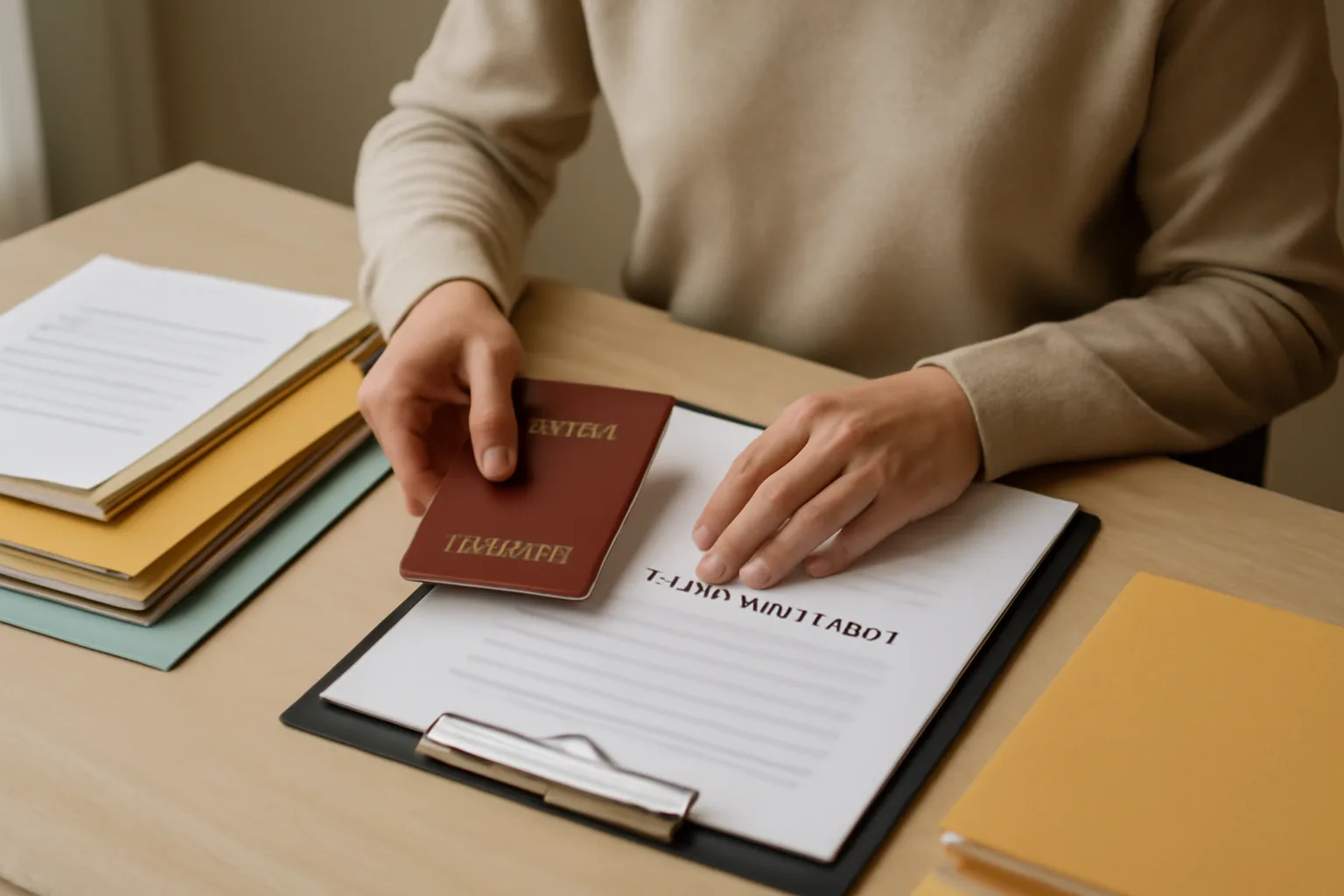
Every question asked, whether it sounds casual or specific, is generally aimed at one of three underlying concerns:
- Is your stated purpose of travel credible and consistent with your documents? Questions about your itinerary, accommodation, or who you're visiting fall here.
- Do you have sufficient means to support yourself for the trip? Questions about your income, savings, or who's funding the trip fall here.
- Are you likely to return home before your visa expires? Questions about your job, family, property, or other commitments back home fall here.
Understanding this framework helps you answer naturally — if you know which underlying concern a question is really getting at, you can give a direct, relevant answer instead of guessing what the officer wants to hear.
Common questions and how to answer them well
- "What is the purpose of your trip?" — Answer specifically and concisely: "Tourism, visiting Paris and Rome for two weeks" rather than a vague "just travelling." Match this exactly to your application form and itinerary.
- "Who is paying for this trip?" — Answer honestly and consistently with your financial documents. If a sponsor is covering costs, say so clearly and reference the sponsorship letter in your file.
- "What do you do for work?" — State your job title and employer plainly, consistent with your employment letter. If you're between jobs, self-employed, or retired, say so factually rather than avoiding the question.
- "When do you plan to return?" — Give your exact planned return date, matching your return flight booking and, if relevant, your approved leave dates from your employer.
- "Have you travelled to Europe before?" — Answer honestly; a clean prior travel history is a positive signal, and there's no benefit to overstating or understating past trips.
- "Do you have family or ties in [destination country]?" — Answer factually. Having relatives there isn't a problem in itself, but be prepared to explain your specific trip purpose clearly regardless.
What to bring and how to organize it
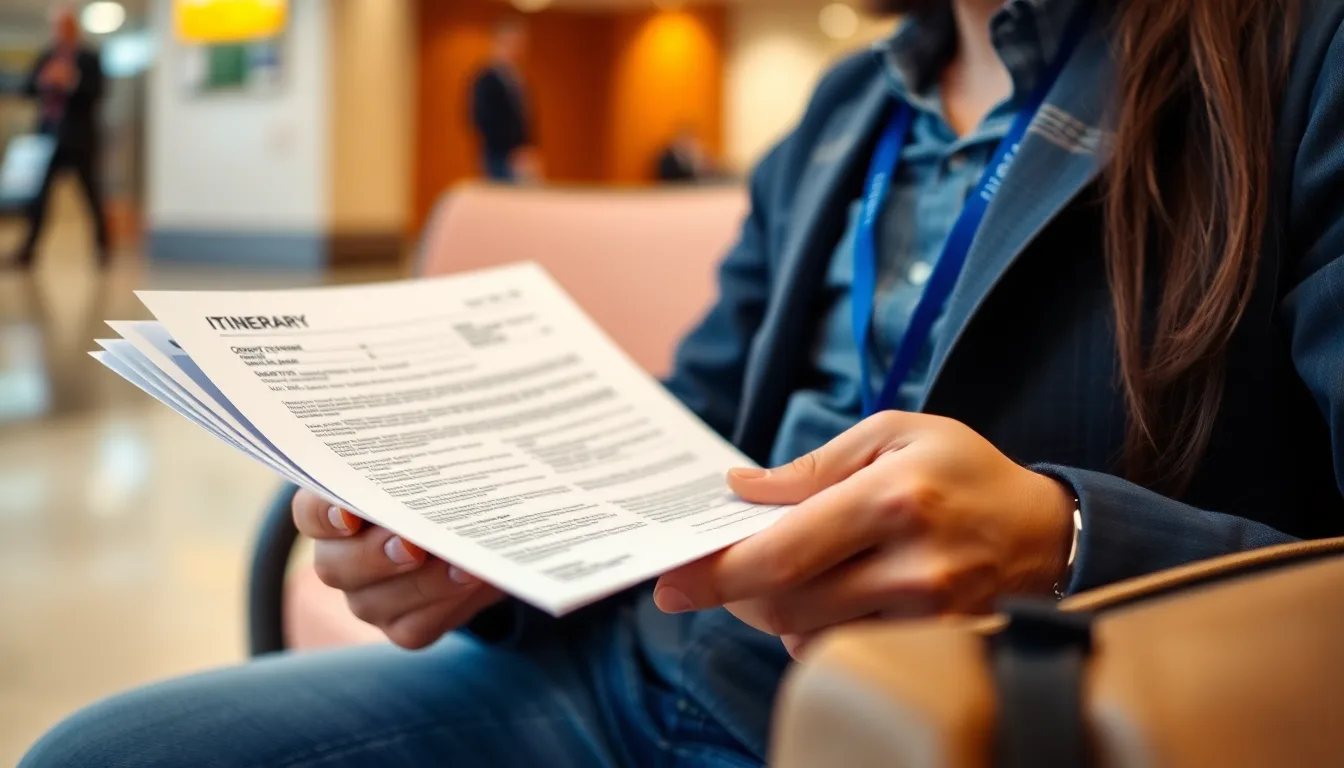
- Your appointment confirmation and printed, signed application form, on top and easy to find.
- Your passport and any previous passports showing prior Schengen travel history.
- Original documents plus one photocopy of each, grouped by category (financial, accommodation, employment, insurance) rather than mixed together.
- A simple, one-page cover letter or itinerary summary you can reference quickly if asked to clarify your trip details.
Being able to quickly locate the specific document that answers a question — rather than shuffling through a disorganized stack — makes a genuinely good impression and keeps the appointment moving smoothly.
Tone and demeanor: what actually helps
- Answer questions directly and briefly — officers appreciate clear, confident answers over long, rambling explanations.
- Stay calm even if a question feels repetitive or if you're asked to clarify something twice — this is normal procedure, not a sign of a problem with your application.
- Avoid volunteering unnecessary information that isn't asked for, since over-explaining can sometimes introduce inconsistencies or raise new questions unintentionally.
- If you don't understand a question, ask for clarification rather than guessing at an answer — officers would rather repeat a question than receive a response to something else entirely.
Language and interpreter considerations
Appointments are typically conducted in the consulate's official language or English, depending on the specific visa center and country. If you're not confident in either:
- Check in advance whether your specific visa center offers interpretation support or accepts a personal interpreter for the appointment.
- If bringing your own interpreter is allowed, choose someone who can translate accurately and neutrally, rather than someone who might answer on your behalf — officers want to hear your own answers, translated, not a third party's interpretation of your situation.
- Practice the likely questions in the language you'll actually be answering in, so unfamiliar vocabulary doesn't slow down a straightforward answer.
What happens if you're asked for additional documents on the spot
Occasionally, an officer identifies a gap and asks for an additional document, either on the spot or as a follow-up request after your appointment.
- If you can provide something on the spot (an extra bank statement page, a clearer copy of a document), do so calmly — this is a normal part of the process, not an automatic red flag.
- If a follow-up request comes after your appointment, respond as quickly as possible, since delays in providing requested information directly extend your own processing time.
- If you're unsure exactly what's being requested, ask for clarification in writing (email) so you can address it precisely rather than guessing and potentially submitting the wrong thing.
Interviews for children and family applications
Children generally don't undergo a separate interview in the same way adults do, though very young children still need to be present for biometric data collection in most cases. For family applications:
- The accompanying parent(s) typically answer questions on behalf of younger children, while the child's own documents (passport, photo) are still required individually.
- Older teenagers may be asked simple, direct questions themselves, particularly about their own understanding of the trip, though this varies by consulate and specific officer.
- Keep the same organized document approach for each family member's file, even when applying together, since each person still has their own complete individual application.
Practicing before your appointment
A short practice session can noticeably improve how confident and clear you sound, without requiring anything as formal as a rehearsed script:
- Go through the common questions list above out loud, once, in whatever language your appointment will actually be conducted in.
- Ask a friend or family member to play the role of the officer and ask you the questions in a different order than you expect, so you're not simply reciting a memorized sequence.
- Time yourself giving each answer — if any single answer runs much longer than 20-30 seconds, it's probably more detailed than necessary and worth trimming down to the essential point.
- Review your own supporting documents one more time immediately before the practice session, so your spoken answers naturally line up with what's actually on paper.
This kind of light practice is especially useful if you're naturally nervous in formal settings, or if English (or the consulate's language) isn't your first language and you want the relevant vocabulary to feel more automatic under pressure.
What a genuinely strong answer sounds like, in practice
To make the earlier question-and-answer guidance more concrete, here's what separates a weak answer from a strong one for a typical tourism question:
- Weak: "Just going to see Europe, maybe Paris, not totally sure yet."
- Strong: "I'm visiting Paris and Amsterdam for 10 days, from the 14th to the 24th of next month, mainly for sightseeing — I have my hotel bookings and a rough day-by-day plan."
The strong answer is specific, matches the application form and itinerary exactly, and references supporting documents naturally without being prompted. This is the standard worth aiming for across every question, not just the ones about trip purpose.
After the interview: what happens next
Once the document review, biometric collection, and questions are complete, you'll typically receive a receipt confirming submission, along with a tracking reference number if your visa center offers online status checking.
- Standard processing takes up to 15 calendar days from your appointment, extendable to 30 or, in some cases, 60 days if additional review is needed.
- If the officer mentioned needing an additional document during your appointment, submit it as quickly as possible through whatever channel they specified, since this directly affects your processing timeline.
- Avoid booking non-refundable travel until your visa is actually issued, given that processing occasionally takes longer than the standard window.
If you're applying for the first time versus a repeat applicant
- First-time applicants should expect slightly more thorough document review, since there's no prior travel history to draw on as supporting context — build extra time into your appointment expectations accordingly.
- Repeat applicants with a clean prior Schengen travel history often find the process moves a bit more smoothly, since a demonstrated pattern of travelling and returning home on time is itself a form of reassurance for the officer reviewing your file.
- Regardless of which category you fall into, the same underlying preparation — organized documents, clear and consistent answers — applies equally.
Special considerations for a previous refusal
If you're attending an appointment after a prior Schengen refusal, expect slightly closer attention to whatever the original refusal reason was. Be ready to reference directly how your new documentation addresses that specific concern — a confident, direct explanation ("my previous application was refused due to insufficient funds; I've included six months of updated bank statements showing a stable balance") tends to land far better than avoiding the topic and hoping it doesn't come up.
Officers reviewing a reapplication can typically see the prior refusal in the shared Visa Information System before you even sit down, so there's no benefit to hoping it goes unnoticed. Applicants who address it directly and briefly, then move on to confidently walking through their strengthened documentation, generally come across as far more credible than those who seem to be avoiding the subject or hoping it simply won't come up in conversation.
Handling unexpected or unusual questions
Occasionally an officer asks something that doesn't map neatly onto the common questions covered above — perhaps about a specific gap in your travel history, an unusual document, or a detail that seems minor to you but caught their attention. A few principles help regardless of the specific question:
- Take a moment to understand exactly what's being asked before answering, rather than jumping to a defensive explanation.
- Answer the actual question asked, directly, rather than volunteering a longer explanation that wasn't requested.
- If the question relates to something you can clarify with a document you have with you, offer to show it rather than just explaining verbally.
- If you genuinely don't know how to answer something, it's fine to say so honestly rather than guessing — officers generally respond better to an honest "I'm not sure, let me check" than to a confident-sounding but ultimately incorrect answer that later turns out to be inconsistent with your paperwork.
- Take a brief pause before answering if you need one — a short moment of thought reads as careful and considered, not as uncertainty about your own application.
Managing nerves before your appointment
Feeling anxious before a visa appointment is completely normal, even for experienced travellers, but it's worth putting the actual stakes in perspective. Most refusals genuinely come down to documentation gaps, not how confidently someone answered a spoken question — a nervous but thoroughly well-documented applicant is in a far stronger overall position than a relaxed one with missing or incomplete paperwork. A few practical ways to walk in feeling more prepared:
- Review your own application and documents the night before, so everything is fresh and you're not seeing your own paperwork for the first time under pressure.
- Prepare a one-sentence answer for each of the common questions above, in your own words, rather than trying to memorize a script — a natural, confident answer reads better than a rehearsed one.
- Arrive with enough time buffer that you're not rushing, since arriving flustered from a tight commute affects how the whole appointment feels, even though it has no bearing on your actual application.
- Remind yourself that the officer's actual job is to process your application accurately and fairly, not to actively look for reasons to refuse it — a well-prepared file with honest, consistent answers is genuinely exactly what they're looking for.
Business travel interviews: what's different
If you're applying for a business visa rather than tourism, expect a few additional or different questions:
- "What is the purpose of your business trip?" — Be specific: "Attending a three-day conference on renewable energy technology" rather than a vague "business meetings."
- "Who is your host company, and do you have an invitation letter?" — Reference your invitation letter directly, including the host company's name and the nature of the meetings.
- "Is your employer covering the trip costs, or are you?" — Answer consistently with your financial documents and employer letter, whichever actually applies.
- "What is your role at your company, and how does this trip relate to your work?" — A clear, brief explanation of your job function and how it connects to the trip purpose strengthens your credibility considerably.
Business applicants are sometimes asked more detail-oriented questions than tourists, simply because the trip purpose is inherently more specific — answer with the same level of specificity your documents already provide, rather than generalizing.
Family visit interviews: what's different
If you're visiting family or friends rather than travelling independently, expect questions focused on the relationship and the visit itself:
- "Who are you visiting, and what is your relationship to them?" — State the relationship clearly and consistently with your invitation letter or any relationship documentation.
- "Where will you be staying during your visit?" — Confirm you'll be staying with your host, referencing the invitation or accommodation letter.
- "How long have you known this person, and how did you meet?" — This comes up more often for friend visits than family visits, and a straightforward, honest answer is always the right approach.
- "Has this person visited you before, or have you visited them before?" — Answer honestly; a two-way visiting history, if it exists, is a positive sign of a genuine ongoing relationship.
What not to do during your interview
- Don't provide inconsistent information across different answers or compared to your written application — if you're unsure of an exact detail, refer to your documents rather than guessing.
- Don't argue with the officer if they ask a question you find repetitive or unnecessary — answer it calmly rather than pushing back, even if it feels redundant.
- Don't bring irrelevant documents that clutter your file and slow down the review — stick to what's actually on your consulate's checklist.
- Don't downplay or exaggerate your finances, employment, or ties to home — inconsistencies between your stated answers and your documents are far more damaging than an honest, modest answer.
- Don't treat the appointment as a formality to rush through — a hurried, incomplete answer can prompt follow-up questions that a clear, complete answer would have avoided entirely.
Regional and cultural variation in interview style
The tone and thoroughness of Schengen visa interviews can vary somewhat by country and even by individual officer, though the underlying three concerns (purpose, funds, ties to home) remain consistent everywhere. Some consulates are known among applicants for a brisker, more procedural style, while others tend toward a slightly more conversational approach. Neither style indicates a harder or easier approval process — it simply reflects different institutional cultures.
Focus on preparing your documentation and answers thoroughly regardless of which style you're expecting to encounter, since a genuinely well-prepared applicant tends to do well under either approach, and there's little practical value in trying to guess your specific officer's personal style in advance.
Key takeaways
- Most Schengen visa "interviews" are brief, procedural document reviews with a few clarifying questions, not a formal interrogation.
- Officers are checking three things: your trip purpose is credible, you have sufficient funds, and you're likely to return home before your visa expires.
- Answer questions clearly, specifically, and consistently with your documents — vague or over-explained answers raise more questions than they resolve.
- Organize your documents by category and keep them easily accessible, so you can reference the right paper quickly if asked.
- If attending after a prior refusal, be ready to directly address how your new documentation resolves the original stated reason.
This article provides general guidance, not official advice — always verify current appointment procedures with the official consulate or visa application center website for the specific country you're applying to.
Frequently asked questions
Quick answers on what to expect at your Schengen visa interview, covering the preparation and process questions applicants ask most often before their appointment.
Official sources
Check the authority for current fees and requirements before applying.
Frequently asked questions
How long does a Schengen visa interview usually take?
What questions are asked at a Schengen visa interview?
What should I bring to my Schengen visa interview?
Can I bring an interpreter to my Schengen visa interview?
What happens if the officer asks for an additional document during my interview?
This article is for general informational purposes only. Visa and travel authorisation rules change frequently. Always check the official government website before travelling.

Written & reviewed by
Can OTUTravel Authorisation Editor
Can OTU is the editor of ETA Travel Assistant, specialising in UK ETA, Schengen ETIAS, NZeTA and ESTA travel authorisations. Can monitors official government sources and policy updates to ensure every guide is accurate, current and genuinely useful for travellers.
View all guides →