Schengen Visa Appointment Bots: How Scalping Scams Work and How to Avoid Them
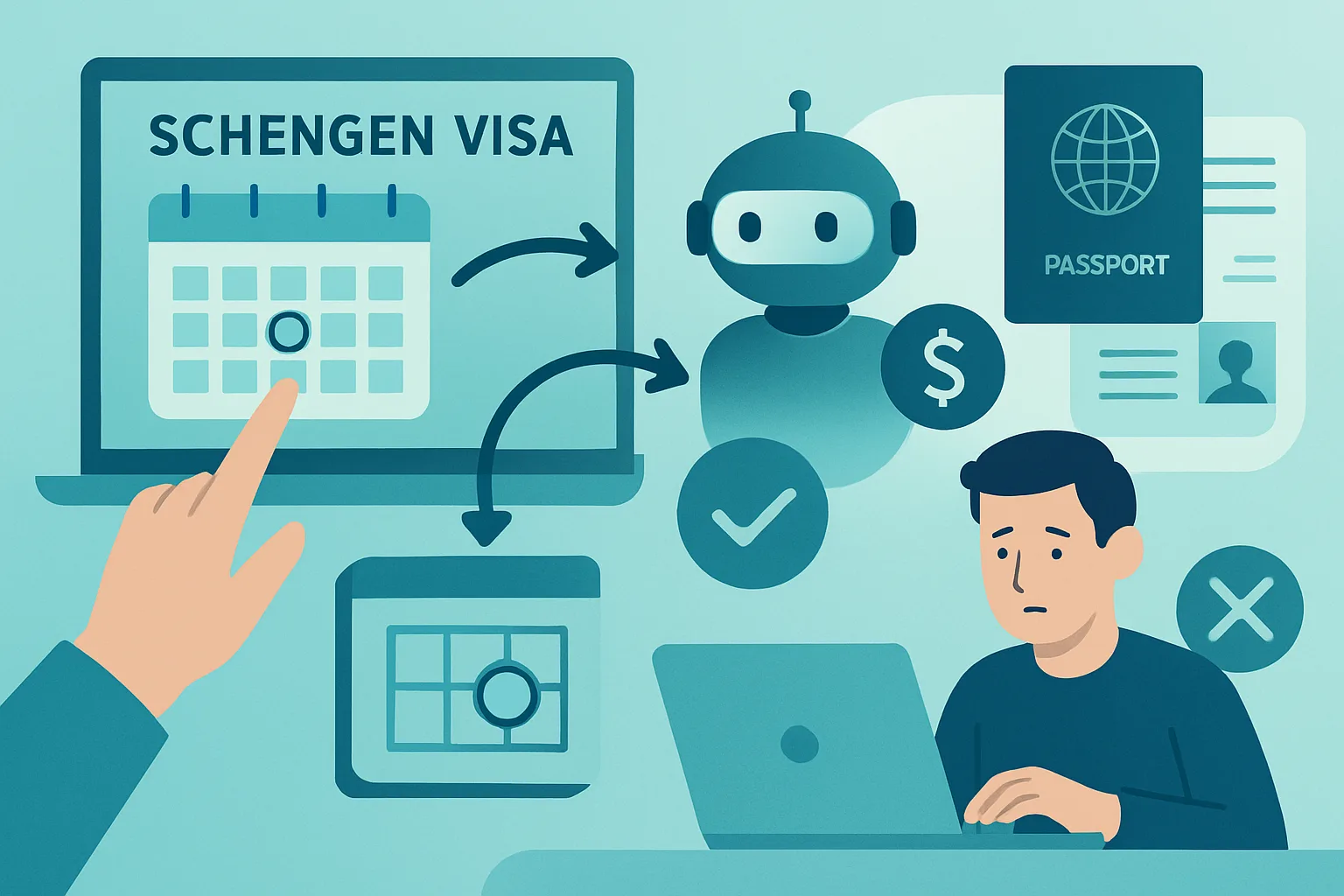
In this guide, we'll explain exactly how these bots work, how to spot a scam, and—most importantly—how to secure a legitimate appointment without paying a scalper. Whether you're a UK resident or applying from elsewhere, this advice will save you time, money, and stress.
Remember: visa appointment booking is always free. No official body charges for a slot. If someone asks for money to 'reserve' an appointment, it's a scam.
What Are Schengen Visa Appointment Bots?
Schengen visa appointment bots are automated programs (often called 'scalpers' or 'bots') that continuously refresh official booking portals—like TLScontact, VFS Global, or BLS International—and grab appointment slots the moment they are released. They can book dozens of slots in seconds, far faster than any human.
These bots are typically run by individuals or organised groups who then sell the booked slots to desperate applicants. Prices vary wildly, from £50 for a standard slot to £300 or more for an urgent appointment during peak season.
Scalping bots are not illegal in every country, but they violate the terms of service of all major visa application centres. Using them—or buying from them—can lead to your appointment being cancelled, your application rejected, or even a ban from applying for a Schengen visa.
How Do Scalping Bots Work?
Understanding the mechanics helps you avoid falling victim. Here's a step-by-step breakdown:
- Monitoring: The bot constantly monitors the booking website for new slots. Some bots check every few seconds, 24/7.
- Automated booking: When a slot appears, the bot fills in the required details (name, passport number, etc.) using pre-loaded data and submits the booking instantly—often in under one second.
- Holding the slot: Many portals allow a short holding period (e.g., 30 minutes) before payment or confirmation. The bot books multiple slots and holds them.
- Reselling: The scalper lists the held slots on third-party websites, social media, or via direct messages, offering to 'transfer' the appointment to you for a fee.
- Transfer: If you pay, the scalper cancels the original booking (freeing the slot) and you must grab it immediately—often requiring you to be online at the same time. This is risky; someone else might take it first.
Some advanced bots even bypass CAPTCHA challenges using automated solvers or human farms. The whole operation is designed to exploit the gap between supply and demand.
Why Are Schengen Visa Appointments So Hard to Get?
The short answer: demand far exceeds supply. After the pandemic, travel rebounded strongly, but many consulates and visa centres still operate with reduced staffing. Peak seasons (spring and summer) see a surge in applications, especially from UK residents and other non-EU nationals.
Additionally, some countries have outsourced visa processing to a few centres, creating bottlenecks. For example, a single TLScontact centre in London handles applications for multiple Schengen states. When slots are released, they vanish within minutes.
Scalpers exploit this scarcity. They know that travellers are willing to pay a premium to avoid missing their trip. But you don't have to play their game.
How to Spot a Schengen Visa Appointment Scam
Scalpers use various tactics to appear legitimate. Here are red flags to watch for:
- Payment demanded for the appointment itself. Official visa application fees cover processing, not booking. Never pay for a slot.
- Guaranteed appointments. No one can guarantee a slot—even official channels can't promise availability.
- Urgency pressure. 'Only 2 slots left!
Pay now or lose it!' This is a classic scarcity tactic.
- Requests for personal data upfront. Scammers may ask for your passport copy, address, or even bank details before 'reserving' a slot.
- Unusual payment methods. Bank transfers, cryptocurrency, or gift cards are common. Legitimate services use credit cards or PayPal with buyer protection.
- No verifiable contact information. If the seller has no physical address, phone number, or verifiable reviews, steer clear.
If you encounter any of these, walk away. Report the seller to the visa application centre and to Action Fraud (UK) or your local police.
How to Avoid Scalping Bots and Get a Legitimate Appointment
You can beat the bots with a bit of strategy and patience. Follow these steps:
1. Book Directly Through Official Channels Only
Always use the official website of the visa application centre for the country you're visiting. For example, if you're applying for a French Schengen visa from the UK, go to TLScontact's official site. Do not use third-party 'booking agents'—they are often scalpers in disguise.
Bookmark the official page and check it regularly. Some centres release slots at specific times (e.g., 8:00 AM local time). Be ready to book as soon as they appear.
2. Use Official Appointment Alerts
Many visa centres offer free email or SMS alerts when new slots become available. Sign up for these. They are not instant, but they give you a head start over manual checking.
Some third-party apps (like 'Visa Appointment Notifier') also provide alerts, but be cautious—only use reputable ones with good reviews. Never pay for alerts.
3. Be Flexible with Dates and Locations
If your schedule allows, consider applying at a less busy centre. For example, instead of London, try Manchester, Edinburgh, or Belfast. Also, consider applying for a visa from a less popular Schengen state if you plan to visit multiple countries—you can apply at the embassy of the country where you'll spend the most time.
Off-peak months (November–February, excluding holidays) have more availability. Plan your trip accordingly.
4. Prepare Your Documents in Advance
One reason people panic-buy from scalpers is that they haven't prepared their documents. If you have everything ready—passport, photos, travel insurance, flight itinerary, accommodation proof, and schengen visa bank statement—you can book the moment a slot appears without delay.
Use our schengen visa application process guide to ensure you have all required documents.
5. Consider Premium or Priority Services
Some visa centres offer paid priority or premium lounge services that include faster appointment booking. These are official services, not scalping. For example, TLScontact's 'Prime Time' service allows you to book appointments outside normal hours for an extra fee.
Check the official website for these options—they are legitimate and often cheaper than scalpers.
6. Use the 90/180 Rule Calculator to Plan Ahead
If you're a frequent traveller, use our schengen 90 180 rule calculator to track your days in the Schengen area. This helps you apply for the right visa type and avoid overstaying, which could complicate future applications.
What to Do If You've Already Paid a Scalper
If you've fallen for a scam, act quickly:
- Contact your bank or payment provider to dispute the charge. If you paid by credit card, you may be protected under Section 75 (UK) or chargeback rules.
- Report the scam to Action Fraud (UK), the visa application centre, and the embassy of the Schengen country.
- Do not use the appointment if it was obtained fraudulently. The centre may cancel it, and you could be flagged.
- Book a new appointment through official channels as soon as possible.
Remember: your personal data is now in the hands of scammers. Monitor your accounts for suspicious activity.
Are There Any Legal Ways to Get an Appointment Faster?
Yes, several official options exist:
- Priority or express processing: Many consulates offer faster visa processing for an additional fee (e.g., €80–€120). This does not guarantee an earlier appointment, but it speeds up the decision once you apply.
- Premium lounge services: Centres like VFS Global offer 'Prime Time' or 'Premium Lounge' appointments for a fee (typically £30–£60). These are legitimate and often have better availability.
- Walk-in appointments: Some centres allow walk-ins for certain visa types (e.g., for urgent travel). Check with the specific centre.
- Apply at a different embassy: If you're a schengen visa uk residents, you can apply at the embassy of the country you're visiting first or where you'll spend the most time. If that embassy has availability, use it.
Never pay a third party for these services—they are only available through official channels.
What Are the Risks of Buying from Scalpers?
Beyond the financial loss, buying from scalpers carries serious risks:
- Appointment cancellation: If the centre detects the booking was made by a bot, they may cancel it without notice.
- Visa refusal: Consulates may view a scalper-bought appointment as evidence of fraudulent behaviour, leading to a refusal or ban.
- Data theft: Scalpers may use your personal information for identity fraud.
- No recourse: If the appointment doesn't work out, you have no way to get your money back—the scalper will disappear.
In short: it's not worth it.
How Are Authorities Fighting Scalping Bots?
Visa application centres and governments are aware of the problem and are taking steps:
- CAPTCHA and anti-bot measures: Many sites now use advanced CAPTCHA systems (like reCAPTCHA v3) that detect automated behaviour.
- Rate limiting: Portals limit the number of booking attempts per IP address or account.
- Legal action: In 2023, a UK-based scalper was prosecuted for selling NHS appointment slots—similar laws could apply to visa appointments. Some countries have made scalping a criminal offence.
- Queue systems: Some centres now use virtual waiting rooms that randomise access, making it harder for bots to jump the queue.
Despite these efforts, scalping persists. Your best defence is to stay informed and never pay for an appointment.
The Role of Social Media in Scalping
Scalpers often use social media platforms like Facebook, Instagram, and Telegram to advertise their services. They create groups or channels with names like 'Schengen Visa Appointment Help' or 'Fast Track Visa Slots.'
These groups may appear helpful at first glance, with fake positive reviews from accomplices. In reality, they are hunting grounds for desperate travellers.
Never trust unsolicited offers on social media. Report any such groups to the platform and to the visa centre.
How Scalpers Manipulate Booking Systems
Some scalpers use multiple IP addresses and VPNs to bypass rate limits. They may also create hundreds of fake accounts on booking portals to increase their chances.
In some cases, they exploit vulnerabilities in the booking system's code. For example, they might directly call an API endpoint to book a slot without going through the web interface.
Visa centres are constantly patching these vulnerabilities, but new ones appear. This cat-and-mouse game makes it essential for you to rely only on official channels.
Why You Should Never Share Your Passport Details with Scalpers
Scalpers often ask for your full name, passport number, and date of birth to 'book' an appointment. Once they have this data, they can use it for identity theft or sell it on the dark web.
Your passport details are valuable. Criminals can use them to apply for loans, open bank accounts, or even commit immigration fraud in your name.
Protect your personal information as if it were cash. Only share it with official visa centres and trusted entities.
How to Verify If a Booking Service Is Legitimate
If you're considering a service that claims to help with appointments, verify it thoroughly. Check if the service is listed on the official website of the visa centre.
Look for a physical address, a phone number, and verifiable customer reviews on independent platforms like Trustpilot. Be suspicious of services that only accept cryptocurrency or wire transfers.
Contact the visa centre directly to ask if the service is authorised. If they say no, run.
The Psychological Tactics Scalpers Use
Scalpers are skilled at creating a false sense of urgency. They may say, 'This slot will be gone in 5 minutes,' or 'I have another buyer waiting.'
They also exploit your fear of missing a holiday or business trip. They know that the more desperate you feel, the more likely you are to pay.
Take a deep breath. Remind yourself that official appointments are always free. Walk away from any pressure tactics.
How to Report Scalping Bots and Scams
Reporting scalpers helps protect other travellers. If you encounter a scalper, gather evidence: screenshots, messages, payment requests, and website URLs.
Report the scam to the visa application centre's customer service. Also report it to your local cybercrime unit or consumer protection agency.
In the UK, you can report to Action Fraud online or by phone. In the EU, contact your national police or the European Consumer Centre.
What to Do If You Can't Find Any Appointments
If you've tried everything and still can't find a slot, don't panic. Consider alternative travel dates or destinations.
You might also apply for a visa from a different Schengen country if your itinerary allows. For example, if France has no slots, but Italy does, and you plan to visit both, apply for an Italian visa.
Remember that patience is key. Slots open up regularly as cancellations occur. Keep checking official sites multiple times a day.
How Technology Is Making Bots Smarter
Bots are becoming more sophisticated. Some now use machine learning to mimic human behaviour, such as random mouse movements and typing delays.
They can also bypass simple CAPTCHAs using automated solvers. This makes it harder for visa centres to distinguish bots from real users.
Visa centres are responding with behavioural analysis and biometric verification. But the arms race continues, so your best bet is to stay vigilant.
The Cost of Scalping on the Travel Industry
Scalping doesn't just hurt individual travellers. It undermines trust in the visa system and increases costs for everyone.
Visa centres spend millions on anti-bot technology, which ultimately raises fees for legitimate applicants. It also delays processing for everyone as centres deal with fraudulent bookings.
By refusing to pay scalpers, you help reduce the incentive for this illegal activity.
How to Stay Informed About Appointment Availability
Follow the official social media accounts of visa centres and embassies. They often post updates about new slot releases or system maintenance.
Join online forums and communities of travellers who share tips and experiences. But be careful—some members may be scalpers in disguise.
Use our schengen visa application process guide for up-to-date information on requirements and procedures.
How Scalpers Target Specific Nationalities
Scalpers often focus on applicants from countries with high visa rejection rates or limited embassy presence. Citizens of India, Pakistan, Nigeria, and the Philippines are frequently targeted.
They know these travellers face longer wait times and stricter scrutiny. This makes them more willing to pay for a 'guaranteed' slot.
If you are from a high-risk nationality, be extra cautious. Never assume a paid service is legitimate just because it promises faster results.
The Rise of Telegram and WhatsApp Scalping Networks
Encrypted messaging apps like Telegram and WhatsApp have become popular channels for scalpers. They create private groups where they post 'available slots' in real time.
These groups often require an invitation or payment to join. Once inside, you are bombarded with offers that seem too good to be true.
Remember: legitimate appointments are never sold on messaging apps. Leave any group that asks for money in exchange for a slot.
How to Use Browser Extensions to Beat Bots
Some travellers use browser extensions that automatically check for appointment availability. Extensions like 'Distill Web Monitor' or 'Page Monitor' can refresh pages and alert you to changes.
These tools are legal and free. They mimic what bots do, but you control them manually.
Set the extension to check every 30–60 seconds during peak release times. Never use extensions that require payment or personal data.
What Happens When You Buy a Scalped Appointment
When you buy a scalped appointment, the scalper typically cancels their original booking. You then have a few minutes to grab the released slot before someone else does.
This process is extremely unreliable. Many travellers report losing the slot because they were not fast enough.
Even if you succeed, the visa centre may later detect the irregularity and cancel your appointment. You lose both the money and the slot.
How to Spot Fake Appointment Confirmation Emails
Scalpers sometimes send fake confirmation emails that look official. These emails may include logos of TLScontact or VFS Global.
Check the sender's email address carefully. Official emails come from domains like @tlscontact.com or @vfsglobal.com, not from Gmail or Yahoo.
Verify your appointment by logging into the official portal directly. Do not click links in the email.
The Impact of Scalping on Visa Processing Times
Scalping creates artificial scarcity, which forces genuine applicants to wait longer. This backlog affects everyone, including business travellers and students.
Consulates may become overwhelmed with fraudulent bookings. This can slow down processing for legitimate applications.
By refusing to engage with scalpers, you help keep the system fair for all travellers.
How to Use Multiple Devices to Increase Your Chances
If you are trying to book a slot manually, use multiple devices. Open the booking portal on your phone, tablet, and laptop simultaneously.
This increases your chances of catching a released slot. But be careful not to exceed rate limits—some portals block IP addresses that make too many requests.
Use different internet connections (Wi-Fi and mobile data) to avoid triggering anti-bot measures.
The Role of Travel Agents in Scalping
Some travel agents offer 'visa appointment booking' as a paid service. While some are legitimate, many are simply scalpers in disguise.
Always ask the agent if they are officially authorised by the visa centre. If they cannot provide proof, do not use them.
Legitimate travel agents do not charge extra for booking an appointment. They may charge for document preparation, but never for the slot itself.
How to Create a Strong Booking Strategy
Plan your appointment search like a military operation. Set aside specific times each day to check the portal.
Use a calendar to track when slots are typically released. Some centres release slots on Monday mornings or Thursday afternoons.
Keep a checklist of all required documents ready. This way, you can book immediately without hesitation.
Key Takeaways
- Schengen visa appointment bots are automated programs that bulk-book slots and resell them at inflated prices.
- Never pay for an appointment—official booking is always free.
- Use official channels only, sign up for alerts, and be flexible with dates and locations.
- Prepare your documents in advance, including a valid schengen visa bank statement.
- If you've been scammed, report it and dispute the payment immediately.
- For UK residents, check our guide on schengen visa uk residents for tailored advice.
- Use the schengen 90 180 rule calculator to plan your trips and avoid overstaying.
- Follow our schengen visa application process for a smooth application.
For the latest official information, always check the website of the Schengen country's embassy or consulate in your country. Visit the official EU Schengen travel page for authoritative guidance.
Disclaimer: This article provides general guidance and is not professional legal advice. Visa rules and appointment availability change frequently. Always verify requirements with official sources before travel.
Frequently asked questions
Is it illegal to use a bot to book a Schengen visa appointment?
Can I get a refund if I paid a scalper for an appointment?
How can I tell if a booking website is official?
What should I do if I can't find any appointments?
Do UK residents face more difficulty booking Schengen visa appointments?
This article is for general informational purposes only. Visa and travel authorisation rules change frequently. Always check the official government website before travelling.

Written & reviewed by
Can OTUTravel Authorisation Editor
Can OTU is the editor of ETA Travel Assistant, specialising in UK ETA, Schengen ETIAS, NZeTA and ESTA travel authorisations. Can monitors official government sources and policy updates to ensure every guide is accurate, current and genuinely useful for travellers.
View all guides →