How to Handle Schengen Visa Requirements From Uk
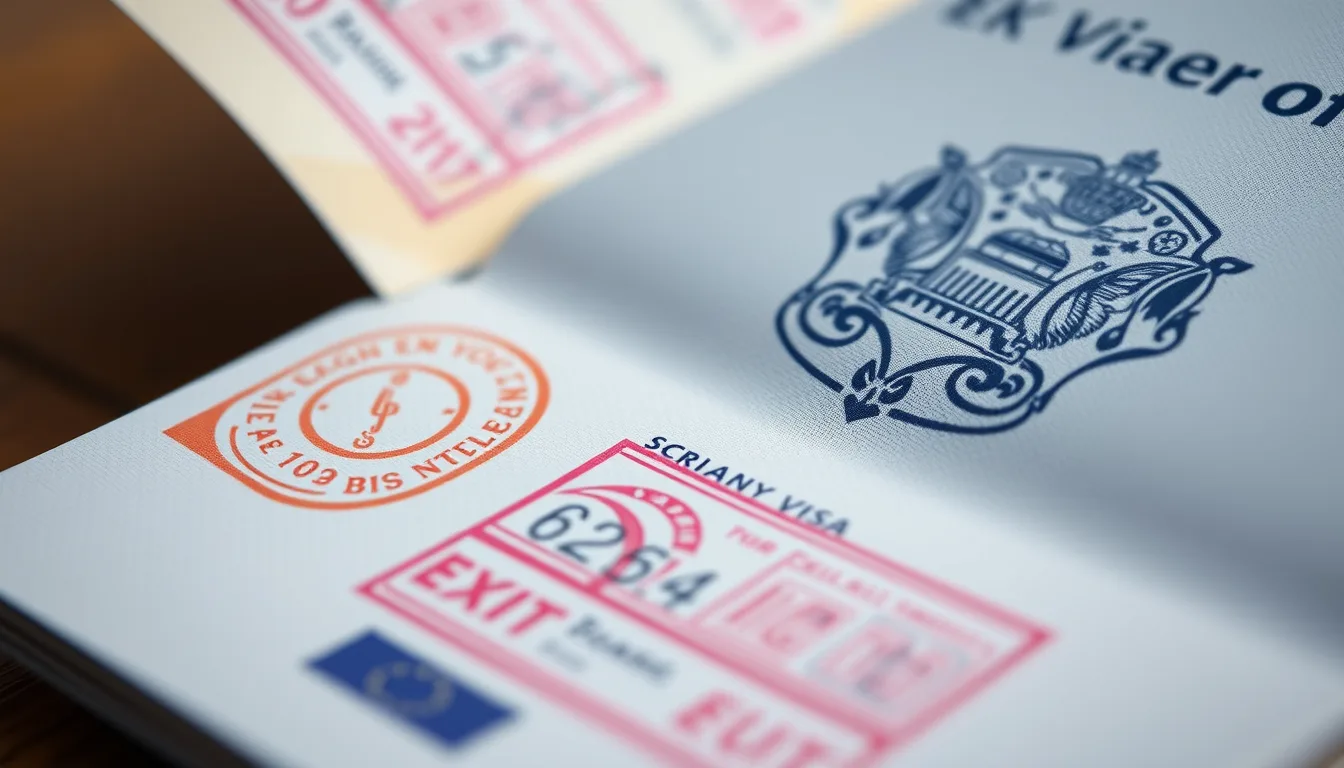
- Adult visa fee is €90 (children 6–11 pay €45, under-6s are free) since 11 June 2024, plus a visa-centre service fee
- You can apply up to 6 months before your trip — and you should, because UK appointment slots dry up in summer
- Standard decision time is 15 calendar days, extendable to 45 if the consulate needs extra checks
Two very different travellers type "Schengen visa requirements from UK" into Google. One is a British passport holder who wants to know whether Brexit changed anything (for short trips, it didn't). The other lives in the UK on a non-British passport and needs the actual visa: the appointment, the €90, the folder of paperwork.
This guide covers both, but it leans into the second group — that's where the cost, the confusion and the refused applications live.
It's general information, not immigration advice. Rules shift, fees move, and each consulate words its checklist slightly differently, so check your consulate's own page and the European Commission's visa pages before you spend money on flights.
Do you actually need a Schengen visa from the UK?
Start here, because the answer splits cleanly in two.
| Your situation | Short trip (up to 90 days) | Long stay (work, study, residence) |
|---|---|---|
| British citizen, living in the UK | No visa. Visa-free for tourism, business, transit and family visits | You need a national long-stay (D) visa from the country concerned |
| Non-British, UK resident, visa-exempt nationality (US, Canada, Australia, Japan, Singapore and others) | No visa. Visa-free — ETIAS will apply to you once it launches | National D visa from the country concerned |
| Non-British, UK resident, visa-required nationality (India, Pakistan, Nigeria, South Africa, China, Turkey and many more) | Yes — a Schengen short-stay (C) visa, applied for in the UK | National D visa, usually applied for in the UK too |
One gotcha for British passport holders: your passport must be valid for at least three months beyond the day you plan to leave Schengen, and it must have been issued within the last 10 years. Passports issued before October 2018 sometimes carried up to nine months of extra validity, and those can be refused at the border. If yours is close to 10 years old, renew it first.
The FCDO travel advice pages for each country spell out the entry rules.
What is the 90/180 rule, in plain English?

You can spend 90 days inside the Schengen area in any rolling 180-day period. Both the day you arrive and the day you leave count as full days.
Here's a worked example. You spend 1 March to 30 April in Spain — 61 days. You fly home to Manchester.
On 1 June you want to go back for a wedding. Look back 180 days from 1 June (that takes you to 3 December of the previous year). You've used 61 days, so you have 29 left on that window.
Days spent in the UK, Ireland and Cyprus don't count, because none of them are in Schengen. Romania and Bulgaria became full members on 1 January 2025, so they do count from that date. A visa doesn't reset the clock — if you hold a one-year multiple-entry visa, you still only get 90 days in any 180.
How to apply for a Schengen visa from the UK: the 9 steps
Follow these in order. Skipping step 2 is the single most common reason applications get turned away at the door.
Step 1 — Confirm your nationality needs a visa
Check the EU's official visa policy pages rather than a blog (including this one). Roughly 60 nationalities are visa-exempt; everyone else needs a visa for any Schengen stay.
Being a UK resident doesn't change this. Your passport decides whether you need a visa. Your UK residence permit decides whether you can apply for it in London rather than Delhi.
Step 2 — Check that your UK status qualifies you to apply here
Consulates generally only accept applications from people legally resident in the UK. If you're here on a Standard Visitor visa for a holiday, you usually can't apply in London — you'd apply in your home country.
Most consulates also want your UK permission to remain valid for at least three months beyond your planned return date. Check your specific consulate's wording, because this varies.
If your status is marginal — a visa expiring soon, an application pending — sort the UK side out first. A Schengen visa is not a way around a UK immigration problem.
Step 3 — Pick the right country to apply to
Apply to the consulate of your main destination: the country where you'll spend the most nights. Not the country you fly into. Not the country where you found the cheapest appointment.
Two exceptions worth knowing:
- If you're spending equal nights in two countries, apply to the one you enter first
- If you're only transiting — say, a two-hour connection at Frankfurt — you don't apply to Germany at all if your actual stay is in Italy
Applying at the ">wrong consulate" is a legal reason for refusal, not a technicality. The same residency principle applies outside the UK, which is why a US green card holder living in America applies in America — the Schengen visa rules for US green card holders follow the same logic.
Step 4 — Book the appointment as early as you can
Most UK applications go through a commercial visa centre — VFS Global, TLScontact, BLS International — rather than the consulate itself. Centres operate in London, Manchester, Edinburgh and Birmingham depending on the country.
This is where trips go wrong. Slots in June, July and August can sit four to eight weeks out at the busy centres. Book the moment your dates are fixed, before you book flights.
If you're travelling in peak season, treat the appointment as the scarce resource, not the flight.
Step 5 — Fill in the application form
The form is short but fussy. These are the fields that trip people up:
- Member State of main destination — must match the consulate you're applying to
- Number of entries requested — single, double or multiple. Ask for multiple if you have history; you may get it
- Dates of arrival and departure — must line up exactly with your flight reservations and hotel bookings
- Reference person or hotel in the Member State — if you're staying with friends, you need their address and often an invitation letter
- Means of support — cash, credit card, or a sponsor. Pick one and back it up with documents
Some consulates now use online forms and print the barcode page for you. Others still want a handwritten signature. Read the centre's instructions — a missing signature is a wasted appointment.
Step 6 — Build the document pack
Bring originals plus photocopies. The full checklist is further down. The two items people forget most often are proof of UK immigration status and travel insurance that meets the €30,000 minimum.
Bank statements are usually the other sticking point. Most consulates want three to six months of personal statements, printed by the bank, showing regular income after bills. A screenshot from your banking app often gets rejected.
Step 7 — Attend the appointment and give biometrics
You'll have fingerprints and a digital photo taken — that's your biometrics. They stay on file for 59 months, so repeat applicants often don't need to attend in person again (check with your centre).
Arrive early, bring the printed appointment confirmation, and expect to be there for around 45–90 minutes at a busy centre. This is also where you pay the visa fee, usually in pounds at the centre's own exchange rate, plus their service charge.
Step 8 — Wait for the decision
The legal standard is 15 calendar days from the day the consulate receives your application. That can stretch to 45 days if they need to consult other Schengen states or check documents further.
Don't book non-refundable flights before the visa is in your hand. If you need certainty for an event, apply early and use refundable or hold bookings for the initial submission.
Step 9 — Check the visa sticker before you leave the building
Read every line: your name spelling, passport number, validity dates, number of entries, and the number of days you're allowed. If anything is wrong, ask the centre or consulate to correct it there and then — it's far harder from an airport check-in desk.
A visa valid from 1 June to 30 September does not mean 121 days of stay. The validity window is when you may travel; the "days" figure is your maximum stay.
What does a Schengen visa from the UK actually cost?

The visa fee is set in euros and has been €90 for adults since 11 June 2024. Here's the realistic total, with illustrative extra costs based on typical UK visa centre pricing at the time of writing.
| Item | Typical amount | Notes |
|---|---|---|
| Schengen visa fee, adult | €90 | Set by EU regulation. Paid in GBP at the centre's rate |
| Schengen visa fee, child 6–11 | €45 | Under-6s are free |
| Visa centre service fee | £20–£40 | Illustrative. Set by the centre, not the EU |
| Travel insurance | £20–£60 | Must cover €30,000 for medical, hospital and repatriation |
| Passport photos | £8–£15 | 35×45mm, recent, plain background |
| Return courier of passport | £15–£30 | Optional at most centres |
| Certified translation | £25–£45 per page | Only if documents aren't in English |
Budget roughly £120–£160 all-in for a single adult application. Some nationalities covered by EU visa facilitation agreements pay a reduced fee — check your consulate's page rather than assuming the €90 applies. The Commission's Schengen visa policy pages list the current fee rules.
Schengen visa document checklist for UK applicants
- Completed application form, signed
- Passport valid at least 3 months beyond departure from Schengen, issued within 10 years, with 2 blank pages
- Two recent 35×45mm photos
- Proof of UK immigration status (see the next section — this changed in 2025)
- Flight reservations in and out of Schengen
- Hotel bookings for every night, or an invitation letter with your host's address and ID
- Travel insurance covering the full trip and the full Schengen area, with €30,000 minimum medical cover
- Three to six months of bank statements
- Payslips or employer letter; students need a university letter and proof of funds
- Previous Schengen visas and entry stamps, if you have them — they help with multiple-entry requests
The eVisa problem: what changed for UK-based applicants
This is the detail most guides still get wrong. Physical biometric residence permits (BRPs) stopped being valid on 31 December 2024. UK immigration status now sits in a UKVI online account as an eVisa.
Schengen consulates and their visa centres updated their checklists at different speeds. Some now ask for a printed "immigration status" page from your UKVI account with the QR code. Others still print the word "BRP" on their checklist — stale wording.
What works in practice:
- Log into your UKVI account and print the status page showing your permission type and expiry
- Generate a share code if the centre asks for one, and bring it on the same sheet
- If a checklist mentions BRP and you don't have one, email the centre before your appointment and ask exactly what they'll accept
Turning up without any proof of UK status is the fastest way to lose an appointment slot you waited six weeks for.
What most guides get wrong about Schengen visas
- "Apply in your country of nationality." No. You apply where you legally reside. A Nigerian national with UK residency applies in London.
- "The visa guarantees entry." It doesn't. A border officer makes the final call and can refuse you even with a valid visa. Carry your documents.
- "One visa covers all of Europe." Ireland isn't in Schengen. Cyprus isn't either. Check before you assume.
- "Three months ahead is early enough." You can apply six months ahead, and in summer you'll want to.
- "British citizens need a visa now." They don't — 90 days visa-free for short trips remains the rule. ETIAS, when it launches, is a pre-travel authorisation, not a visa.
A realistic scenario: Priya's Spanish visa
Priya is an Indian national on a UK Skilled Worker visa, living in Manchester. She wants ten days in Andalusia in July with her sister, who lives in Seville.
She checks the Spanish consulate's requirements in early April and books a VFS appointment for 12 May — the first slot that fits her work schedule. She prints her UKVI eVisa status page, gets a three-month bank statement stamped by her branch, and buys insurance covering the full ten days for £28.
Her flight reservation is refundable, which costs her an extra £40 but means she isn't exposed if the visa is delayed. At the appointment she pays €90 plus a £32 service fee, gives fingerprints, and gets her passport back by courier 11 working days later.
The sticker grants 18 days within a 45-day window — more than she asked for, which is normal. Total spend: roughly £175 including the refundable-booking premium. What almost derailed it was her eVisa: the centre's checklist still said "BRP" and she had to ring them to confirm the printed status page was acceptable.
If someone else is paying for your trip
Students, adult children travelling with parents, and anyone whose trip is funded by a relative need extra paperwork. The consulate wants to see who is paying, how they're related to you, and that they can actually afford it.
You'll need the sponsor's bank statements, a letter confirming the arrangement, and proof of the relationship. The guide to writing a Schengen visa sponsorship letter covers the wording that consulates accept.
Multi-country trips: which visa, which border
Inside the Schengen area, most internal borders have no routine checks. But you're still legally required to carry your passport and visa, and spot checks do happen — on night trains, at Alpine crossings, at airports.
Keep your accommodation bookings and insurance on your phone. If an officer asks why you're entering Germany when your visa was issued by Italy, your itinerary should show Italy as the main destination.
What happens at the Schengen border now
The EU's Entry/Exit System (EES) began a phased rollout from 12 October 2025 and is being introduced across ports over roughly 12 months. Expect to give fingerprints and a facial image on your first entry after that — it replaces passport stamping.
ETIAS is a separate scheme for visa-exempt travellers, including British citizens. It is not yet in force; the EU has indicated a launch in late 2026 with transitional arrangements, but dates have moved before. Check the official EU ETIAS site before you travel rather than a headline.
If you hold a Schengen visa, ETIAS doesn't apply to you.
How long can you get a multiple-entry visa for?
First-time applicants usually get a single-entry visa covering their exact itinerary, or a few extra days. Build a clean travel history and you can move up the scale: one year, then two, then five years, under the EU's cascade rules.
The catch is that a five-year visa still caps you at 90 days in any 180. The rules on multiple entry Schengen visa validity explain how validity windows and permitted days differ.
British citizens who want to stay longer than 90 days
There's no EU-wide long-stay visa. Each country runs its own scheme — a French long-stay visa, a Spanish non-lucrative visa, a Portuguese D visa — with its own income thresholds, insurance requirements and processing times.
You apply to that country's consulate in the UK, and you generally need to apply before you travel, not after you arrive. Working remotely on a tourist entry is not permitted under Schengen rules unless your specific visa allows it.
This article is for general information only and is not a substitute for official advice. Always verify current requirements with official sources before you travel.
Key takeaways
- British passport holders don't need a Schengen visa for short trips — 90 days in any 180, visa-free
- Non-British UK residents with visa-required passports apply at the consulate of their main destination, in the UK
- The adult fee is €90 (€45 for ages 6–11, free under 6), plus a visa-centre service fee of roughly £20–£40
- Apply up to six months ahead and at least 15 days before travel; standard decisions take 15 calendar days
- Your UK eVisa status page has replaced the BRP — print it and confirm with your visa centre what they accept
- Always verify current fees, document lists and launch dates with the consulate or the official EU pages before booking
Official sources
Check the authority for current fees and requirements before applying.
Frequently asked questions
Do British citizens need a Schengen visa to travel to Europe?
Can I apply for a Schengen visa in the UK if I'm not a British citizen?
How much does a Schengen visa cost from the UK in total?
How long does a Schengen visa take to process from the UK?
Which consulate should I apply to if I'm visiting several Schengen countries?
This article is for general informational purposes only. Visa and travel authorisation rules change frequently. Always check the official government website before travelling.

Written & reviewed by
Can OTUTravel Authorisation Editor
Can OTU is the editor of ETA Travel Assistant, specialising in UK ETA, Schengen ETIAS, NZeTA and ESTA travel authorisations. Can monitors official government sources and policy updates to ensure every guide is accurate, current and genuinely useful for travellers.
View all guides →