UK ETA for Children: What Parents Need to Know Before Applying
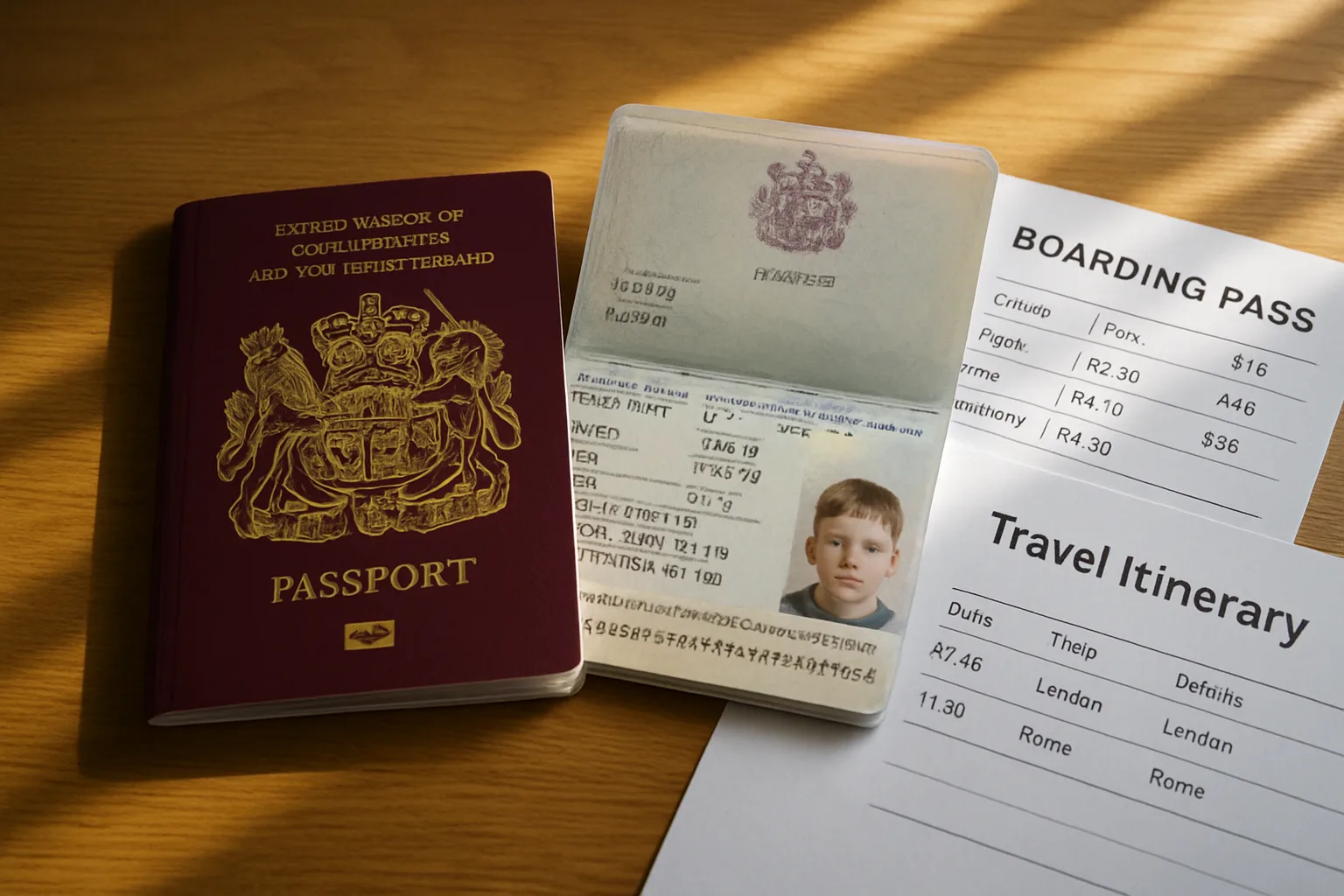
- Children as young as newborns need an ETA if they hold a non-British passport
- Your child must have a valid passport before you can apply
- The application takes under 10 minutes and most approvals come through instantly
If you're planning a family trip to the UK and your children aren't British citizens, you'll need to arrange a UK ETA for each one. It's straightforward, but parents often wonder: Do really young children need one? What if my child's passport expires before the ETA does?
How exactly do I apply on their behalf? This guide walks you through every question, so your family trip can go ahead without delays or confusion at the border.
The UK ETA system replaced the simpler visa exemption arrangement for many countries in late 2024. Where families used to just turn up with a passport, now you need to register each family member — children included. The good news: the process is quick, cheap, and you do it all online.
No paperwork, no documents to post, no lengthy processing times.
Before you book your flights, you'll want clarity on the big questions. Can your newborn really need an ETA? What happens if your child's passport expires before the ETA does?
And what if you're applying for a child who's not yours? Read on, and you'll have answers to all of it.
Do All Children Need a UK ETA?
Yes — almost all children need a UK ETA to enter the UK, regardless of age. This includes newborns and infants. The only significant exception is British citizens.
If your child holds a non-British passport, they need an ETA.
The age truly doesn't matter. A six-month-old with a US passport needs an ETA just as much as a 16-year-old. Many parents assume very young children are exempt from immigration requirements — they're not.
The UK border system treats each individual traveller, including babies, the same way. Every person entering the UK who's not exempt requires authorisation, and for most nationalities, that's an ETA.
That said, applying for a child's ETA is far simpler than the old visa application process ever was. You do it all online, it costs £20, and you're finished in minutes. There's no need to attend an appointment, submit documents, or wait for a letter.
What if your child is a British citizen?
British citizens don't need a UK ETA. This includes children born to British parents, naturalised British citizens, and children granted British citizenship through naturalisation. If your child holds a British passport, they can enter the UK with just that passport — no ETA required, no online application needed.
If your child holds dual citizenship (British and another nationality), they should use their British passport when entering the UK. This automatically exempts them from the ETA requirement entirely.
What about children with multiple nationalities?
If your child has dual or multiple passports, the rule is simple: they should use their British passport when entering the UK. No ETA needed, even if they have other passports in a drawer.
If they only have non-British passports, they'll need an ETA under whichever non-British passport they use. For example, a child with Irish and US passports can use their Irish passport to avoid the ETA requirement (Irish citizens don't need a UK ETA). But if they enter with their US passport, they'll need an ETA for that passport.
Which Passports Require a UK ETA?
The UK ETA requirement applies to nationals of roughly 90 countries. These include almost all Western nations, most of the world's major economies, and many others. If your child's passport is from a Western country — the US, Canada, Australia, New Zealand, Japan, South Korea, and so on — they'll need an ETA.
The main groups exempt from the ETA are British citizens, Irish citizens, and citizens of countries with specific visa-exemption or visa-waiver agreements (a short list). If you're unsure whether your child's nationality requires an ETA, the official UKVI website has a tool to check before you apply.
The official list of eligible nationalities is maintained on the UK government's ETA guidance page, and it's updated regularly as new countries are added to the scheme. It's worth checking if your child's nationality is on the list before you assume they need an ETA — though statistically, most nationalities do.
Age and Eligibility — What If Your Child Is Very Young?
A question that surprises many parents: does my newborn really need an ETA? Yes. The UK treats all travellers — including infants — as individuals for immigration purposes.
Your newborn will need their own ETA before they can enter the country.
This might seem counterintuitive for a baby who can't consent, can't understand what's happening, and won't remember the trip. But the border system doesn't distinguish by age or capacity. Every person entering the UK who's not exempt needs authorisation, and for most nationalities, that's an ETA.
A newborn is a person, and they need one too.
The practical side, though, is genuinely easy. You apply online as the parent or guardian on your child's behalf. There's no special process for children of different ages — no different form, no extra questions, no higher fees.
A six-month-old's ETA application looks almost identical to a 16-year-old's.
Do I apply differently for babies, toddlers, or older children?
No. The online form is the same regardless of age. You enter your child's details (name, passport number, date of birth, nationality), pay £20, answer a few security and health questions, and you're done. Age doesn't change the process, the cost, or the approval timeframe.
The only practical difference is that very young children may need a passport renewal sooner than older children, which means they may need a new ETA before the original two years is up. We'll cover that scenario below.
Can a child apply for their own ETA?
No. Children must have a parent or legal guardian apply on their behalf. The online system doesn't allow minors to create accounts or submit applications independently. There's no specific age at which a child can take over — parents remain responsible for the account and application throughout.
A teenager might technically help a parent fill out the form, or you might walk them through it, but the parent must be the one who actually submits it and manages the account.
Passport Requirements for Children's UK ETA
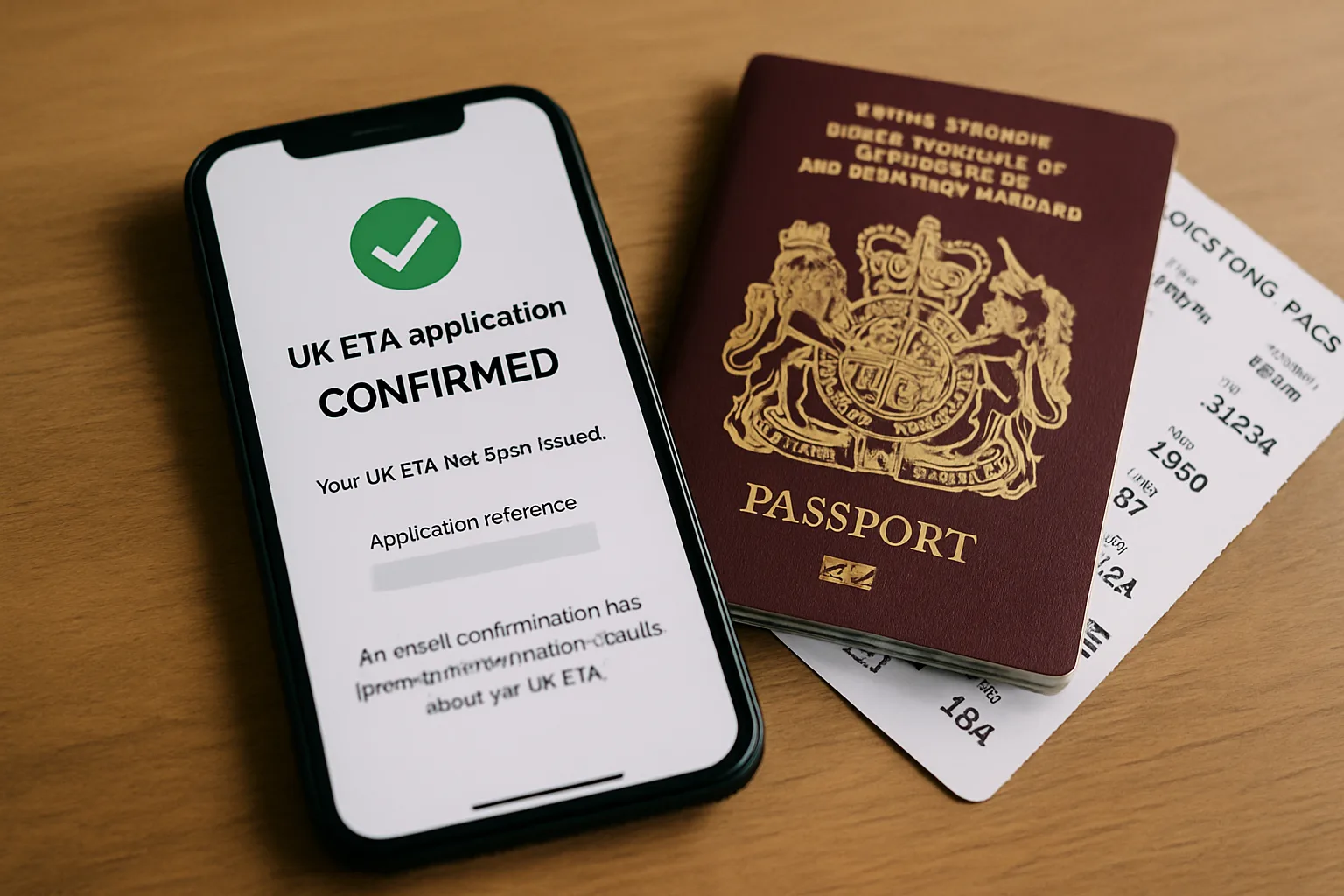
Your child needs a valid passport before you can apply for an ETA. When you apply, you'll enter the passport number, and the ETA is permanently tied to that specific passport number. This is crucial to understand.
Here's the important part: if your child's passport expires before the ETA does (which can happen with children's passports, which are often issued for shorter periods than adult passports), the ETA becomes invalid. A new passport means a new ETA application — there's no way around this. We'll cover what to do in that situation below.
What type of passport does your child need?
Your child needs a standard national passport recognised by the UK border system. The main types accepted are:
- Adult passports (for teenagers and some older children)
- Child passports (for young children — typically valid for 5 years in the UK and US, 6 years in Canada, and varying periods in other countries)
- Biometric passports (now standard in most countries)
UK child passports work fine for a UK ETA. EU passports, US passports, Canadian passports, Australian passports, and passports from nearly any recognised country are accepted. Emergency or travel documents, refugee travel documents, and temporary passports are generally not eligible.
The passport simply needs to be:
- Currently valid (not expired)
- Recognised internationally by the UK
- Issued by an official government authority
How long must your child's passport be valid?
Technically, the UK doesn't enforce a minimum six-month validity rule the way some countries (like the US) do. But practically, your child's passport should be valid for the entire duration of their stay in the UK plus ideally a few months after. You don't want it expiring while you're on holiday.
More importantly: when your child's passport expires, their ETA expires with it. This is non-negotiable. If your child gets a new passport before the original ETA expires, the original ETA becomes worthless — you'll need a new one.
How to Apply for Your Child's UK ETA
The application process is straightforward and takes less than 10 minutes. Here's exactly what to do:
Step 1: Go to the official UK ETA portal and create an account
Visit the UK ETA application website (accessible from gov.uk). You'll create an account using your email address and set a password. Choose a password you'll remember — you may need to log back in to check application status, retrieve records, or contact support.
Use an email address you check regularly, because you'll receive the ETA decision and any follow-up communications there.
Step 2: Enter your child's details
You'll be asked for basic information about your child:
- Full name (exactly as it appears in their passport)
- Date of birth
- Passport number
- Passport country of issue
- Passport expiry date
- Nationality
Have your child's passport open in front of you as you fill this in. Accuracy matters — any mismatch between what you enter and what's in the passport will cause the application to be rejected. Double-check names, especially if middle names are involved or if there are accents or unusual spellings.
Step 3: Answer eligibility and security questions
The form will ask health and security questions, such as whether your child has any serious criminal convictions, has been deported or refused entry to any country, or has certain health conditions. For most children, the answer to all these is no.
Read each question carefully and answer honestly. If you're unsure about a question, check the guidance text provided — the form explains what's being asked. Don't guess or leave things blank.
Step 4: Review and pay
Review your entries for accuracy one final time. Then pay the £20 fee using a debit or credit card. This is a one-time charge per child.
Step 5: Submit and receive your decision
Click submit. Most applications are approved within minutes. You'll see a decision on screen immediately, and you'll also receive an email confirmation.
If approved, your child's ETA is active at that moment and stored in the system, linked to their passport number. There's nothing else to do — no printing, no codes to enter at the border, no ongoing fees.
In rare cases, an application might be flagged for manual review and take longer, or it might be refused. If that happens, you'll receive a detailed email explaining why. But for the vast majority of family applications, approval is instant.
Cost and Processing Time for Children
Each child's ETA costs £20 — the same as an adult's. There are no child discounts, no family packages, and no reduced rates. Every child needs their own ETA and pays the full £20.
How much does a UK ETA cost?
£20 per child for a two-year authorisation. This is a one-time fee. Once paid and approved, there's no additional cost unless you later need to apply for a new ETA (for example, if your child's passport expires and you renew it).
For budgeting purposes: a family of four (two adults, two children) would pay £80 total (4 × £20). For a family of six (two adults and four children), you'd pay £120.
For detailed pricing and other fee-related questions, check our article on how much does a uk eta cost.
How long does it take to get an ETA?
Most children's ETAs are approved within minutes — you may see the decision before you even close the browser window. However, you should apply at least 72 hours before your travel date. This isn't because the process takes that long; it's because it's the official recommendation and allows time in case your application is flagged for further checks or you need to contact support.
In practice, same-day applications often succeed without issue. But if you're booking a last-minute trip, don't rely on instant approval — apply as soon as you have your child's passport details, and assume 72 hours as a safety buffer.
Documents You'll Need to Have Ready
The good news: the UK ETA is a digital-only process. You don't post documents, don't upload files, and don't need to provide originals. But you do need certain information available to complete the application:
- Your child's passport number (from the photo page)
- Your child's passport expiry date
- Your child's exact date of birth
- Your child's full name as it appears in their passport
- Your email address (for the decision and account access)
- Your payment card details (debit or credit card for the £20 fee)
Have your child's passport open next to you when you apply. That's genuinely all the documentation you need.
You won't need to provide or upload birth certificates, proof of custody, travel itineraries, parental ID, proof of funds, accommodation details, or anything else. The online process is deliberately simple and digital-first.
If your application is flagged for manual review (rare for children), you may be contacted and asked for additional documents. But the standard process requires none.
If you want to understand what you might need in more detail, our guide to uk eta application requirements covers the full picture, including edge cases and what happens if your application is reviewed manually.
Parental Consent and Legal Responsibility
A natural question, especially in blended families or complex custody situations: who can apply for a child's ETA, and what if parents aren't together?
Who can apply on behalf of a child?
A parent or legal guardian can apply. If you have parental responsibility for the child — whether you're their biological parent, adoptive parent, or have a guardianship order — you can apply for their ETA.
If you're a grandparent, aunt, uncle, or other relative caring for the child but don't have formal legal responsibility, you may need written consent from a parent or guardian. In practice, the online form doesn't require you to prove your legal status, but if your application is reviewed, you could be asked for evidence. The safest approach: have written consent from a parent.
Most applications are submitted by parents during the trip planning phase, and there's no issue.
What if parents are separated or divorced?
If one parent is the sole legal guardian with formal custody, they can apply without the other parent's consent.
If both parents have joint custody, either parent can typically apply. However, it's good practice to inform the other parent, especially if the child will be travelling and might be away for some time. Open communication avoids problems later.
If there's a court order that restricts one parent's authority over the child's travel or care (for instance, a restraining order), that order takes legal precedence. Respect those restrictions.
Do I need to provide proof of parental responsibility?
Not during the initial application. The online form simply asks you to confirm you're responsible for providing the information and that you have authority to apply on the child's behalf. You're not required to upload a birth certificate, custody document, or guardianship order.
However, if your application is flagged for manual review or if you're asked for additional information, you may be asked to provide proof (for instance, a copy of the child's birth certificate showing you as a parent, or a custody agreement). This is rare with straightforward family applications.
What Happens If Your Child's Passport Expires Before the ETA Does?
This is a scenario many parents worry about, and it's worth understanding clearly. Children's passports are often issued for shorter validity periods than adult passports. A UK child passport is valid for five years, but some countries issue shorter validity periods.
Renewal is inevitable.
Here's the key point: if your child's passport expires, their ETA tied to that passport is no longer valid — even if the two-year ETA period hasn't elapsed. The ETA is permanently linked to that specific passport number. A new passport means a new ETA.
Can you renew an ETA?
No. The ETA is not renewable. It's issued for two years from the date of approval and is tied to one passport only. You cannot extend it, update it, or carry it forward to a new passport.
When your child gets a new passport (because the old one expired or was lost or damaged), you must apply for a new ETA. The new passport will have a different number, and the system requires a separate application.
Planning ahead to avoid multiple ETAs
Before booking long-haul travel or planning a multi-year trip that requires multiple visits to the UK, check your child's passport expiry date. If it expires before your intended return date (or shortly after), consider renewing it beforehand.
Alternatively, apply for the ETA when you renew the passport, not before. This way, the two-year ETA validity and the passport validity will be roughly aligned, reducing the chance you'll need a second ETA during the two-year window.
For example: if your child's passport expires in 2026, renew it in early 2026, then apply for an ETA in 2026. The new ETA will then be valid until 2028, aligned with the new passport's expiry. This saves you a second £20 application fee and the hassle of applying again.
What to Do If Your Child's Circumstances Change
Occasionally, something changes between the time you apply for an ETA and the time you travel. Here's how to handle the main scenarios:
Name change
If your child's name changes between ETA application and travel (due to marriage, legal name change, or cultural name update), they'll need a new passport reflecting the change. Once they have a new passport with the new name, they'll need a new ETA too.
If there's a delay in receiving the new passport and you're due to travel, bring both the old and new passports to the border, along with a copy of the legal document evidencing the name change (marriage certificate, court order, deed poll, etc.). Border Force can verify the connection between the two, though it's not ideal. It's better to have the new passport and new ETA before you travel.
Change of nationality or passport
If your child acquires a new nationality or passport (for instance, a child born to non-British parents who later acquires British citizenship through naturalisation), they can use their new British passport at the border — and they won't need an ETA at all.
If they want to travel on their new passport, apply for an ETA under the new passport number if it's not British. If it's a British passport, no ETA is needed.
Medical or criminal matters
If your child has a new health diagnosis or legal issue (criminal charges, conviction, etc.) between applying and travel, contact UKVI before your trip. Changes that might have been disclosed differently on a fresh application should be flagged. It's rare, but it's worth being honest — misrepresenting information on an immigration application can have consequences.
What Happens at the Border With Your Child's ETA
You might wonder what actually happens when you arrive at UK border control with your child's ETA.
When you arrive, Border Force will check your child's passport in their system. The ETA is stored in the UK immigration database, linked to the passport number. They'll see that the ETA is valid and allow entry.
There's no document to show, no code to enter — the ETA is purely digital and invisible to you.
Just make sure your child is travelling on the same passport that the ETA was issued for. If they somehow have a different passport (because they renewed it, lost the first one, etc.), the ETA won't be in the system for that new passport number, and they could be denied entry.
Airlines also check ETA status before allowing boarding. If an ETA is missing or invalid, you might be refused boarding on your flight. This is actually a helpful backstop — you'd find out before getting to the airport, not at the border.
Common Issues and How to Resolve Them
My application was refused. What do I do?
Refusals are uncommon for children, but if it happens, check the decision email carefully for the reason. This might be a simple data error (name or passport number mismatch), a security flag, or a health concern.
If it's a data error, correct the information and re-apply. If it's a security or health issue, contact UKVI for guidance on whether the issue can be resolved or whether additional information might help. You may be able to provide clarification and re-apply.
I can't remember my account password.
Use the "Forgot Password" link on the portal. You'll be sent a reset link to your email address. Follow it to set a new password.
My child's ETA was approved, but the name on the passport is slightly different.
Minor variations (middle name included/excluded, nickname vs. formal name, accent marks) might not cause border issues, but they could. It's risky to leave it. If there's a discrepancy, contact UKVI to clarify whether the ETA is still valid or if you need to re-apply with the correct name.
I applied too late — can I pay for urgent processing?
No. There's no express or premium processing for UK ETAs. The standard 72-hour recommendation is the only option. Most approvals come through in minutes anyway, so applying as soon as you have your child's passport details should be fine.
Don't wait — apply today, and you'll almost certainly have approval within hours.
Can Your Child Travel Without an ETA?
No. If your child doesn't have a valid ETA and needs one, they cannot enter the UK. Attempting to travel without it will result in denial of boarding on your flight or refused entry at the UK border.
Airlines perform ETA checks before allowing boarding. Border Force checks again on arrival. You cannot get around this — don't guess or hope.
Confirm the ETA is approved and active before travel.
A Final Note
This article provides general guidance on UK ETA requirements for children. Rules and fees can change, and individual circumstances vary. Always verify the current requirements with official sources — specifically the UK government's ETA website and UK Visas and Immigration — before booking your trip or submitting an application.
Your peace of mind is worth the five minutes it takes to double-check.
Key Takeaways
- Most children need a UK ETA regardless of age, unless they're British citizens
- You apply online as the parent or guardian; the process takes under 10 minutes and most approvals are instant
- It costs £20 per child and is valid for two years from the date of approval
- Your child must have a valid passport before you can apply, and the ETA is tied permanently to that passport number
- If your child's passport expires before the ETA does, you'll need to apply for a new ETA linked to their new passport
- Check who needs a uk eta if you're unsure whether your child's specific nationality requires one
- Apply at least 72 hours before travel, though most applications succeed within minutes
- This is general guidance — always verify with official UK sources before travel
Official sources
Check the authority for current fees and requirements before applying.
Frequently asked questions
Do newborns and babies really need a UK ETA?
Can I apply for a UK ETA before my child has a passport?
What if my child's ETA is rejected?
My child has a British passport as well as another passport. Do they need an ETA?
My child's ETA is valid, but their passport expires next year. Do I need a new ETA?
This article is for general informational purposes only. Visa and travel authorisation rules change frequently. Always check the official government website before travelling.

Written & reviewed by
Can OTUTravel Authorisation Editor
Can OTU is the editor of ETA Travel Assistant, specialising in UK ETA, Schengen ETIAS, NZeTA and ESTA travel authorisations. Can monitors official government sources and policy updates to ensure every guide is accurate, current and genuinely useful for travellers.
View all guides →