UK ETA Rejection Reasons by Traveller Profile: Which Risks Actually Apply to You

- Rejection risk varies meaningfully by traveller profile, not just by generic application mistakes.
- Dual nationals, recently renamed applicants, and frequent short-notice travellers each face distinct, predictable risk patterns.
- Understanding your own profile's specific risk factors lets you take targeted precautions rather than generic advice.
Here's a detailed breakdown of the traveller profiles most likely to encounter specific UK ETA rejection patterns, and what each individual group should specifically watch for closely.
Profile one: dual nationals applying with the "wrong" passport details in mind
Dual nationals sometimes enter details that blend information from both of their passports, or apply using one nationality's details while intending to travel on a different passport entirely. This creates a data mismatch that's specific to this traveller profile, since it isn't a simple typo but a genuine confusion about which of two valid identities to use consistently. Dual nationals should decide, before starting the application, exactly which single passport they intend to travel on, and use only that document's details throughout, treating their other nationality and passport as entirely separate for this specific purpose.
Profile two: applicants who've recently changed their name
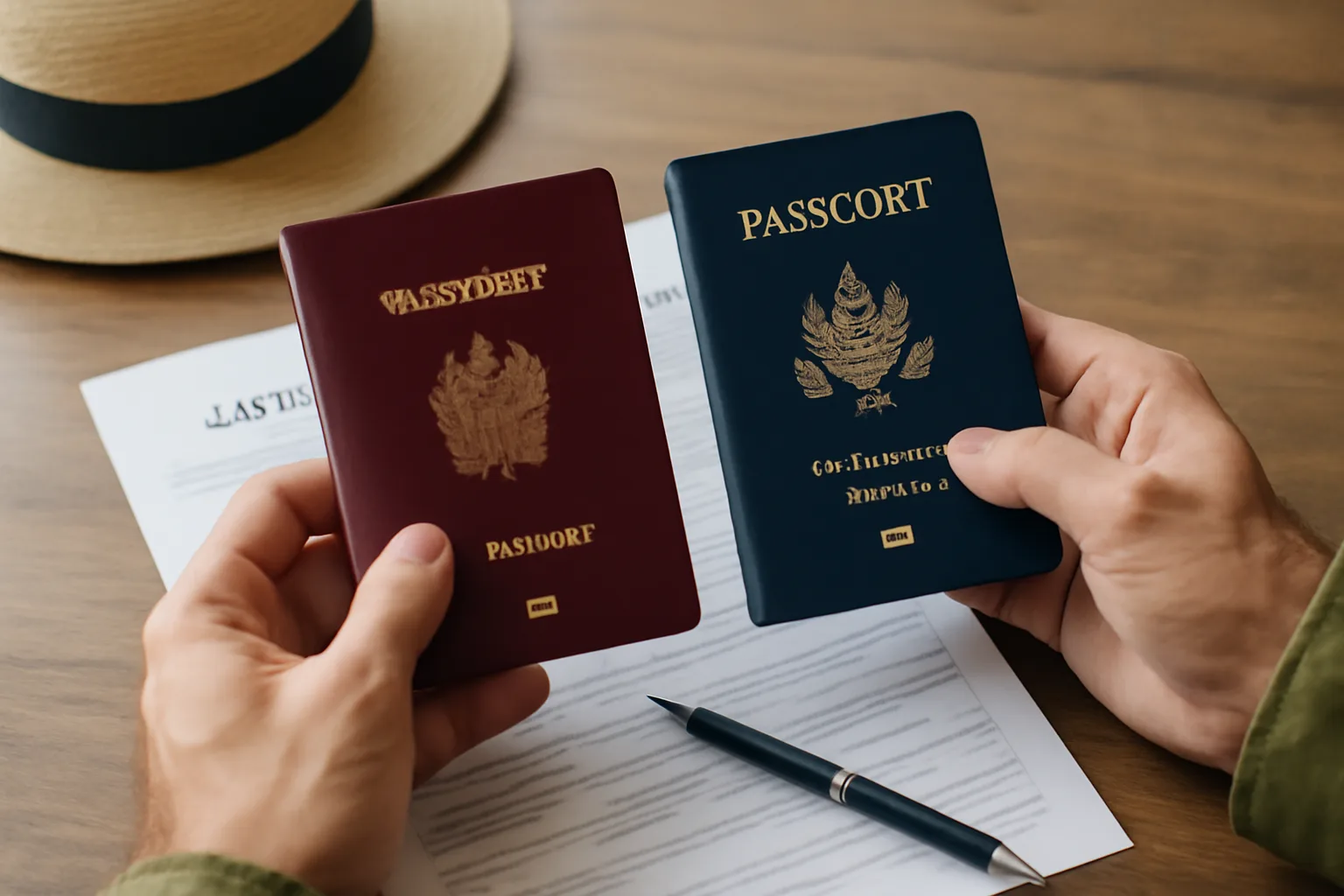
Travellers who've recently married, divorced, or otherwise legally changed their name face a specific risk if their new passport hasn't been fully updated yet, or if they enter their name in the ETA application slightly differently than it now appears on their current passport. This profile should apply only once their new passport is fully issued and in hand, entering their name exactly as it currently appears on that document, rather than a version they've grown used to using elsewhere, such as on social media, banking, or older documents that haven't caught up with the legal change.
Profile three: frequent short-notice business travellers
Business travellers who book UK trips on short notice, sometimes within days of departure, face a specific risk pattern around rushed applications submitted under real time pressure. This profile is statistically more likely to encounter avoidable data-entry issues simply because of how compressed their preparation window tends to be. Frequent business travellers benefit particularly from keeping a saved, verified record of their own passport details readily accessible, specifically so a short-notice application can still be completed carefully and accurately, rather than rushed under pressure.
Profile four: travellers with a previous UK immigration history

Anyone who has previously held a UK visa, overstayed a previous visit, or had any prior interaction with UK immigration authorities faces a different rejection risk profile than a first-time visitor with no such history. This isn't necessarily disqualifying, but this profile specifically needs to answer background questions about immigration history with complete accuracy and honesty, since inconsistencies here are scrutinised more closely than for applicants with no prior UK immigration history at all.
Profile five: applicants travelling on an older or soon-to-expire passport
Travellers using a passport that's approaching its expiry date, or an older passport issued before biometric chips became standard, face a specific and entirely predictable rejection pattern tied to passport validity and type requirements. This profile should check their passport's remaining validity and biometric status well before applying, since renewing an ageing passport before applying is generally more efficient than applying with a soon-to-expire or non-biometric document and risking rejection on that basis specifically.
Profile six: families applying with inconsistent details across members
Parents applying on behalf of children, particularly when handling multiple applications in one sitting, sometimes accidentally transpose details between family members — entering one child's date of birth against another's name, for instance. This profile-specific risk comes from handling several similar-looking applications back to back, and is best managed by completing and fully submitting one family member's entire application before starting the next, rather than working across multiple partially completed applications simultaneously.
Profile seven: applicants relying on translated or transliterated names
Travellers whose names are transliterated from a non-Latin script passport, or who have multiple possible transliteration spellings of their name, face a specific rejection risk if the spelling entered doesn't precisely match the exact transliteration shown on their specific passport. This profile should copy their name directly from their passport's machine-readable zone character by character, rather than using a transliteration they've seen used elsewhere, such as on a visa from a different country or an airline booking, which may use a slightly different transliteration convention.
Profile eight: travellers with a common or frequently duplicated name
Applicants with a very common name, or a name that closely matches someone flagged in relevant background-check systems, face a distinct and specific risk of their application requiring additional manual review, even when nothing about their own actual circumstances is problematic. This profile benefits particularly from applying well in advance of travel, since this specific rejection pattern is more often resolved through the standard manual review process taking its full course, rather than through any specific correction on the applicant's part.
Profile nine: applicants who previously used an unofficial third-party service
Travellers who've previously applied through a paid, unofficial third-party website, rather than the official GOV.UK channel, sometimes have inaccurate historical data associated with an earlier application, which can create confusion on a subsequent official application. This profile should apply exclusively through the official GOV.UK website or app going forward, and be prepared to provide accurate, current details clearly if any confusion arising from a prior unofficial application needs to be resolved.
Profile ten: applicants travelling with a recently issued passport
Travellers with a very recently issued passport, particularly if they applied for their ETA before receiving the new document and then had to update their application, face a specific risk of the two records not matching up cleanly in the system. This profile should always apply for the ETA only after the new passport is fully in hand, avoiding the temptation to apply early using anticipated passport details before the document has actually been issued and confirmed.
Why understanding your own profile matters more than a generic checklist
A generic list of rejection reasons treats every applicant as facing an identical, undifferentiated risk, but in practice, your own specific circumstances — your nationality situation, your passport's age, your name history, your travel timing — meaningfully shape which specific risks are actually relevant to you. Identifying which of the profiles above most closely matches your own situation lets you focus your particular care on the specific risk factors that genuinely apply to you, rather than spreading equal attention across risks that may not be relevant to your circumstances at all.
Profile eleven: students and young adults applying independently for the first time
Young travellers applying for their own ETA for the first time, often without a parent's guidance for the first time, sometimes underestimate how carefully background and travel-history questions need to be read, particularly if this is their first experience with any kind of formal international travel documentation. This profile benefits from taking extra time with unfamiliar sections of the application, and from having a parent or experienced traveller review the completed application before submission, simply as a second set of eyes rather than because anything is expected to be wrong.
Profile twelve: retirees and older travellers with older-style passports
Older travellers, particularly those who haven't needed to renew a passport in many years, sometimes hold a passport issued before certain current biometric or format standards became mandatory. This profile faces a specific risk tied to passport format compliance rather than anything about the application itself. Checking a passport's issue date and biometric status carefully before applying, and renewing well in advance if there's any doubt, addresses this specific risk directly rather than discovering it only after a rejection.
Profile thirteen: travellers relocating or living between two countries
People who split their time between two countries, or who have recently relocated internationally, sometimes have address or contact details that don't clearly reflect a single, current location, which can create minor inconsistencies in an application that asks for current contact information. This profile should use their genuinely current, most reliable contact details at the time of application, rather than an address or number associated with wherever they happen to be at the exact moment of applying, particularly if that location is temporary or in transition.
Profile fourteen: applicants with a name that includes special characters or diacritics
Names containing accented characters, umlauts, or other diacritics present a specific risk if the application system doesn't handle these characters consistently, or if the applicant substitutes a simplified, unaccented version of their name inconsistently across different fields. This profile should check carefully how their specific passport represents their name — with or without diacritics — and match that exactly throughout the application, rather than switching between accented and unaccented versions in different places.
Profile fifteen: group organisers applying for multiple unrelated travellers
Anyone coordinating ETA applications for a larger group of unrelated travellers — a tour organiser, for instance, rather than a parent applying for their own children — faces an amplified version of the family-application risk, simply due to the larger number of similar-looking applications being processed in sequence. This profile benefits enormously from a systematic, one-at-a-time approach with a written checklist tracking each individual's specific details and application status, rather than attempting to manage several applications loosely from memory.
How these profiles interact with the standard rejection categories
Each of these profiles ultimately increases the likelihood of running into one of the more general categories of rejection — a data mismatch, a passport compliance issue, or a background-check flag — but understanding your specific profile helps you anticipate which general category you're most likely to encounter, before it actually happens. A dual national is disproportionately likely to encounter a data-mismatch issue specifically related to passport confusion, for instance, while an older traveller is disproportionately likely to encounter a passport-compliance issue specifically related to document age or format.
Building a profile-specific pre-application check
Once you've identified which profile, or combination of profiles, applies to your own situation, build a short, specific check tailored to exactly that risk before you apply — for a dual national, confirming which single passport you're using throughout; for a recently renamed applicant, confirming your new passport is fully in hand; for a frequent business traveller, having your verified passport details saved and ready even under time pressure. This targeted approach is considerably more efficient than working through an entire generic checklist that includes several precautions genuinely irrelevant to your specific circumstances.
Key takeaways
- Rejection risk varies meaningfully by traveller profile, not just by generic mistakes that apply equally to everyone.
- Dual nationals, recently renamed applicants, and short-notice business travellers each face distinct, predictable risk patterns.
- Families and multi-passport-transliteration cases carry their own specific, identifiable risks worth watching for directly.
- Identifying which profile most closely matches your own situation helps you focus your care on what's actually relevant to you.
This article provides general guidance, not official advice — always verify current requirements and fees directly on the official GOV.UK website before applying, regardless of which profile applies to your situation.
What to do if you fit more than one profile
Some travellers genuinely fit more than one of these profiles at once — a dual national who has also recently changed their name, for instance, or a frequent business traveller using an ageing passport. In this situation, apply the specific precautions relevant to each profile you fit simultaneously, rather than assuming addressing one risk factor is sufficient, since combined risk factors don't cancel each other out and each still needs its own specific attention during your application.
Profile sixteen: applicants who've had a previous rejection for a different reason
Travellers who've already experienced one UK ETA rejection, for whatever original reason, sometimes carry a heightened sense of anxiety into their next attempt that can paradoxically increase the risk of a second, unrelated mistake — rushing through the reapplication out of a desire to get it over with quickly, or over-explaining background questions in a way that introduces new inconsistency. This profile benefits from treating the reapplication as a genuinely fresh attempt, working through it with the same calm, careful pace recommended for a first-time applicant, rather than letting anxiety about the previous rejection rush the current attempt.
Profile seventeen: travellers applying immediately after a significant life event
Beyond a name change specifically, other significant life events — a recent move, a change in employment, a change in immigration status in another country — can sometimes mean an applicant's circumstances have shifted in ways relevant to specific application questions, without the applicant necessarily realising the connection. This profile should read background and circumstances questions with particular care, considering whether any recent life change might be relevant to how a specific question should now be answered, rather than answering on autopilot based on how they might have answered the same question a year or two earlier.
Profile eighteen: applicants using a shared or family computer
People applying from a shared household computer, particularly one where other family members have previously submitted their own ETA applications, face a specific and easily overlooked risk: browser autofill or saved form data from a different family member's earlier application accidentally carrying over into their own. This profile should actively clear or carefully review autofilled fields before relying on them, treating a shared computer's saved data with particular scepticism rather than assuming it's necessarily accurate for the current applicant specifically.
Profile nineteen: applicants travelling for an unusual or less common purpose
Most ETA applications relate to straightforward tourism, business, or family visits, but travellers with a less typical purpose — attending a one-off event, a brief medical consultation, or an unusual combination of purposes within one trip — sometimes struggle to categorise their visit clearly within the application's standard questions. This profile benefits from thinking through, before starting the application, how their specific purpose best fits the categories offered, and answering as accurately and specifically as the format allows, rather than forcing an unusual purpose into a category that doesn't quite fit and creating an inconsistency as a result.
Profile twenty: applicants relying on someone else's account or device history
Occasionally, travellers apply using an account, email address, or device previously associated with someone else's earlier ETA application, whether a family member's old device or a shared email inbox. This profile should ensure the application is clearly and entirely their own — their own passport, their own answers, their own contact details — with no residual mixing from whoever previously used the same device or account, since this kind of carried-over confusion is a genuinely avoidable, profile-specific risk.
How to use this profile-based approach if you're helping someone else apply
If you're assisting a family member, friend, or colleague with their own ETA application, it's worth thinking through which of these profiles might apply to them specifically, since you may notice a relevant risk factor — a recent name change, an ageing passport, a shared household computer — that the applicant themselves hasn't consciously considered. Raising this specifically and directly, rather than simply helping them fill in the form generically, adds genuine value beyond what they'd get from working through it entirely alone.
Why this profile-based thinking becomes more useful over repeated applications
The first time you identify which profile applies to you, it requires a small amount of genuine, deliberate thought. On subsequent applications, whether for a renewed passport or a future trip within your ETA's validity window, you'll already know your own relevant profile and its specific risk factors, meaning this kind of targeted preparation becomes progressively quicker and more automatic each time you go through the process again.
A simple way to identify your own profile before applying
Before your next application, take a moment to genuinely ask yourself a short series of questions: do I hold more than one nationality or passport? Has my name changed recently? Am I applying under real time pressure, close to travel?
Do I have any prior UK immigration history? Is my passport older or approaching expiry? Am I applying on a shared device, or on behalf of several people at once?
Answering these honestly and carefully, even quite briefly, quickly surfaces which of the profiles covered throughout this guide are genuinely relevant to your own specific situation, letting you focus your actual preparation time and attention exactly where it matters most for you personally, specifically.
Why no single profile guarantees a rejection
It's worth being clear that fitting one, or even several, of these profiles doesn't mean rejection is likely or expected — the overwhelming majority of applicants across every profile described here are approved without any issue at all. These profiles describe where elevated risk factors tend to cluster statistically, not a prediction about any individual application. Understanding your own relevant risk factors is genuinely about applying slightly more targeted, focused care in exactly the right places, not about expecting or fearing some kind of negative outcome before you've even actually started the process at all.
Think of these profiles as a lens for sharpening your attention where it matters most, rather than a source of worry about an application that, for the vast majority of travellers in every one of these groups, goes through entirely smoothly.
Frequently asked questions
Quick answers on how UK ETA rejection risk varies by traveller profile, and what specific precautions different groups of travellers should take.
Frequently asked questions
Do dual nationals face different UK ETA rejection risks?
How does a recent name change affect UK ETA rejection risk?
Are frequent business travellers more likely to face UK ETA rejections?
Does a previous UK immigration history affect rejection risk?
What if I fit more than one risk profile?
This article is for general informational purposes only. Visa and travel authorisation rules change frequently. Always check the official government website before travelling.

Written & reviewed by
Can OTUTravel Authorisation Editor
Can OTU is the editor of ETA Travel Assistant, specialising in UK ETA, Schengen ETIAS, NZeTA and ESTA travel authorisations. Can monitors official government sources and policy updates to ensure every guide is accurate, current and genuinely useful for travellers.
View all guides →