Do Children Need Their Own NZeTA? A Practical Application Guide for Families
- Every child, including infants, needs their own individual NZeTA linked to their own passport.
- A parent or legal guardian completes the application on the child's behalf, using the child's own passport details and photo.
- The practical challenges — particularly the photo requirement — differ meaningfully from an adult's own straightforward application.
Here's exactly and precisely how to handle your own particular child's NZeTA application, step by step and in genuinely full detail, including the specific practical challenges parents most commonly encounter along the way.
Confirming your child needs their own passport first
Before applying for a child's NZeTA, confirm they hold their own individual passport — children cannot travel to New Zealand on a parent's passport, and an NZeTA application requires the child's own passport details. If your child doesn't yet have their own passport, arranging this is the necessary first step before an NZeTA application becomes possible at all.
Who can apply on a child's behalf
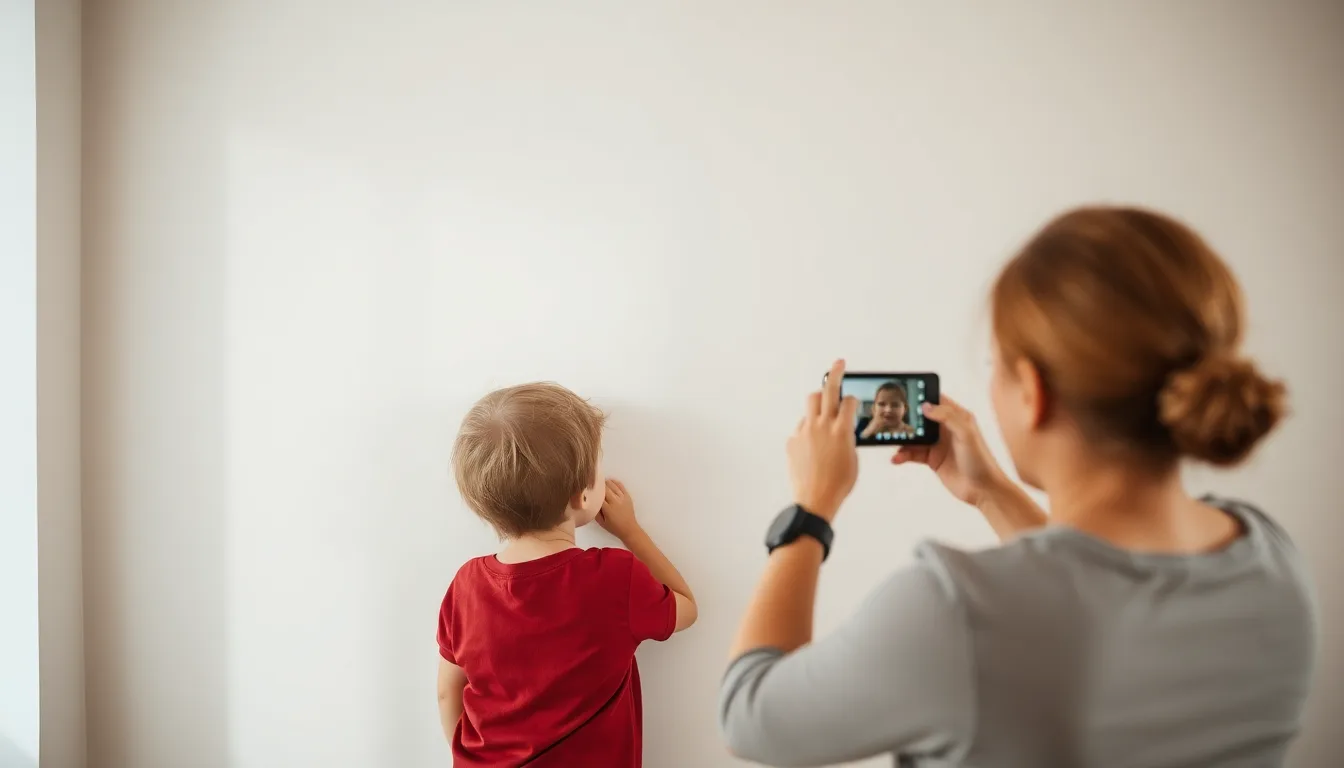
A parent or legal guardian can complete the NZeTA application on a child's behalf, entering the child's own information throughout, rather than the applying adult's details. If you're not the child's parent but are travelling with them — a grandparent, for instance, or another family member — confirm you have appropriate authority to apply on the child's behalf, and be prepared to explain your relationship to the child if asked at any point during travel.
Step-by-step: applying for a child's NZeTA
- Gather the child's own passport, ensuring it's valid and current.
- Take a suitable photo of the child specifically, meeting the same technical requirements as an adult photo.
- Complete the application using the child's own name, date of birth, and passport details exactly as shown on their document.
- Answer any relevant background or health questions accurately for the child specifically, not the applying parent.
- Pay the applicable fee and IVL levy for the child's own individual application.
- Wait for the decision, checking the confirmation is linked to the correct child if applying for multiple children.
The photo challenge: getting a usable image of a young child

Official photo requirements — a neutral expression, open eyes, a plain background — are considerably harder to achieve consistently with an infant or young toddler than with an adult or older child capable of following simple instructions. Take several attempts, ideally when your child is calm and alert rather than upset or drowsy, and review each attempt critically against the official requirements before selecting one to submit, since a poor-quality photo is a common cause of delay or rejection for children's applications specifically.
Practical tips for photographing an infant
- Photograph the infant lying on a plain, light-coloured sheet or blanket, taken from directly above, which some parents find produces a more consistent result than an upright photo.
- Choose a moment when the infant is calm and awake, rather than attempting this during a period of distress.
- Ensure lighting is even and natural, avoiding harsh shadows across the infant's face.
- Take several attempts in one sitting, since getting a genuinely suitable result on the very first try is uncommon.
What to do if you're struggling to get an acceptable child's photo
If you're genuinely struggling to capture a photo meeting the official requirements yourself, some photography studios and passport-photo services offer child-specific photo services designed around exactly this challenge, for a modest fee. This can be a worthwhile option if you've made several attempts yourself without success and want to avoid further delay to your child's application.
Applying for multiple children in one sitting
If you're applying for more than one child, complete and fully submit one child's entire application before starting the next, rather than working across several partially completed applications simultaneously, which increases the risk of accidentally mixing up details between children — entering one child's date of birth against a different child's name, for instance. Working through each child's application individually and completely, one at a time, is the most reliable approach for avoiding this specific, easily made mistake.
Keeping track of multiple children's applications and confirmations
For families with several children, keep a simple record — a note, spreadsheet, or dedicated folder — listing each child's name, passport number, and application status as confirmations arrive, since relying purely on memory to track multiple children's individual application statuses becomes considerably more error-prone as the number of children increases.
What happens if a child's passport is renewed before travel
Since a child's NZeTA is linked to a specific passport number, a passport renewal after approval — not uncommon for young children whose passports are often issued with shorter validity periods, or who need one renewed due to their changing appearance — breaks the link to their existing NZeTA, requiring a fresh application tied to the new passport. If you know a child's passport renewal is coming up before an upcoming trip, it's worth timing the NZeTA application for after the new passport arrives, avoiding the need to apply twice.
Age-related considerations beyond the application itself
Beyond the NZeTA application process itself, travelling with children involves other age-related considerations worth planning for alongside the application — appropriate travel insurance covering the whole family, any specific documentation that might be relevant for children travelling with only one parent or in shared custody situations, and simply building extra time into your travel day for the practical realities of travelling with young children through an international airport.
What to do if travelling with only one parent
If a child is travelling with only one parent, rather than both, it's worth being aware that some situations — particularly shared custody arrangements — can benefit from having supporting documentation, such as evidence of parental responsibility or consent from the other parent, accessible during travel, separate from the NZeTA application itself. While NZeTA's application process doesn't inherently require this kind of documentation, border officials may occasionally ask about it in specific circumstances, so having it accessible is a sensible precaution.
How school-age children's applications differ from infants
School-age children generally present fewer photo-related challenges than infants, since they can typically follow simple instructions to achieve a neutral expression and hold still for a photo, though patience and a calm approach still help produce the best result. Beyond the photo, school-age children's applications are otherwise very similar in process to an infant's — a parent or guardian still completes the entire application on the child's behalf, using the child's own details throughout.
Involving older children and teenagers in their own application
For older children and teenagers, some parents find it a useful, low-stakes opportunity to involve the child directly in understanding their own travel documentation, walking them through what's being entered and why, even though a parent or guardian remains the one formally submitting the application on their behalf. This isn't required, but some families find it a genuinely useful, age-appropriate way to build a teenager's general understanding of international travel requirements they'll eventually need to navigate independently as adults.
What to do if a child's name has recently changed
If a child's legal name has changed — following an adoption, a parental name change reflected in the child's own documentation, or a similar circumstance — ensure the child's passport reflects their current legal name before applying, and enter this exact current name throughout the NZeTA application. Using an outdated name that doesn't match the child's current passport can create the same kind of data-mismatch issue that affects adult applications in similar circumstances.
How blended and multi-generational families should approach applications
In blended families, where children may have a different surname than the applying parent, or in multi-generational travel involving grandparents applying on behalf of grandchildren, it's worth having documentation clarifying the relationship between the applying adult and the child readily accessible for travel, even though this isn't always formally required during the application itself. Border officials occasionally ask about the relationship between travelling adults and children, particularly when surnames differ, and having this context prepared removes any awkwardness if the question arises.
What happens if a child's application is refused or delayed
Children's applications can, like adult applications, occasionally be delayed for review or, in rarer cases, refused, generally tracing back to similar underlying causes as adult applications — a data mismatch, an unclear photo, or a specific flag requiring closer review. If your child's application is delayed or refused, work through the same diagnostic approach you'd apply to your own application, checking the specific reason given and addressing it directly, rather than assuming children's applications are treated fundamentally differently from adult ones in terms of the underlying review process.
Coordinating children's applications with the rest of the family's travel
Since each family member's NZeTA is entirely independent, it's worth applying for all children reasonably close together in time to the rest of the family's applications, so everyone's validity periods and confirmation timelines stay roughly aligned for planning purposes, even though this isn't strictly required. This makes tracking the whole family's travel-readiness considerably simpler than if children's applications were submitted at a very different time than the accompanying adults'.
What documentation to bring for children specifically when travelling
- Each child's own passport, matching the details used in their NZeTA application exactly.
- A copy or screenshot of each child's individual NZeTA confirmation, kept separately identifiable if travelling with multiple children.
- Any relevant custody, guardianship, or parental consent documentation relevant to your specific family situation.
- Basic medical information or documentation relevant to any child-specific health considerations for the trip.
Key takeaways
- Every child needs their own individual NZeTA, linked to their own passport, with no exemption based on age.
- A parent or legal guardian applies on the child's behalf, using the child's own details throughout the application.
- The photo requirement is often the most practically challenging part of a child's application, particularly for infants.
- Apply for multiple children one at a time, fully completing each application before starting the next, to avoid mixing up details.
This article provides general guidance, not official advice — always verify current requirements and fees directly on the official New Zealand immigration website before applying, since specific requirements around documentation and photos for children can be refined over time.
How this experience tends to change with each subsequent family trip
Most parents find that the first time they work through the children's NZeTA application process, particularly the photo step, is genuinely the most time-consuming and occasionally frustrating part of preparing for a New Zealand family trip. Subsequent applications, whether for a return trip within the same NZeTA's validity or after a child's passport renewal, tend to go noticeably more smoothly, simply because parents already know what to expect and have often refined their own approach to the trickier steps, particularly photographing younger children, based on their first experience.
A final practical reminder for family trip planning
Build each child's NZeTA application into your family's overall trip planning timeline genuinely early, given the extra time photos and several separate individual applications can realistically take compared to a single adult's own comparatively straightforward application. Treating this specifically as its own distinct task within your broader family trip preparation, rather than something to squeeze in at the last minute alongside everything else, meaningfully reduces the chance of it becoming a source of stress closer to your actual departure date. Applying well before your planned departure, rather than close to travel, gives you a genuinely comfortable buffer to work through any photo retakes or other practical hiccups along the way, without adding unnecessary extra pressure to your family's overall travel preparation and planning process during an already busy period.
How school trips and group travel with children work
Teachers or group leaders organising a school trip or similar group travel involving multiple children face a scaled-up version of the same family application process — every single child participant needs their own individual NZeTA, applied for on their behalf by a parent, guardian, or, in some organised group contexts, a designated authorised adult with appropriate consent from each child's actual parents. Given the larger number of individual applications involved, building in considerably more lead time and a clear, organised tracking system for each child's specific status becomes particularly important for this kind of larger group travel.
What consent documentation group leaders typically need
For a group leader applying on behalf of children who aren't their own, appropriate documented parental consent is generally essential, both for the practical purpose of accessing each child's passport details accurately and for demonstrating appropriate authority if questioned by border officials or the immigration system itself. Schools and organisations regularly arranging this kind of group travel typically have established consent forms and processes for exactly this purpose, which is worth confirming and using rather than assuming informal permission is sufficient.
How to handle a child's application if travel plans change
Since an approved NZeTA remains valid for up to two years, a child's approved application generally continues to cover them for any trip within that window, provided their passport hasn't changed in the meantime. If your family's travel dates shift after a child's NZeTA is already approved, this generally isn't a problem — the approval isn't tied to one specific planned date, only to the validity period itself and the requirement that the child's passport details remain unchanged.
What to do if you realize a mistake after submitting a child's application
If you discover an error in a child's submitted application shortly after submission — a typo in their name or passport number, for instance — check whether the application is still pending or has already been decided, since your available options differ depending on its current status. If it's still pending, contacting official support promptly to flag the specific error is worth attempting. If it's already been refused due to the error, correcting the detail and submitting a fresh application is generally the straightforward path forward.
Managing children's travel documents during the actual trip
Once your family's applications are all approved, keep each child's passport and NZeTA confirmation organized in a way that lets you quickly locate the right document for the right child during travel, rather than a single mixed pile of family paperwork that requires searching under time pressure at check-in or border control. Some families find a dedicated folder or pouch per child, or per family member generally, considerably reduces stress during the actual travel day compared to managing everything as one undifferentiated stack of documents.
What airlines check for children specifically at boarding
Airlines verify each individual traveller's NZeTA status before boarding, including children, exactly as they do for adult passengers — there's no different or reduced verification standard applied to children's travel authorisation status. This reinforces why ensuring every child's application is confirmed and approved well before your travel date matters just as much as it does for the adults in your travelling party, since a missing or unconfirmed child's NZeTA can hold up your whole family's boarding process.
How to prepare children emotionally and practically for the travel process itself
Beyond the paperwork itself, preparing children — particularly younger ones experiencing an international flight and border process for the first time — with simple, age-appropriate explanations of what to expect at the airport can make the actual travel day considerably smoother for the whole family. Explaining in simple terms that they'll show their own passport, just like a grown-up, can help even quite young children feel more confident and cooperative during what can otherwise be an overwhelming, unfamiliar process for a first-time young traveller.
What happens if a family member's application is approved but a child's isn't yet
Since every family member's application is entirely independent, it's genuinely possible for adult applications to be approved quickly while a specific child's application is still pending, particularly if their photo required multiple attempts or their specific application happened to require additional review. In this situation, continue monitoring the child's specific application status separately, and avoid finalising non-refundable travel arrangements until every family member, including every child, has a confirmed approval in hand.
A simple pre-trip checklist specifically for children's NZeTA applications
- Confirm every child holds their own current, valid passport before starting any application.
- Set aside a specific block of time for the photo process, separate from the rest of the application, particularly for infants and toddlers.
- Complete and fully submit one child's application before beginning the next, to avoid mixing up details between siblings.
- Keep a simple record of each child's application status, passport number, and confirmation, particularly for larger families.
- Confirm every single child's application shows as approved, not just submitted, before finalising non-refundable travel plans.
Why this extra care for children's applications is genuinely worth it
The additional time and care required for children's NZeTA applications, particularly the photo process for younger children, can feel like a genuinely tedious extra step compared to a straightforward adult application, but it directly protects your family's actual travel day from an entirely avoidable complication. A little extra patience and organisation during the application phase, well before departure, is a considerably better trade than discovering an issue with a child's travel authorisation only at the airport, with your whole family's trip depending on it.
Frequently asked questions
Quick answers on applying for a child's NZeTA, covering photos, documentation, and family application logistics.
Official sources
Check the authority for current fees and requirements before applying.
Frequently asked questions
Do infants need their own NZeTA?
Who can apply for a child's NZeTA?
How do I get an acceptable NZeTA photo for an infant?
Can I add my children to my own NZeTA application?
What happens if my child's passport is renewed after their NZeTA is approved?
This article is for general informational purposes only. Visa and travel authorisation rules change frequently. Always check the official government website before travelling.

Written & reviewed by
Can OTUTravel Authorisation Editor
Can OTU is the editor of ETA Travel Assistant, specialising in UK ETA, Schengen ETIAS, NZeTA and ESTA travel authorisations. Can monitors official government sources and policy updates to ensure every guide is accurate, current and genuinely useful for travellers.
View all guides →