New Zealand ETA: The Essential Guide for 2026 Travellers
Quick answer: The New Zealand ETA (NZeTA) is a two-year, multi-entry travel authorisation that most visa-waiver visitors, including UK citizens, need before boarding a flight or cruise to New Zealand.
- You can stay up to 3 months per visit, or 6 months if you hold a British passport.
- The NZeTA costs NZD 17 on the app or NZD 23 on the website, plus the NZD 100 IVL for most visitors.
- Apply at least 72 hours before you fly; the NZeTA is electronically linked to your passport.
You will see different names online. Some sites call it New Zealand ETA, others call it NZeTA, and some third-party pages call it an eTA. They all mean the same thing in practice.
The official name is NZeTA.
This guide explains who needs it, how to apply, what it costs in 2026, and what happens at the border. It also covers the edge cases travellers often forget: transits, children, dual passports, and Australian permanent residents.
If you are planning a holiday or a stopover in New Zealand, think of the NZeTA as a boarding requirement rather than a visa application. You can complete it in a few minutes once your passport is in front of you. The problem is usually forgetting to do it until check-in.
This expanded guide also covers processing delays, cruise travel, family applications, and what happens if your plans change after approval. These are not official guarantees, but they reflect how the system tends to operate for most applicants.
What is the New Zealand ETA?
The New Zealand ETA is an electronic travel authority for passport holders from visa-waiver countries. It was introduced on 1 October 2019 to strengthen border security and streamline arrivals. You do not need to visit an embassy.
You do not need an in-person appointment.
When your NZeTA is approved, it is stored digitally in Immigration New Zealand's system. Your passport number is linked to the authorisation. At airport check-in, the airline can see that you have an NZeTA.
At the border, the immigration officer can see it too.
The NZeTA does not guarantee entry. It is a required step before travel, not a promise of entry. You still need to satisfy the border officer that you are visiting for a genuine reason and that you meet character and health requirements.
For most holidaymakers this digital check is straightforward. Suppose you are flying from Manchester to Auckland for a two-week holiday. You would normally apply once, receive email confirmation, and then simply turn up at the airport with the same passport.
The airline check-in system confirms the approval electronically. Because the NZeTA is linked to passport numbers, it is not a document you can print and show separately. It also has no photograph and no biometric chip.
What does an approved NZeTA look like?
You receive an email confirmation, but that email is not your travel document. There is no visa label in your passport and no paper letter to carry. Immigration New Zealand stores the authorisation in their database.
If you need to prove the NZeTA to your airline, use the confirmation email if asked. In practice, the check is automatic at almost every airline that flies to New Zealand. Your passport number is the key that unlocks the approval.
NZeTA vs visitor visa
A visitor visa and a New Zealand ETA are different products. The NZeTA is cheaper, faster, and only available to citizens from visa-waiver countries. A visitor visa is for people who do not qualify for visa-waiver access or who want a longer stay.
You cannot apply for an NZeTA if you need a visa. If you hold a passport from a country that is not on the visa-waiver list, you need a standard visitor visa before you travel.
| Feature | NZeTA | Visitor visa |
|---|---|---|
| For who? | Visa-waiver nationals | Most non-visa-waiver nationals |
| Validity | 2 years | Usually longer than 3 months |
| Cost | NZD 17 or NZD 23 plus IVL | Higher, with more paperwork |
| Application | Online, quick | Online, more documents required |
The NZeTA is the faster product because it uses automated screening. A visitor visa usually involves more questions, supporting documents, and a decision made by an immigration officer. If you are a visa-waiver national and you simply want a holiday, the NZeTA is almost always the right choice.
There are exceptions. An applicant with a criminal conviction might prefer to apply for a visitor visa and include an explanation, because the visa process gives more room for context. In some cases Immigration New Zealand may ask you to switch from an NZeTA to a visitor visa anyway.
Who needs a New Zealand ETA in 2026?
You need a New Zealand ETA if all of these apply: you hold a passport from a visa-waiver country, you are travelling to New Zealand for tourism, transit, or short-term business, and you do not already hold a valid New Zealand visa.
The visa-waiver list covers around 60 countries, including the UK, the US, Canada, Japan, South Korea, Singapore, Malaysia, most of the EU, and citizens of several other territories. If your passport is on that list, the NZeTA is your standard route in.
Cruise passengers generally need an NZeTA too. If you arrive in New Zealand by cruise ship and your nationality is visa-waiver, Immigration New Zealand will expect your NZeTA to be linked to your passport before you board. Children of any age need their own NZeTA as well.
It is the traveller's responsibility, not a travel agent's, to have a valid NZeTA before check-in.
Who does not need an NZeTA
- New Zealand citizens
- New Zealand residence class visa holders
- Australian citizens
- Anyone holding a valid New Zealand visitor visa
- Travellers from non-visa-waiver countries with a valid visa for New Zealand
One group confuses travellers: Australian permanent residents. They are not Australian citizens, so they normally still need an NZeTA unless they hold another valid visa for New Zealand. Check this carefully if it applies to you.
New Zealand regularly reviews its visa-waiver arrangements. Always check the current official list rather than relying on a blog or social media post. A passport from a visa-waiver country is not the same as a passport that gives you automatic entry to every country on earth.
Do children need a New Zealand ETA?
Yes. Every traveller, including infants and children, needs their own New Zealand ETA. There is no family discount.
A parent or guardian can complete the child's application, and you can normally do several applications in one sitting.
The child's passport number must match the one you use at check-in. If a child has two passports, apply with the one they will travel on.
Applying for a child is similar to applying for an adult. The child's passport details must be entered exactly as they appear on the passport. Each child needs a separate application.
What about short business meetings and family visits?
The NZeTA covers tourism and family visits, but it also allows some short-term business activities. Meetings, conferences, negotiations, and site inspections generally fit within the rules. Paid work for a New Zealand employer does not.
If you plan to take up employment in New Zealand, even for a few weeks, you need a work visa, not an NZeTA. Working without the correct visa can lead to refusal of entry or removal.
Do not interpret the business allowance too broadly. The NZeTA does not permit you to be paid by a New Zealand company or to complete work projects that would normally require a work visa. If your trip is mainly work, take the longer and safer route of applying for the correct visa.
New Zealand ETA for families and group travel
Families travelling together each need their own NZeTA, including babies. You cannot add a child to a parent's application. However, you can complete the applications one after another and pay for them separately.
If you are leading a group, create a simple checklist before you start. Keep one passport scan per traveller so the details you enter are consistent. Each person must travel with the passport linked to their own NZeTA.
Group tours and school trips still require individual applications. There is no group discount and no special student rate. Some third-party agencies offer to fill in the forms for you, but the official fee remains the same.
For a family of four, the total official cost through the app is currently NZD 468 under the standard fee schedule. That assumes two adults and two children, all paying the NZeTA fee and the IVL. For British citizens, the same maths applies, although each visitor can stay up to six months.
Do not plan to apply for a whole family in one browser session and then close the tab. Check each confirmation email as it arrives. A missing application for one passenger can delay boarding for everyone.
How to apply for a New Zealand ETA
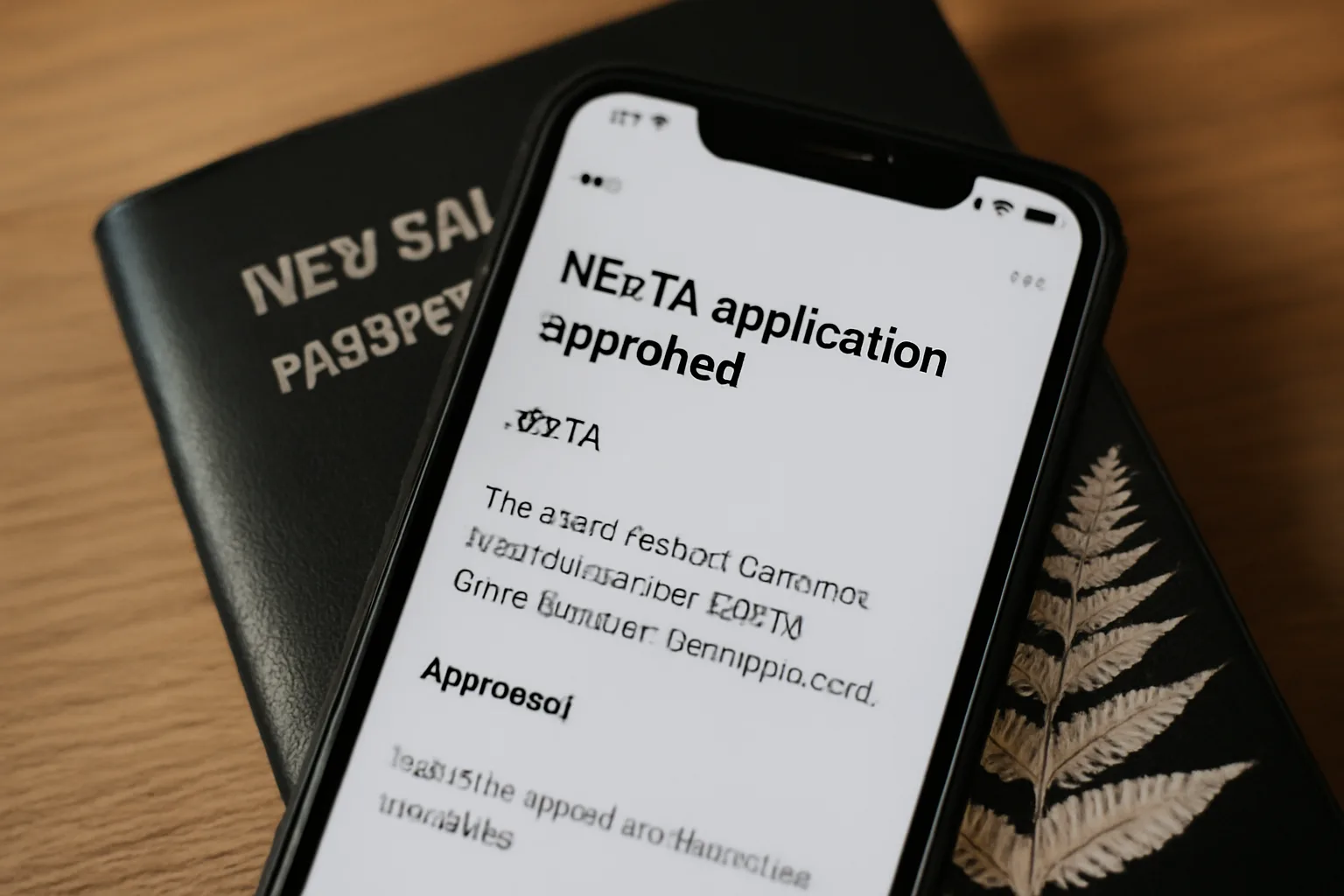
The official application process is digital, and you can do it from your phone. There are only two official ways to apply: the official NZeTA mobile app, or the Immigration New Zealand website. Avoid third-party sites that charge extra for the same service.
If you want the step-by-step process, our guide shows you exactly how to apply for nzeta using the official app or website.
Documents and details you need before starting
- A valid passport from a visa-waiver country
- A credit or debit card for payment
- Basic details about your accommodation or itinerary
- An email address you check regularly
You do not normally need to upload bank statements, hotel confirmation, or return tickets. The NZeTA application is much shorter than a visitor visa. However, you should still have those details available because border officers may ask to see them on arrival.
NZeTA app vs website
The app is usually the better choice for most travellers. It costs less in government fees, and it lets you scan your passport which reduces typing errors. The website works well on a desktop, but the fee is slightly higher.
| Method | Official NZeTA fee | IVL | Total |
|---|---|---|---|
| NZeTA app | NZD 17 | NZD 100 | NZD 117 |
| Website | NZD 23 | NZD 100 | NZD 123 |
You also pay the International Visitor Conservation and Tourism Levy, called the IVL, at the same time. The IVL helps fund conservation and tourism infrastructure. Most visitors pay it.
Transit passengers may be exempt, which we cover below.
The app charges a lower government fee, which makes it cheaper for most people. It also scans the machine-readable strip on your passport. If you prefer to use a laptop, the website is still a straightforward route.
Step-by-step NZeTA application
- Get your passport and a credit or debit card ready.
- Download the official NZeTA app or open the official application webpage.
- Scan or enter your passport details.
- Enter personal details, contact information, and travel plans.
- Answer the health and character questions honestly.
- Pay the NZeTA fee and the IVL.
- Wait for the application result, which is sent by email.
Most applicants receive a result within 24 hours. Some are approved in minutes. Immigration New Zealand still advises travellers to allow at least 72 hours before departure in case extra checks are needed.
You do not need to print your NZeTA. There is no sticker, stamp, or physical document.
The online form asks about your health and character history. You should answer every question honestly. A false declaration, even a small one, can cause problems at the border and affect future New Zealand applications.
How Immigration New Zealand processes your NZeTA application
When you submit your application, it is checked against Immigration New Zealand systems and border security databases. Most applications do not need a human interview. The system compares names, passport numbers, travel document validity, and any alerts connected to those details.
Processing times can vary. Many travellers receive approval within minutes, but official guidance still recommends allowing at least 72 hours before travel. This buffer matters because some applications are selected for additional checks that are not visible to the applicant.
Possible application outcomes
- Approved: you receive email confirmation and the ETA is linked to your passport.
- Pending: more checks are required; you may be asked for further information.
- Refused: you cannot travel with the NZeTA and may need to apply for a visitor visa instead.
An approval email is the only confirmation you receive. If you do not receive any update within a few days, check your spam folder and the email address you entered. If you cannot find a decision, contact the official channel or consider whether your first application was already approved.
For example, a traveller applying on a Monday morning may be approved by lunchtime. Another traveller with a name match on a security list might wait three or four days for manual clearance. Neither outcome is guaranteed for anyone.
How much is a New Zealand ETA in 2026?
The cost depends on the channel you use. As of the current official fee schedule, the NZeTA fee is NZD 17 through the app and NZD 23 through the website. On top of that, most visitors pay the IVL of NZD 100.
That gives a total of NZD 117 for an app application and NZD 123 via the website. These are government fees. They can change, so the amount you see at payment is the final amount.
UK citizens pay exactly the same NZeTA fee as other visa-waiver nationals. There is no special UK discount and no exemption. For a full breakdown of the levy and payment card options, read our guide to nzeta cost uk citizens.
Where does the money go? The NZeTA fee helps cover border processing services. The IVL contributes to conservation and tourism infrastructure.
New Zealand uses these funds to maintain tracks, huts, and visitor facilities that many travellers use.
Be careful when comparing prices online. If a website asks for more than NZD 123 plus optional service fees, it is not the official application. Some third-party sites charge two or three times the government amount.
How long is the New Zealand ETA valid?
An approved NZeTA is valid for two years from the date it is granted. During those two years, you can visit New Zealand multiple times on a multi-entry basis.
Each visit is limited to three months for most visa-waiver travellers. British citizens are different: they can stay up to six months per visit under the visa-waiver arrangement with New Zealand.
Your NZeTA is not tied to a single airline, a single airport, or a single trip. You can use it to come and go, as long as each visit stays within the maximum period and your passport remains valid.
Two years is a generous window for most visitors. It covers repeat trips, so you do not need a new ETA for every holiday. However, there is no refund if you use it once and do not travel again.
What if my passport changes?
Your NZeTA is linked to a specific passport number. If you renew your passport, the authorisation does not automatically transfer to the new passport. You will need to apply for a new NZeTA before your next flight.
Similarly, if you enter your passport number incorrectly, your NZeTA may not match your passport at check-in. Double-check every number before submitting.
If you expect to renew your passport before travel, wait until you have the new passport before applying. That saves you from paying the government fee twice. A new passport number means a new NZeTA.
What if my NZeTA expires while I am in New Zealand?
If your NZeTA expires during your visit, you do not need to leave immediately. You can stay until the end of your lawful visit period, which is normally three months or six months for UK citizens. However, before you make another trip to New Zealand, you must apply for a new NZeTA.
Do not try to extend an NZeTA. It cannot be extended, and there is no renewal process. You simply apply again.
The key date at the border is the day you arrive, not the day you apply. Your entry permission is usually shown electronically, and that is the period you must respect. An NZeTA expiring during your stay is not a reason to panic.
What if your travel plans change after approval?
An NZeTA is not tied to a single itinerary. It is valid for multiple visits, so you can change flights, airports, airlines, or accommodation without telling Immigration New Zealand. You can even travel earlier or later in the two-year period, as long as your passport remains valid.
If your passport changes, the situation is different. You must apply again because the ETA is stored against a passport number. If your arrival date changes but your visa-waiver status has not changed, your existing NZeTA should still work.
What if your trip becomes longer than three months? The NZeTA does not give an extension. If you need a longer stay, look at a visitor visa before you travel, or leave New Zealand before your entry permission expires.
What if you are denied boarding due to an expired NZeTA? You cannot fix it at the gate. You need to leave the queue, apply online, and wait for a decision.
That is why it is safer to check your NZeTA as soon as you book your flights.
Do I need a New Zealand ETA for a transit or layover?
This is one of the most common questions, and the answer surprises people. Yes, you normally need a New Zealand ETA even if you are only transiting through New Zealand to another country.
New Zealand does not have the same blanket airside transit exemption that some other countries use. Visa-waiver nationals transiting through New Zealand need an NZeTA before they board, even if they will not be staying in the country.
If you are landing in Auckland to connect to another international flight, the airline wants to see an NZeTA at check-in for the first leg. The only alternative for most non-visa-waiver nationalities is a formal transit visa. Our dedicated nzeta transit visa guide covers these situations in more detail.
One detail in your favour: while you normally need to pay the IVL as part of a visit NZeTA, transit passengers may be exempt from that specific levy. You still pay the NZeTA application fee. Check official guidance if this applies to you.
Even a short stopover can count as transit for New Zealand immigration purposes. You cannot skip the form just because you will stay airside. Border systems still need to know who is in the country.
New Zealand ETA for cruise passengers
Cruise passengers are often surprised to learn that the NZeTA applies to them. If your cruise stops in New Zealand ports and you hold a visa-waiver passport, you generally need an NZeTA before boarding. The cruise line will check your travel documents before you board in Auckland or in an overseas port.
Children on cruises need their own NZeTA too. There is no group exemption. If your cruise line asks for immigration details, do not assume that answers your NZeTA requirement; the two are separate checks.
Which cruise travellers are exempt?
- New Zealand citizens and residence class visa holders
- Australian citizens
- Passengers holding a valid New Zealand visitor visa
Australian permanent residents are not automatically exempt. They should read the general visa-waiver rules carefully before boarding. Some Pacific cruise itineraries include New Zealand as a turn-around port, which creates the same requirement.
For example, a passenger sailing from Sydney to Auckland with a stop in Wellington would normally need an NZeTA before leaving Australia. Another passenger on a cruise that calls at Auckland for a day ashore still needs the ETA because the passenger will enter New Zealand territory. Cruise companies cannot issue an NZeTA on your behalf.
Check your cruise operator's policy and official immigration guidance before you book. A refusal at the gangway can ruin an entire itinerary. Make sure every member of your party has their own authorisation before the ship departs.
Dual nationality and which passport to use
If you hold more than one passport, choose the passport you will actually travel on and enter New Zealand with. Then apply for the NZeTA using that same passport. An NZeTA cannot be transferred between passports.
For example, if you are a UK citizen and a US citizen, you can apply on either passport. But you must be consistent. At check-in, the airline checks that passport.
At the border, the immigration officer checks the same passport. Do not swap halfway through the journey.
If one of your passports is New Zealand or Australian, use that passport instead. You may not need an NZeTA at all.
Do not apply with one passport and then show another at check-in. The system only recognises the passport number you used. If you have recently renewed your passport, apply again with the renewed one.
Check-in and entering New Zealand
Your airline checks your NZeTA electronically at check-in. If you do not have one, or if it is linked to the wrong passport, you may be denied boarding. Passengers are not allowed to simply explain at the gate.
When you arrive in New Zealand, the border officer may ask about your travel plans, accommodation, return ticket, and funds. The NZeTA is a pre-approval for travel, not a guarantee of entry. Entry is still at the discretion of the immigration officer.
You will usually be given entry permission for the standard visa-waiver period. That means three months for most nationalities and six months for British citizens.
Keep your return ticket details and accommodation information easy to access. Border officers can ask to see them, and having them on your phone is usually enough.
Many airlines will send automated reminders before check-in. If you ignore them, your boarding pass may not print. Keep your answers at the border simple and consistent with the information you provided in your NZeTA application.
Common mistakes travellers make
- Applying less than 72 hours before departure. Most approvals are fast, but a character check can slow things down.
- Using a third-party website and paying markups. Official fees are fixed; unofficial sites often charge two or three times more.
- Entering the passport number incorrectly. One digit can trigger a mismatch at check-in.
- Assuming Australian permanent residents do not need an NZeTA. They generally do.
- Assuming transit passengers are exempt from everything. They need an NZeTA in most cases.
- Renewing a passport without moving the NZeTA across. The NZeTA stays with the old passport number.
- Assuming the IVL is optional. It is required for most visitors.
- Ignoring email updates from Immigration New Zealand. They may ask for more information.
Even one mistake can cause a missed flight. The most expensive mistake is booking a non-refundable trip and then realising your NZeTA is linked to an old passport. Build your NZeTA check into the same checklist you use for bookings and insurance.
Can your NZeTA application be refused?
Yes. Every NZeTA application is screened. If you have certain criminal convictions, a history of deportation, or other character concerns, Immigration New Zealand may refuse the NZeTA.
You may then be told to apply for a visitor visa instead, which involves a more detailed assessment.
If you are unsure about your eligibility, do not guess. Apply early, and if your NZeTA is refused you still have time to look at a visitor visa.
Refusal is rare for clean visa-waiver travellers, but it can happen. There is no simple appeal through the NZeTA process. A visitor visa application gives you more room to explain your situation.
Do I need insurance for a New Zealand ETA?
Travel insurance is not required for the NZeTA application itself. However, New Zealand has no public healthcare entitlement for most visitors, and accident cover through ACC is limited. A good travel insurance policy is strongly recommended for medical costs, trip delays, and lost luggage.
Make sure your policy covers New Zealand and any transit countries you pass through.
Check that your policy covers medical treatment in New Zealand, including visits to hospital. It should also cover the cost of cancelling your trip if your NZeTA is refused or delayed. Insurance is a safety net, not a visa requirement.
New Zealand ETA questions travellers ask
Do UK citizens need an NZeTA?
Yes. British passport holders are visa-waiver travellers, so they need a New Zealand ETA before they fly. The only differences are the longer six-month stay limit and the fact that UK citizens do not need a visa for short visits.
The NZeTA fee still applies.
Can I apply for a New Zealand ETA at the airport?
No. You should apply before you travel. Airlines will not let you board without one. There is no reliable way to apply at the airport as an arriving passenger.
How long does a New Zealand ETA take?
Most applications are processed within 24 hours, and many are instant. Immigration New Zealand still recommends applying well before travel, and we suggest at least 72 hours before departure.
Can I work on an NZeTA?
No. The NZeTA is for tourism, family visits, or certain short-term business activities. It does not give you the right to work for a New Zealand employer. Working without the correct visa can lead to refusal of entry or removal.
What is the difference between a New Zealand ETA and a UK ETA?
They are different systems for different countries. The UK ETA is for travel to the United Kingdom. The New Zealand ETA, or NZeTA, is for travel to New Zealand.
You need to check each destination separately, plus any transit requirements.
Do I need an NZeTA if I am only visiting for one day?
Yes, if the day visit involves entering New Zealand. This could be a cruise stop, a flight connection, or a short crossing from a neighbouring country. The length of stay does not remove the requirement.
Can I submit one application for my whole family?
No. Every traveller needs an individual NZeTA. You can submit them one after another in the same session, but the system creates separate records for each passport.
What if I already have an NZeTA from my last trip?
Check the expiry date. If it is still valid, you can use it again. If it has expired, a new application is required; there is no renewal or automatic extension.
Check official sources before you fly
Immigration rules can change without warning. Fees, processing times, and visa-waiver country lists are all subject to updates. This article is general guidance for 2026 travellers, not official immigration advice.
Before you book anything, verify the current requirements on the official Immigration New Zealand NZeTA page. That is the only source that matters when you plan a trip.
If you are transiting, check the situation for your specific nationality and route. Transit rules depend on your passport, not just on where you are from.
Bookmark the official page and check it at least twice: before you book flights and again before you apply. Nothing in this guide replaces official information. Use it as a planning starting point, not as legal advice.
Key takeaways
- The New Zealand ETA is required for most visa-waiver travellers, including UK, US and EU citizens.
- It is valid for two years and allows multiple visits.
- Most visitors can stay three months per visit; British citizens can stay six months.
- The fee is NZD 17 via the app or NZD 23 via the website, plus the NZD 100 IVL.
- Apply at least 72 hours before departure, but ideally much earlier.
- Your NZeTA is tied to your passport number. Renewing your passport means applying again.
- Transit passengers normally need an NZeTA too, even if they are not staying in New Zealand.
- Always double-check with official Immigration New Zealand sources before you fly.
Official sources
Check the authority for current fees and requirements before applying.
Frequently asked questions
Do UK citizens need a New Zealand ETA in 2026?
How much does a New Zealand ETA cost?
How long is the New Zealand ETA valid and how long can I stay?
Do I need a New Zealand ETA if I am just transiting or have a layover?
What is the difference between a New Zealand ETA and a visitor visa?
This article is for general informational purposes only. Visa and travel authorisation rules change frequently. Always check the official government website before travelling.

Written & reviewed by
Can OTUTravel Authorisation Editor
Can OTU is the editor of ETA Travel Assistant, specialising in UK ETA, Schengen ETIAS, NZeTA and ESTA travel authorisations. Can monitors official government sources and policy updates to ensure every guide is accurate, current and genuinely useful for travellers.
View all guides →