New Zealand ETA: What It Is and How to Apply
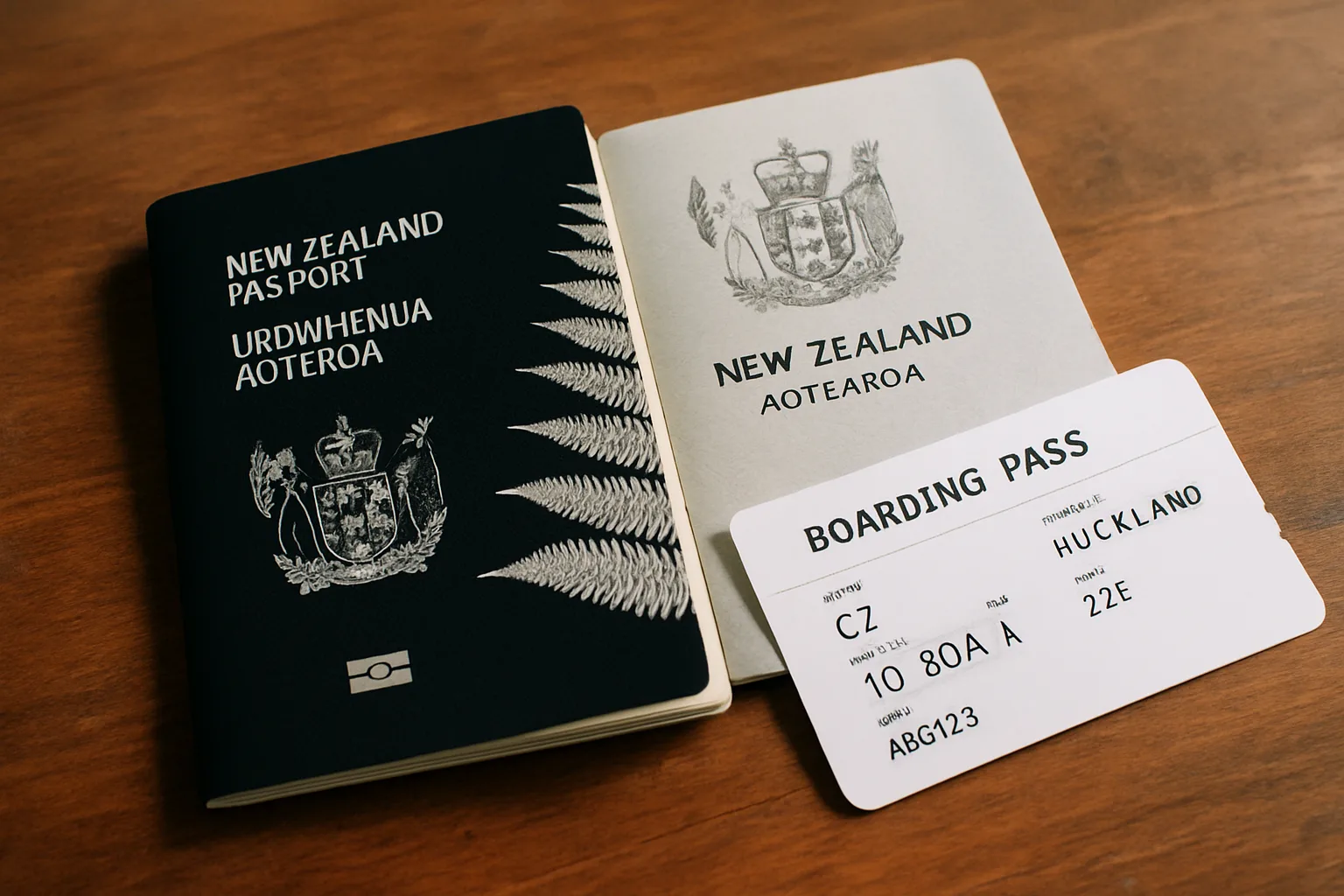
The New Zealand Electronic Travel Authority (NZeTA) is not a visa. It's an electronic waiver that allows eligible travellers to enter New Zealand for short stays (up to 3 months) without applying for a traditional visa. It was introduced in 2019 to strengthen border security and streamline entry for low-risk visitors.
Think of it as a pre-screening check that links your passport to an approved travel record. You'll need one even if you're just transiting through New Zealand.
This article is for general guidance only. Always check the official Immigration New Zealand website for the most current requirements before you travel.
What is the New Zealand ETA (NZeTA)?
The New Zealand Electronic Travel Authority, commonly called the NZeTA, is a digital travel authorisation for citizens of visa-waiver countries. It's not a visa – you don't need to submit biometrics or attend an interview. Instead, you fill out an online form, pay a fee, and receive an electronic approval linked to your passport.
The NZeTA is valid for up to 2 years and allows multiple visits, each stay up to 3 months.
You can learn more about the scheme in our dedicated article on the new zealand electronic travel authority.
Who needs a New Zealand ETA?
You need an NZeTA if you are a citizen of a visa-waiver country, including the United Kingdom, United States, Canada, Japan, South Korea, and many European Union countries. The full list is on the Immigration New Zealand website. If you hold a passport from a visa-waiver country, you must get an NZeTA before you travel – even if you're just transiting through New Zealand to another destination.
For example, a British citizen flying from London to Sydney with a 3-hour layover in Auckland must have an approved NZeTA. Without it, the airline will likely deny boarding at the departure gate. Always confirm your nationality is on the waiver list before applying.
If you are a citizen of a country that requires a visa (e.g., India, China, Philippines), you do not need an NZeTA – you need a visitor visa instead.
Who does NOT need a New Zealand ETA?
You don't need an NZeTA if:
- You are a New Zealand citizen or resident (hold a valid resident visa).
- You are an Australian citizen or Australian permanent resident.
- You hold a valid New Zealand visitor visa.
- You are a diplomat or official traveller with a special passport.
- You are from a visa-waiver country but are arriving on a cruise ship (special rules apply – check with the cruise line).
Note that Australian permanent residents who are not citizens still need an NZeTA if they hold a visa-waiver passport. Cruise passengers should confirm their status with the cruise operator before booking. These exceptions are narrow and specific, so double-check your situation.
New Zealand ETA requirements
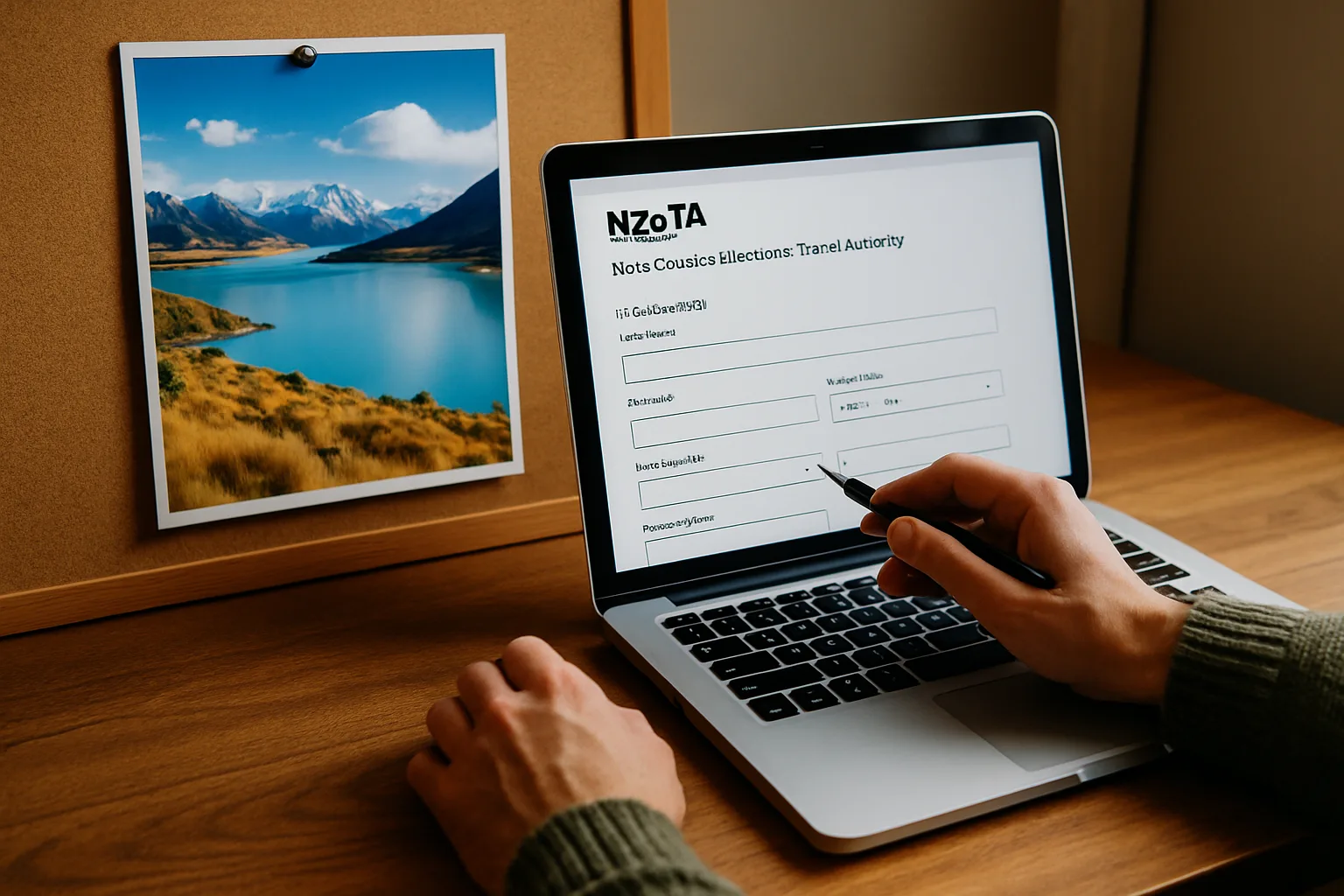
Before you apply, make sure you meet these requirements:
- Valid passport: Your passport must be valid for at least 3 months beyond your intended departure date from New Zealand.
- Visa-waiver nationality: You must hold a passport from an eligible country.
- Travel details: You'll need your flight details (or intended travel dates) and accommodation address (if known).
- Credit or debit card: To pay the NZeTA fee and the International Visitor Conservation and Tourism Levy (IVL).
- Email address: To receive your NZeTA approval.
- Good character: You must not have a criminal record that would make you inadmissible. If you have a conviction, you may need to apply for a visa instead.
For example, if you have a DUI conviction from five years ago, you might still be eligible. However, serious offences like drug trafficking or violent crimes can lead to refusal. Always disclose all convictions honestly on the application form.
Your passport must be valid for the entire duration of your stay. If it expires sooner, renew it before applying. The NZeTA is electronically linked to your passport number, so any mismatch causes problems.
How to apply for a New Zealand ETA: Step-by-step
Applying for an NZeTA is straightforward. Follow these steps:
- Check eligibility: Confirm your country is on the visa-waiver list. If you're a UK passport holder, you're eligible. See our guide for nzeta uk passport holders.
- Prepare your documents: Have your passport, travel details, and payment method ready.
- Choose your application method: You can apply via the official NZeTA mobile app (recommended – cheaper and faster) or via the official website. The app costs NZD $9, the website NZD $12.
- Fill in the application form: Enter your personal details exactly as they appear on your passport. Include your full name, date of birth, passport number, and travel plans.
- Answer health and character questions: You'll be asked about any criminal convictions and any serious medical conditions. Answer honestly – false information can lead to refusal.
- Pay the fees: You'll pay the NZeTA fee plus the IVL (NZD $35). Total cost: NZD $44 via app, NZD $47 via website.
- Submit and wait: Most applications are processed automatically within minutes to 72 hours. You'll receive an email confirmation. Save this and keep a copy on your phone.
- Check your approval: Use the official check status tool to confirm your NZeTA is linked to your passport. It's valid for up to 2 years.
For a more detailed walkthrough, see our nzeta application guide.
If you are applying for a family of four, you can submit all applications in one session. Each person, including infants, needs their own separate form. The app allows you to save progress and return later if needed.
New Zealand ETA cost and fees
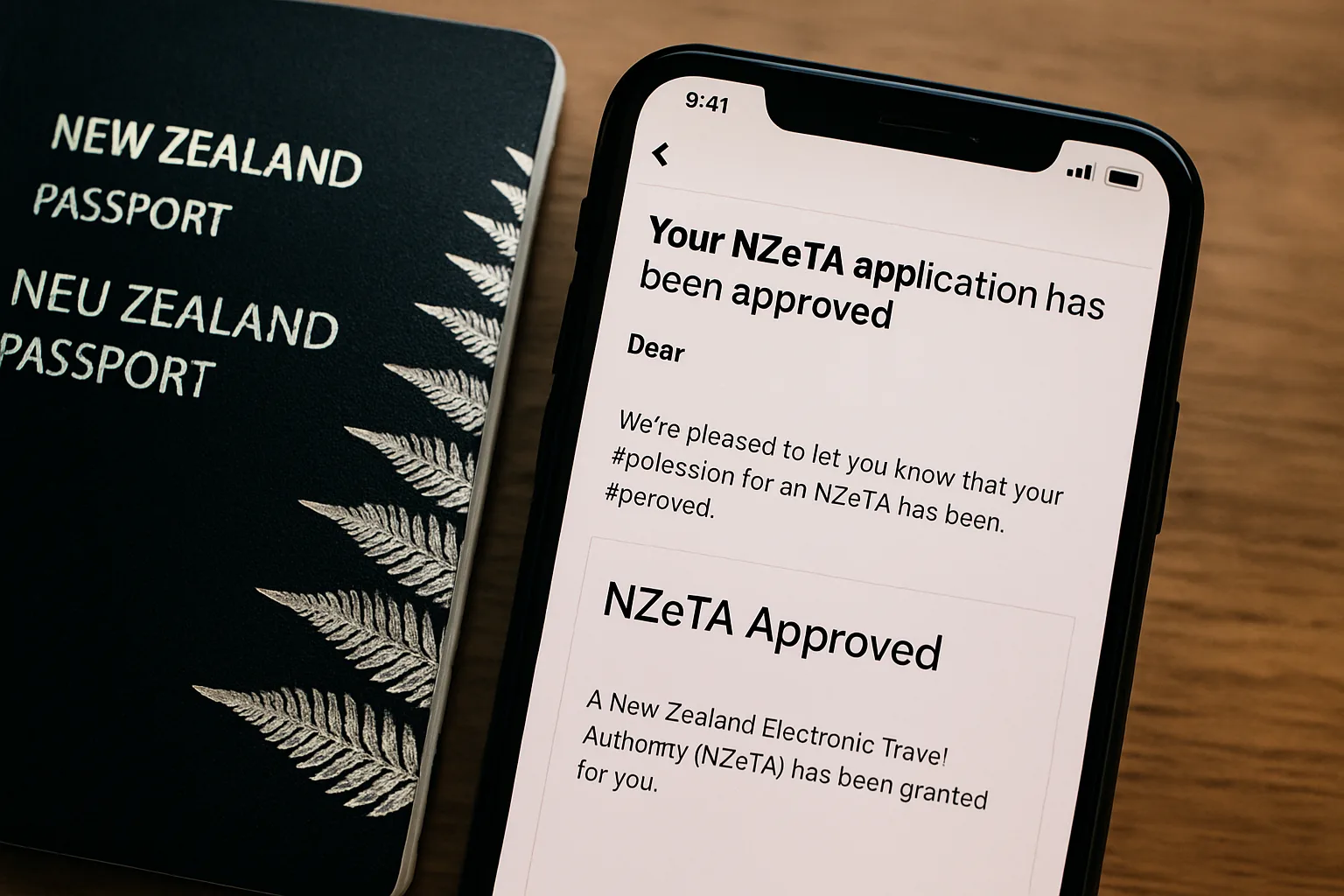
The total cost of an NZeTA includes two components: the NZeTA fee and the International Visitor Conservation and Tourism Levy (IVL). The IVL is a separate charge that funds conservation and tourism infrastructure. You must pay both when you apply.
| Fee type | App cost (NZD) | Website cost (NZD) |
|---|---|---|
| NZeTA fee | $9 | $12 |
| IVL | $35 | $35 |
| Total | $44 | $47 |
Prices are in New Zealand dollars. Payment is by credit or debit card. There are no additional service fees if you use the official channels.
Beware of third-party websites that charge extra – always use the official Immigration New Zealand app or website. For a full breakdown, visit our page on nzeta cost.
The IVL is non-refundable even if your application is denied. If you apply and are refused, you lose the $35 levy. This is why it is important to ensure you meet all requirements before submitting.
New Zealand ETA processing time
Most NZeTA applications are processed automatically within minutes. However, some applications require manual review and can take up to 72 hours. In rare cases, it may take longer.
To be safe, apply at least 2 weeks before your travel date. Do not book non-refundable flights until you have your NZeTA approved.
If your application is urgent, you cannot expedite it. The only option is to apply early. If you're denied, you'll need to apply for a visitor visa instead, which takes longer.
For example, a traveller who applied three days before departure was still waiting after 48 hours. They had to rebook their flight at significant cost. Planning ahead prevents such stress and expense.
New Zealand ETA validity and conditions
An approved NZeTA is valid for up to 2 years from the date of approval, or until your passport expires – whichever comes first. It allows multiple visits to New Zealand, with each stay up to 3 months. You cannot work or study on an NZeTA (you need a specific visa for that).
You must also meet health and character requirements at the border.
When you arrive in New Zealand, border officers may ask to see your return ticket, proof of accommodation, and evidence of sufficient funds. They can refuse entry if they believe you won't comply with visa conditions. Always carry your NZeTA confirmation email or have it accessible on your phone.
For instance, a traveller with NZD $500 for a 3-week trip might be questioned about funds. Having a credit card or bank statement showing NZD $1,000 per month of stay is generally acceptable. Prepare these documents in advance.
Frequently asked questions about the New Zealand ETA
Here are answers to common questions travellers ask:
Can I apply for an NZeTA at the airport?
No. You must have an approved NZeTA before you board your flight to New Zealand. Airlines will check your travel documents at check-in. If you don't have an NZeTA, you'll be denied boarding.
Apply well in advance.
Do children need an NZeTA?
Yes. Every traveller, including infants and children, needs their own NZeTA linked to their own passport. You can apply for a family group in one session, but each person must have a separate application.
What if I have dual nationality?
You must apply with the passport you intend to travel on. If one of your nationalities requires a visa, you cannot use your visa-waiver passport to avoid the visa requirement. Use the passport that matches your eligibility.
If you have a visa-waiver passport, you can use it for the NZeTA.
Can I extend my stay beyond 3 months?
No. The NZeTA does not allow extensions. If you want to stay longer, you must apply for a visitor visa before your NZeTA expires. Overstaying can result in deportation and future entry bans.
What happens if my NZeTA is denied?
If your application is refused, you will receive a reason. You cannot appeal the decision. You may apply for a visitor visa instead, but that is a separate process with different requirements.
Check the refusal letter for guidance.
Common mistakes to avoid when applying
Many travellers make simple errors that delay or deny their NZeTA. One common mistake is entering passport details incorrectly. Even a single typo can cause a mismatch and lead to rejection.
Always double-check your full name, passport number, and expiry date before submitting.
Another frequent error is applying too late. While most approvals are instant, some take up to 72 hours. If you apply the day before your flight, you risk being denied boarding.
Plan ahead and apply at least two weeks in advance to avoid stress.
Some applicants also forget to pay the IVL fee. The NZeTA application will not be processed without this payment. Ensure your credit or debit card has sufficient funds and is accepted for international transactions.
If the payment fails, your application will be incomplete.
For example, a traveller once entered their middle name as "John" when their passport showed "J." This small discrepancy caused a manual review that took four days. Always match the passport exactly.
What to do if your NZeTA is delayed
If your NZeTA application is still pending after 72 hours, you can check the status online using the official tool. Delays often happen if your application requires manual review. This may occur if you have a common name, a previous visa refusal, or a minor criminal record.
You cannot contact Immigration New Zealand to speed up the process. The only option is to wait. If you have not received a decision within two weeks, you should consider applying for a visitor visa instead.
This is a separate, longer process, so it's best to avoid this scenario by applying early.
If your NZeTA is approved after a delay, you will receive an email confirmation. Print this email or save it on your phone for travel. Always carry a copy of your approval, as airline staff may ask to see it at check-in.
In rare cases, technical glitches can cause delays. If your status shows "submitted" for more than a week, try reapplying. Ensure you use a stable internet connection to avoid submission errors.
Transiting through New Zealand with an NZeTA
Even if you are only passing through New Zealand on your way to another country, you still need an NZeTA. This applies to all visa-waiver nationals who transit through Auckland, Christchurch, or Wellington airports. The only exception is if you are an Australian citizen or hold a valid New Zealand visa.
For example, if you fly from London to Sydney with a layover in Auckland, you must have an approved NZeTA. Without it, you will not be allowed to board your flight. The same rule applies if you transit through New Zealand to reach a Pacific island like Fiji or Tonga.
Transit passengers do not need to clear customs or leave the airport. However, you must still meet the same health and character requirements as visitors. Your NZeTA will be checked by airline staff before departure, so ensure it is valid before you travel.
Some travellers mistakenly think transit means no authorisation is needed. This is false for New Zealand. Always apply for an NZeTA if your itinerary includes a stopover, even if it is only a few hours.
Using the NZeTA mobile app
The official NZeTA mobile app is the fastest and cheapest way to apply. It is available for both iOS and Android devices. The app costs NZD $9, which is $3 less than the website fee.
It also allows you to scan your passport using your phone's camera, reducing typing errors.
To use the app, download it from the Apple App Store or Google Play Store. Create an account and follow the on-screen instructions. You can save your application progress and return later if needed.
The app also lets you check your application status and view your approved NZeTA.
One advantage of the app is that it automatically links your NZeTA to your passport number. This reduces the risk of manual entry mistakes. However, you still need a stable internet connection to submit the application.
If you are in a remote area, consider applying via the website instead.
The app also supports multiple applications for a family. You can submit all members in one session, saving time. Just ensure each person has their own passport ready for scanning.
What happens at the New Zealand border
When you arrive in New Zealand, a border officer will check your passport and NZeTA. They may ask about your travel plans, accommodation, and funds. Be prepared to show your return ticket and proof of sufficient money for your stay.
For example, you might need to show a hotel booking or a bank statement.
Border officers also assess your health and character. If you have a contagious disease or a serious criminal record, you may be refused entry. They can also deny entry if they believe you plan to work illegally or overstay.
Always answer questions honestly and provide clear documentation.
After passing through immigration, you will collect your luggage and go through customs. New Zealand has strict biosecurity laws. Declare any food, plants, or animal products you are carrying.
Failure to declare can result in fines of up to NZD $400. For a smooth entry, check the biosecurity rules before you travel.
For instance, a traveller who brought hiking boots with soil was fined NZD $400. Cleaning all gear before travel avoids such penalties. Always declare risk goods, even if you are unsure.
Travel insurance and the NZeTA
While travel insurance is not required for an NZeTA, it is strongly recommended. New Zealand's healthcare system is not free for visitors. If you fall ill or have an accident, you could face high medical bills.
Travel insurance can cover these costs and give you peace of mind.
For example, if you break your leg while hiking in Queenstown, a hospital visit might cost thousands of dollars. Insurance can reimburse you for medical treatment, emergency evacuation, and trip cancellation. Check your policy to ensure it covers activities like bungee jumping or skiing, which are common in New Zealand.
Some travel insurance policies also cover lost luggage, flight delays, and personal liability. Compare different providers to find a plan that suits your needs. Remember, insurance is about protecting yourself from unexpected events, not a requirement for entry.
But it is a smart investment for any trip.
Adventure activities like skydiving or jet boating often require specific coverage. Confirm with your insurer before booking such excursions. Without insurance, a medical evacuation from a remote area could cost over NZD $10,000.
Preparing for your trip: practical tips
Before you depart, make several copies of your NZeTA approval email. Keep one in your carry-on bag, one in your checked luggage, and one saved on your phone. This ensures you can access it even if your phone battery dies or your bag is lost.
Check the entry requirements for any countries you are transiting through. Some countries, like Australia, require their own electronic travel authority even if you are just changing planes. Plan your entire itinerary to avoid last-minute surprises.
Familiarise yourself with New Zealand's customs and biosecurity rules. Items like hiking boots, camping gear, and sports equipment must be clean of soil and seeds. Declare all risk goods honestly to avoid fines and delays at the border.
Also, pack a power adapter for New Zealand's Type I sockets (three flat pins). This ensures you can charge devices and access your digital NZeTA copy. A portable charger is useful for long layovers.
Understanding the International Visitor Conservation and Tourism Levy
The IVL is a NZD $35 fee that funds conservation projects and tourism infrastructure in New Zealand. It is mandatory for most visitors, including those with an NZeTA. The levy helps protect natural attractions like Milford Sound and Tongariro National Park.
You pay the IVL at the same time as your NZeTA fee. It is non-refundable, even if your application is denied or you cancel your trip. The money goes directly to the Department of Conservation and Tourism New Zealand to improve visitor experiences.
Some travellers are exempt from the IVL, such as Australian citizens and permanent residents. Diplomats and transit passengers who do not clear customs may also be exempt. Check the official website to see if you qualify for an exemption.
For example, a transit passenger flying from Los Angeles to Sydney via Auckland who stays airside does not pay the IVL. However, they still need an NZeTA. Always confirm your exemption status before applying.
Renewing or reapplying for an NZeTA
Your NZeTA is valid for up to 2 years or until your passport expires. If you get a new passport before the NZeTA expires, you must apply for a new NZeTA. The old one is linked to your previous passport and cannot be transferred.
You can apply for a new NZeTA at any time, even if your current one is still valid. The new approval will replace the old one and start a fresh 2-year validity period. This is useful if you change your travel plans or need to update your details.
If your NZeTA is refused, you can reapply after addressing the reason for refusal. For example, if you had a criminal record that was not disclosed, you may need to apply for a visitor visa instead. Always provide complete and accurate information to avoid complications.
Suppose your passport is stolen and replaced. You must apply for a new NZeTA with the new passport number. The old approval is invalid.
Keep a digital copy of your old NZeTA for reference, but do not rely on it.
Special considerations for cruise ship passengers
If you are arriving in New Zealand on a cruise ship, different rules may apply. Some cruise passengers from visa-waiver countries do not need an NZeTA if they are on a closed-loop cruise. However, this depends on the specific itinerary and the cruise line's arrangements.
For example, if your cruise starts and ends in New Zealand, you may need an NZeTA. If it is a transit stop on a longer voyage, check with your cruise operator. They will advise on the correct documentation for your journey.
Always confirm requirements with your cruise line before booking. They have the most up-to-date information on entry rules for cruise passengers. Do not assume you are exempt without checking first.
Cruise lines often provide group processing for NZeTAs. Ask your operator if they handle applications for passengers. This can save time and ensure compliance with border rules.
How to check your NZeTA status
After you apply, you can check your NZeTA status online using the official Immigration New Zealand tool. You will need your application reference number and passport details. The tool shows whether your application is pending, approved, or denied.
If your NZeTA is approved, you can view and print the confirmation. Keep this document with your travel papers. If it is still pending, note the date of application and wait for the standard processing time.
Checking your status regularly helps you catch any issues early. If you notice an error, you may need to reapply. Always use the official website or app to avoid scams.
For peace of mind, check your status 48 hours before departure. If it is still pending, contact your airline for advice. They may allow boarding with a pending application, but this is not guaranteed.
Key takeaways
- The New Zealand ETA is an electronic travel authorisation for visa-waiver nationals, including UK passport holders.
- Apply online or via the app at least 2 weeks before travel. Cost: NZD $44 (app) or $47 (website).
- Valid for 2 years, multiple entries, stays up to 3 months each.
- You must have an approved NZeTA before boarding your flight.
- Always check the official Immigration New Zealand website for the latest rules – this is general guidance only.
Frequently asked questions
How long does it take to get a New Zealand ETA?
Can I use the New Zealand ETA for multiple trips?
What is the difference between NZeTA and a visitor visa?
Do I need a New Zealand ETA if I am just transiting?
What if my passport expires before my NZeTA?
This article is for general informational purposes only. Visa and travel authorisation rules change frequently. Always check the official government website before travelling.

Written & reviewed by
Can OTUTravel Authorisation Editor
Can OTU is the editor of ETA Travel Assistant, specialising in UK ETA, Schengen ETIAS, NZeTA and ESTA travel authorisations. Can monitors official government sources and policy updates to ensure every guide is accurate, current and genuinely useful for travellers.
View all guides →