EES Border Checks: Why 9 EU Countries Say They Still Can't Fully Enforce Them
- EES has been live since 12 October 2025; full operation at all Schengen external border crossing points is required from 10 April 2026.
- If a crossing point isn't connected, you get a stamp and no biometrics are taken there — so your record can be split across two systems for a few months.
- You never apply for the EES. It's free and automatic at the border. ETIAS, the thing you apply for, isn't live yet.
If you've seen the headline that nine EU countries "can't enforce" the EES, you'd be forgiven for thinking the whole system is coming apart. It isn't. None of those nine refused to run the Entry/Exit System.
What they told the European Commission in September 2025 was narrower than that: they couldn't have every single external border crossing point fitted with the hardware, connected to the central database and staffed by trained officers by 12 October. That's a logistics problem, not a legal rebellion — and the EU had already written a fix into law a year earlier.
This piece explains what actually happened, which countries were involved and why, what a "progressive rollout" looks like at a real border desk, and what the EES enforcement problems reported for 2026 mean for your trip. The short version: your journey is unlikely to be disrupted. But the detail matters, because for a few months two border processes are running side by side — one electronic, one made of ink.
What is the EES, in plain English?
The Entry/Exit System is the EU's electronic register of non-EU nationals crossing the Schengen external border for a short stay. It replaces the ink stamp in your passport with a database record.
It has been in operation since 12 October 2025. It's run by eu-LISA, the EU agency that also operates the Visa Information System and the Schengen Information System.
Here's what it covers, in five lines:
- Who it applies to: non-EU, non-EEA and non-Swiss nationals crossing the external border of the Schengen area — including UK, US, Canadian, Australian and Japanese nationals.
- Who it doesn't apply to: EU/EEA/Swiss citizens, holders of a Schengen residence permit or long-stay visa, and a short list of others covered later in this article.
- What it costs you: nothing. There is no application, no form and no fee.
- What it records: your identity, your travel document, the date and place of every entry and exit, a facial image, and four fingerprints (fingerprints from age 12).
- How long it's held: three years for short-stay records, five years where an overstay is recorded.
One thing to lock in early, because a lot of content gets it wrong: EES is not something you sign up for. It happens to you at the border, whether you like it or not. The scheme you apply for is ETIAS, and that's a different thing entirely.
More on that below.
When does EES start — and when is it fully enforced?

There are two dates that matter, and the gap between them is the whole story.
| Date | What happens |
|---|---|
| 12 October 2025 | EES enters into operation. Member states begin registering travellers at connected border crossing points. |
| 12 Oct 2025 – 9 April 2026 | Progressive rollout window — 180 days. States may connect crossing points in stages. Where a crossing point isn't connected, passports are stamped as before. |
| 10 April 2026 | Full operation. Every Schengen external border crossing point must be using EES. |
| Expected late 2026 | ETIAS — the pre-travel authorisation for visa-exempt nationals — is currently expected, subject to transition periods. The Commission has not fixed a date. |
During the rollout window, member states can choose which crossing points to connect and when. In practice, almost everyone started with the big airports, because that's where the volume is and where the investment was already going in.
Land and sea crossing points, smaller regional airports and seasonal ferry terminals generally come later. That's the inverse of what most travellers assume — people worry about a rural land crossing and it's the one still stamping.
Why nine EU countries said they couldn't fully enforce EES
In September 2025, a group of member states told the Commission they would not be in a position to register EES data at every one of their external border crossing points when the system went live. Press reporting at the time put the number at nine.
Two things are worth getting straight. First, none of them said they'd refuse to apply the system. Second, the Commission never published a list.
Different outlets named slightly different sets of countries, and the Commission's public position was simply that the 12 October start date was fixed.
What the nine were flagging was readiness, in four specific areas: hardware installed, national IT systems talking to the central EES, officers trained, and enough of them on shift to handle a slower process.
Which countries were involved, and what were their constraints?
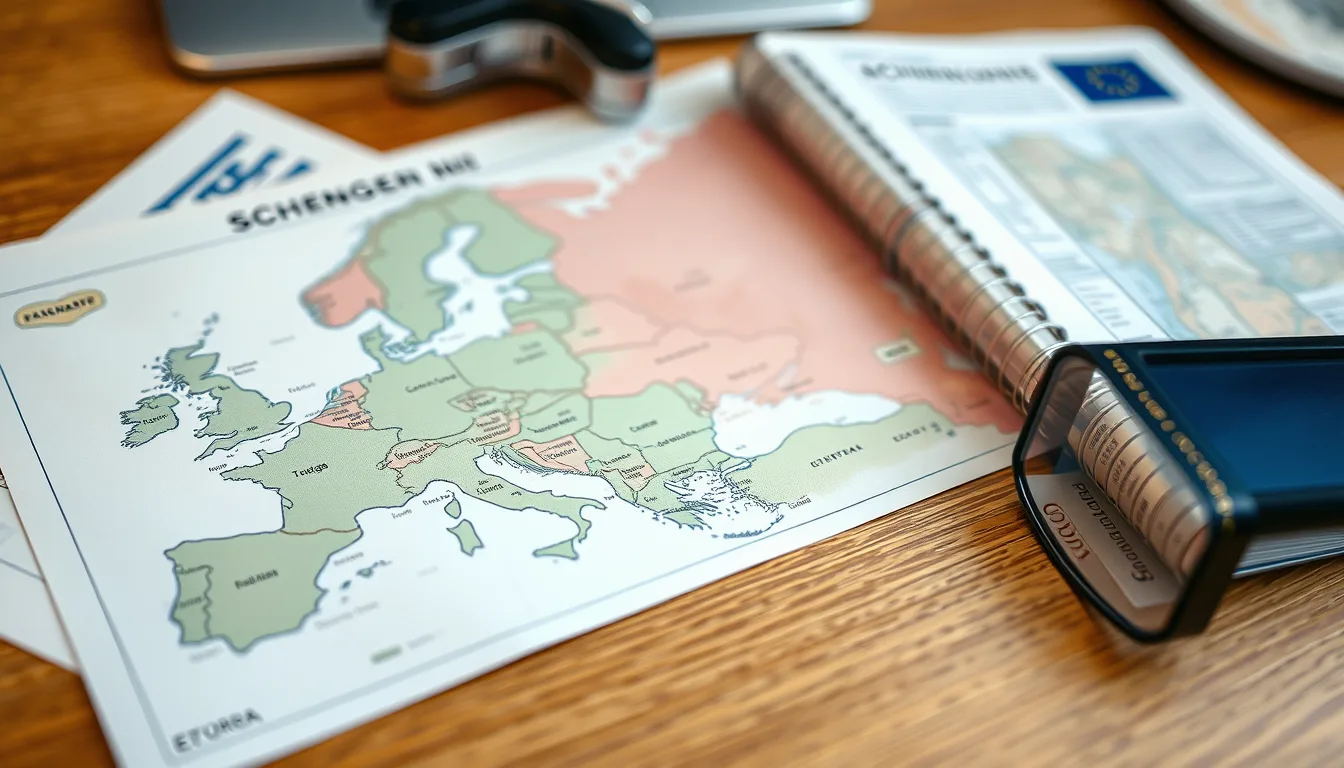
We're not going to pretend there's an official list of nine — there isn't. Reporting varied, and the Commission stayed quiet on names. What follows is the set of large Schengen states whose implementation constraints have been discussed most openly by their own border authorities, airports and police unions.
Treat it as indicative, not as a Commission document.
| Country | Constraint publicly discussed |
|---|---|
| Germany | Connecting Frankfurt, Munich and Berlin in parallel; federal police representatives publicly questioned staffing and training timelines. |
| France | Paris CDG and Orly plus Channel and Alpine crossings; police unions flagged officer numbers for the extra processing time. |
| Italy | Rome Fiumicino and Milan Malpensa are straightforward; the long tail of small airports and seasonal ferry ports is not. |
| Spain | Madrid-Barajas and Barcelona-El Prat, plus the Morocco land borders at Ceuta and Melilla, which are high-volume external crossings. |
| Netherlands | Amsterdam Schiphol ran a deliberately phased connection, pier by pier, rather than switching the whole terminal at once. |
| Belgium | Brussels Airport plus the Port of Antwerp, where freight and passenger flows share infrastructure. |
| Portugal | Lisbon, Porto and Faro, plus island airports in the Azores and Madeira with lower connectivity and fewer staff. |
| Poland | A long eastern land border with Ukraine and Belarus, where hardware and connectivity are harder than at an airport. |
| Greece | Hundreds of islands and small sea crossing points, with traffic that spikes hard in July and August. |
Notice the pattern. It's not that any of these countries lacked the legal will or the political appetite. It's that EES requires physical equipment at physical locations, and some locations are much harder to equip than others.
The five practical reasons full enforcement slipped
1. Hardware takes time to procure and install
Self-service kiosks and biometric enrolment devices aren't off-the-shelf consumer goods. They go through public procurement, testing and certification. A country that started tendering late simply wasn't going to have thousands of units installed by October.
2. Airport terminals weren't built for this
A kiosk needs floor space, power and network cabling — and it needs to sit before the border desk without blocking the walking route. At older terminals with tight arrivals halls, that's a genuine architectural problem, not a paperwork one.
3. National IT systems have to talk to the central system
Each member state connects to the central EES through its own national interface. That integration has to be built, tested and certified against the central system. Certification failures are common in these projects and they're not quick to fix.
4. Officers need training, and there aren't spare officers
EES adds handling time per traveller, especially on first registration. Border officers need to learn the new process and the exception handling — what to do when the system is down, when biometrics fail, when a traveller objects. Police unions in several countries said openly that headcount hadn't grown to match.
5. Land and sea borders are the hardest to connect
An airport has one arrivals hall, stable power and a fibre connection. A rural land crossing may have none of those. A Greek island port in August may process more passengers in a day than it does in February in a month.
The infrastructure problem is real, and it's why the tail of the rollout runs right up to April 2026.
What "progressive rollout" actually means
The progressive rollout isn't an improvisation. A 2024 amendment to the EES Regulation created the mechanism on purpose, precisely because member states said they couldn't be ready everywhere at once.
Here's what it legally allows:
- Connecting border crossing points in stages, at the member state's own pace.
- Connecting some transport hubs before others — usually major airports first.
- Continuing to stamp passports at any crossing point not yet connected.
- Continuing to stamp when the system is temporarily unavailable at a connected point.
The binding obligation is to be fully connected by 10 April 2026. Not before.
So when you read that nine countries "can't enforce the EES", the accurate version is this: nine countries used a legal mechanism the EU created for exactly this situation. The system was still being applied at every crossing point that was connected. Nothing was suspended.
What you'll actually experience at the border in 2026
At an EES-connected crossing point
- You join the non-EU arrivals queue as normal.
- Your passport is scanned. If it's your first EES entry, none of your data is on file yet.
- You're asked to look at a camera for a facial image, and to place four fingers on a reader.
- The officer confirms the Schengen Borders Code conditions — length of stay, purpose, funds, return ticket.
- Your entry is logged electronically. No stamp.
First registration is the slow bit. Budget roughly 30 to 90 seconds extra on your first trip after the change. On subsequent trips at connected crossings, the scan takes seconds.
At a crossing point that isn't connected yet
Nothing changes at all. The officer looks at your passport, runs the usual checks and stamps it. No facial image, no fingerprints, no EES record created on the spot.
If you got an EES record in March and a stamp in June, your travel history lives in two places. That matters for the 90/180 calculation — keep the stamped pages.
If the system goes down while you're there
Contingency procedures kick in. Border officers fall back to stamping, and the record is entered into EES retrospectively or handled under the fallback rules. You don't get turned away because a server is offline.
What most EES guides get wrong
There's a lot of recycled misinformation out there. Here are the corrections that actually matter.
- "You need to register for EES before you travel." No. There is no registration, no portal and no fee. It happens at the border.
- "EES and ETIAS are the same thing." They're not. EES records entries and exits. ETIAS is a pre-travel authorisation you apply for online. ETIAS isn't live yet.
- "If nine countries aren't enforcing it, the whole launch is postponed." No. The start date and the full-operation date are set in the Regulation.
- "Internal border checks count as EES." They don't. EES applies only at external borders. If German police check your passport on a train from Salzburg, that's a temporary reintroduction of internal checks under the Schengen Borders Code — no EES record is created.
- "British citizens are exempt." They're not. UK nationals are one of the main groups EES applies to. The narrow exception is for UK nationals with rights under the Withdrawal Agreement and their family members.
- "Visa-free travellers aren't recorded." Backwards. Visa-free nationals are the biggest category in the system.
That fourth point trips up more people than any other. You can be checked three times on a single train journey across internal borders and still have no EES record, because you never crossed an external one.
A worked scenario: two trips, two different processes
Names changed, details representative.
Sarah, a UK national from Bristol.
- 14 January 2026: Bristol to Alicante. The arrivals hall her flight uses at Alicante-Elche hasn't been connected yet. The officer stamps her passport. No facial image, no fingerprints, roughly the usual two minutes.
- 2 March 2026: Bristol to Faro. Faro is connected. She's directed to a kiosk, gives a facial image and four fingerprints. First registration takes about 90 seconds on top of the normal check. Her entry is logged electronically, no stamp.
- 20 June 2026: Bristol to Alicante again. Now connected. Her passport is scanned, the March record appears, and the entry is logged in seconds. No stamp.
Net effect on Sarah's trip: nothing, beyond an extra minute and a half at Faro. Net effect on her paperwork: her January entry exists only as a stamp, and everything from March onwards exists only in a database.
That's the practical consequence of the rollout most articles miss. If Sarah ever has to prove how long she's spent in Schengen during early 2026, she needs both her passport pages and a data access request.
Now imagine the same traveller with a 6-year-old. Children under 12 aren't fingerprinted, but a facial image is captured for all travellers including infants. In a family of four, that's four camera stops instead of one passport handover — and it's the reason some airports are warning about slightly longer dwell times in family lanes.
Does EES change anything if you need a Schengen visa?
Not to the application. The visa process is unchanged — same forms, same appointments, same biometrics at the consulate or its outsourced centre.
What EES does change is enforcement after you arrive. Border officers now have a precise electronic record of every day you've spent in the Schengen area. Visa conditions get checked against a database rather than a page of stamps.
If you're a US green card holder trying to work out whether you still need a visa for a European trip, the answer depends on your nationality, not your green card — we break the specifics down in our guide to the schengen visa for us green card holders.
And if a third party is funding your trip — a partner, a parent, an employer — the consulate will want a written undertaking. Our walkthrough on how to write a schengen visa sponsorship letter covers what the document needs to say and who has to sign it.
EES and the 90/180 rule: the biggest practical change
The rule itself hasn't moved. Non-EU nationals on a short stay can spend 90 days in any 180-day period across the Schengen area. What's changed is the counting.
Before EES, officers counted stamps. Travellers did rough mental arithmetic, and mistakes were common in both directions — people who thought they were fine were over, and people who thought they were over were fine.
Now entry and exit dates are electronic. The calculation gets done for you, accurately, and it follows you from country to country because it's one central system.
Two consequences worth planning around:
- Overstays that used to go unnoticed will surface. A five-day overshoot in 2024 that nobody stamped won't be in EES — but anything from October 2025 onwards will be.
- Split records need both halves. If part of your history is stamps and part is EES data, keep the passport and know how to request your EES record.
If you already hold a multi-entry visa, the underlying validity rules are unchanged — our explainer on multiple entry schengen visa validity covers how the window works and how it interacts with the 90/180 rule.
Who is exempt from EES?
The exemption list is short and specific. If you fall into one of these groups, your passport gets no EES record.
- EU, EEA and Swiss nationals — including non-EU family members holding a residence card under the free movement rules.
- Holders of a residence permit or long-stay visa issued by a Schengen state.
- UK nationals who are beneficiaries of the Withdrawal Agreement, and their family members.
- Nationals of Andorra, Monaco, San Marino and the Holy See.
- Holders of a local border traffic permit.
- Heads of state and certain diplomats travelling on official business, plus a few other narrow categories in the Regulation.
Everyone else crossing an external Schengen border is in scope. That includes tourists, business visitors, second-home owners on short stays, and people who've been visiting Europe for 30 years without incident.
What if you hold dual nationality?
This is the edge case that causes the most confusion, so here's a clean decision rule.
EES applies based on your status, not the passport in your hand. If you're a citizen of an EU or EEA country, you have the right of free movement and you're outside EES. But if you present a non-EU passport at the desk, you'll be treated as a third-country national and registered.
So: Irish-American? Show the Irish passport. Italian-Australian?
Show the Italian passport. German-Canadian? Same answer.
There's a related trap for UK nationals living in the EU. If you hold a residence document issued under the Withdrawal Agreement, you're exempt from EES. If you're a UK national who simply owns a house in Spain and visits for a few months a year, you're not exempt — you're a short-stay traveller and you'll be registered like anyone else.
Not sure which category you're in? The European Commission's EES pages set out the scope and exemptions in the Regulation's own language.
EES vs ETIAS vs UK ETA: what's the difference?
Three schemes, three different purposes, and travellers mix them up constantly.
| Scheme | Applies to | Do you apply? | Fee | Validity |
|---|---|---|---|---|
| EES | Non-EU nationals crossing the Schengen external border | No | Free | Record held 3 years (5 if overstay recorded) |
| ETIAS | Visa-exempt non-EU nationals | Yes, online | €20 (under 18s and over 70s exempt) | 3 years, or until the passport expires |
| UK ETA | Visa-exempt nationals travelling to the UK | Yes, online or via the app | £16 | 2 years, multiple entries |
Two notes on that table. ETIAS is not live yet — the Commission has said it will follow full EES operation, currently expected in late 2026, with transition periods built in. The UK ETA fee rose to £16 on 9 April 2025.
If you're a UK national flying to Spain, you're in scope for EES now and you'll be in scope for ETIAS once it launches. Different scheme, different direction of travel.
Do you need to do anything before you travel?
Genuinely, almost nothing. But there are five things worth checking.
- Confirm your passport is biometric. The overwhelming majority are. If yours isn't, expect a slower manual process and check with the embassy of your destination.
- Check whether you need a Schengen visa based on your nationality — not your residency.
- Do nothing about EES. There's no form, no portal, no fee, and any site charging you for it isn't official.
- Add 15 minutes to your buffer on your first post-October-2025 trip, especially on a family booking.
- Keep your boarding passes and stamped pages. They're the only way to reconcile a split record.
This article is general guidance, not professional immigration advice. The Regulations and the Commission's practical guidance are the authoritative sources, and they're updated as the rollout progresses — always verify the current position with an official source before you book or travel.
What happens to your biometric data?
EES stores a facial image and four fingerprints. Fingerprints aren't taken from children under 12. A facial image is captured for all travellers, including infants.
Retention is three years for a short-stay record. If an overstay is recorded, that extends to five years. Records are deleted automatically when the retention period expires.
Access is limited by the Regulation — border authorities and visa authorities for their own purposes, and Europol under specific conditions and safeguards. As a data subject you have rights of access, rectification and erasure, exercised through the national data protection authority of the country where the data was collected.
In practice, the most useful one is access. If you need to prove your Schengen travel history — for a tax residency argument, a visa application or a dispute — a data access request is how you get the electronic half of it.
Will the rollout make queues worse?
Honest answer: at some crossings, briefly, yes. And it depends on the airport.
First registration is the slow point. Everyone arriving for the first time after a crossing point connects needs the full enrolment — camera, fingerprints, confirmation. At a large airport during a peak arrival bank, that adds up across a whole flight.
Repeat travellers are faster, because the record exists and it's a scan-and-match. That's why Schiphol and others phased the connection pier by pier rather than switching the whole terminal on one morning.
The awkward window is February to April 2026. Peak travel periods — half-term, Easter — coincide with the tail of the rollout, when crossing points are being connected for the first time and staff are still getting used to the extra steps. If you're travelling then, take the earlier flight rather than the later one.
What happens after 10 April 2026?
From 10 April 2026, every Schengen external border crossing point must be connected to EES. Stamping becomes the exception rather than the norm, reserved for system outages and the narrow exempt categories.
That's also when the compliance picture gets interesting. Up to that date, an unconnected crossing point was lawful. After it, it isn't — and the Commission has the tools to pursue infringement proceedings against a member state that hasn't finished the job.
Expect a period of consolidation rather than a clean switch: leftover stamps, some manual fallbacks, and a data set that fills in over the following months. For travellers, the practical advice stays the same — carry the passport, allow a bit more time, and keep your own record of dates.
ETIAS is the next milestone, and it's the one that will actually require action from you. Once it launches — currently expected in late 2026, with transition periods — visa-exempt nationals will need to apply online before travel. That's the point at which you'll genuinely have homework to do.
Key takeaways
- Nine EU countries told the Commission they couldn't connect every external border crossing point by 12 October 2025 — none refused to apply the EES.
- The 2024 amendment to the EES Regulation created the 180-day progressive rollout precisely for this. The window closes on 9 April 2026, with full operation from 10 April 2026.
- At a crossing point that isn't connected, you get a stamp and no biometrics. Your record can therefore be split between paper and database for a few months.
- You never apply for the EES. It's free, automatic and happens at the desk. If a website charges you for it, it isn't official.
- EES applies only at external borders. Internal border checks under temporary reintroduction rules create no EES record.
- Dual nationals should travel on their EU/EEA passport if they have one — otherwise they'll be registered as third-country nationals.
- The 90/180 rule is unchanged, but it's now counted electronically, so overstays surface far more reliably than they used to.
- ETIAS is still to come, currently expected in late 2026 — that's the scheme you'll need to apply for.
Frequently asked questions
Do I need to apply or register for the EES before travelling to Europe?
Which EU countries are not fully enforcing EES in 2026?
Will I still get a passport stamp at a Schengen border in 2026?
Does the EES apply to me if I already hold a Schengen residence permit?
Is the EES the same as ETIAS, and will I need both?
This article is for general informational purposes only. Visa and travel authorisation rules change frequently. Always check the official government website before travelling.

Written & reviewed by
Can OTUTravel Authorisation Editor
Can OTU is the editor of ETA Travel Assistant, specialising in UK ETA, Schengen ETIAS, NZeTA and ESTA travel authorisations. Can monitors official government sources and policy updates to ensure every guide is accurate, current and genuinely useful for travellers.
View all guides →