Why You Should Apply for Your Schengen Visa Early: Tips to Avoid Delays
- Submit your application no later than 15 days before travel, but aim for 3-6 months early.
- Gather all required documents (passport, photos, travel insurance, itinerary, proof of accommodation, financial means) before booking an appointment.
- Check embassy-specific rules: some countries have different processing times or require in-person interviews.
You've booked your flights, picked your hotels, and you're counting down the days to your European adventure. But there's one thing that can derail everything: your Schengen visa application. If you leave it too late, you risk delays, missed trips, and a lot of stress.
The good news? You can avoid almost all of that by applying early. In this guide, I'll walk you through exactly when to apply, what documents you need, and how to handle common hiccups.
I'll also share insider tips that most travel blogs don't mention.
Remember: this is general guidance. Always check the official website of the embassy or consulate of the country you're applying to for the most up-to-date requirements. Official sources like the European Union's travel page are your best friend.
When Should You Apply for a Schengen Visa?
The official rule: you can apply up to 6 months before your trip, and no later than 15 days before. But that 15-day cutoff is the absolute last minute — not a target. Aim for 3 to 6 months early.
Why 3-6 Months?
Embassies get swamped during peak travel seasons (summer, Christmas, Easter). Appointment slots fill up fast. Processing times can stretch from the usual 15 calendar days to 45 days or more if they need extra checks.
If you apply 3-6 months out, you have breathing room. If something's missing from your application, you can fix it without missing your flight. If the embassy is slow, you're still fine.
If you need to reschedule an interview, you can.
Consider a real-world example: a traveller named Maria booked a trip to Italy for July. She applied in April, 3 months early. Her appointment was available within a week, and her visa was processed in 10 days.
She had plenty of time to correct a minor error in her hotel booking. In contrast, her friend applied in June for the same July trip. The embassy had no appointments for 3 weeks, and the visa arrived only 2 days before departure.
The stress was immense.
What About Last-Minute Travel?
Sometimes you can't plan months ahead. If you're travelling in under 3 weeks, you can still try — but be prepared for a possible rejection. Contact the embassy directly and explain your situation.
Some offer expedited processing for an extra fee, but not all. Your best bet is to apply as soon as you book your trip.
For example, if you have a family emergency and need to travel to Germany within 2 weeks, call the embassy immediately. Provide proof of the emergency, such as a hospital letter. Some embassies may prioritise your case, but there is no guarantee.
Always have a backup plan, like refundable flights.
Step-by-Step Guide to Applying for a Schengen Visa Early
Follow these steps in order. Each step builds on the last. Don't skip ahead.
Step 1: Determine Which Country to Apply To
You apply to the country where you'll spend the most days. If you're visiting multiple countries for equal time, apply to the one where you'll enter first. This is the "main destination" rule.
For example, if you're flying into Paris, spending 5 days in France, then 3 days in Italy, you apply to France. If you're spending 4 days in France and 4 days in Italy, apply to the country of first entry (France).
If you're a US green card holder, the rules are the same — but you might have different document requirements. Check our guide on schengen visa for us green card holders for specifics.
Step 2: Check the Embassy's Specific Requirements
Every Schengen country has its own application form, fee, and document list. Some require you to apply in person; others accept applications by mail or through a visa application centre (like VFS Global or TLScontact).
Go to the embassy's official website. Look for the "Visas" section. Download the application form and read the document checklist.
Pay attention to photo size, passport validity (usually 3 months beyond your departure from Schengen), and travel insurance minimum coverage (€30,000).
For instance, the French embassy may require a different photo size than the German embassy. The Spanish embassy might ask for a specific format of bank statement. These small differences can cause big delays if overlooked.
Always print the checklist and tick off each item as you gather it.
Step 3: Gather Your Documents
This is the part that takes the longest. Start collecting everything at least a month before you plan to apply. Here's a typical checklist:
- Valid passport (issued within the last 10 years, with at least 2 blank pages, valid for at least 3 months after your planned departure from Schengen)
- Completed visa application form (signed and dated)
- Recent passport-sized photos (meeting Schengen specifications)
- Travel itinerary (flight bookings, hotel reservations, or proof of accommodation)
- Travel health insurance (minimum €30,000 coverage for the entire Schengen area)
- Proof of financial means (bank statements, payslips, or a sponsor letter)
- Proof of employment or study (letter from employer, school, or proof of self-employment)
- For US green card holders: a copy of your green card and proof of residence in the US
Make copies of everything. Originals are often returned, but copies are kept.
Let's break down each document further. Your passport must be valid for at least 3 months after your planned departure from Schengen. If you plan to leave on 1 October, your passport must be valid until at least 1 January of the next year.
Also, it must have been issued within the last 10 years. Some travellers with older passports have been rejected even if the passport is still valid.
Your travel health insurance must cover the entire Schengen area. A policy that only covers France is not enough if you plan to visit Italy. The minimum coverage is €30,000 for medical emergencies, including repatriation.
Buy a policy that covers a few extra days beyond your trip to account for delays.
Proof of financial means can be tricky. Most embassies want to see bank statements from the last 3-6 months. The balance should be sufficient for your stay.
A general rule is €50-100 per day. For a 10-day trip, you might need €500-€1,000. If your balance is low, include a sponsor letter from a family member or friend, along with their bank statements and proof of relationship.
Your travel itinerary should include flight bookings and hotel reservations. Do not book non-refundable flights until your visa is approved. Many airlines offer hold options or refundable tickets for a small fee.
Use those to avoid losing money if your visa is refused.
Step 4: Book an Appointment
Once your documents are ready, book your appointment. This is where applying early really pays off. Popular embassies can have wait times of 2-4 weeks during peak season.
If you apply 3 months early, you can snag an appointment within a week.
Some countries allow walk-in appointments, but most require an online booking. Check the embassy's website or the visa application centre's portal.
For example, the Italian embassy in New York might have no appointments for 3 weeks in June. But if you check in March, you can book a slot for the following week. This is why early planning is critical.
Set a reminder to check appointment availability as soon as you decide on your travel dates.
Step 5: Attend the Interview (If Required)
Many applicants need to appear in person. The interview is usually short — 5-10 minutes. The officer will ask about your trip, your job, and your ties to your home country.
Be honest and concise. Bring all your documents in a neat folder.
If you're applying for a multiple-entry visa, the officer may ask about your travel history. Having a previous Schengen visa helps. For more on validity, see our article on multiple entry schengen visa validity.
Prepare for common questions: "Why are you visiting?" "What is your job?" "Do you have family in your home country?" "How will you fund your trip?" Have clear answers ready. If you are a student, bring your student ID and a letter from your school. If you are employed, bring a letter from your employer confirming your leave.
Step 6: Pay the Fee
The standard Schengen visa fee is €80 for adults, €40 for children aged 6-12, and free for children under 6. Some nationalities pay reduced fees. Payment is usually by card or cash at the appointment.
Note: the fee is non-refundable even if your visa is refused. So make sure your application is solid.
Check the embassy's website for the exact fee in your local currency. Some visa application centres charge an additional service fee. For example, VFS Global may charge a handling fee of around €20-€30.
Factor this into your budget.
Step 7: Wait for Processing
Processing time is officially up to 15 calendar days. In practice, it can take 2-3 weeks. If the embassy needs extra documents or a background check, it can take up to 45 days.
Applying early means you won't be sweating it.
You can usually track your application online. Some embassies send you an email when your passport is ready for collection.
During peak season, processing times can stretch. For instance, the Spanish embassy in London might take 20 days in August. If you applied 3 months early, this delay is manageable.
If you applied 2 weeks before your trip, you could miss your flight. Always plan for the worst-case scenario.
Step 8: Collect Your Passport
Once processed, you'll either collect your passport in person or have it mailed back (if that service is offered). Check the visa sticker carefully: make sure your name, dates, and number of entries are correct. If there's an error, report it immediately.
Common errors include misspelled names, incorrect validity dates, or wrong number of entries. If you requested a multiple-entry visa but received a single-entry visa, you may need to appeal. Report any errors within 24 hours to the embassy or visa centre.
Common Reasons for Schengen Visa Delays
Even if you apply early, delays can happen. Here's what causes them — and how to avoid each one.
Incomplete Application Form
Missing a signature, leaving a field blank, or using incorrect date formats can stall your application. Double-check every box. If you're unsure, ask the embassy or use a checklist.
For example, one traveller forgot to sign the declaration section. The embassy returned his application, and he had to resubmit it. This added 2 weeks to his processing time.
Another applicant used the wrong date format (MM/DD/YYYY instead of DD/MM/YYYY). The embassy rejected the form and asked for a new one. These simple mistakes are easily avoidable.
Insufficient Financial Means
You need to show you can support yourself during your stay. The amount varies by country, but a general rule is €50-100 per day. Bank statements from the last 3-6 months are standard.
If your balance is low, include a sponsor letter and their bank statements.
Consider this: a traveller named Ahmed applied for a 15-day trip to Spain. His bank statement showed a balance of €300. The embassy refused his visa because he could not prove he had enough funds.
He then provided a sponsor letter from his father, along with his father's bank statements showing €5,000. The visa was approved on reapplication. Always ensure your financial documents are robust.
Travel Insurance Issues
Your insurance must cover the entire Schengen area, not just one country. It must be valid for the whole duration of your stay. Many travellers buy a policy that starts and ends exactly on their travel dates — that's fine.
But if your flight is delayed and you arrive a day late, your insurance might not cover the first day. Buy a policy that covers a few extra days just in case.
For instance, a traveller named Elena bought insurance that started on 1 June and ended on 10 June. Her flight was delayed by 2 days, so she arrived on 3 June. Her insurance did not cover the first 2 days of her trip.
She had to buy a new policy at the airport. To avoid this, buy a policy that covers your travel dates plus 2-3 extra days.
Passport Validity Problems
Your passport must be valid for at least 3 months after your planned departure from the Schengen area. If it expires sooner, renew it before applying. Also, your passport must have been issued within the last 10 years.
Some older passports are rejected even if they're still valid.
For example, a traveller named Carlos had a passport issued in 2013, which was still valid until 2024. He applied for a Schengen visa in 2023. The embassy rejected his application because the passport was issued more than 10 years ago.
He had to renew his passport and reapply, losing 3 weeks. Check your passport's issue date before you start the process.
Previous Visa Violations
If you've overstayed a Schengen visa before, or been deported, your new application will face extra scrutiny. Be upfront about it. Provide a written explanation and any supporting documents (e.g., proof of medical emergency).
For instance, a traveller named Li overstayed his Schengen visa by 5 days due to a family emergency. He applied for a new visa a year later. The embassy asked for an explanation.
He provided a letter from the hospital where his mother was treated. The visa was approved after a 30-day review. Honesty and documentation are key.
How to Handle a Schengen Visa Rejection
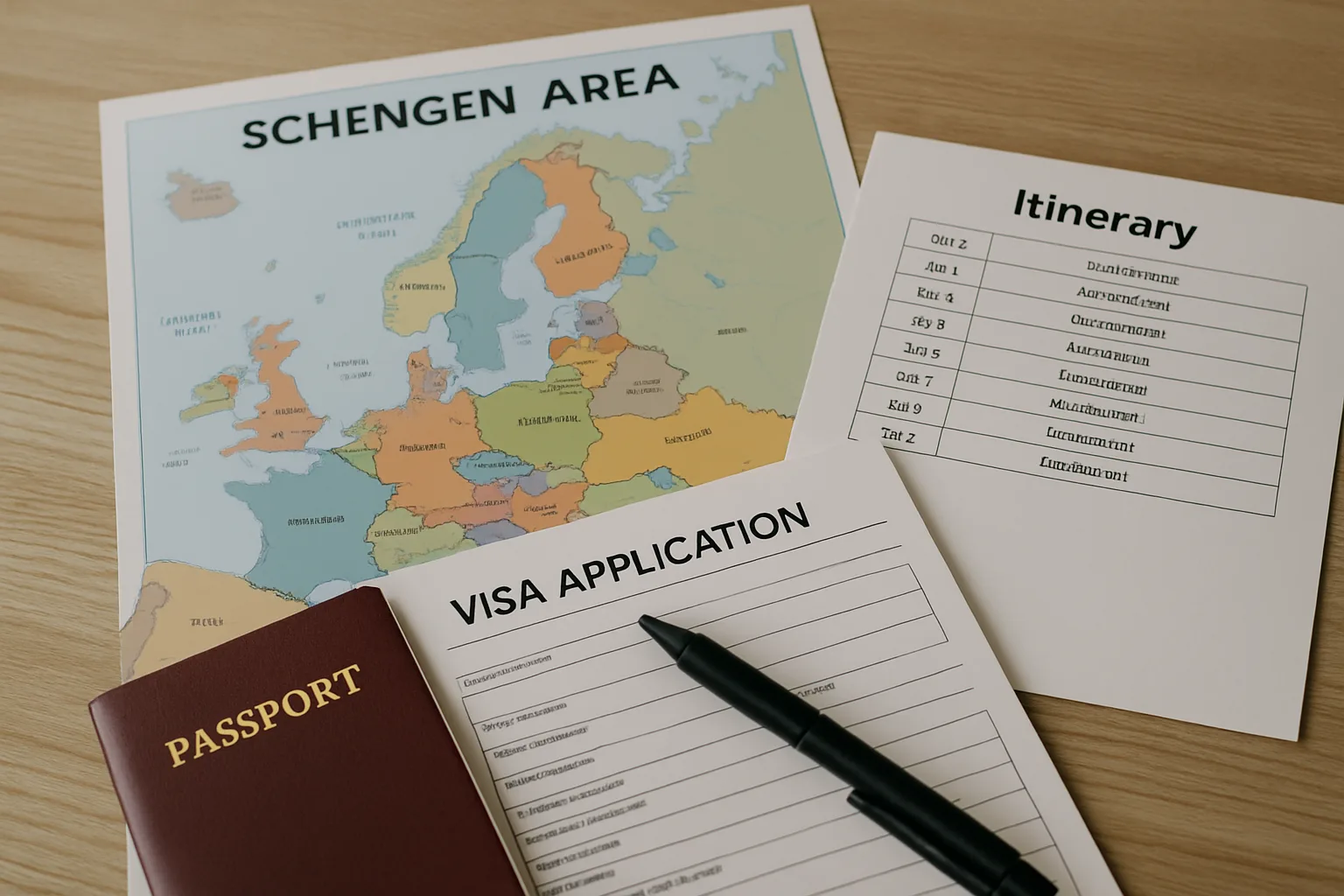
If your visa is refused, you'll receive a formal letter with the reason. Common grounds: insufficient funds, unreliable travel itinerary, or doubts about your intention to return home.
You can appeal the decision within a specific timeframe (usually 30 days). The appeal process varies by country. You'll need to submit a letter explaining why the refusal was wrong, plus new supporting documents.
Alternatively, you can reapply with a stronger application.
Applying early gives you time to appeal or reapply without cancelling your trip.
For example, a traveller named Sofia was refused a visa to France because her travel insurance did not cover the entire Schengen area. She appealed within 2 weeks, providing a new insurance policy that covered all 27 Schengen countries. The appeal was successful, and her visa was issued 3 weeks later.
If she had applied late, she would have missed her trip.
Special Cases: Who Needs Extra Time?
First-Time Applicants
If you've never had a Schengen visa before, expect more scrutiny. Embassies may ask for additional documents like proof of ties to your home country (property deeds, family certificates, employment contract). Apply at least 4-6 months early.
For instance, a first-time applicant named Raj from India applied for a Schengen visa to visit Germany. The embassy asked for his employment contract, bank statements for 6 months, and a letter from his landlord proving his residence. Gathering these documents took him 3 weeks.
He applied 5 months early, so the delay did not affect his trip.
Applicants from High-Risk Nationalities
Some nationalities face longer processing times due to geopolitical factors. For example, Schengen visa Russian nationals suspended by Slovakia is a specific case. Always check the latest travel advisories for your nationality.
Other nationalities, such as those from certain African or Middle Eastern countries, may face additional document requirements. For example, applicants from Nigeria may need to provide biometric data at a specific centre. These steps can add days or weeks to the process.
Check the embassy's website for nationality-specific rules.
Business or Medical Visa Applicants
If you're applying for a business visa, you may need an invitation letter from the company you're visiting. Medical visa applicants need a letter from the hospital. These documents can take time to obtain, so start early.
For example, a business traveller named Anna needed a letter from her German partner company. The company took 2 weeks to issue the letter due to internal approvals. She applied 4 months early, so the delay was manageable.
A medical visa applicant named Pedro needed a letter from a hospital in Spain. The hospital took 3 weeks to provide it. He applied 5 months early and his visa was approved in time.
Tips to Speed Up Your Schengen Visa Application
- Use a visa application centre (like VFS Global) if available — they often have more appointment slots than embassies.
- Submit your application in the morning: if something's missing, you might be able to return the same day.
- Double-check your photo: wrong size or expression (no smile, plain background) is a common reason for rejection.
- Keep copies of everything: if the embassy loses a document, you have a backup.
- Don't book non-refundable flights until you have your visa. If you must, buy travel insurance that covers visa refusal.
Another tip: use a checklist app or spreadsheet to track your documents. Mark each item as you gather it. This reduces the risk of missing something.
Also, consider using a courier service for passport return if available. This can save you a trip to the embassy.
What to Do If Your Appointment Is Unavailable
Sometimes, even applying early, you may find no appointments available. This can happen during peak seasons or in busy cities. Do not panic.
First, check the embassy's website regularly. Appointments may open up due to cancellations. Some travellers book multiple slots and cancel later.
Check the site every morning for new availability.
Second, consider applying at a different embassy. If you are applying for a visa to France, but the French embassy in your city is full, you might apply at the French consulate in another city. However, you must have a valid reason to apply there, such as residence in that consular district.
Check the rules carefully.
Third, use a visa application centre. Centres like VFS Global or TLScontact often have more appointment slots than embassies. They may charge a service fee, but the convenience is worth it.
For example, the French embassy in London might have no appointments for 3 weeks, but VFS Global has slots available next week.
How to Track Your Application Status
After you submit your application, you can track its status online. Most embassies and visa centres provide a tracking number. Use this number on their website or portal.
Some embassies send email updates when your application moves to the next stage. For example, you might receive an email saying "Application received" and later "Application processed." If you do not receive updates, check the portal yourself.
If your application is taking longer than expected, contact the embassy or visa centre. Be polite and provide your tracking number. They may tell you if additional documents are needed.
For instance, a traveller named Kim tracked her application for 3 weeks with no update. She called the embassy and learned that her passport photo was rejected. She submitted a new photo the same day, and her visa was issued a week later.
Key Takeaways
- Apply for your Schengen visa 3-6 months before travel to avoid delays and appointment shortages.
- Gather all documents before booking an appointment — missing paperwork is the #1 cause of delays.
- Check the specific requirements of the embassy you're applying to, as they vary by country.
- If you're refused, you have time to appeal or reapply if you applied early.
- Always verify the latest rules on official government websites before you apply.
Frequently asked questions
Can I apply for a Schengen visa more than 6 months before my trip?
What happens if my Schengen visa application is delayed and I'm about to travel?
Do I need to apply for a Schengen visa if I have a US green card?
How long is a multiple-entry Schengen visa valid?
Can I apply for a Schengen visa if I have a criminal record?
This article is for general informational purposes only. Visa and travel authorisation rules change frequently. Always check the official government website before travelling.

Written & reviewed by
Can OTUTravel Authorisation Editor
Can OTU is the editor of ETA Travel Assistant, specialising in UK ETA, Schengen ETIAS, NZeTA and ESTA travel authorisations. Can monitors official government sources and policy updates to ensure every guide is accurate, current and genuinely useful for travellers.
View all guides →