How to Book Your Schengen Visa Appointment Without Delays

- Book as early as your travel dates allow — most Schengen consulates open appointment slots up to 6 months ahead, and popular destinations fill fast during peak season.
- Apply through the correct country: the one where you'll spend the most nights, or your first point of entry if your nights are evenly split.
- Have your documents largely ready before you even book — many visa centers require you to select a specific document checklist or service type during booking itself.
The appointment booking step trips up a lot of first-time applicants, mostly because it's more competitive and technical than people expect — some countries route bookings through third-party visa application centers with clunky portals, high demand, and limited slot availability. Here's how to navigate the booking process cleanly, avoid the common delays, and get a slot that actually works for your travel timeline, start to finish.
Step 1: Confirm which country you should apply through
Before you can book anything, you need to know exactly which Schengen country's consulate or visa center handles your application. The rule is straightforward:
- If you're visiting only one Schengen country, apply through that country's consulate or authorized visa center.
- If you're visiting multiple Schengen countries, apply through the country where you'll spend the most nights.
- If your nights are split evenly across multiple countries, apply through the country you'll enter first.
Getting this wrong doesn't just risk a rejection — it can mean you've booked and paid for an appointment at the wrong consulate entirely, wasting time and money you don't have to spare if your travel dates are already approaching fast.
Step 2: Find the correct booking portal
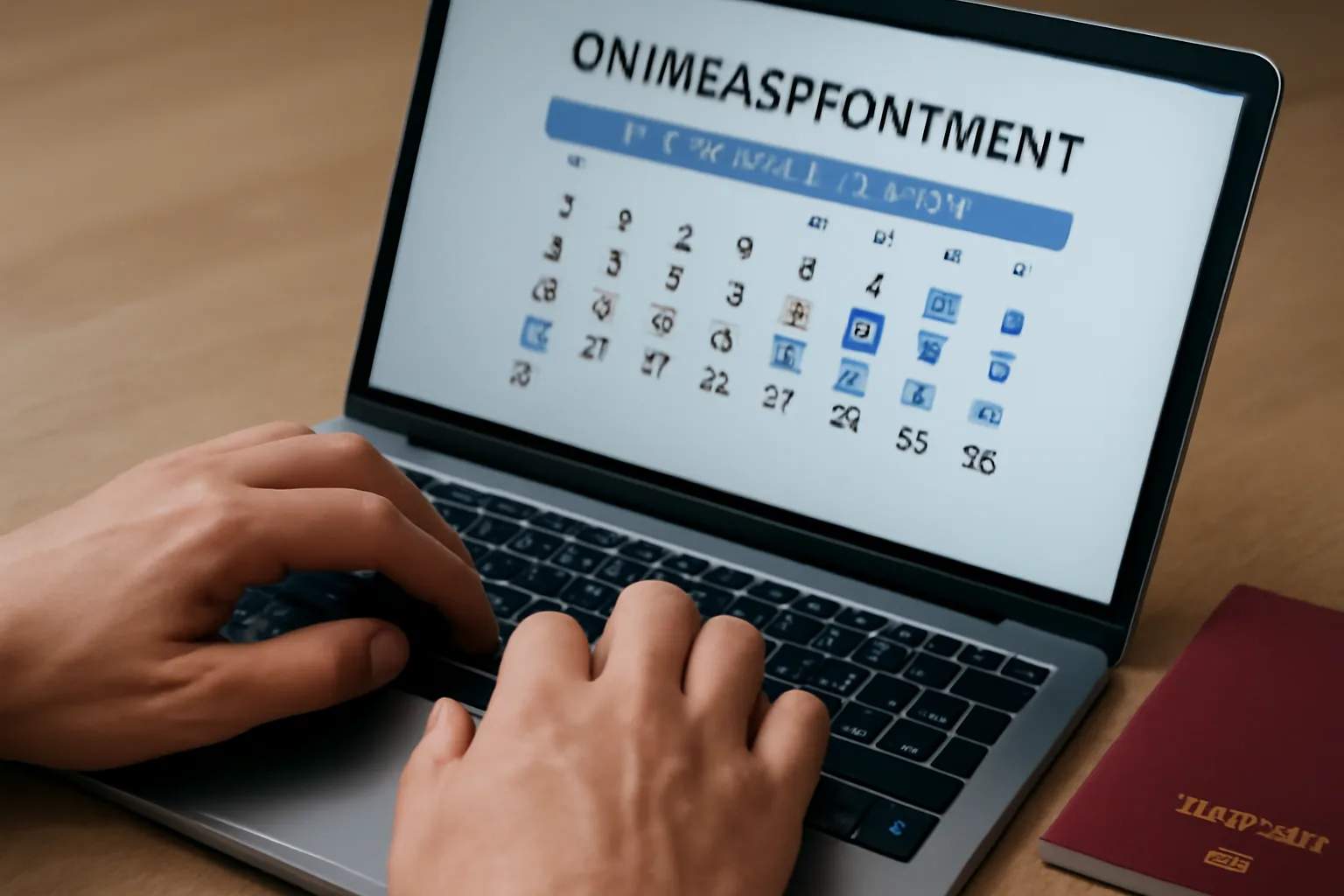
Most Schengen countries no longer accept walk-in visa applications directly at the embassy — they route applications through outsourced visa application centers like VFS Global, TLScontact, or BLS International, depending on the country and your location. A few countries still manage bookings directly through embassy websites.
- Search directly for "[country] visa application center [your city/country]" rather than relying on a general search for "Schengen visa appointment," which can lead to unofficial or scam booking sites that charge unnecessary fees.
- Bookmark the official portal once you've confirmed it — some of these centers operate multiple regional sites, and using the wrong regional portal can create booking confusion.
- Watch out for third-party sites that charge a "booking fee" for something the official visa center portal offers for free — these aren't always scams, but they add unnecessary cost for a service you can usually do yourself.
Step 3: Time your booking correctly
Most Schengen visas can be applied for up to 6 months before travel (some long-stay or multiple-entry categories allow up to 9 months), and the general rule is you shouldn't apply less than 15 days before your trip, to leave enough processing time.
For popular destinations during peak season — summer travel to France, Italy, Spain, or Greece, or December holiday travel to major cities — appointment slots can fill up 6 to 8 weeks in advance, sometimes faster. If you know your travel dates well ahead of time, check the booking portal as soon as the 6-month window opens rather than waiting until a few weeks before your trip.
If you're applying somewhere with lighter demand, this pressure is much lower, and you can usually book comfortably a few weeks ahead. But it's always safer to check earlier than you think you need to, especially if your destination is a well-known tourist hotspot.
Step 4: Prepare before you book, not after
Many visa center booking systems ask you to select your visa category and sometimes upload preliminary information during the booking process itself — not just at your actual appointment. Having your trip details and rough document plan sorted before you start booking avoids getting stuck partway through an online form.
- Know your exact travel dates and destination country before you start.
- Know your visa category (tourism, business, family visit) since some portals ask this during slot selection.
- Have your passport number and basic personal details on hand, since most booking forms ask for these upfront.
- If the portal offers a "premium" or "prime time" paid slot option, understand what it actually gets you (usually a faster or more convenient appointment time) before assuming it's necessary.
Common delays and how to avoid them
- Fully booked calendars during peak season. Check daily if you're struggling to find a slot — some portals release new appointment windows on a rolling basis, and slots can open up as other applicants cancel or reschedule.
- Account creation issues. Some visa center portals require you to create an account before you can even see the calendar. Do this well before you actually need to book, so a login problem doesn't cost you a slot during a rare availability window.
- Group or family bookings. If you're applying with family members, some portals let you book multiple slots together; others require separate individual bookings that may not land on the same day. Check this early, since coordinating separate appointments across different days adds real logistical complexity.
- Payment failures during booking. Have a working payment method ready, since a failed transaction can sometimes lose you the slot you were trying to secure, forcing you to start the search again.
- Choosing the wrong visa category by mistake, which can affect which appointment types and slots are shown to you. Double-check your selection before finalizing.
Checking your appointment status and confirmation details
Once you've booked, most portals send an automated confirmation email immediately, followed sometimes by a separate reminder closer to the appointment date. It's worth actively checking a few things rather than assuming everything is correct:
- Confirm the address of the specific visa center location — some countries have multiple centers in the same city, and arriving at the wrong one wastes valuable time on appointment day.
- Double-check the date and time format, especially if you're booking from a country that uses a different date convention (day/month/year versus month/day/year) than the one your confirmation email displays, since misreading this is a surprisingly common source of missed appointments.
- Save the confirmation both digitally and as a printed copy — some centers ask for a physical printout at the door and won't accept a phone screen as a substitute.
- If you don't receive a confirmation email within a reasonable time after booking, check your spam folder before assuming the booking failed, and contact the visa center's support line if it genuinely hasn't arrived.
What to expect once you've booked
After securing your appointment, you'll typically receive a confirmation email with your appointment date, time, location, and a document checklist specific to your visa category and consulate. Read this checklist carefully and in full — it may differ slightly from generic Schengen visa guides, since it reflects your specific consulate's exact requirements.
- Arrive on time, ideally 10 to 15 minutes early — most visa centers are genuinely strict about appointment windows and may not accommodate late arrivals at all.
- Bring both your appointment confirmation and a printed copy of your completed application form.
- Double-check whether your specific center accepts walk-ins for biometric data (fingerprints and photo) if you've previously provided them within the validity period (usually 5 years) — this can sometimes save you from needing new biometrics.
Why demand spikes at certain times of year
Understanding why appointment slots get tight helps you plan around the crunch rather than fighting it. A few predictable patterns show up year after year:
- Summer (June through August): the single busiest period for Schengen visa applications, driven by school holidays, warm-weather tourism, and a general surge in leisure travel to Southern Europe in particular. If your trip falls in this window, book the moment your 6-month window opens.
- Late November through January: a secondary peak driven by winter holiday travel, festive city breaks, and, in some regions, ski season demand for Alpine countries.
- Around major cultural or religious holidays in applicants' home countries, when family visit travel to Europe often spikes — this varies by region and nationality, but it's worth considering if your own travel plans line up with a broader seasonal pattern among people applying through the same consulate.
- Right after visa fee or policy changes are announced, which can cause a short-term rush of applicants trying to beat a deadline or a fee increase.
If your travel dates are flexible, shifting your trip slightly outside these peak windows — even by a couple of weeks — can make the entire booking and appointment process noticeably smoother, from finding a slot to the wait time on the day itself.
What happens behind the scenes when you book
It helps to understand what a visa center's booking system is actually doing, since this explains some of the frustrating quirks applicants run into. These portals allocate a finite number of daily appointment slots based on staffing capacity at each physical center — they aren't artificially limiting availability to create urgency, they're working within a genuinely fixed daily capacity for processing applications and biometrics.
This is why slots can appear and disappear quickly: a center might release a batch of new dates on a specific day of the week, or free up cancelled slots at irregular intervals throughout the day. Some applicants find success checking the portal at unusual hours — very early morning or late evening in the local time zone of the visa center — since that's sometimes when cancelled slots get released and haven't yet been claimed by other applicants checking during typical daytime hours.
Group applications and travel agencies
If you're travelling as part of an organized tour group, some travel agencies and tour operators have arrangements with certain consulates or visa centers to handle group bookings in bulk, which can sometimes secure appointments more efficiently than each traveller booking individually. If you're travelling with a tour company, ask directly whether they offer this service before attempting to book your own individual appointment — doing both in parallel can create confusion or duplicate bookings, and in some cases, a duplicate booking can even trigger a review flag on your application that slows things down rather than speeding them up.
For independent travellers organizing a group trip with friends or family without going through a formal tour operator, check whether your specific visa center's portal supports linked or simultaneous bookings for multiple applicants travelling together, since this varies significantly by country and center.
Language and translation support during booking
Most major visa center portals offer their booking interface in English alongside the destination country's own language, and sometimes several other languages depending on the regions they serve. If you're booking from a country where the portal's default language isn't one you're comfortable with, look for a language selector, typically in the top corner of the portal's homepage, before you start entering personal details — filling out a form in a language you don't fully understand increases the risk of a data entry mistake that could complicate your actual appointment. If no language switch is available and you're not confident reading the portal in its default language, consider asking a fluent friend or family member to help you complete the booking form carefully rather than guessing at unfamiliar fields.
If you genuinely can't find any available slots
When a consulate's calendar looks completely booked for months, a few options can help:
- Check back at different times of day — some portals release cancelled slots at specific times, and early morning or late evening checks sometimes catch these before others do.
- Consider whether a different, less busy consulate in a nearby city (if your consulate has multiple locations) has more availability, if that's logistically feasible for you.
- If your trip is for an urgent, verifiable reason (a family emergency, a medical need, a confirmed business commitment), some consulates offer an expedited or emergency appointment process — check the specific consulate's website for how to request this, since it's not automatically available to everyone.
- Avoid third-party services that claim to "guarantee" appointment slots for a fee — these are frequently scams, or at best simply automate the same public booking process you can do yourself for free.
- As a last resort, contact the consulate or visa center's customer support line directly and explain your situation — while they can't bypass the standard system for most applicants, some do maintain a small reserve of appointments for genuinely urgent or exceptional cases.
How booking works differently by country
The core booking process is similar everywhere, but the specific portal, demand level, and quirks vary enough that it's worth knowing what to expect for the more commonly applied-through countries:
- France: bookings typically go through TLScontact or VFS Global depending on your location, and slots for popular application centers in major cities can be genuinely competitive during summer. Some applicants find booking a slot in a smaller regional application center (where legally permitted) noticeably easier than a capital-city center.
- Germany: some German missions handle bookings directly through embassy portals rather than a third-party center, and availability varies significantly by consulate location. German appointment systems are known for being relatively strict about rescheduling once booked.
- Italy: Italian visa applications are frequently routed through VFS Global, and demand is high year-round given Italy's popularity as a destination — booking early is especially important here.
- Spain: Spain's visa application centers, often run through BLS International in various regions, can have long lead times during peak summer beach-season travel.
- Smaller or less-visited Schengen countries: countries that receive fewer visa applications overall (several Central and Eastern European members, for instance) often have much lighter appointment demand, meaning slots are easier to find even closer to your travel date.
None of this changes the underlying process — you're still confirming the right country, finding the correct portal, and booking within the right window — but knowing which consulates run tighter calendars helps you prioritize your booking effort where it matters most.
Rescheduling and cancelling an existing appointment
Plans change, and most visa center portals allow you to reschedule or cancel a booked appointment, though the flexibility varies by country and portal.
- Check the specific rescheduling policy for your portal before you book — some allow free rescheduling up to a certain number of days before the appointment, others charge a fee or restrict how many times you can reschedule.
- If you need to cancel entirely, do so as early as possible — this frees up the slot for someone else and, on some portals, is a small courtesy that keeps the overall system moving faster for everyone, including your own future bookings if your plans change again.
- Be aware that rescheduling doesn't always guarantee a similarly convenient slot — if you cancel a booked appointment during a high-demand period, you may not find an equally good replacement slot quickly.
Using visa center mobile apps and notifications
Several visa application centers now offer companion mobile apps or SMS/email notification systems that alert you when new slots open up. If you're struggling to find availability:
- Check whether your specific visa center offers a notification or waitlist feature — some explicitly let you register interest for a fully booked date range and get notified if a slot opens.
- Enable notifications well in advance of when you actually need to book, since these systems sometimes have their own registration lead time.
- Be cautious of unofficial browser extensions or bots claiming to auto-book slots for you — these often violate the visa center's terms of service and can create account issues rather than actually helping.
Special considerations for first-time applicants
If this is your first Schengen visa application, a few extra considerations are worth knowing before you book:
- First-time applicants virtually always need to provide biometric data (fingerprints and a photo) in person — there's no way to skip this step, so make sure your appointment type includes the biometric enrollment stage.
- Some visa centers offer a "assisted" or "guided" service tier at an extra cost, where staff help you check your documents before your actual interview. This isn't necessary if you're confident in your paperwork, but it can be worth considering if you're unsure about a specific requirement.
- Build in extra buffer time on booking day itself — first appointments sometimes take longer than subsequent ones, since more explanation and document review typically happens the first time around.
Key takeaways
- Book as early as your travel plans allow — up to 6 months ahead for most Schengen visa categories, and don't wait until the last few weeks for popular summer destinations.
- Confirm the correct country and consulate before you start booking, based on where you'll spend the most nights or your first point of entry.
- Search directly for the official visa application center rather than a general search, to avoid unnecessary third-party booking fees.
- Have your travel dates, visa category, and passport details ready before you start the booking process, since many portals ask for these upfront.
- Be wary of services promising "guaranteed" appointment slots for a fee — check the official portal yourself first.
This article provides general guidance, not official advice — always verify current booking procedures with the official visa application center or embassy website for the specific country you're applying to.
Frequently asked questions
Straight answers on booking your Schengen visa appointment, covering the timing and portal questions that come up most for first-time and repeat applicants alike.
Frequently asked questions
How far in advance can I book a Schengen visa appointment?
Which country's consulate should I book my Schengen visa appointment through?
Do I need to pay a third-party service to book a Schengen visa appointment?
What should I do if there are no available Schengen visa appointment slots?
Can I book a Schengen visa appointment for my whole family at once?
This article is for general informational purposes only. Visa and travel authorisation rules change frequently. Always check the official government website before travelling.

Written & reviewed by
Can OTUTravel Authorisation Editor
Can OTU is the editor of ETA Travel Assistant, specialising in UK ETA, Schengen ETIAS, NZeTA and ESTA travel authorisations. Can monitors official government sources and policy updates to ensure every guide is accurate, current and genuinely useful for travellers.
View all guides →