ETIAS for Families: Do Children Need Their Own Application?
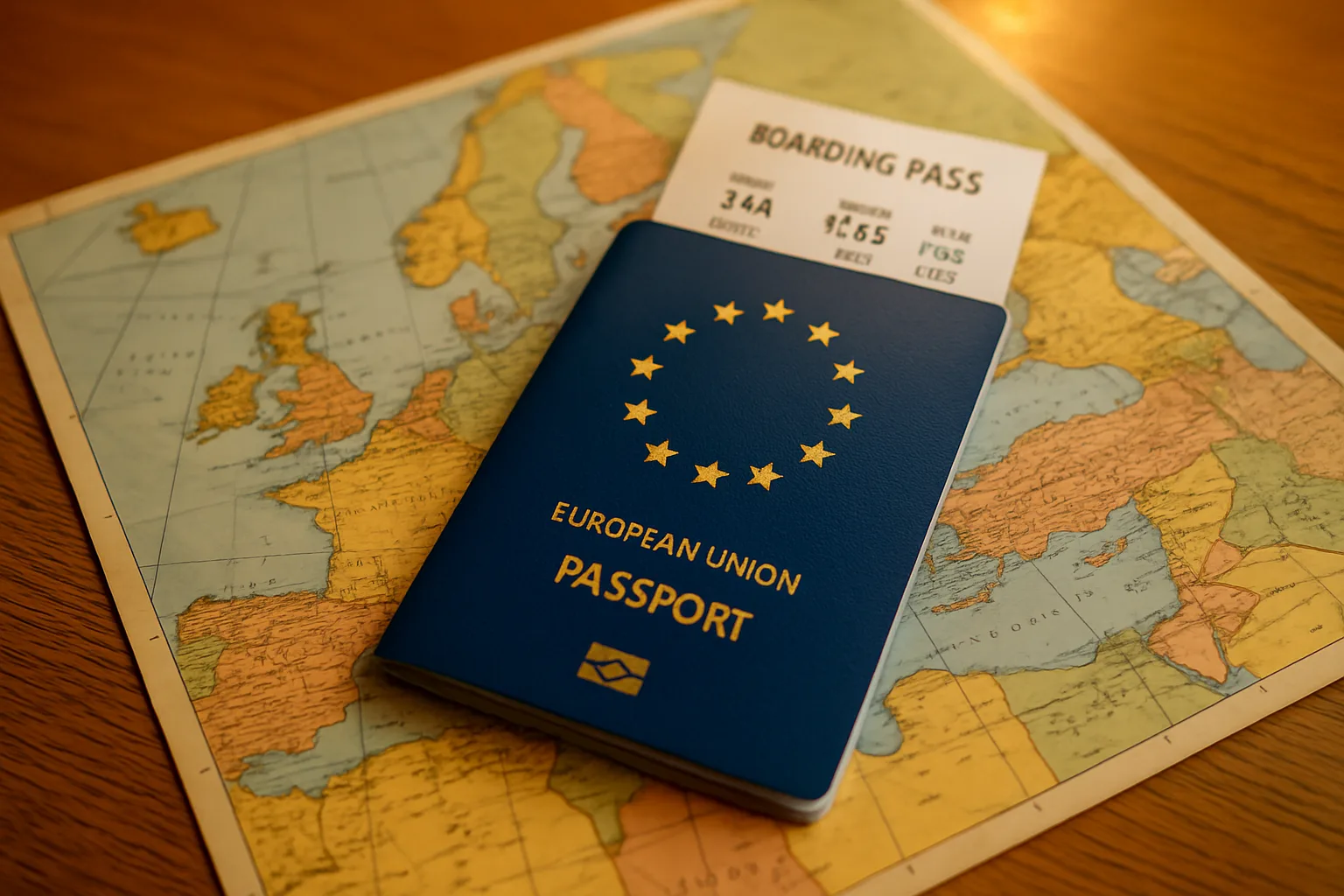
- Children cannot be added to a parent's ETIAS; each traveller needs an individual authorisation.
- Applications for minors require a parent or legal guardian to apply and provide consent.
- The ETIAS fee is €20 for all applicants aged 18 and over; children under 18 are exempt from the fee.
Planning a family trip to the Schengen Area soon? You've probably heard about ETIAS — the European Travel Information and Authorisation System — and you're wondering how it affects your children. The short answer is straightforward: every traveller, no matter how young, needs their own ETIAS travel authorisation.
But there are a few important details about the application process, fees, and what you need to prepare.
This guide covers everything families need to know about ETIAS for children. We'll walk you through who needs to apply, how to do it, what documents you'll need, and common questions parents ask. By the end, you'll know exactly what's required so your family can travel without surprises.
Remember, ETIAS is not a visa — it's a visa waiver for travellers from countries that currently enjoy visa-free access to the Schengen Area. It's similar to the US ESTA or the UK ETA. Applications are online, quick, and designed to be simple.
But when it comes to children, there are a few extra steps. Let's dive in.
What Is ETIAS and Who Needs It?
ETIAS is an electronic travel authorisation required for citizens of visa-exempt countries (like the US, Canada, Australia, New Zealand, and the UK) who want to visit the Schengen Area for short stays — up to 90 days within any 180-day period. It's not a visa, but you must have it before you travel. The system is expected to launch in mid-2025 (check the latest updates on when does etias start).
Every traveller, regardless of age, must have their own ETIAS. That includes babies, toddlers, and teenagers. A child cannot be added to a parent's application.
Each person gets a unique authorisation linked to their passport.
The purpose of ETIAS is to enhance security and streamline border checks. It pre-screens travellers before they arrive, reducing wait times at entry points. For families, this means a smoother experience when crossing into Schengen countries.
ETIAS covers short stays for tourism, business, transit, or medical visits. It does not permit work or long-term study. If your family trip involves these activities, you may need a different authorisation.
Do Children Need Their Own ETIAS Application?

Yes, absolutely. Each child must have their own ETIAS authorisation. There is no family application or group option. You will need to submit a separate online form for each child, using their own passport.
The good news is that the process is essentially the same as for an adult — just with a few child-specific fields. A parent or legal guardian can (and should) complete the application on behalf of the child.
This requirement applies to all minors, from newborns to 17-year-olds. Even if your child is an infant and will be carried in your arms, they still need their own ETIAS. The system does not make exceptions based on age or dependency.
Think of it like airline tickets: each passenger, regardless of age, needs their own booking. ETIAS works the same way. This ensures each traveller is individually screened and accounted for.
ETIAS Application Process for Children
Applying for a child's ETIAS is straightforward. Here's what you need to do:
- Gather the child's passport. The passport must be valid for at least 3 months beyond your planned departure from the Schengen Area. It should be a biometric passport (with a chip) if issued after the relevant date for that country.
- Fill in the online application. You'll need to enter the child's personal details: name, date of birth, place of birth, nationality, passport information, and address. You'll also answer security and health questions.
- Provide parent/guardian details. The form will ask for the details of the parent or legal guardian submitting the application. You'll need to confirm your relationship to the child.
- Pay the fee (if applicable). Children under 18 are exempt from the €20 fee. But you still need to complete the payment step — it will show €0. For applicants 18 and over, the fee is €20.
- Submit and wait for approval. Most applications are processed within minutes, but it can take up to 96 hours. Apply well in advance of your trip.
Once approved, the ETIAS is electronically linked to the child's passport. You don't need to print anything, but it's wise to keep a copy of the approval email.
For example, if you are a family of four with two children aged 10 and 14, you will submit four separate applications. Use the same device and session to complete them all at once. This saves time and ensures consistency in the information provided.
Each application will generate a unique reference number. Save these numbers in a secure place. They are useful for checking status or contacting support if issues arise.
Who Can Apply for a Child's ETIAS?
Only a parent or legal guardian can submit an ETIAS application for a child. If you are not the parent or legal guardian, you cannot apply on behalf of a minor. The system requires you to declare your relationship and may ask for supporting documents in some cases.
If both parents have custody, either can apply. If only one parent has legal custody, that parent should apply. In cases of dispute, the application may be delayed.
For example, if you are a grandparent travelling with a grandchild, you cannot apply for their ETIAS unless you have legal guardianship. The child's parent must submit the application. This rule prevents unauthorised applications and protects minors.
If you are a step-parent, you can apply only if you have legal adoption or guardianship rights. Check the laws of your home country to confirm your status. When in doubt, consult a legal expert.
What Documents Do You Need for a Child's Application?
You'll need the child's passport and your own identification. No additional documents are required for the standard application, but you should have the following ready:
- Child's valid passport (biometric, if applicable)
- Your own passport or ID (as the applying parent/guardian)
- Details of your relationship to the child (e.g., birth certificate, adoption papers, or legal guardianship documents) — these may be requested if your identity is questioned
It's a good idea to have digital copies of these documents handy in case the system asks for them, though most applications go through without extra checks.
For instance, if your child was adopted internationally, keep the adoption decree scanned and ready. The system may flag the application for manual review if the names differ from the parent's. Having documents prepared speeds up the process.
Some parents worry about privacy when uploading documents. Rest assured, the ETIAS system uses encryption to protect your data. Only authorised officials can access the information you provide.
ETIAS Fees for Children

The ETIAS fee structure is simple: €20 for all applicants aged 18 and over. Children under 18 are exempt from the fee. This means that for a family of four with two children under 18, you'd pay €40 (€20 each for the two adults) and €0 for the children.
But remember: even though children don't pay, you still need to complete the payment step. It will show a €0 charge. Don't skip it — the application won't be submitted otherwise.
This fee exemption applies to all minors, regardless of nationality. Whether your child is from the US, Canada, or Australia, they pay nothing. This makes ETIAS affordable for families, especially those with multiple children.
For example, a family with three children under 18 would pay only €40 for the parents. The children's applications are free. Compare this to a Schengen visa, which costs €80 per child.
ETIAS is significantly cheaper.
Note that the fee is non-refundable, even if the application is denied. For children, since the fee is €0, there is no financial loss. Still, ensure all information is correct to avoid unnecessary denials.
How Long Is a Child's ETIAS Valid?
A child's ETIAS is valid for 3 years, or until the passport expires — whichever comes first. So if your child's passport expires in 2 years, the ETIAS will also expire at that time. You'll need to apply for a new ETIAS when the child gets a new passport.
The ETIAS allows multiple entries for short stays (up to 90 days in any 180-day period) for tourism, business, transit, or medical reasons.
For example, if your child's passport is issued for 5 years, the ETIAS will be valid for 3 years from the date of approval. If the passport is renewed after 2 years, the ETIAS becomes invalid. You must reapply with the new passport.
This rule applies to all travellers, including adults. Always check the passport expiration date before applying. For children, passports often have shorter validity, so plan accordingly.
If your child's ETIAS expires while you are in the Schengen Area, it does not affect your stay. You can remain until the end of your allowed 90 days. However, you must have a valid ETIAS before your next trip.
Special Cases: Newborns, Adopted Children, and Dual Nationals
Newborns and Infants
Yes, even a newborn baby needs their own ETIAS. The application is the same as for older children. You'll need the baby's passport, which you should get well before travel.
Many countries issue passports for infants quickly, but check processing times.
If you're travelling with a newborn, make sure you apply for their ETIAS at least a few days before departure. The system usually processes quickly, but it's better to be safe.
For example, if your baby is born 2 months before your trip, apply for their passport immediately. Once you receive it, submit the ETIAS application. This ensures you have both documents ready in time.
Some parents wonder if a newborn needs a separate passport. Yes, each child, regardless of age, must have their own passport. The passport must meet the same validity requirements as for adults.
Adopted Children
If you have adopted a child, you can apply on their behalf as long as you are the legal parent or guardian. You may need to provide adoption papers if the system requests proof of guardianship. The process is the same as for biological children.
For example, if you adopted a child from another country and have the legal adoption decree, you can proceed. Enter the child's details as they appear on their passport. If the child's surname differs from yours, be prepared to explain the relationship.
In some cases, the system may flag the application for manual review. This is normal and does not indicate a problem. Provide the requested documents promptly to avoid delays.
If you are in the process of adopting but have not yet obtained legal guardianship, you cannot apply. The child's legal guardian must submit the application until the adoption is finalised.
Dual National Children
If your child holds dual nationality, you should apply using the passport they will travel on. If one of their nationalities is a Schengen country, they may not need ETIAS at all — they can use that passport to enter. But if they are travelling on a non-Schengen passport, they will need ETIAS (if that country is visa-exempt).
For example, a child with both US and Italian passports can travel on the Italian passport and skip ETIAS. But if they use the US passport, they'll need ETIAS.
This flexibility allows families to choose the most convenient option. If your child has a Schengen passport, it may simplify travel. However, ensure the passport is valid for the entire trip.
If your child holds two non-Schengen passports, apply using the one that is visa-exempt. For instance, a child with US and Canadian passports can use either. Both require ETIAS, but the process is the same.
Always check the entry requirements for each passport. Some countries may have different rules. Consult the official EU list for the most accurate information.
ETIAS vs Schengen Visa for Children
ETIAS is not a visa. If your child is from a country that requires a Schengen visa (not visa-exempt), they will need to apply for a visa, not ETIAS. The visa process is more involved and requires an in-person appointment, biometrics, and supporting documents.
For more on the differences, see our guide on etias vs schengen visa.
For visa-exempt children, ETIAS is the only requirement (aside from a valid passport). It's much simpler and faster than a visa.
For example, a child from India needs a Schengen visa, while a child from Australia needs ETIAS. The visa application may take weeks and cost €80. ETIAS takes minutes and costs €0 for children.
This distinction is crucial for families planning trips. Check your child's nationality against the visa-exempt list. If they need a visa, start the process early to avoid last-minute stress.
ETIAS is designed for short stays only. If your child plans to study or work in Schengen, they need a visa or permit. ETIAS does not cover these activities.
Common Mistakes Parents Make When Applying for ETIAS for Children
Avoid these pitfalls to ensure a smooth application:
- Applying too late. Even though processing is usually quick, apply at least 72 hours before travel. Some applications may be referred for manual processing, which can take up to 96 hours.
- Using the wrong passport. Make sure the passport you use for the application is the one the child will travel with. If the child gets a new passport after ETIAS approval, the ETIAS is no longer valid.
- Not checking passport validity. The passport must be valid for at least 3 months beyond your planned departure from Schengen. For children, passports often have shorter validity — check the expiry date.
- Forgetting to apply for each child. You cannot add a child to your own application. Each child needs a separate submission.
- Leaving the fee step incomplete for children. Even though it's €0, you must complete the payment step. Otherwise, the application won't be submitted.
For example, a parent once applied for their child using an expired passport. The application was denied, and they had to reapply with a new passport. This delayed their trip by a week.
Another common mistake is entering the child's name incorrectly. Always type the name exactly as it appears on the passport. A single typo can cause a denial or delay at the border.
Some parents assume that children under 2 do not need ETIAS. This is false. Every traveller, regardless of age, must have their own authorisation.
Double-check the requirements for all family members.
Tips for a Smooth Family ETIAS Application
Here are some practical tips to make the process hassle-free:
- Apply for all family members at the same time. You can use the same device and session to submit multiple applications. Just make sure you have all passports handy.
- Double-check the child's details. A typo in the name or passport number can cause delays or denial. Enter exactly as on the passport.
- Keep a record of the application number. Each application gets a unique ID. Save it in case you need to check status or contact support.
- Apply early. While most approvals come within minutes, apply at least a week before travel to allow for any manual checks.
- Check if your child needs a visa instead. Not all nationalities are visa-exempt. If your child holds a passport from a country that requires a Schengen visa, they must apply for a visa, not ETIAS. Check the official EU list.
For example, create a shared document with all family members' passport details. This includes full names, dates of birth, passport numbers, and expiry dates. Use this document when filling out the forms to avoid errors.
Set aside 30 minutes per application. While the form is simple, rushing can lead to mistakes. Take your time and review each entry before submitting.
If you encounter technical issues, try a different browser or device. The ETIAS website is designed to work on most platforms. Clear your cache if the page does not load properly.
What Happens at the Border for Children with ETIAS?
When you arrive at the Schengen border, the border officer will check each traveller's passport. For children, the ETIAS authorisation is linked electronically to their passport. The officer may ask questions about the purpose of travel, accommodation, and funds.
For children, they might ask the parent these questions.
It's a good idea to have supporting documents ready: return flight tickets, hotel bookings, travel insurance, and proof of sufficient funds. For families, having a clear itinerary helps.
Children are generally not required to provide biometrics (fingerprints) at the border, but they may be photographed. The rules vary by country.
For example, at a major airport like Paris Charles de Gaulle, border officers may ask your child their name and age. They might also ask about the purpose of the trip. Answer calmly and honestly.
If your child is travelling with only one parent, carry a consent letter from the other parent. This is not required by ETIAS, but some border officers may request it. It helps avoid delays.
Keep all documents organised in a travel folder. This includes passports, ETIAS approval emails, flight tickets, and hotel confirmations. Quick access to these documents makes border crossing smoother.
ETIAS for British Citizens and Their Children
British citizens are visa-exempt for short stays in the Schengen Area, so they will need ETIAS once it launches. This includes British children. For more details, see our article on etias british citizens.
The application process for British children is the same as for any other nationality. Parents should apply using the child's UK passport. Note that British citizens do not need a visa for Schengen, but ETIAS will be mandatory for travel from mid-2025.
For example, a British family planning a summer holiday to France must apply for ETIAS for each member. The parents pay €20 each, and the children pay nothing. This is a small cost compared to the overall trip budget.
British children with dual nationality, such as UK and Irish, can use their Irish passport to enter without ETIAS. Ireland is not part of Schengen, but Irish citizens have special status. Check the rules for your specific situation.
Stay updated on the launch date. The EU may announce changes or delays. Bookmark the official ETIAS website for the latest information.
ETIAS Application Requirements: What You Need to Know
For a full list of requirements, check our guide on etias application requirements. Here's a quick summary for families:
- Valid passport (biometric for most countries)
- Email address (for each applicant or a shared one)
- Payment method (credit/debit card) — only for adults
- Parent/guardian details for children
- Answers to security and health questions
No physical documents need to be submitted. The entire process is online.
For example, you will need to answer questions about the child's criminal history (if any) and past travel to conflict zones. For most children, these answers will be straightforward. Answer truthfully to avoid complications.
The security questions also cover health conditions. If your child has a contagious disease, you may need to provide additional information. This is rare but possible.
Ensure your email address is correct. The approval and any updates will be sent there. Use a shared family email to keep all communications in one place.
How to Prepare for ETIAS as a Family: A Step-by-Step Plan
Start by checking each family member's passport well in advance. Ensure all passports are valid for at least three months beyond your planned departure from Schengen. This is especially important for children, as their passports often have shorter validity periods.
Create a checklist for each applicant. Include items like passport numbers, expiry dates, and parent details for children. This will streamline the process when you sit down to apply together.
Set aside a dedicated time to complete all applications. You can do them all in one session online. Keep a spreadsheet or note with each application ID for easy reference later.
For example, two weeks before your trip, gather all passports. Check the expiry dates and renew any that are close to expiring. Then, on a weekend morning, sit down with your laptop and apply for each family member.
After submitting, monitor your email for approval notifications. Most come within minutes. If any application is delayed, you have time to follow up.
Print a copy of each approval email and keep it with your travel documents. While not required, it is a handy backup if there are technical issues at the border.
What If a Child's ETIAS Is Denied?
Denials are rare but possible. If a child's ETIAS is denied, the parent will receive a reason for the denial via email. Common reasons include incorrect data entry or a mismatch with security databases.
You have the right to appeal a denial. The appeal process involves submitting additional documentation to the ETIAS authority. This can take time, so apply early to leave room for any issues.
If you suspect an error in the application, double-check the child's passport details. A simple typo can cause a denial. Correct it and reapply if needed.
For example, if you entered the child's date of birth incorrectly, the system may flag it. Review the application carefully before submitting. If denied, correct the error and submit a new application.
If the denial is due to a security concern, you may need to provide evidence of the child's identity. This could include a birth certificate or court documents. Contact the ETIAS support team for guidance.
Remember, a denial does not mean your child cannot travel. It means you need to resolve the issue. Start the process early to avoid last-minute stress.
Travel Insurance and ETIAS for Children
While ETIAS itself does not require travel insurance, it is highly recommended for families. Medical emergencies abroad can be costly. Many Schengen countries require proof of travel insurance for visa applicants, but it's a good practice for ETIAS travellers too.
Check that your policy covers all family members, including children. Some policies offer family plans that are more cost-effective. Keep a copy of the insurance documents with your travel papers.
Travel insurance can also cover trip cancellations, lost luggage, and other disruptions. This adds an extra layer of security for your family trip.
For example, if your child falls ill during your stay in Italy, travel insurance can cover hospital bills. Without it, you may face high out-of-pocket costs. Choose a policy with comprehensive medical coverage.
Some insurance companies offer plans specifically for Schengen travel. These meet the minimum coverage requirements (€30,000 for medical expenses). Compare policies to find the best fit for your family.
Keep a digital copy of the insurance policy on your phone. Also, carry a printed version in your travel folder. This ensures you have access to the information in case of an emergency.
ETIAS for Children with Special Needs or Medical Conditions
The ETIAS application includes health-related questions. If your child has a chronic condition or special needs, answer honestly. The system may flag the application for manual review, but this does not mean automatic denial.
Be prepared to provide medical documentation if requested. This could include a doctor's note or treatment plan. Most applications are approved without issue, but transparency is key.
For children requiring specific medical care during travel, carry relevant documents. This includes prescriptions, medical history, and contact information for healthcare providers in Schengen countries.
For example, if your child has asthma, you may need to carry inhalers and a doctor's letter. The letter should explain the condition and the need for medication. This helps at customs and in case of emergencies.
If your child has a disability, research accessibility options in your destination. Many Schengen countries have laws to accommodate special needs. Plan ahead to ensure a comfortable trip.
Answering health questions truthfully protects your child. If you hide a condition, it could lead to denial or issues at the border. The ETIAS system is designed to assess risk, not to discriminate.
Frequently Asked Questions About ETIAS for Children
Can a child travel alone with ETIAS?
Yes, a child can travel alone if they have their own ETIAS. However, border officers may ask about the purpose of travel and who is meeting them. It's advisable to have a consent letter from parents or guardians.
Unaccompanied minors may face additional scrutiny. Ensure they have all necessary documents, including a letter of consent and contact details for the person meeting them.
For example, a 16-year-old travelling to Spain for a school exchange should carry a signed letter from parents. The letter should include the host family's contact information. This helps border officers verify the trip's legitimacy.
Some airlines have their own rules for unaccompanied minors. Check with the airline before booking. They may require additional forms or fees.
Do children need to provide biometrics for ETIAS?
No, ETIAS does not require biometric data like fingerprints or photos. The application is purely online and based on passport information. Biometrics may be collected at the border in some cases, but not for ETIAS itself.
This makes the process simple for children. You do not need to take them to an appointment or submit physical documents. Everything is done from home.
For example, a parent can apply for their child's ETIAS while the child is at school. The system does not require the child's presence. This is especially convenient for families with busy schedules.
Note that some Schengen countries may collect biometrics at the border for identification purposes. This is separate from ETIAS and varies by country.
Can I use the same email for multiple children's applications?
Yes, you can use the same email address for all family members. This makes it easier to track approvals and updates. Just ensure each application is submitted separately.
For example, use a family email like "[email protected]" for all applications. You will receive separate emails for each child's approval. Organise them in a folder for easy access.
Using a single email also simplifies communication. If there are issues with one application, you will see it in the same inbox. This helps you respond quickly.
Some parents prefer separate emails for privacy. Either option works, as long as you can access the emails. Choose what works best for your family.
Key Takeaways
- Every child, including infants, needs their own ETIAS application. No family applications.
- Parents or legal guardians can apply on behalf of children.
- Children under 18 are exempt from the €20 fee, but adults pay €20 each.
- Apply well before travel — at least 72 hours, but ideally a week or more.
- Use the child's passport that they will travel on; check validity.
- ETIAS is not a visa — if your child needs a Schengen visa, apply for that instead.
- Always verify requirements with official sources before travel, as rules may change.
For the latest official information, visit the European Union's ETIAS official website.
Frequently asked questions
Can I apply for ETIAS for my child if I am not the legal guardian?
Does my child need an ETIAS if they are travelling on a school trip without parents?
What if my child's ETIAS application is denied?
Do children need to provide biometrics for ETIAS?
Can I use the same email address for multiple children's applications?
This article is for general informational purposes only. Visa and travel authorisation rules change frequently. Always check the official government website before travelling.

Written & reviewed by
Can OTUTravel Authorisation Editor
Can OTU is the editor of ETA Travel Assistant, specialising in UK ETA, Schengen ETIAS, NZeTA and ESTA travel authorisations. Can monitors official government sources and policy updates to ensure every guide is accurate, current and genuinely useful for travellers.
View all guides →