Should the EU Copy New Zealand's Border System for Easier EES Entry?

Quick answer: Not a straight copy — New Zealand's single-declaration border system is brilliant at collecting information, but EU EES has to do something harder: verify every non-EU traveller's identity with biometrics across 29 countries.
- New Zealand's NZTD is a free, phone-friendly declaration covering customs, biosecurity, immigration and health in one step.
- EES is a compulsory biometric registration system — it records your face and fingerprints, not just your answers.
- The EU could borrow useful parts: pre-departure declarations, a single app, smoother eGates — but the biometric core of EES stays.
The EU is now bringing in EES — the Entry/Exit System — which does something much bigger. It registers every non-EU traveller's entry and exit with fingerprints and a facial image, across 29 countries. That naturally raises a question travellers keep asking: why can't the EU just copy New Zealand?
It's a fair question, and the honest answer is "partly". New Zealand's model is excellent at what it does. But EES is built for a different job.
This article explains both systems, what the EU could realistically borrow, and what it will never adopt — plus what that means for your next trip. One note first: this is general information, not professional advice. Border rules change fast, so always verify the details on official government pages before you travel.
To understand the comparison properly, it helps to imagine the same traveller landing in Auckland and then landing in Frankfurt. The airport buildings look similar. The passport queues look similar.
But behind the scenes, the data systems are doing completely different work.
New Zealand wants to know what you are bringing in and whether you pose a biosecurity risk. The EU wants to know exactly when you arrived, exactly when you leave, and whether you have quietly overstayed your 90-day welcome. Those goals determine why the border experience will never be identical.
Why everyone keeps comparing New Zealand to the EU
New Zealand's border process has become the reference point for "didn't feel like a border at all". Travellers land, glance at a screen, and walk out. Meanwhile, Europe's upcoming EES has been described in everything from "digital border wall" to "queue apocalypse".
The comparison is natural. But it usually ignores a key fact: New Zealand and the EU are solving different problems. New Zealand is a small island nation with a handful of entry points and a visitor economy it wants to feel welcoming.
The EU is a 29-country bloc that must track hundreds of millions of crossings a year — and stop people who stay past their 90 days.
Still, there are real lessons in Wellington's playbook. Let's look at the details before judging.
New Zealand welcomed roughly five million visitors in its last full pre-pandemic year. By contrast, the Schengen area processes hundreds of millions of crossings annually — some estimates exceed 500 million. That is not a small difference in volume; it is a difference in kind.
When a country's entire tourism pitch is built around "safe, clean, remote and friendly", a rude border guard is an economic disaster. New Zealand understands this instinctively. The airport arrival hall is treated as the first marketing asset a visitor sees.
Europe, by contrast, is not short of tourists. The EES debate in Brussels has always focused on security, overstays, and data consistency. The traveller experience matters, but it has never been the top priority in the same way it is in Wellington.
What exactly is New Zealand's border system?
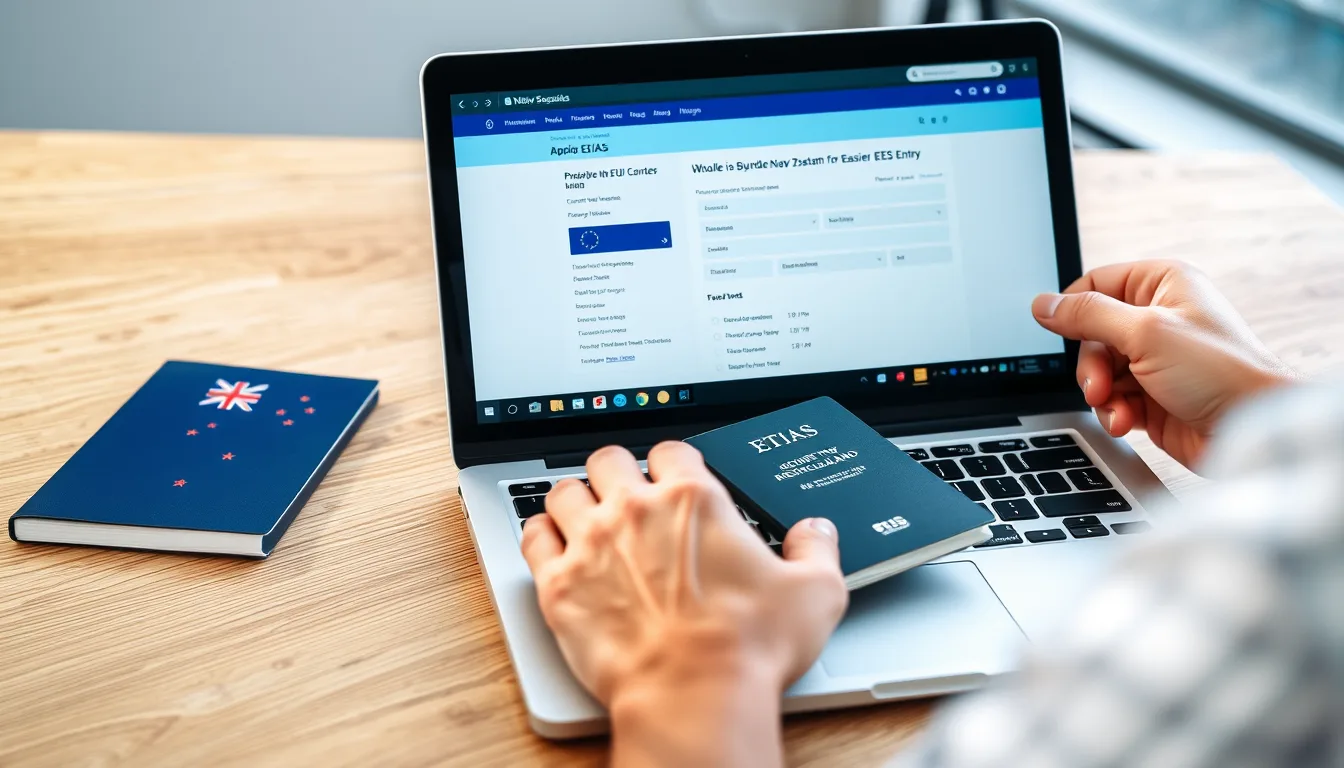
People often lump two separate New Zealand systems together: NZeTA and NZTD. They do different jobs, and the confusion matters.
NZeTA is the New Zealand Electronic Travel Authority. Passport holders from visa-waiver countries need it before flying. It costs NZ$17 through the app or NZ$23 online, plus the NZ$35 International Visitor Conservation and Tourism Levy (IVL).
It's valid for two years and allows stays of up to 90 days per visit.
NZTD — the New Zealand Traveller Declaration — is the star of the show. It's free, and it replaces the paper arrival card that used to slow down every flight into Auckland or Christchurch.
Here is a concrete example of how the two work together. A British tourist flying from London to Auckland completes NZeTA before booking, pays the IVL, and then, 24 hours before departure, fills out NZTD on their phone. Without the first, they are not allowed on the plane.
Without the second, they are held at the border while they fumble with a paper form in a crowded arrivals hall.
New Zealand deliberately separated these two steps so that the pre-travel security check and the on-arrival declaration do not delay each other. The NZeTA is about who you are before you fly. The NZTD is about what you are carrying and how you feel, the moment you arrive.
How the NZTD works
- Complete the declaration online or in the NZTD app, from 24 hours before your departure.
- Enter your passport details, contact details and flight or vessel information.
- Answer the customs, biosecurity, immigration and health questions in one single form.
- Get an instant digital response — either cleared or referred for a face-to-face check.
- Show the QR code, on your phone or printed, at the border processing point.
For a standard tourist, the whole form takes about ten minutes. The declaration stays valid for 24 hours after your estimated arrival time. Border staff scan your QR code, and you're done.
It's an information collection tool, not an identity verification system. That distinction is the heart of this whole debate.
What happens if you declare that you are carrying fruit or hiking boots? The system does not silently wave you through. It flags your QR code for a biosecurity inspection, and you are directed to a separate lane where officers check you more carefully.
That is why the form asks about very specific things like honey, wooden articles, and outdoor gear.
The beauty of the digital form is that you can change your answer after you have started. If you realise halfway through that the walking stick in your backpack is made of untreated wood, you can go back, correct the declaration, and avoid a fine at the border. Paper forms did not offer that second chance.
What NZTD doesn't do
It doesn't take fingerprints. It doesn't photograph you. It doesn't verify your identity beyond your passport details.
It doesn't calculate how many days you've spent in New Zealand, and it doesn't enforce any 90/180 rule.
Identity work is handled separately by New Zealand's eGates, which read your ePassport chip and match your face to it in seconds. The declaration gathers information; the gate confirms who you are. Two separate steps, each doing what it does best.
That split is elegant. Questions don't slow down the people who don't need to be asked them.
New Zealand also deletes the information it collects from the NZTD within a matter of days once the border process is complete. Biosecurity and customs records may be kept for enforcement purposes, but the routine traveller declaration does not build a permanent, Europe-style biometric database. That is a huge relief for privacy-conscious visitors, and it helps explain why the system feels so light.
What EU EES actually does — and why it's different
EES is an automated registration system for non-EU travellers crossing an external Schengen border. It's not a form. It's a database that records every single entry and exit.
What happens at the border
- Scan your passport or travel document.
- Have your facial image taken.
- Provide four fingerprints at your first enrolment.
- Get an electronic entry record — no more passport stamps.
When you leave, the system records your exit. The core purpose is to enforce the 90/180-day rule that visa-exempt travellers can quietly ignore today, simply because their entries and exits were never systematically tracked.
Your biometric data is stored for up to three years. That means frequent visitors don't have to re-enrol at every single entry. After the first enrolment, the process should theoretically be quicker.
And yes — EES applies to visa travellers too. Having a Schengen visa doesn't exempt you from the entry-exit record. Everyone who isn't an EU citizen or a long-term resident gets registered.
Currently, border officers rely on passport stamps and manual calculations. Stamp ink fades, pages fill up, and some travellers quietly cross border posts at quiet hours. EES replaces that patchwork with a central system that can instantly show your whole history of entry and exit dates.
The system also matters for security beyond the 90/180 rule. Border officers will be able to see whether a passport has been used by someone else since it was reported lost or stolen, and the biometric link between a face and a passport creates a stronger anti-fraud check than a paper stamp ever could.
EES vs ETIAS vs Schengen visas
Three systems, three jobs. Travellers keep mixing them up, so here's the quick version:
| System | Who it applies to | What it does | Fee |
|---|---|---|---|
| EES | All non-EU short-stay travellers | Registers entry and exit with biometrics | Free |
| ETIAS | Visa-exempt nationals (US, Canada, UK, Australia and others) | Pre-travel authorisation linked to your passport | €20 |
| Schengen visa | Visa-required nationals (India and many others) | Permission to enter for a short stay | €90 standard adult fee |
EES and ETIAS will work together once both are live. EES checks your identity and records your movement; ETIAS checks that you're allowed to travel in the first place. Both hit you differently, depending on which passport you hold.
Not sure if your nationality is on the visa-exempt list? The list shifts sometimes, so check our regularly updated etias country list before you book flights.
The visa and EES relationship can confuse people even further. A non-EU traveller with an Italian Schengen visa still has to go through EES at the border, and their biometrics will be captured again if they have not been enrolled in the last three years. The visa is permission, not a passport through the biometric gate.
A traveller's journey: Auckland vs Paris, step by step
The most useful way to understand the difference is to walk through two realistic arrivals side by side. These are hypothetical journeys, not guarantees of how every border will run, but they capture the design philosophy of each system.
Imagine an Australian tourist, Priya, flying into Auckland. She completed NZTD in the departure lounge, and her QR code is green. At the eGate, she places her passport on the reader, looks at the screen, and walks through in thirty seconds.
Her bag is scanned, nothing is searched, and she is at the rental car desk within fifteen minutes of landing.
Now imagine the same traveller flying into Paris Charles de Gaulle on her first trip after EES goes live. She does not have an enrolment yet, so she must find a self-service kiosk, scan her passport, look into the camera, and press four fingerprints onto the reader. That process takes a few minutes, and if the line is long, it takes much longer.
Her identity is now in the EES central system, and every future trip will be faster.
The difference is not that one country is smarter than the other. It is that Paris is building a permanent biometric record, and Auckland is not. Once you understand that, the "why can't the EU copy New Zealand?" question becomes easier to answer.
If Priya is a frequent visitor to France, her second, third and fourth arrivals should feel close to Auckland's eGates. The friction is deliberately loaded onto the first visit, because that is when Europe collects the data it believes it needs.
What New Zealand does better than the EU
Let's give credit where it's due. New Zealand's border system gets several things genuinely right, and the EU should be paying attention.
One process, not three
For the traveller, New Zealand's genius is that almost everything happens in one place. Customs, biosecurity, immigration and health questions live in the same form. You don't separately apply for one authorisation, then queue for a paper card, then wait for a stamp.
In the EU, the same traveller faces three separate systems: EES at the border, ETIAS before travel, and a national visa if they need one. They're operated by the same bloc but were designed and rolled out entirely separately.
Imagine if the NZTD app also required you to download a second app for the eGate, and a third app for customs. That is effectively what the EU has built, except the pieces are not even in the same digital ecosystem.
The form is short by design
NZTD asks roughly a dozen questions for most travellers. The team behind it deliberately cut anything unnecessary. That's a design philosophy, not an accident.
EU border processes, by contrast, have grown by layering one requirement on top of another. The result is a system that's thorough but rarely described as pleasant.
The New Zealand form does not ask for your intended address if you are just visiting for the day, and it does not ask for your employer's details unless you are travelling for work. It only asks what the border genuinely needs to know. That is a lesson in restraint that the EU's interface designers should study.
It treats the border as a service
New Zealand publishes plain-English instructions and actively tells travellers to complete the declaration before they reach the airport. The messaging is consistent across airlines, airports and government sites.
The EU's communication around EES has been patchier. Launch dates shifted multiple times. Airlines and travellers were left guessing.
That communication gap is a real lesson for Brussels.
New Zealand's official NZTD site even offers a test version of the form, so curious travellers can see the questions before they need to answer them. The EU has not done anything similar for EES, and the lack of a clear, hands-on preview has allowed rumours and anxiety to fill the gap.
Where the comparison falls apart
Here's the part most "just copy New Zealand" takes miss. The EU can't import NZTD wholesale, because EES is not a declaration system. It's a security and identity system, built for 29 countries and hundreds of millions of crossings a year.
Scale: 29 countries, not one island
New Zealand has one coast guard, one customs service, one set of rules. The Schengen area has 29 member states — every one with its own police, border force and administrative culture. Whatever the EU builds has to work across airports, sea ports, and long land borders with non-Schengen neighbours.
That isn't an excuse for clunkiness. It's a structural reason why a single unified touchpoint is politically and technically harder.
Land borders create a particular problem. A traveller driving from Serbia into Hungary cannot pull over at a digital kiosk in the same way an airline passenger does at an airport. The EU has to design for pedestrians, cars, buses, trains, and freight trucks all moving through the same checkpoints.
New Zealand simply does not have land borders. Its only entry points are airports and seaports, where infrastructure can be controlled and queues can be managed in a contained space.
EES is about law enforcement, not paperwork
A declaration form works because it trusts the traveller's answers. EES can't do that. Its entire purpose is to close the loophole where visa-exempt travellers stayed past 90 days with no record of having left.
That requires fingerprints and facial scans at the border. No QR code can substitute when the whole point is verifying that you are who your passport says you are.
Consider a hypothetical overstayer who has been jumping between Schengen countries for two years, careful to avoid passport stamps. Under the old system, that person could keep moving almost invisibly. Under EES, the moment their passport is scanned, the database will show they have long since exhausted their 90 days.
That is not a problem a declaration form can solve.
You can't fake a fingerprint
New Zealand's eGates match your face to your ePassport chip. They don't store new biometric data. EES, by contrast, builds and maintains a biometric database.
That's a heavier enterprise with heavier consequences if data leaks or is misused.
It also requires physical kiosks, staff training, and contingency plans for everything from broken scanners to power cuts. A phone form doesn't need any of that.
The physical infrastructure for EES is enormous. Airports need space for kiosks, power supplies, network cables, privacy screens, and maintenance teams. Ferry terminals need a redesign of the whole passenger flow.
No amount of clever software can replace the need for a fingerprint scanner in every single lane.
Privacy and legal constraints
EES sits under strict EU data-protection rules. The storage of fingerprints and facial images is far more sensitive than storing answers about "anything to declare?". Any EU equivalent of NZTD would still have to connect to the biometric layer.
You can copy the front end. You can't copy away the fingerprint scanner.
There is also a legal question about who gets to see that biometric data. Under current plans, border officers in all 29 EES member states will be able to query the system, as will certain law enforcement agencies under tightly controlled conditions. That is a level of access that no one in New Zealand has ever needed to debate, simply because the data does not exist.
Five ways the EU could borrow from New Zealand without changing EES
Despite everything above, there are several concrete things the EU can copy that would not undermine the security core of EES. Some of these are already being discussed quietly in Brussels, and others would only require a change in interface design, not a change in law.
1. A single pre-departure app for travel details
New Zealand's NZTD is a single form for everything. The EU could let travellers fill in their passport details, address in Europe, and travel plans through an official app before they reach the border. The app would not replace EES biometrics, but it would mean border officers already know the answers to the standard questions before the traveller steps up to the kiosk.
That would shorten the time spent at the kiosk and reduce the chance of errors made under time pressure.
2. A clear, plain-English checklist for first-time travellers
The EU has improved its public communication, but it is still not as clear as New Zealand's. A simple page called "What to expect at the border" could be shown to every traveller when they buy their flight, with icons, translations, and a short video of a first enrolment.
New Zealand's declaration site is already used as a model by designers. The EU can borrow not just the content, but the tone.
3. eGates as the default route for everyone after enrolment
The EU plans to use eGates for most travellers, but the design is not uniform across all airports. Some countries have invested heavily in automated gates, while others still rely on standard officer-style booths. New Zealand shows that a consistent eGate experience, the same at every airport in the country, reduces anxiety and speeds up the flow.
The EU should push for a minimum common standard of eGate coverage at every major international airport and ferry terminal.
4. More honest, spaced-out launch phases
New Zealand did not roll out the NZTD to every airport overnight. It piloted at one airport, then another, and used the feedback to improve processes. The EU has now started a phased rollout, but it should use the full period to genuinely test peak loads rather than simply switching systems on everywhere.
Drawing out the rollout may look like delay, but it gives travellers more time to learn, and border agencies more time to correct mistakes.
5. A published service standard
New Zealand's border agency publishes clear targets for processing times. The EU could publish a simple promise: "For enrolled travellers, the EES eGate process should take no more than 60 seconds from scan to exit." That kind of commitment gives airports, airlines, and passengers a shared benchmark and holds operators accountable.
Without a public standard, no one can complain effectively when the queues spiral out of control.
Could the EU copy New Zealand anyway? A realistic hybrid
Yes — partly. And some elements may already be coming in a quieter way.
Pre-enrolment before you fly
The single most useful idea the EU could borrow is letting travellers submit their details before they reach the border. If you could upload your passport photo, enter your travel plans and answer a short health/customs declaration in an app, the border kiosk visit would shrink dramatically.
First-time EES enrolment could still capture fingerprints, but the traveller-facing part — who are you, where are you staying, what are you carrying — could be done from home. That's entirely feasible and would pull huge pressure off border queues.
Imagine an app that shows you a progress bar with five steps: passport scan, facial image, fingerprints, travel details, and confirmation. On the plane, you complete the first four in your seat. At the border, the officer simply verifies that you are the person in the app.
That would feel strikingly similar to New Zealand.
A Schengen-wide digital declaration
The EU has no equivalent of NZTD today. There's no single digital form for customs, security and health that works across all 29 Schengen states. Building one would be a major win for travellers, even if it didn't replace EES biometrics.
The political hurdle is real — who operates it, who reads the data, who answers when something goes wrong. But as a traveller experience, it's the most obvious upgrade on the table.
The good news is that some member states are already testing national apps for customs or specific ports. If those pilots prove successful, a shared Schengen-wide version may feel less like a fantasy and more like a natural next step.
eGates as the default, not the exception
The EU already plans for eGates to process most travellers after their first EES enrolment. That's the New Zealand model in spirit: tap your passport, look at the camera, walk through.
The gap is the painful first-time enrolment. New Zealand skips it because it doesn't keep biometric records. The EU can't skip it, but it can staff those first days properly and communicate clearly so travellers arrive prepared.
Airports can also learn from New Zealand by placing the kiosks before the security screening rather than after, so travellers are not queueing with heavy jackets and hand luggage still strapped across their chests.
What this means for your next trip to Europe
First entry will be slow. Plan for it.
If you're crossing a Schengen border after EES goes live and it's your first time enrolled, expect extra steps. You'll use a self-service kiosk, give fingerprints and have your photo taken. That takes a few minutes per traveller — and the first weeks or months may bring queues as staff and passengers adapt.
Frequent travellers to Paris or Amsterdam will queue once, then use eGates for the next three years. The pain is front-loaded.
If you have small children, note that they need their own EES enrolment. There is no family shortcut in the early design. Each child's biometrics must be captured, which means a family of four should budget for four separate kiosk visits.
Ports will feel it most
Ferries from Dover to Calais, and other short-sea crossings, have tight space and huge passenger volumes. Installing kiosks in a ferry terminal is harder than at a purpose-built airport.
If you're travelling by ferry in the early months of EES, arrive earlier than you think you need to. Same goes for the Eurostar and Eurotunnel, where passenger throughput is measured in trains per hour, not airports per day.
At Dover, thousands of cars arrive in waves, and passengers may all need to leave their vehicles to use the kiosks. That is a massive logistical change. Some operators are planning to have staff with handheld devices walking down the vehicle queues, but the final process is not yet uniform across all routes.
What it will cost you
EES itself is free. ETIAS will cost €20 once it's live, and it's valid for three years — that's cheaper than New Zealand's NZeTA plus IVL, which works out at roughly NZ$52–58 for most visitors.
For context, the UK's own ETA — now £16 after the April 2025 increase — shows how fast digital travel authorisations are becoming standard across Europe's western fringe.
That means the EU is, for once, the budget option. €20 for three years of authorisation is a fraction of what some countries charge for single-entry visas.
When is all this happening?
EES began a phased rollout in late 2025, after years of delays since the original 2022 target. The gradual approach means not every border introduces it on day one.
ETIAS is planned to follow in 2026, though that date has slipped before. Treat every headline about launch dates with a pinch of salt until you see it confirmed on the official EU pages.
Here is what the phased rollout might look like in practice: one major airport begins using EES, then another, then a land border between Germany and Switzerland. During this period, a traveller may enter through a border that still uses stamping and leave through one that uses EES. That mixed environment is confusing for travellers, which is why the EU has said it will publish a list of operational entry points.
The real reason EES keeps getting delayed
People love to tell a simple story about EU incompetence whenever a launch date slips. The truth is more complex, and more interesting.
An automated biometric border system for 29 countries has to be tested against threats that New Zealand never thinks about. What happens if a central database goes down in one member state? What happens if the network connection to the kiosk fails for an entire airport?
What happens if a fingerprint reader misreads the same glove-wearing truck driver at the same checkpoint every single night?
The answers require fallback procedures, printed vouchers, trained staff, and legal continuity if something goes wrong. Each of those parts takes time to build and test.
Every delayed date has also been a chance to improve the traveller face of EES. The original design was heavily focused on data capture and security. After criticism from airlines and ports, the revisions have pushed the interface closer to what New Zealand's system already does well: plain language, visual prompts, and faster enrolment.
Delays are frustrating, but a system that works smoothly from day one is better than one that crashes at Dover during a summer weekend. The phased rollout is an acknowledgment of that, not a sign of failure.
What different passport holders need to know
US and Canadian travellers
Both the US and Canada are visa-exempt for Schengen. That means citizens of both countries will get ETIAS once it launches, and EES will finally enforce the 90/180-day rule that border officers currently track with stamps and best guesses.
Canadians face a particular trap: for longer stays, study or work, ETIAS won't cover you at all — you'll need a visa. Our detailed guide on schengen visa or etias canada explains exactly when each one applies.
US citizens, meanwhile, should watch their entry dates closely. A border officer can now see your full entry-exit history, so the old "lost passport stamp" excuse is gone.
The same is true for Australians, Japanese, South Koreans, and every other visa-exempt nationality. The days of fudging your Schengen stay are ending, and the calculation will be done automatically at the border, not by a generous officer with a calculator.
Indian passport holders
India is not on the Schengen visa-waiver list. So most Indian citizens need a short-stay Schengen visa, not ETIAS. EES will still record your entries on top of the visa process.
The good news: visa applicants already give fingerprints at the embassy, so a large part of your biometric data already exists in EU systems. The first EES entry shouldn't feel like a surprise.
Edge cases exist — diplomats, certain residence permit holders, and British citizens of Indian origin. Our dedicated page on etias indian passport holders sets out who's exempt and who isn't.
If you have a long-term residence permit from an EU country, EES does not apply to you in the same way. The residence permit is treated separately from short-stay visitor records. A person living in Madrid on a Spanish work permit will not see their everyday commute affected by EES.
British and Irish citizens, and dual nationals
British citizens are visa-exempt third-country nationals in Schengen terms. If you're a UK passport holder, you'll use EES for short stays and will eventually need ETIAS. That's a big change from the pre-Brexit era.
Irish citizens are different. As EU citizens with freedom of movement, EES doesn't apply to them in the same way. An Irish passport effectively sidesteps the whole system.
Dual nationals should carry the passport that determines their entry status — and make sure that's the one booked on their ticket. It's a small detail that causes real problems at the border if it goes wrong.
Consider a dual British-Irish citizen who books a flight with their UK passport but holds their Irish passport at the border. The airline may have already sent passenger data to the EES system, and the border officer will see a mismatch. The fix is simple but the queue time is irritating.
Practical checklist before you fly to Schengen
Here's what to do now, before the systems fully shake out:
- Check your passport validity — Schengen requires at least three months beyond your planned departure and a passport issued within the last ten years.
- Confirm whether your nationality is visa-exempt or visa-required. Don't guess; check the official EU pages first.
- If you're visa-exempt, expect to need ETIAS once it launches. If you're visa-required, book your Schengen visa appointment early — slots fill fast in summer.
- Plan extra time for your first EES entry after rollout, especially at ports and land borders.
- Keep your biometrics clean — fingerprints with minor cuts or heavy calluses can slow the scanners down.
- Use official sources only. Circumstances change monthly, and no article — including this one — should be your final authority.
The official EU source to bookmark is the EU's EES information hub, which is kept current as rollout proceeds. And if you want to see the system being compared to, New Zealand's own New Zealand Traveller Declaration official site shows exactly how simple a well-run digital border can feel.
One extra tip that airports rarely publicise: if you are a frequent traveller to Schengen, carry a paper copy of your most recent entry or exit record. In the early months of EES, some travellers may be wrongly flagged as overstayers because of a data transfer error. A paper trail makes it much easier for a border officer to correct you quickly.
Also consider arriving through a smaller airport for your first post-EES visit. Major hubs like Frankfurt, Amsterdam and Paris will be busiest during the enrolment phase. A smaller airport with lower passenger volume may process your first enrolment in minutes rather than an hour.
Frequently asked questions
Is New Zealand's border system actually faster than EU EES?
For most travellers, yes — after enrolment. NZTD takes about ten minutes on your phone, and eGates process passengers in seconds. The EU's first-time EES enrolment will take a few minutes at a kiosk, and queue times could be significant at busy ports and land borders.
Once enrolled, frequent travellers should see speeds comparable to New Zealand's eGates.
Can I fill in an EU border declaration before I fly, like New Zealand's NZTD?
Not yet. There's no Schengen-wide pre-arrival declaration today. A few countries have tested digital pre-registration for specific routes, and the EU has discussed pre-enrolment to cut queues, but EES biometric enrolment still happens at the border.
If a pre-departure option ever launches, it will look a lot like NZTD.
Do I need both ETIAS and EES?
Yes, if you're visa-exempt. EES registers your entry and exit with biometrics, while ETIAS authorises you to travel in the first place. They're separate systems that run in parallel.
Think of ETIAS as the ticket and EES as the turnstile — you need both to get through.
Does EES apply if I already have a Schengen visa?
Yes. EES covers all non-EU short-stay travellers, including those entering with a visa. Your visa proves you're allowed to travel, but EES still records your fingerprints, photo, and entry and exit dates.
The two systems are complementary rather than alternatives.
Will EES and ETIAS add extra costs to my trip?
EES itself is free. ETIAS will cost €20 and be valid for three years of entries. Compared to New Zealand's NZeTA plus IVL — roughly NZ$52–58 in total — the EU's fee is modest.
The bigger cost to travellers will be time, especially at first enrolment, not money.
Will my fingerprints be deleted after three years?
Yes, if you have no entries or exits during that period, the EES data will be deleted automatically. If you do return, the three-year clock starts again from your most recent crossing. That is a clear rule, though it may be tested in practice if the system struggles to distinguish between an enrolled traveller and a brand-new one.
Can airlines refuse boarding without ETIAS or EES?
Airlines already check visa and ETIAS information before boarding, because they are legally responsible for transporting passengers who may be refused entry. Once ETIAS is live, you should expect the airline to verify it at check-in. EES enrolment, however, happens at the border, so airlines will not require proof of it in the same way.
This article is for general information only and is not a substitute for official advice. Always verify current requirements with official sources before you travel.
Key takeaways
- New Zealand's border system pairs a free digital declaration (NZTD) with fast eGates. EU EES is a biometric registration system — different job, different rules.
- The EU can't copy NZTD wholesale, because EES must capture fingerprints and facial images to enforce the 90/180 rule across 29 countries.
- Useful ideas the EU should borrow: one short digital declaration, pre-departure enrolment, eGates as the default, and clear traveller communication.
- First-time EES entry will be slower, especially at ports and land borders. After enrolment, regular travellers should move quickly.
- ETIAS won't fix border queues — it's a travel authorisation, not a border-clearing tool. It will add a €20 cost for visa-exempt travellers.
- Always verify current requirements on official EU and national government pages before travelling. Dates, fees and rules keep evolving.
Frequently asked questions
Is New Zealand's border system actually faster than EU EES?
Can I fill in an EU border declaration before I fly, like New Zealand's NZTD?
Do I need both ETIAS and EES?
Does EES apply if I already have a Schengen visa?
Will EES and ETIAS add extra costs to my trip?
This article is for general informational purposes only. Visa and travel authorisation rules change frequently. Always check the official government website before travelling.

Written & reviewed by
Can OTUTravel Authorisation Editor
Can OTU is the editor of ETA Travel Assistant, specialising in UK ETA, Schengen ETIAS, NZeTA and ESTA travel authorisations. Can monitors official government sources and policy updates to ensure every guide is accurate, current and genuinely useful for travellers.
View all guides →