EU Entry/Exit System (EES) and ETIAS: How New Border Checks Affect British Travellers
- EES uses fingerprints and facial scans instead of passport stamps
- ETIAS costs €20 and lasts 3 years – apply online before travel
- British travellers need both EES registration and an ETIAS
If you're a British traveller used to breezing through EU border control, big changes are coming. The European Union is rolling out two new digital border systems: the Entry/Exit System (EES) and the European Travel Information and Authorisation System (ETIAS).
Together, they'll replace the old passport‑stamping system with biometric checks and a pre‑travel authorisation. Sound familiar? It's similar to the UK's own ETA system – but with its own quirks.
This guide covers everything you need to know about the EES entry exit system EU border checks, including timelines, costs, and what will happen at the border. We'll keep it clear and practical – no jargon overload.
What is the EU Entry/Exit System (EES)?
The EES is an automated system that registers travellers from non‑EU countries (including the UK) each time they cross the external borders of the Schengen Area. Instead of getting a passport stamp, your entry and exit will be recorded electronically – with your name, travel document details, and two biometrics: fingerprints and a facial image.
Think of it as a digital logbook. Border guards will scan your passport, take your prints (or scan your face), and the system records the date and place of entry. When you leave, it does the same.
The system then calculates how long you've stayed, so you can't accidentally overstay your 90‑day visa‑free limit.
EES applies to all non‑EU nationals who need a short‑stay visa or are visa‑exempt (like British passport holders). It covers entry to and exit from 29 European countries – the 27 EU member states in Schengen plus Iceland, Norway, Switzerland, and Liechtenstein. Ireland and Cyprus are not part of Schengen, so EES won't apply there.
How EES works in practice
When you first encounter EES, a border guard will ask you to place your fingers on a scanner. They will also take a digital photo of your face using a camera at the booth. This process takes about 30 seconds per person.
On subsequent trips, the system may only require one fingerprint or a quick facial scan to verify your identity. This reduces the time needed at the border after your initial registration.
For example, imagine you fly from London to Paris for a weekend trip. At the border, you scan your passport and provide fingerprints. The system records your entry on Friday and your exit on Sunday.
It automatically calculates that you stayed two days, which counts toward your 90-day limit.
What data does EES collect?
EES collects four types of data: your name and travel document details, your fingerprints, a facial image, and the date and place of entry and exit. This data is stored securely for three years after your last exit from the Schengen Area.
For example, if you visit Spain in June and return in July, your data is kept until July of the third year after your last exit. If you don't travel again within that period, the data is automatically deleted. The EU says this complies with GDPR and is only used for border control and security.
You have the right to request access to your data or ask for it to be corrected if there's an error. If you believe your data has been misused, you can file a complaint with the national data protection authority of the country where the incident occurred.
What is ETIAS?
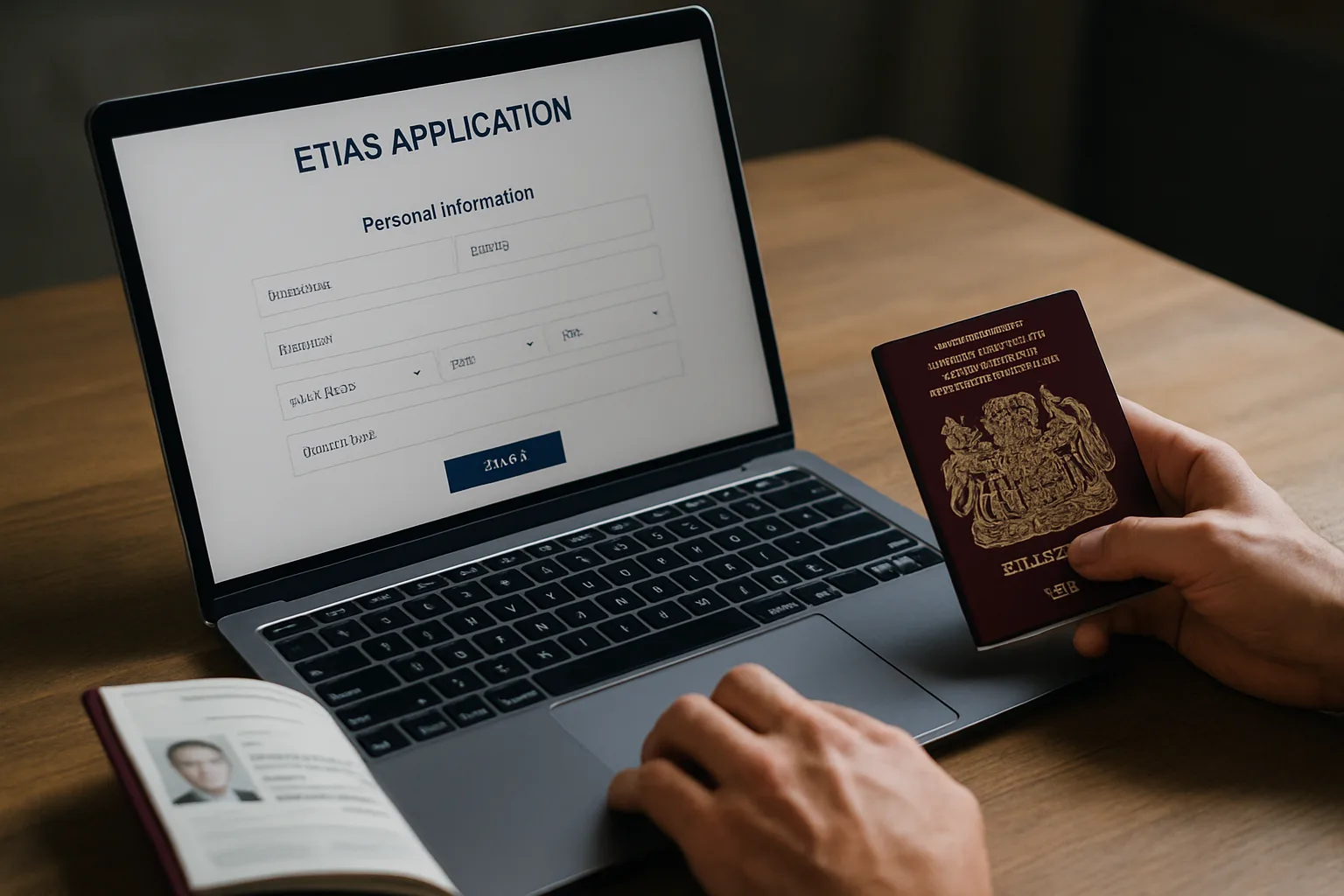
ETIAS stands for European Travel Information and Authorisation System. It's a pre‑screening system for visa‑free travellers – exactly like the US ESTA or the UK ETA. British passport holders will need an approved ETIAS before they can board a flight, ferry, or coach to the Schengen Area.
ETIAS is not a visa. It's a quick online application that checks your details against security databases. If approved, it's valid for three years (or until your passport expires, whichever comes first) and costs €20 (about £17).
You can use it for multiple trips within the Schengen Area, as long as you don't exceed 90 days in any 180‑day period.
You'll need to apply before you travel – ideally well in advance. The system is expected to process most applications within minutes, but some may take up to 72 hours if further checks are needed.
Who needs ETIAS?
ETIAS is required for all nationals of countries that currently enjoy visa-free access to the Schengen Area. This includes British citizens, US citizens, Canadians, Australians, and many others. If you hold a passport from an EU country, you do not need ETIAS.
For example, a British family planning a holiday to Spain must each apply for ETIAS before their flight. The parents pay €20 each, while their two children under 18 are exempt from the fee. They apply online two weeks before departure and receive approval within minutes.
ETIAS is not required for travel within the Common Travel Area (UK, Ireland, Isle of Man, Channel Islands). It only applies when crossing into the Schengen Area from outside.
What information is needed for the ETIAS application?
The ETIAS application form asks for your full name, date and place of birth, passport details, and contact information. You also need to answer a few security questions about your health, criminal record, and previous travel to conflict zones.
For example, you might be asked if you have ever been convicted of a serious crime or if you have visited a country with a high security risk. These questions are standard for pre-travel authorisation systems like ESTA. Answer them truthfully, as false information can lead to refusal.
You do not need to upload any documents for a standard ETIAS application. The system cross-checks your details against EU security databases automatically. If your application is flagged for manual review, you may be asked to provide additional information by email.
When will EES and ETIAS start?
Good question – and the answer keeps changing. The EU originally planned to launch EES in 2022, then 2023, then 2024. As of early 2025, the latest timeline is:
- EES launch: Expected in late 2025 (possibly October). The EU is rolling it out gradually, with a phased approach.
- ETIAS launch: Expected about six months after EES goes live – so likely mid‑2026.
These dates are not set in stone. The EU has been cautious, partly because member states' border systems need to be ready. But the political will is strong, and the systems are being tested.
Check official EU sources before you travel – don't rely on news headlines alone.
For a deeper look at how these changes could affect your summer travel plans, see our guide on EU border wait times summer 2026.
Why the delays?
The main reason for delays is the complexity of connecting 29 national border systems. Each country must install new hardware, train staff, and test the software. Some member states, like France and Germany, have large airports with many entry points, making the rollout slower.
Another factor is the need for interoperability with other systems, such as the Schengen Information System (SIS). The EU wants to ensure that data flows smoothly between databases without errors. This requires extensive testing and debugging.
For example, the port of Dover handles thousands of cars and coaches daily. Installing self-service kiosks and training border guards there takes months of planning. The EU has promised a phased rollout to avoid chaos, but this means delays for travellers.
What is the phased rollout plan?
The EU plans to introduce EES in stages, starting with a small number of border crossing points. Initially, only major airports and ports will have the new kiosks. Smaller crossings may continue using manual stamps for a few months after the launch.
For example, in the first phase, airports like Charles de Gaulle in Paris and Schiphol in Amsterdam will activate EES kiosks. Smaller airports in less busy regions may follow later. This gradual approach helps border authorities manage the transition and fix any technical issues.
Travellers should check the status of EES at their specific entry point before departure. Airlines and ferry companies are expected to provide updates. The EU also plans to publish a list of operational EES crossing points on its official website.
How will EES affect British travellers at the border?

When EES goes live, expect a change in how you cross the border. Here's what will happen step‑by‑step:
- Arrive at the border – at an airport, port, or Eurostar terminal.
- Hand over your passport – the border guard will scan it.
- Provide biometrics – on your first visit after EES starts, you'll have your fingerprints taken and a facial photo captured. On subsequent trips, the system may just use your face or fingerprint to verify your identity.
- Receive a digital record – no stamp. The system logs your entry.
- Exit is the same – when you leave, your biometrics are checked again, and the system records your exit.
The big change: no more passport stamps. That means no more counting stamps to check your 90‑day limit – the system does it for you. But it also means you'll need to be careful not to overstay, because the system will know exactly how long you've been in Schengen.
Will there be longer queues?
Probably, at least at first. The EU is aware that biometric checks take longer than a quick stamp. To manage this, they're introducing self‑service kiosks at many airports and ports.
You'll scan your passport and provide biometrics at the kiosk, then see a border guard for a final check. This should speed things up once everyone is used to it.
But during the first few months, expect delays – especially at busy land borders like Dover or the Channel Tunnel. The UK government has been working with French and EU authorities to minimise disruption, but it's wise to allow extra time.
For instance, at Eurostar terminals in London and Paris, the process may involve queuing at a kiosk before proceeding to the border guard. During peak holiday periods, this could add 30 minutes or more to your journey. Plan accordingly.
What about children and elderly travellers?
Children under 12 may not need to provide fingerprints, but they will still have a facial image captured. The exact rules vary by member state, so check with your airline or travel provider before departure. Elderly travellers or those with physical disabilities may be offered assistance at the border.
For example, a family with a baby travelling to France will have the baby's face scanned, but fingerprints may be waived. The border guard will guide them through the process to minimise stress. Always allow extra time when travelling with children.
For elderly travellers with arthritis or other conditions that make fingerprinting difficult, border guards can use alternative methods. They may rely solely on facial recognition or allow a manual check. If you have a medical condition, inform the border guard before the process begins.
How to apply for ETIAS
Applying for ETIAS is straightforward. Here's the process:
- Go to the official ETIAS website (only one exists – etias.europa.eu). Beware of third‑party sites charging extra fees.
- Fill in the online form – you'll need your passport details, personal information, and answers to a few security questions.
- Pay the fee – €20 (about £17). Under‑18s and over‑70s are exempt from the fee.
- Submit and wait – most applications are approved within minutes. If flagged for manual review, it can take up to 72 hours.
- Receive your authorisation – it's linked electronically to your passport. You don't need to print anything, but it's a good idea to keep a copy.
ETIAS is valid for three years or until your passport expires. If you get a new passport, you'll need a new ETIAS. The authorisation allows multiple entries, but you still must respect the 90/180‑day rule.
Common application mistakes
Many applicants make errors that delay their ETIAS approval. Common mistakes include entering passport numbers incorrectly, misspelling names, or using a passport that expires soon. Double-check all details before submitting.
For example, if your passport has a hyphen in your surname (e.g., Smith-Jones), ensure you enter it exactly as shown. A mismatch can trigger a manual review, causing a delay of up to 72 hours. If you're travelling soon, this could mean missing your flight.
Another tip: use the same passport for your ETIAS application that you plan to travel with. If you renew your passport after receiving ETIAS, the authorisation becomes invalid. You'll need to apply again with the new passport details.
Can you apply for ETIAS on behalf of someone else?
Yes, you can apply for ETIAS on behalf of family members or friends, as long as you have their consent and their passport details. This is common for parents applying for children or for elderly relatives who are not comfortable with online forms.
For example, a British mother can apply for ETIAS for her 15-year-old son using his passport information. She fills in the form, pays the fee (which is waived for under-18s), and receives the authorisation linked to his passport. The son does not need to be present.
However, you must ensure all information is accurate. If you make a mistake on behalf of someone else, it can delay their travel. Always double-check the passport details before submitting the application.
What about the UK's own ETA?
If you're a British traveller, you might be wondering: do I need a UK ETA to come home? No – British citizens do not need a UK ETA. The UK ETA is for non‑visa nationals visiting the UK, not for UK passport holders.
But if you're a dual national with a non‑British passport, you may need a UK ETA to enter the UK. Check the UK government's official guidance for your specific situation.
Comparison with ETIAS
The UK ETA and EU ETIAS are similar in purpose but differ in cost and validity. The UK ETA costs £20 and lasts two years, while ETIAS costs €20 and lasts three years. Both are online applications that check security databases.
For example, a US citizen visiting both the UK and France would need a UK ETA for the UK leg and an ETIAS for the Schengen leg. They apply separately and must ensure both are valid before travel. This adds a layer of planning but is manageable with advance preparation.
British citizens do not need a UK ETA, but they do need ETIAS for Schengen travel. This asymmetry is important to remember when planning multi-country trips.
How do the systems interact for multi-country trips?
If you are a British citizen travelling from the UK to France and then to Spain, you only need ETIAS for the Schengen entry. The UK ETA is not required for British citizens. However, if you are a non-British traveller, you may need both.
For example, a Canadian citizen flying from Toronto to London, then taking the Eurostar to Paris, needs a UK ETA for the UK and an ETIAS for France. They apply for both online before departure. The systems are independent, so approval for one does not guarantee approval for the other.
Always check the requirements for each country on your itinerary. Some countries, like Ireland, have separate rules. The UK and EU systems are designed to work in parallel, but you must meet the conditions for each jurisdiction separately.
Common questions about EES and ETIAS
Will EES affect my travel to Ireland?
No. Ireland is not in the Schengen Area and has its own border arrangements. EES does not apply to travel between the UK and Ireland (the Common Travel Area). However, if you fly from Ireland to mainland Europe, you'll go through EES at the first Schengen airport.
Do I need both EES and ETIAS?
Yes, if you're a visa‑free traveller (like a British passport holder). EES is the system that records your entry and exit – it's automatic once you're at the border. ETIAS is the pre‑travel authorisation you need to get before you travel.
Think of ETIAS as the ticket to board, and EES as the turnstile that logs your entry.
What happens if I don't have ETIAS when I arrive?
You won't be allowed to board your flight, ferry, or coach. Airlines and carriers are required to check that passengers have a valid ETIAS before travel. If you arrive at the border without one, you'll be refused entry and could face a fine for the carrier.
So apply before you travel.
Will my fingerprints be stored?
Yes, but only for the purpose of border control. EES stores your biometric data for three years after your last exit from the Schengen Area. After that, it's deleted.
The EU says the data is protected under GDPR and used only for border management and security checks.
Can I use the eGates with EES?
Yes, that's the plan. Many EU airports already have eGates for EU citizens. With EES, they'll be extended to non‑EU travellers who have registered their biometrics.
You'll scan your passport and have your face or fingerprint checked at the gate – no need to see a border guard unless there's an issue. This should make the process faster once the system is established.
What if I'm refused ETIAS?
If your ETIAS application is refused, you will receive a reason and can appeal the decision. Common reasons include a criminal record or a previous overstay in the Schengen Area. You may need to apply for a visa instead, which involves a more detailed process.
For example, a British traveller with a past overstay of 10 days might have their ETIAS flagged. They would then need to contact the EU's ETIAS unit to explain the circumstances. In some cases, a visa may be the only option, so plan ahead if you have a complex travel history.
What happens if my ETIAS expires while I'm in the Schengen Area?
If your ETIAS expires while you are already in the Schengen Area, it does not affect your stay. The authorisation is only required for entry. As long as you entered legally and respect the 90/180-day rule, you can remain until your permitted stay ends.
For example, you enter France on 1 June with an ETIAS valid until 15 June. You plan to stay until 30 June. Your ETIAS expiry does not matter because you already entered legally.
You must still leave by 30 June to avoid overstaying.
However, if you leave and try to re-enter after your ETIAS expires, you will need a new authorisation. Always check your ETIAS validity before planning a return trip.
Practical tips for British travellers
- Check your passport validity – your passport must be valid for at least three months beyond your planned departure from the Schengen Area. That's the current rule, and it won't change with EES/ETIAS.
- Apply for ETIAS early – don't wait until the last minute. Even though most approvals are instant, a manual review can take up to 72 hours. Apply at least a week before you travel.
- Keep an eye on official sources – the EU's official EES and ETIAS websites are the most reliable. The UK Foreign Office also updates its travel advice regularly.
- Allow extra time at the border – especially during the first few months after EES launches. Arrive at the airport earlier than usual, and if you're driving through the Channel Tunnel, expect potential queues.
- Know your 90‑day limit – EES will track it automatically, but it's your responsibility not to overstay. Overstaying can lead to a ban from the Schengen Area.
Travel insurance considerations
Some travel insurance policies may not cover delays caused by new border systems. Check your policy to see if it includes coverage for border delays or denied boarding due to missing ETIAS. If not, consider upgrading your policy before travel.
For example, a traveller whose ETIAS application is delayed by 72 hours might miss their flight. If their insurance doesn't cover this, they may lose the cost of the ticket. A comprehensive policy with trip delay coverage can mitigate this risk.
Also, ensure your insurance covers medical expenses in the Schengen Area. While the European Health Insurance Card (EHIC) or its replacement, the GHIC, provides some cover, it's not a substitute for full travel insurance.
What about driving to the EU?
If you are driving from the UK to the EU via the Channel Tunnel or ferry, you will still go through EES at the border. The process is the same as at airports: you provide biometrics at a kiosk or booth before entering the Schengen Area.
For example, at the Eurotunnel terminal in Folkestone, drivers and passengers will need to exit their vehicles to use the EES kiosks. This may cause delays, especially during busy periods. Allow extra time for your journey, particularly in the first few months after EES launches.
If you are travelling with a pet, you will still need to follow existing pet travel rules. EES and ETIAS do not affect animal health checks. Ensure your pet's documentation is in order separately.
Key differences between EES and ETIAS
| Feature | EES | ETIAS |
|---|---|---|
| Purpose | Record entry/exit and calculate stay | Pre‑screen travellers before travel |
| When it's used | At the border (entry and exit) | Before travel (online application) |
| Biometrics | Yes – fingerprints and facial image | No – just personal and passport data |
| Cost | Free | €20 (free for under‑18s and over‑70s) |
| Validity | Per trip (data stored for 3 years) | 3 years (or until passport expiry) |
| Who needs it | All non‑EU travellers (visa and visa‑free) | Visa‑free travellers only |
What if I'm a dual national?
If you hold both a British passport and an EU passport, you can use your EU passport to enter the Schengen Area. EU citizens are exempt from EES and ETIAS. But you must use your EU passport consistently – you can't mix and match.
If you use your British passport, you'll be treated as a non‑EU traveller and need ETIAS.
If you're a British citizen with another non‑EU passport (e.g., Canadian), you can choose which passport to use for travel. But remember: the UK ETA rules apply if you're visiting the UK, and ETIAS applies if you're visiting Schengen. Use the passport that gives you the easiest entry.
Impact on residency and long-term stays
If you are a British citizen living in an EU country with residency rights under the Withdrawal Agreement, EES and ETIAS do not apply to you. You should use your residency card to cross borders, not your British passport. The systems are only for short-term visitors.
For example, a British pensioner living in Spain with a residencia card does not need ETIAS to return to Spain after a trip to the UK. They simply show their residency card at the border. However, if they travel to another Schengen country for a holiday, they may need to carry proof of residency.
Always carry your residency documentation when travelling within the Schengen Area. Border guards may ask for it to confirm your status, especially during the transition period when new systems are being introduced.
What about British citizens with second homes in the EU?
If you own a second home in the EU but do not have residency rights, you are still treated as a short-term visitor. You must respect the 90/180-day rule and obtain ETIAS before travel. EES will track your entries and exits, so overstaying is not possible without detection.
For example, a British couple with a holiday home in Portugal can spend up to 90 days in any 180-day period. They apply for ETIAS before each trip. EES records their entry and exit, automatically calculating their stay.
If they exceed 90 days, they risk a ban from the Schengen Area.
If you plan to spend more than 90 days in the EU, you should apply for a long-stay visa or residency permit. The new systems do not change the rules for long-term stays. Consult the embassy of the country where your second home is located for guidance.
How will EES and ETIAS affect business travellers?
Business travellers will face the same requirements as leisure travellers. You need ETIAS before travel and will go through EES at the border. There is no separate fast-track for business purposes, though some airports may offer priority lanes for frequent travellers.
For example, a British consultant travelling to Berlin for a three-day meeting must apply for ETIAS in advance. At the airport, they provide biometrics at the EES kiosk. The process is the same as for a tourist, so they should allow extra time for border checks.
If you travel frequently for business, consider applying for ETIAS well in advance of your first trip. The three-year validity means you won't need to reapply for each journey. Keep a digital copy of your ETIAS approval on your phone for easy access.
Will there be a frequent traveller programme?
The EU has discussed a frequent traveller programme that would allow pre-screened individuals to use faster lanes. However, as of early 2025, no such programme has been implemented. It remains a potential future development.
For example, a British journalist who travels to Brussels monthly might benefit from a trusted traveller scheme. They would undergo a background check and receive a biometric card for faster border crossing. The EU has not confirmed a timeline for this.
Until such a programme is launched, all non-EU travellers must use the standard EES and ETIAS processes. If you travel frequently, plan your trips with extra time for border formalities. Check official EU sources for updates on any new programmes.
Final thoughts
The EES and ETIAS systems represent a major shift in how the EU manages its borders. For British travellers, the key takeaways are: expect biometric checks at the border, apply for ETIAS before you travel, and allow extra time during the transition period.
These changes are designed to improve security and make border crossing more efficient in the long run. But the rollout will take time, and there may be teething problems. Stay informed, plan ahead, and you'll be fine.
Remember: this is general guidance only. Always check official sources – the EU's EES and ETIAS websites, and the UK Foreign Office – before you travel. Rules and timelines can change.
Key takeaways
- EES replaces passport stamps with biometric checks at Schengen borders – no cost, but expect longer queues initially.
- ETIAS is a €20 pre‑travel authorisation for visa‑free travellers, valid for 3 years – apply online before you go.
- Both systems are expected to launch in 2025/2026 – exact dates are not yet confirmed.
- British passport holders need both EES registration and an approved ETIAS to enter the Schengen Area.
- Plan ahead: check passport validity, apply for ETIAS early, and allow extra time at the border.
Frequently asked questions
Will EES and ETIAS affect my travel to Ireland?
Do I need both EES and ETIAS as a British traveller?
What happens if I arrive at the EU border without an ETIAS?
How long will my biometric data be stored under EES?
Can I use eGates with EES as a British traveller?
This article is for general informational purposes only. Visa and travel authorisation rules change frequently. Always check the official government website before travelling.

Written & reviewed by
Can OTUTravel Authorisation Editor
Can OTU is the editor of ETA Travel Assistant, specialising in UK ETA, Schengen ETIAS, NZeTA and ESTA travel authorisations. Can monitors official government sources and policy updates to ensure every guide is accurate, current and genuinely useful for travellers.
View all guides →