UK ETA for Business Travel: What You Can and Cannot Do
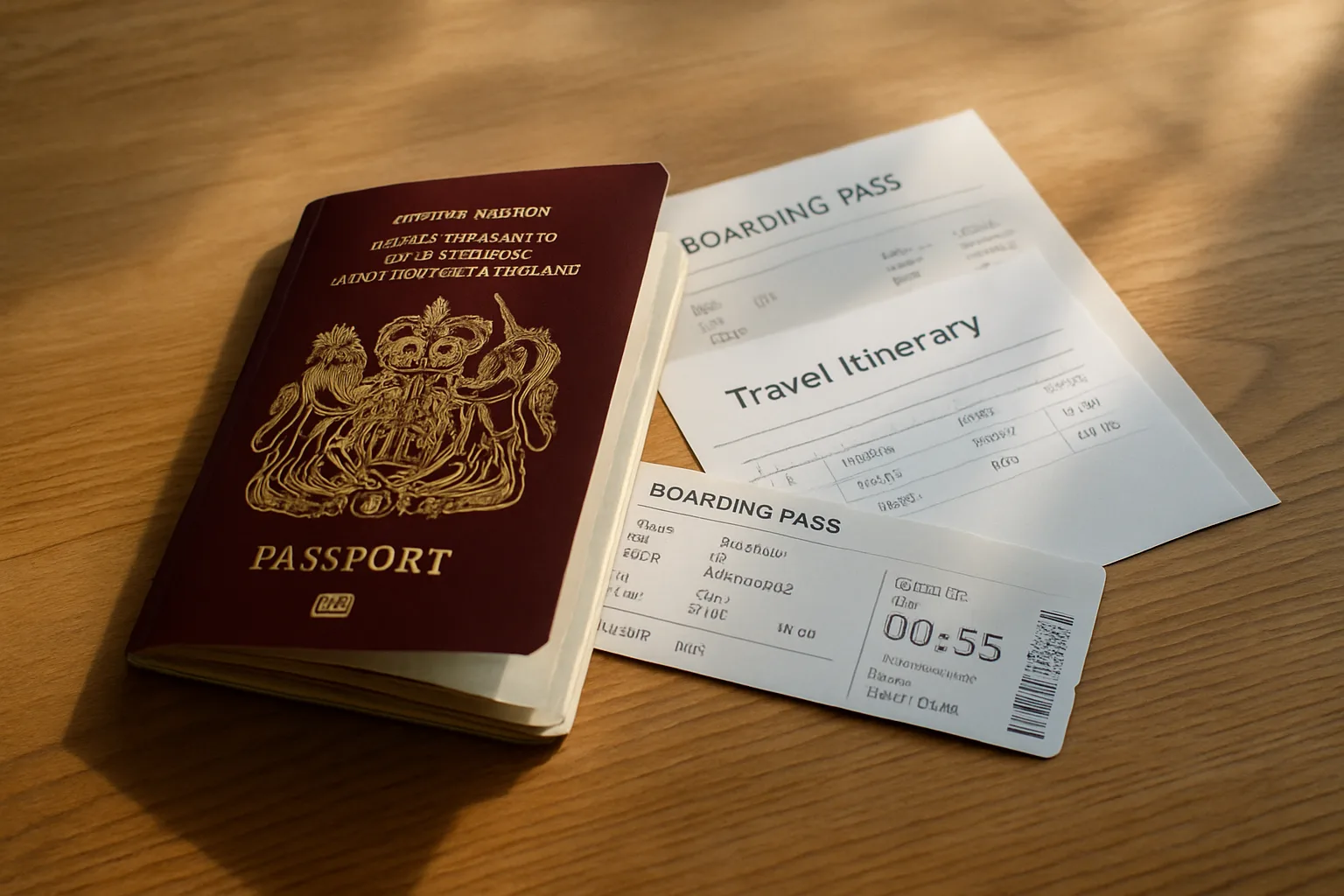
- You can attend meetings, conferences, trade fairs, and conduct site visits or fact-finding missions.
- You cannot take up employment, fill a job vacancy, or provide services to a UK company as a contractor or consultant.
- Remote work for a non-UK employer is generally allowed, but you cannot be paid by a UK source or perform work for a UK client.
If you're planning a business trip to the UK under the Electronic Travel Authorisation (ETA) scheme, it's crucial to know exactly what you can and cannot do. The rules are clear, but many travellers get caught out by the fine print. This guide covers everything you need to know about business activities permitted with a UK ETA, what's strictly forbidden, and what happens if you overstep.
The UK ETA is not a visa. It's an electronic pre-travel authorisation that allows visa-exempt nationals to travel to the UK for short stays (up to 6 months) for tourism, business, study, and other permitted activities. But "business" under the ETA rules has a specific meaning.
It does not cover all business activities. You need to understand the difference between permitted business visitor activities and work that requires a work visa.
This article is general guidance only. Always check the official UK government website for the most up-to-date rules before you travel. The rules can change, and your specific circumstances matter.
What Business Activities Are Permitted with a UK ETA?
The UK ETA allows you to carry out a range of business activities as a visitor. These are activities that are considered "business visitor" activities under the Immigration Rules. They do not require a work visa because they do not constitute "work" in the UK labour market.
Attending Meetings, Conferences, and Seminars
You can attend internal business meetings, external client meetings, conferences, seminars, and workshops. You can be a delegate, a speaker, or a participant. You can also network and exchange ideas.
The key point is that you are not providing a service or doing productive work for a UK organisation. You are there to receive information, share knowledge, or discuss business opportunities.
For example, you can attend a trade conference in London, give a presentation about your company's products, and meet potential partners. That's fine. But if you are paid by a UK company to deliver that presentation as part of a consultancy contract, that's not permitted.
Consider a scenario where you are a marketing manager for a German firm. You attend a conference in Manchester to learn about new industry trends. You can take notes, ask questions, and chat with exhibitors.
You cannot, however, help a UK exhibitor set up their booth or provide advice on their marketing strategy for a fee.
Negotiating and Signing Contracts
You can negotiate and sign contracts for the sale of goods or services. You can also agree on terms, review documents, and finalise deals. This is a core business visitor activity.
You can do this for your own company (if you are an employee or director) or for a foreign company you represent.
But you cannot then carry out the contract — for example, installing equipment, training staff, or providing ongoing consultancy. That would be work.
Imagine you are a sales director for a Japanese electronics firm. You travel to the UK to negotiate a deal with a British retailer. You can sign the contract and agree on delivery dates.
You cannot then stay in the UK to train the retailer's staff on how to use your products. That requires a work visa.
Conducting Site Visits and Fact-Finding Missions
You can visit potential business locations, factories, warehouses, or offices to assess suitability. You can also carry out research, check quality, or inspect goods. This is allowed as long as you are not doing hands-on work.
For example, you can visit a UK factory to check production quality, but you cannot operate machinery or assemble products.
Suppose you are a quality assurance manager for a Canadian food company. You visit a UK supplier's facility to inspect their production line. You can observe processes and review documentation.
You cannot step in to adjust equipment or help with packaging. That would be productive work.
Attending Trade Fairs and Exhibitions
You can attend trade fairs, exhibitions, and product launches. You can set up a display, promote your products, and talk to visitors. You can also take orders.
But you cannot sell goods directly to the public at the event — that would be trading, which is not allowed under a visitor visa.
For instance, you represent an Australian wine company at a trade fair in Birmingham. You can offer samples to trade buyers and take orders for future delivery. You cannot sell bottles of wine to individual attendees for immediate payment.
That is considered retail trading.
Internal Audits and Inspections
If you work for a multinational company, you can visit UK branches to conduct internal audits, quality checks, or compliance inspections. This is considered a business visitor activity. You are not doing the work of a UK employee; you are overseeing or verifying processes.
For example, you are an internal auditor for a US bank. You travel to the bank's London office to review financial records and ensure compliance with company policies. You can examine documents and interview staff.
You cannot take over the duties of a UK-based accountant or fill a staffing gap.
Training to Use Your Company's Products or Services
You can receive training on how to use your company's products or services. But you cannot deliver training to UK staff unless it is incidental to a sale (e.g., showing a customer how to use a product you just sold them). If you are a trainer by profession and you come to the UK to train UK employees on a regular basis, you likely need a work visa.
Consider a scenario where you work for a French software company. You visit the UK to attend a training session on a new software update. That is allowed.
However, if you are a certified trainer and you travel to the UK to train UK clients on software they purchased, you may be providing a service. This could be considered work.
What Business Activities Are NOT Permitted with a UK ETA?
The UK ETA does not allow you to work in the UK. "Work" includes any activity that could be done by a UK resident for pay or other consideration. Even unpaid work can be prohibited if it fills a job that a UK worker could do.
Taking Up Employment (Paid or Unpaid)
You cannot take a job with a UK employer, even if it's unpaid. This includes internships, work experience, and volunteering that is similar to a paid role. If you are offered a job, you need a work visa before you start.
You cannot use an ETA to test the waters or work while your visa application is pending.
For example, a recent graduate from India (who is visa-exempt) cannot accept an unpaid internship at a UK marketing firm while on an ETA. That internship would normally be a paid position for a UK resident. The same applies to work placements as part of a university course.
Providing Services as a Contractor or Consultant
If you are self-employed or a contractor, you cannot provide services to a UK client while in the UK on an ETA. For example, a freelance graphic designer cannot design a website for a UK company while visiting. Even if you are paid by your own company abroad, if the end client is in the UK, it may be considered work.
The rules are strict: you must not engage in any "productive work" for a UK organisation.
Imagine you are a freelance IT consultant based in Singapore. A UK startup asks you to help set up their network during your two-week visit. Even if you are paid by your Singapore company, you are providing services to a UK client.
This is not allowed.
Selling Goods or Services Directly to the Public
You cannot trade or sell goods or services to the public. This means you cannot set up a stall, sell products on the street, or offer services like hairdressing or photography to UK residents. You can take orders for future delivery, but you cannot hand over goods or perform services on the spot.
For instance, an artist from Brazil cannot sell paintings at a London market while on an ETA. They could, however, display their work at a gallery and take orders for future delivery. The sale cannot be completed in the UK.
Working as a Freelancer for UK Clients
Even if you are a freelancer based abroad, if you come to the UK and work on projects for UK clients, you are likely breaching your ETA conditions. The Home Office considers remote work for UK clients as work in the UK, because the benefit of your work accrues to a UK entity. To be safe, avoid any work that benefits a UK person or company while you are physically in the UK.
Suppose you are a freelance writer from Australia. You travel to the UK for a holiday. You continue writing articles for a UK magazine from your hotel room.
Even though you are paid into your Australian bank account, the work benefits a UK client. This is not permitted.
Performing as an Entertainer or Musician
If you are a professional entertainer, musician, or artist, you cannot perform for an audience or take part in a paid engagement unless you have the appropriate visa. The ETA only covers amateur performances that are not paid and are not part of a commercial event. Even unpaid charity gigs may be prohibited if a UK performer could have been paid for the same role.
For example, a professional singer from Canada cannot perform at a London club for a fee while on an ETA. They would need a Permitted Paid Engagement visa or a work visa. Even a free performance at a charity event could be problematic if it displaces a paid performer.
Can You Work Remotely for a Non-UK Employer on a UK ETA?
This is a common question. The short answer is: yes, you can do incidental remote work for your non-UK employer while in the UK. The Home Office guidance states that "digital nomad" activities — such as checking emails, attending virtual meetings, and doing work that is not linked to a UK client — are generally permitted, as long as your primary purpose for visiting is not to work remotely.
But there are limits. You cannot be employed by a UK company, even if you work remotely. And you cannot provide services to UK clients, even if you are paid abroad.
If your remote work involves managing UK-based staff or projects that benefit a UK entity, you may be crossing the line.
In practice, if you are a software developer working for a US company, and you come to the UK for a two-week holiday but also do some coding for your US employer, that is likely fine. But if you spend the entire six months working full-time for your US employer while living in the UK, the Home Office may question whether you are a genuine visitor. The key is that your primary purpose must be one of the permitted activities (tourism, business meetings, etc.), not remote work.
Consider a graphic designer from New Zealand who works for a company in Auckland. She travels to the UK for a month to visit friends. She spends a few hours each day on client projects for her New Zealand clients.
This is generally acceptable. However, if she takes on a new project for a UK client during her stay, that would be a violation.
Can You Volunteer or Do Charity Work on a UK ETA?

Volunteering is allowed, but with restrictions. You can volunteer for a registered charity, as long as the volunteering is not a substitute for a paid job. For example, you can help at a charity shop for a few hours, but you cannot manage the shop or do the same work as a paid employee.
The volunteering must be incidental to your visit, not the main purpose. If you plan to volunteer full-time for several months, you may need a charity worker visa.
You cannot volunteer for a for-profit organisation. And you cannot receive any payment or benefit in kind (like free accommodation) in exchange for your volunteering, except for reasonable expenses.
For instance, you can volunteer at a local animal shelter in the UK for a few afternoons during your holiday. You can help clean cages and walk dogs. You cannot take on the role of a paid shelter manager or work a full-time schedule.
If the shelter offers you free room and board in exchange for your work, that may be considered a benefit in kind and could be prohibited.
What About Paid Engagements Like Speaking or Teaching?
You can give a one-off paid talk or lecture if you are invited by a UK institution (like a university or conference organiser). But this is only allowed if the engagement is not part of a regular series and you are not filling a permanent position. For example, a guest lecture at a university is fine.
A full semester of teaching is not.
Similarly, you can be paid for appearing at a business event as a speaker, as long as it's a one-off. But if you are a professional speaker and you come to the UK to deliver multiple paid speeches, you may need a work visa.
Imagine you are a renowned author from South Africa. A UK university invites you to give a single paid lecture on your book. This is allowed.
However, if the university asks you to deliver a series of lectures over several weeks, that would likely require a work visa. The same applies to corporate training sessions.
How Does the UK ETA Compare to the US ESTA for Business Travel?
The UK ETA rules are similar to the US ESTA (Visa Waiver Program) in many ways, but there are differences. Under the US ESTA, you can attend meetings and conferences, but you cannot work or receive payment from a US source. The UK rules are broadly the same, but the UK is stricter on remote work for UK clients.
The US is more lenient on incidental remote work. Always check the specific rules for each country.
For example, under the US ESTA, you can generally perform remote work for a non-US employer without issue. The UK ETA allows this too, but the UK is more likely to scrutinise if your work benefits a UK entity. If you are a consultant with clients in both countries, you must be careful.
The US may allow you to meet with a US client, while the UK may prohibit you from meeting with a UK client under the same conditions.
Another difference is the duration. Both allow stays of up to 90 days (US) or 6 months (UK). The UK ETA is valid for multiple entries over 2 years, while the US ESTA is valid for 2 years as well.
However, the activities permitted are not identical. Always review the official guidance for each country before travelling.
What Happens If You Breach the Business Visitor Rules?
If you are caught working illegally in the UK, you can be refused entry at the border, removed from the UK, or banned from returning for up to 10 years. Your ETA can be cancelled. You may also face difficulties applying for future UK visas.
The Home Office takes illegal working seriously. Employers who hire you illegally can also face penalties.
If you are unsure whether an activity is allowed, it's better to ask before you travel. You can contact UK Visas and Immigration or seek professional advice. Don't assume that because you are not paid, it's allowed.
Unpaid work that displaces a UK worker is still illegal.
For instance, a photographer from Japan offers to take free portraits at a UK event. If a UK photographer would normally be paid for that work, the activity could be considered illegal working. The consequences can include immediate removal from the UK and a ban on future travel.
How to Apply for a UK ETA for Business Travel
Applying for a UK ETA is straightforward. You need to complete an online application, provide your passport details, answer some questions, and pay the fee. The process is similar whether you are travelling for business or tourism.
For full details, check the uk eta application requirements guide.
The fee is modest. See how much does a uk eta cost for the latest price. Most applications are approved within minutes, but it's wise to apply at least a few days before travel.
Not everyone needs an ETA. Find out if you do by reading who needs a uk eta.
What Documents Should You Carry for Business Travel?
When travelling to the UK for business under an ETA, you should carry documents that support your purpose of visit. This can include an invitation letter from a UK company, conference registration details, or a letter from your employer. These documents help demonstrate that you are a genuine business visitor.
You may also need proof of accommodation, return flight tickets, and evidence of sufficient funds for your stay. Border officers may ask about your itinerary. Having these documents ready can speed up your entry and reduce the risk of being refused.
For example, if you are attending a conference, bring the registration confirmation and a programme. If you are visiting a client, carry a letter of invitation on company letterhead. These documents show that your activities are permitted under the ETA rules.
Can You Extend Your Stay for Business Purposes?
The UK ETA allows a maximum stay of 6 months per visit. You cannot extend your stay beyond this period under the ETA. If you need more time for business activities, you must apply for a different visa, such as a Standard Visitor visa with a longer validity or a work visa.
Extensions are generally not granted for business visitors. If you overstay, you may face penalties, including a ban from the UK. Plan your trip carefully to ensure you complete all business activities within the 6-month limit.
For instance, if you need to oversee a long-term project, consider applying for a work visa instead. The ETA is not designed for extended stays or ongoing work. Overstaying can harm your future travel plans.
Can You Bring Family Members on a Business Trip?
Yes, you can bring family members on a business trip under the UK ETA, but they must have their own ETA or visa. Family members can accompany you for tourism or other permitted activities. They cannot work or engage in business activities themselves unless they qualify separately.
For example, if you are travelling to London for a conference, your spouse can join you for sightseeing. They must apply for their own ETA if they are from a visa-exempt country. They cannot attend the conference as a delegate unless they have their own business purpose.
Children also need their own ETA or visa. Ensure all family members meet the requirements before travel. The rules for family members are the same as for any visitor.
What Are the Risks of Using an ETA for Business Activities?
The main risk is unintentionally breaching the rules. Many business travellers mistakenly believe that any work-related activity is allowed. The consequences can be severe, including refusal of entry, deportation, or a ban.
Even a minor violation can have long-term effects on your ability to travel to the UK.
Another risk is the interpretation of "incidental" work. If border officers believe your primary purpose is work, they may refuse entry. For example, if you arrive with a laptop and plan to work full-time for a foreign employer, you may be questioned.
Always be honest about your activities.
To minimise risks, keep detailed records of your business activities. Carry supporting documents and be prepared to explain your purpose. If in doubt, seek professional advice before travelling.
Key Takeaways
- The UK ETA allows a wide range of business visitor activities: meetings, conferences, negotiations, site visits, and more.
- You cannot take up employment, provide services to a UK client, or work as a freelancer for UK companies.
- Incidental remote work for a non-UK employer is generally permitted, but it must not be your main purpose for visiting.
- Volunteering is allowed only for registered charities and must not replace a paid role.
- Breaching the rules can lead to refusal of entry, deportation, or a ban from the UK. Always check official guidance before you travel.
This information is general guidance only. For authoritative rules, visit the UK government's official Visit the UK guidance.
Frequently asked questions
Can I attend job interviews in the UK on an ETA?
Can I do paid work for a non-UK company while in the UK on an ETA?
Can I set up a UK company while on an ETA?
Can I bring samples or prototypes for business meetings?
What if I accidentally work illegally on an ETA?
This article is for general informational purposes only. Visa and travel authorisation rules change frequently. Always check the official government website before travelling.

Written & reviewed by
Can OTUTravel Authorisation Editor
Can OTU is the editor of ETA Travel Assistant, specialising in UK ETA, Schengen ETIAS, NZeTA and ESTA travel authorisations. Can monitors official government sources and policy updates to ensure every guide is accurate, current and genuinely useful for travellers.
View all guides →