Where Can You Travel With a UK BRP or eVisa? Countries, Rules, and What Actually Works at the Border

- A UK BRP or eVisa confirms your UK immigration status — it is not a substitute for your actual national passport when travelling internationally.
- Whether you need a visa for a third country depends entirely on your nationality and passport, not your UK immigration status.
- Returning to the UK after travel requires both your valid passport and evidence of your current UK immigration status, whether that's a physical BRP or your digital eVisa record.
If you hold a UK BRP or eVisa and are planning international travel, here's exactly how your status interacts with border rules, both for leaving and returning to the UK and for visiting other countries.
What a BRP or eVisa actually confirms
A Biometric Residence Permit, or its digital successor the eVisa, confirms your specific UK immigration status — whether that's a work visa, a family visa, indefinite leave to remain, or another category — and your right to be in the UK under that status. It is issued based on your immigration permission, not your nationality, and it doesn't replace your national passport as your primary international travel document. When you travel, your passport remains the document that determines your nationality and, in turn, which countries you can enter without a separate visa.
Can a BRP or eVisa get you into another country?
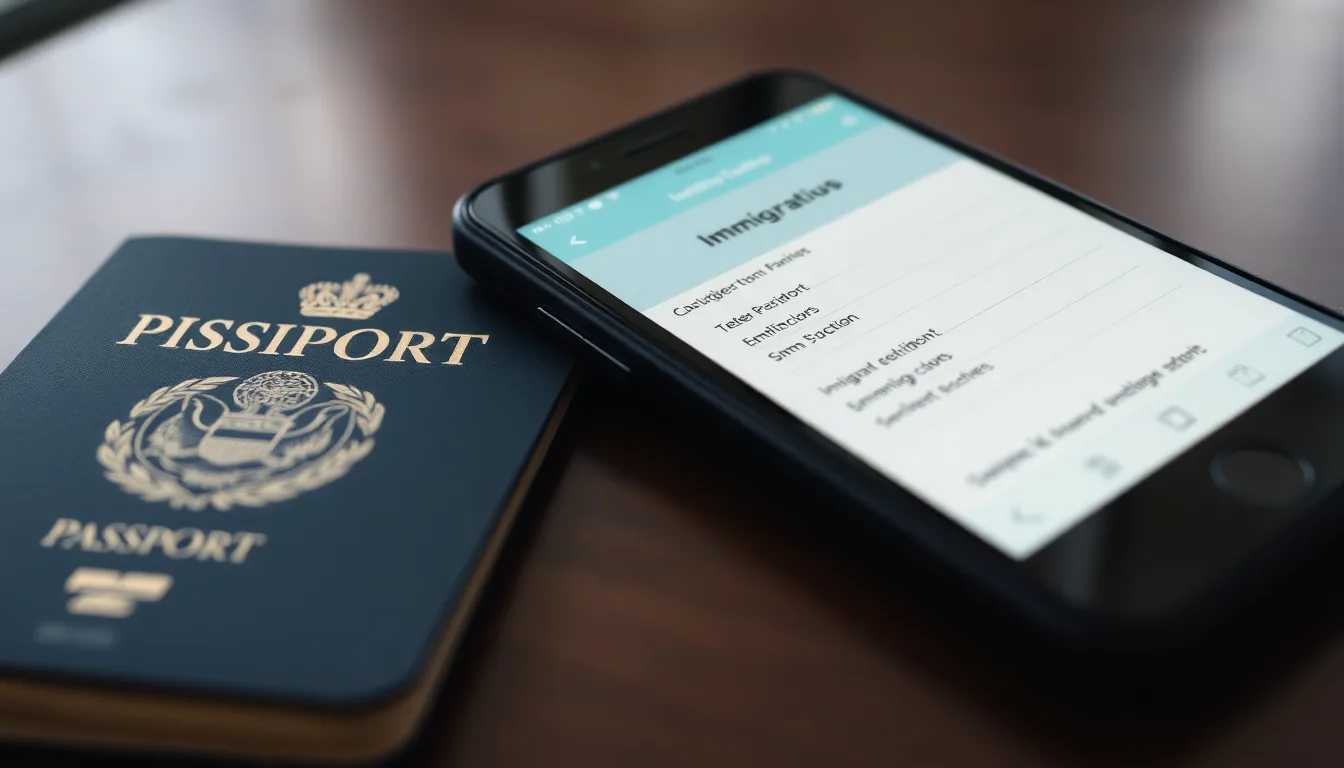
No, not on its own. Entry to any country other than the UK is determined by your actual nationality, as shown on your passport, and that country's specific visa or entry requirements for people of your nationality. Your UK BRP or eVisa doesn't grant you any additional entry rights to third countries, even ones that maintain visa-free arrangements with the UK itself, since those arrangements are based on UK citizenship, not simply holding UK immigration status as a non-citizen resident.
What you need to leave and re-enter the UK
To leave and later return to the UK, you need your valid national passport, matching the identity under which your UK immigration status was granted, along with evidence of your current UK immigration status — either your physical BRP card, if you still hold one, or confirmation of your digital eVisa status, which UK Immigration systems can check electronically at the border. Since the UK has been transitioning from physical BRPs to digital eVisas, it's worth confirming which system currently applies to your specific status before travelling.
The shift from physical BRPs to digital eVisas

The UK has been moving away from physical BRP cards toward a fully digital immigration status system, known as eVisa, where your status is held electronically rather than on a physical card. If your status has transitioned to an eVisa, you'll typically need to demonstrate this through the official online service, sometimes using a share code, rather than presenting a physical card at the border. Check your specific status through the official GOV.UK service well before travelling, since requirements and the exact process can differ depending on whether you're still on a physical BRP or have moved to the digital eVisa system.
Travelling to countries requiring a separate visa
If your nationality requires a visa for a specific destination country, that visa application is generally handled through that country's own embassy or consulate, based on your actual passport and nationality — your UK immigration status doesn't factor into their decision, except in limited cases where you might be asked to provide evidence of your UK status as supporting context, such as demonstrating you have a genuine right to return to the UK after your trip. Some countries do ask about your current residency status as part of a visa application, since this can support their assessment of whether you're likely to return home after your visit, but this is different from the UK status itself determining your eligibility.
Travelling to countries with visa-free access for your actual nationality
If your nationality already has visa-free or visa-on-arrival access to a specific country, this is based entirely on your passport's nationality, and your UK immigration status is generally irrelevant to that specific country's entry decision. You would simply travel using your national passport exactly as you normally would, with your separate UK BRP or eVisa status relevant only to your eventual return journey back into the UK afterward, not to your actual entry into the specific country you're genuinely visiting right now.
What to carry when travelling internationally with UK residency status
- Your valid national passport, matching the identity your UK status is registered under.
- Evidence of your current UK immigration status — a physical BRP card, or your digital eVisa confirmation accessible online.
- Any specific visa or entry documentation required by your destination country, based on your actual nationality.
- Your UK visa or residence permit approval letter, in case additional confirmation of your status is requested.
What happens if your BRP is lost or expires while abroad
If your physical BRP is lost, stolen, or expires while you're outside the UK, this can complicate your return, since border officials need to confirm your current UK immigration status to allow re-entry. If this happens, contact UK Visas and Immigration as soon as possible to understand your options, which may include applying for a replacement or providing alternative evidence of your status, ideally well before your planned return date rather than discovering the problem at check-in for your return flight.
Travelling with an eVisa: what actually works at the border
With the digital eVisa system, your status exists in government records rather than on a card you physically present, meaning airlines and border officials verify it electronically using your passport details, sometimes supplemented by a specific online share code you generate and provide when needed. Before travelling, it's worth generating and saving a current share code specifically for this purpose, and confirming your passport details on file with the Home Office match the passport you'll actually be travelling with, since a mismatch here can cause exactly the kind of verification problems that create delays at the border.
Common misunderstandings about BRP and eVisa international travel
- "My BRP lets me travel visa-free like a UK passport." Not correct — your BRP confirms UK status, not nationality, and doesn't grant visa-free access based on UK citizenship.
- "I don't need my passport if I have a BRP." Incorrect — your national passport remains essential for international travel and identity confirmation.
- "My eVisa status is automatically checked everywhere. Not necessarily — you may need to generate and provide a share code in specific situations, rather than assuming it's always checked automatically without any action from you.
Family members with different immigration statuses
In families where members hold different UK immigration statuses — for example, one parent with indefinite leave to remain and children with a different visa category — each family member's international travel is governed independently by their own passport nationality and their own specific UK status, rather than being determined collectively as a family unit. Check each person's specific situation individually before a family trip, rather than assuming everyone's travel requirements are identical simply because you're travelling together.
What UK border officials check on your return
When you return to the UK, border officials check your passport to confirm your identity and nationality, alongside verifying your current UK immigration status, whether through your physical BRP or the digital eVisa system. Having both readily accessible — your passport and confirmation of your current UK status — helps this process go smoothly, particularly if there's ever any discrepancy between your physical card and the current digital record, which can occasionally happen during the transition period between the two systems.
How this works for specific common visa categories
Whether you hold a Skilled Worker visa, a Student visa, a Family visa, or Indefinite Leave to Remain, the underlying principle for international travel remains the same — your specific category determines your UK status, but your passport and nationality determine your access to other countries. Indefinite Leave to Remain holders sometimes assume their more settled UK status grants broader international travel rights than a temporary visa holder, but this isn't the case — ILR confirms a more permanent right to live in the UK, not any additional entry rights elsewhere, which continue to depend entirely on your actual nationality and passport.
Refugees and holders of protection-based status
Individuals with refugee status or another form of international protection in the UK are often issued a specific travel document, sometimes called a Convention Travel Document, precisely because they may not be able to safely use their original national passport, or may not hold one at all. This is a distinct situation from a standard BRP or eVisa holder travelling on their own national passport, and it comes with its own specific set of rules about which countries can be visited and what re-entry to the UK requires. If you hold this kind of status, check the specific rules attached to your particular travel document directly, since they differ meaningfully from the general BRP and eVisa guidance covered elsewhere in this article.
Long-term UK residents visiting their country of origin
Many BRP and eVisa holders travel back to their country of origin periodically to visit family, and it's worth understanding that your country of origin's own entry rules for its nationals apply to you in the usual way, based on your passport from that country, regardless of your separate UK immigration status. Some countries have specific rules for citizens who have been living abroad for an extended period, such as requirements around visa-free stay durations or registration on arrival, so it's worth checking your specific country of origin's current rules for returning nationals, rather than assuming your UK residency status has any bearing on how that country treats your visit.
Business travel and international assignments while holding UK status
If your role involves international business travel while you hold a UK work visa, your ability to travel to client countries or attend international meetings depends on your own nationality's visa requirements for each specific destination, exactly as it would for any other business traveller. Some employers assist international staff with understanding visa requirements for business trips, but it's worth confirming this support explicitly with your employer rather than assuming your UK sponsor licence status automatically extends to smoothing entry requirements at other countries' borders, since it generally doesn't.
What travel insurance considerations apply
When arranging travel insurance for a trip that involves both leaving and returning to the UK under BRP or eVisa status, check that your policy doesn't have unusual exclusions related to your specific residency situation, particularly if your policy is arranged through a UK-based provider that may have specific wording about residency requirements for coverage to apply. Most standard travel insurance policies are unaffected by your specific UK immigration category, but it's a detail worth confirming directly with your insurer if you have any uncertainty, rather than assuming standard coverage automatically applies to your particular situation.
What to do if you're unsure about a specific country's requirements
Given how much international entry requirements can vary by nationality and change over time, always check the specific, current requirements for your actual nationality directly with the destination country's official embassy, consulate, or government website, rather than relying on general guidance intended for a different nationality or a slightly outdated source. Your UK immigration status is a separate matter from this check entirely, and conflating the two — assuming your UK status somehow simplifies or changes another country's entry requirements for your nationality — is one of the most common and avoidable sources of confusion in this whole area.
Key takeaways
- A UK BRP or eVisa confirms your UK immigration status, not your nationality, and doesn't grant visa-free access to other countries.
- Entry to any country other than the UK is based on your actual passport and nationality, not your UK residency status.
- Returning to the UK requires both your valid passport and current evidence of your UK immigration status.
- Check whether your status is on a physical BRP or has transitioned to the digital eVisa system before you travel.
This article provides general guidance, not official advice — always verify current requirements and fees on the official GOV.UK website before applying, since specific processes and systems can genuinely change over time.
Planning ahead for a smooth return to the UK
Before any international trip, it's worth checking your current UK immigration status through the official GOV.UK service, confirming your passport details on file are accurate and up to date, and generating a fresh eVisa share code if your specific situation requires one. Doing this a few days before travel, rather than assuming everything is automatically in order, catches the kind of small discrepancies — an outdated passport number, an expired physical BRP — that are otherwise easy to overlook until they cause a genuine, entirely avoidable problem right at the border itself, at precisely the moment you can least afford an unexpected delay.
Dual nationals with a BRP or eVisa
If you hold dual nationality, your international travel options depend on which passport you actually choose to travel on for a given trip, and this choice can meaningfully affect which countries you can enter visa-free. Some dual nationals deliberately choose whichever of their two passports offers broader visa-free access for a specific trip, while others travel consistently on one particular passport for simplicity or personal preference. Your UK BRP or eVisa status remains linked to whichever identity and passport it was originally granted against, so if you plan to travel on a different passport than the one linked to your UK status, it's worth confirming in advance that this won't cause confusion or delay when you return to the UK.
Children with a BRP or eVisa travelling with parents of different nationalities
In families where a child holds their own UK immigration status separate from either parent's nationality, that child's international travel is governed by their own passport and nationality, just like an adult in the same situation. This can occasionally mean a child needs a visa for a country that one or both parents can enter visa-free, or vice versa, depending on the specific passports involved. Checking each family member's individual requirements separately, rather than assuming the family unit is treated uniformly by every country you might visit together, avoids an unpleasant surprise discovered only during the actual trip planning process.
What changes if you later become a UK citizen
If you eventually naturalise as a UK citizen and obtain a UK passport, your international travel situation changes meaningfully, since you would then travel on your UK passport and benefit from the UK's own visa-free arrangements with other countries, rather than relying on your previous nationality's passport and its own separate set of arrangements. This is a significant enough change that it's worth reviewing your travel plans and any existing visas or entry arrangements tied to your previous passport once your UK citizenship is confirmed, since assumptions that applied under your old nationality may no longer be accurate.
Practical tips for frequent international travellers with UK status
- Keep a clear, updated list of your current passport's validity, your UK BRP or eVisa status details, and any current visas for countries you visit regularly.
- Set a personal reminder to check your specific status and passport validity a few weeks before any planned international trip.
- If you rely on the digital eVisa system, generate a fresh share code close to your actual travel date rather than relying on an old one that may have expired.
- Keep both your UK immigration documents and your national passport's details backed up securely, in case either is lost while travelling.
How this differs from holding a UK passport outright
It's worth being explicit about the core distinction this entire topic hinges on: a UK passport confirms British citizenship and grants the specific visa-free or visa-on-arrival access the UK has negotiated with other countries for its citizens, while a BRP or eVisa confirms only your immigration status within the UK as a non-citizen resident. These are fundamentally different documents serving fundamentally different purposes, and confusing the two — expecting BRP or eVisa holder benefits to match those of an actual UK passport holder — is the single most common misunderstanding in this entire area of UK immigration and international travel.
A simple mental model to remember
If you take away just one idea from this whole guide, let it be this: your passport answers "where can I go," while your BRP or eVisa answers "can I come back to the UK." Keeping these two entirely separate questions clearly distinct in your mind, rather than blending them together, resolves the vast majority of confusion travellers run into around this topic, whether they're planning a simple holiday, a family visit home, or a genuinely more complex international business trip involving several different countries and their own distinct entry requirements along the way.
Frequently asked questions
Quick answers on what a UK BRP or eVisa actually allows when travelling internationally, and what you need for a smooth return to the UK.
Official sources
Check the authority for current fees and requirements before applying.
Frequently asked questions
Does a UK BRP let me travel to other countries visa-free?
Do I need my BRP or eVisa to return to the UK?
What is the difference between a BRP and an eVisa?
What happens if my BRP is lost while I'm abroad?
Do all my family members need the same immigration status to travel together?
This article is for general informational purposes only. Visa and travel authorisation rules change frequently. Always check the official government website before travelling.

Written & reviewed by
Can OTUTravel Authorisation Editor
Can OTU is the editor of ETA Travel Assistant, specialising in UK ETA, Schengen ETIAS, NZeTA and ESTA travel authorisations. Can monitors official government sources and policy updates to ensure every guide is accurate, current and genuinely useful for travellers.
View all guides →