ESTA Revoked at the Last Minute: What to Do If Your Travel Authorisation Is Cancelled Before Your Flight
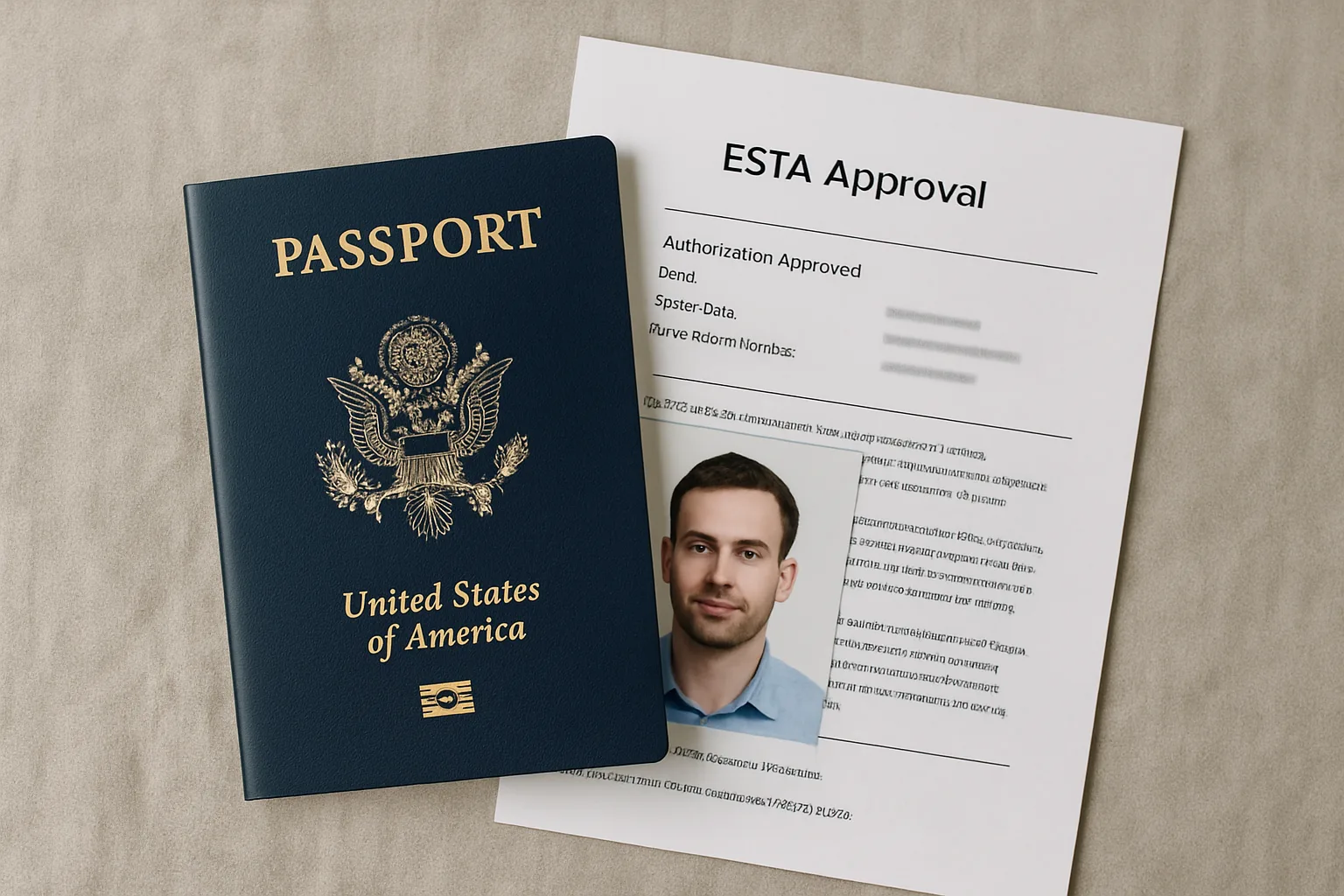
- A revoked ESTA means you cannot board a flight to the US under the Visa Waiver Program.
- Contact CBP directly to check whether the revocation was a genuine error before assuming the worst.
- There's no mandatory waiting period before reapplying, but reapplying won't help if the underlying issue hasn't changed.
- Check your specific airline's policy on rebooking or refunds given the circumstances.
Here's exactly what to do, step by step, if your ESTA is revoked shortly before you're due to fly.
What ESTA revocation actually means
CBP can revoke an approved ESTA at any time, based on new security information or a change in the traveller's circumstances, and importantly, they aren't required to notify you directly before or after doing so. A revoked ESTA means your Visa Waiver Program authorisation is no longer valid, and airlines checking passenger status before boarding will see this as an invalid authorisation, preventing you from checking in or boarding your flight.
Step 1: Don't panic — verify the situation first
Before assuming the worst, step aside from the check-in queue if you're already at the airport, and take a moment to verify exactly what's happening rather than reacting immediately. Airline check-in staff sometimes see an ESTA-related system flag without being able to explain the specific reason, so getting accurate information directly from the source — CBP — is the genuinely useful first step, rather than relying on secondhand interpretation from airline staff who don't control the ESTA system itself.
Step 2: Contact CBP directly
Call the CBP ESTA helpdesk directly to ask specifically why your ESTA shows as revoked and whether this reflects an error. Having your ESTA application number, passport details, and full name ready before calling speeds up this conversation considerably, and asking the representative directly whether there's an error on file, versus a genuine, deliberate revocation, gives you a clear next step depending on the answer.
Step 3: Understand your realistic options based on what CBP tells you

- If it's confirmed as an error: ask specifically what needs to happen to correct it and whether this can be resolved before your flight.
- If it's a genuine revocation with a stated reason: assess honestly whether that underlying reason still applies to your current circumstances.
- If the reason is unclear or disputed: you can submit a formal inquiry, though this generally won't resolve quickly enough to save an imminent flight.
What happens if you can't resolve it before your flight
If your ESTA can't be resolved or corrected before your scheduled departure, you genuinely cannot board under the Visa Waiver Program, and attempting to fly regardless will simply result in denied boarding at the airline's check-in desk. At this point, your realistic options are rebooking your flight for a later date once the issue is resolved, or in cases where the underlying reason for revocation still applies, pursuing a traditional US visa instead of relying on ESTA at all.
Should you reapply for a new ESTA immediately?
There's no mandatory waiting period before submitting a new ESTA application after a revocation, meaning you technically can reapply right away. However, if the reason behind the original revocation still applies to your circumstances — an unresolved security flag, a criminal record issue, or a prior overstay, for instance — a new application will likely face the same outcome, meaning reapplying only makes sense once you've genuinely addressed or resolved the underlying issue.
Why using a different passport isn't a safe workaround
Applying for a new ESTA under a different passport, if you happen to hold dual nationality, might seem like a way to bypass a revocation, but this carries real risk. CBP can see applications linked to your personal identifying details across different passports, and attempting to circumvent a revocation this way can be interpreted as a deliberate attempt to bypass the system, which risks a considerably more serious, potentially permanent consequence than the original revocation itself. Addressing the actual underlying issue is the safer path.
What to do about your flight booking
- Contact your airline directly as soon as you know you can't travel, rather than simply not showing up.
- Ask specifically about your options given the circumstances — some airlines make exceptions for ESTA or visa-related issues even on otherwise non-refundable tickets.
- Check whether you have travel insurance that might cover this specific situation.
- If rebooking, build in a genuine buffer before your new travel date to ensure the underlying ESTA issue is actually resolved.
What if you believe the revocation was entirely a mistake
If you're confident the revocation reflects a genuine CBP error — mistaken identity, an outdated record, or a data-matching issue — you can submit a formal inquiry or written appeal through CBP's official channels, providing any evidence supporting your position. This process can take considerable time, often weeks or months, meaning it's not a realistic fix for an imminent flight, but it matters for correcting your record ahead of future travel.
What this means for your broader ability to travel to the US
While your specific ESTA is resolved, either through correction or reapplication, you'll need a valid US visa instead of ESTA if the underlying reason for revocation is something that continues to affect your Visa Waiver Program eligibility going forward. Understanding whether your situation is a one-off, resolvable issue or a more fundamental change to your eligibility helps set realistic expectations for both this specific trip and any future US travel.
How to prevent this from catching you off guard again
Given that CBP isn't required to notify travellers when an ESTA is revoked, checking your ESTA status directly before every US-bound trip, rather than assuming a previously approved authorisation remains valid indefinitely, is the single most reliable way to avoid discovering a revocation at the worst possible moment — during check-in. This small habit, taking only a couple of minutes through the official CBP website, catches exactly this kind of issue with enough advance notice to actually do something about it.
What travellers with connecting flights should specifically consider
If your US-bound trip involves a connecting flight through a third country, a revoked ESTA discovered only at your connecting airport creates a genuinely more complicated situation than discovering it at your original departure point, since you're now stranded partway through your journey rather than simply not having left home yet. Checking your ESTA status before departing on the very first leg of a multi-flight itinerary, rather than assuming it will still be valid by the time you reach your US-bound connection, avoids this considerably more difficult scenario.
What business travellers should know about the knock-on effects
Business travellers facing a last-minute ESTA revocation should notify their US-based contacts or clients as early as possible once the situation is clear, since a delayed or cancelled business trip has knock-on effects beyond just the traveller's own inconvenience. Having a clear, honest explanation ready — rather than a vague excuse — generally helps maintain the business relationship while the underlying issue gets resolved.
What to do while you're waiting on hold with CBP
While waiting to get through to CBP's ESTA helpdesk, which can genuinely take some time during busy periods, gathering every relevant document you might need — your passport, original ESTA approval confirmation if you saved it, and any booking references — means you're ready to move quickly once you actually reach a representative, rather than scrambling to find information mid-call. This preparation, done during otherwise unproductive waiting time, genuinely speeds up the eventual conversation once connected.
What airport staff can and can't actually help with
Airline check-in and gate staff can see that your ESTA shows as invalid within their own booking system, but they generally can't explain the specific reason behind a revocation or resolve it on your behalf, since that information and authority sits entirely with CBP rather than the airline. Understanding this distinction upfront helps manage expectations — airline staff can confirm you can't board and discuss your booking options, but the actual ESTA issue itself needs to go through CBP directly.
How to explain the situation calmly if you're travelling with others
If you're travelling with family or colleagues who don't face the same ESTA issue, deciding quickly whether they should proceed with the trip without you, or whether the whole group should adjust plans together, is a genuinely practical conversation worth having as soon as the situation becomes clear, rather than leaving it until the very last moment at the gate. Groups who've discussed this possibility even briefly beforehand tend to handle the actual situation, if it arises, considerably more calmly than those caught completely by surprise.
What documentation to keep from this entire experience
Throughout the process of discovering and addressing a revoked ESTA, keeping a written record — the exact time you discovered the issue, who you spoke with at CBP and when, and any reference or case numbers provided — creates a genuinely useful paper trail if you later need to appeal, dispute a related charge, or simply explain the situation to an airline, insurer, or employer. This kind of documentation costs nothing to maintain but can matter considerably if the situation becomes more complicated or protracted than initially expected.
What happens to any US-based plans you'd already arranged
Travellers with US-based plans already arranged around their now-cancelled trip — hotel bookings, event tickets, business meetings — should notify each relevant party as early as possible once it's clear the trip won't proceed as planned, since prompt notification generally preserves more flexibility for refunds, rescheduling, or alternative arrangements than a last-minute or no-show cancellation would. Working through this notification list systematically, rather than all at once in a panic, helps ensure nothing gets missed during an already stressful situation.
How to think about the emotional side of a last-minute travel disruption
A last-minute ESTA revocation is genuinely stressful, particularly for a long-anticipated trip, and it's worth acknowledging that frustration or anxiety in the moment is a completely normal reaction rather than something to suppress while trying to problem-solve efficiently. Taking even a brief moment to process the disappointment, before diving into the practical steps of resolving the situation, often leads to clearer decision-making than trying to power through purely on adrenaline and stress.
What travel agents and booking platforms can offer in this situation
If you booked through a travel agent or a platform offering customer support, contacting them alongside the airline directly can sometimes surface additional rebooking or refund options not immediately obvious through the airline's standard customer service channels alone. Travel agents in particular sometimes have relationships or booking flexibility that a traveller working directly with an airline's general customer service line doesn't have easy access to.
What to check before attempting to travel again in the future
Before booking a future US trip following a resolved ESTA revocation, checking your current status directly through the official CBP website well ahead of your new travel date, rather than assuming the previous issue is definitely and permanently resolved, gives you genuine confidence and, if needed, enough lead time to address anything that's still outstanding. This extra verification step, particularly important for the first trip after a revocation, is a small but genuinely worthwhile precaution.
How this experience should change your future travel preparation habits
Travellers who've experienced an ESTA revocation, once resolved, often adopt a more proactive habit of checking their status before every subsequent US trip, having learned firsthand how disruptive an unexpected revocation can be. Adopting this habit going forward — even if the original revocation turns out to have been a one-off error — is a genuinely sensible response to having experienced this kind of last-minute disruption once already.
What business travellers should tell their employer immediately
Employees facing a revoked ESTA on a company-sponsored business trip should notify their manager or travel coordinator as soon as the situation is clear, providing an honest, specific explanation rather than a vague one, since companies with international travel programmes have generally seen this kind of disruption before and often have established processes for handling it. Employers are typically far more understanding of a promptly and clearly communicated ESTA issue than of a traveller who goes quiet or delays sharing what's actually happening.
What to know about CBP's own internal review timelines
CBP's internal review of a disputed or appealed ESTA revocation doesn't follow a fixed, published timeline, meaning travellers pursuing this route should expect genuine uncertainty about exactly when a resolution might arrive, rather than a specific promised date. Checking in periodically for an update, while remaining patient given the genuinely variable nature of this kind of review process, is a reasonable approach for travellers pursuing a formal correction to their record.
What happens if you need to travel to the US urgently despite the revocation
Travellers with a genuine, urgent need to reach the US despite an unresolved ESTA revocation should investigate whether an expedited or emergency US visa application is available through their nearest embassy or consulate, since this represents a genuinely different, parallel path to entry that doesn't depend on the ESTA system being resolved first. This route involves its own separate application process and isn't guaranteed to move quickly either, but it's worth investigating specifically for a genuinely time-critical situation.
How frequent US travellers can build in extra resilience
Travellers who visit the US regularly for business or family reasons benefit from checking their ESTA status as a routine step before every single trip, rather than only after having experienced a revocation once already, given how much smoother pre-trip preparation becomes when this check is simply built into standard travel routine rather than treated as an occasional afterthought. This habit costs only a couple of minutes per trip but provides considerably more warning than discovering an issue at check-in ever does.
What to know about traveling on a connecting itinerary through a different country
If your original itinerary included a layover in a third country before reaching the US, and your ESTA issue is discovered at that connecting point rather than your true origin, you may face additional complications around your onward travel from that specific country, separate from the core ESTA issue itself. Contacting your airline about your options for this specific leg of the journey, in addition to addressing the ESTA situation with CBP, ensures you're managing both the immediate travel logistics and the underlying authorisation issue simultaneously.
A final word on treating this as a solvable problem, not a crisis
While a last-minute ESTA revocation genuinely disrupts travel plans and creates real stress in the moment, it's ultimately a solvable administrative situation with a clear set of practical steps to work through, rather than a permanent or unresolvable crisis. Approaching it methodically — verifying the situation, contacting the right authority, understanding your realistic options, and managing the practical knock-on effects — considerably improves both the outcome and your own experience of getting through what is, admittedly, a genuinely stressful travel disruption.
Key takeaways
- A revoked ESTA means you cannot board a US-bound flight under the Visa Waiver Program.
- Contact CBP's ESTA helpdesk directly to check whether the revocation was a genuine error.
- There's no mandatory waiting period to reapply, but it only helps if the underlying issue is actually resolved.
- Checking your ESTA status before every trip is the best way to avoid being caught off guard by a revocation.
This article provides general guidance, not official advice — always verify your current status directly through the official CBP ESTA website before travelling, and consult a qualified immigration attorney for complex or disputed cases.
Frequently asked questions
Quick answers on what to do if your ESTA is revoked at the last minute, before or during your trip to the US.
Frequently asked questions
Can I still travel if my ESTA is revoked while I'm already at the airport?
Will I get a refund on my flight if my ESTA is revoked?
How long do I have to wait before reapplying for ESTA after a revocation?
Can I use a different passport to apply for ESTA if my first one was revoked?
What should I do if my ESTA revocation was a mistake?
This article is for general informational purposes only. Visa and travel authorisation rules change frequently. Always check the official government website before travelling.

Written & reviewed by
Can OTUTravel Authorisation Editor
Can OTU is the editor of ETA Travel Assistant, specialising in UK ETA, Schengen ETIAS, NZeTA and ESTA travel authorisations. Can monitors official government sources and policy updates to ensure every guide is accurate, current and genuinely useful for travellers.
View all guides →